Hail Trump, King Of Signature Significance!

Because Senator Lindsey Graham properly said that Donald Trump needed to stop acting like a jackass and should get out of the Presidential race, Trump gave out the Senator’s cell-phone number.

Of course he did.

I almost wrote a post yesterday about how some right-wing pundits apparently have no concept of right and wrong, crippling them in matters like the Donald Trump campaign. I listened in amazement–I actually had to pull off the road, so as not to crash—as Sean Hannity and another right-wing fool (I didn’t catch his name) went on and on about how if only Trump could avoid “mistakes” and “self-inflicted wounds” what a great candidate he would be, and how impugning the courage of a war hero like John McCain was such bad strategy, because it distracted from his message. These people really understand nothing, not ethics, not common sense, not character, and certainly not signature significance, even though Donald Trump is the living embodiment of the term.

Signature significance, which is used often here, means that a single instance of conduct can be so remarkable that it allows an accurate assessment of the character of the individual engaging in it. It comes from the world of baseball statistical analysis, and the example is a starting pitcher allowing no runs, striking out 15, not walking a batter and giving up less than five hits in a complete game, 9 inning performance. Doing this just once is enough evidence to conclude, decisively and validly, that the pitcher involved is a superior one. Why? The reason is that the history of baseball shows that literally no pitcher who isn’t great can pitch even one game that good.

In ethics, signature significance refers to an act so blatantly wrong and yet intentional that no ethical individual would ever do it, even once, or a statement showing such complete ethics ignorance that it alone justifies withholding trust from anyone who would say it, even once. Ethics dolts like Sean Hannity really think that public figures who have shown beyond all doubt that they don’t know what ethical behavior is will suddenly be able to act ethical if they just try a little harder.  Donald Trump is the perfect example of why that is ridiculous, yet here Hannity was, yesterday, applying that logic to Donald Trump.

Trump is the epitome of signature significance. Again and again he has done and said things that if they were the only thing we had ever heard about the man, it would be sufficient to conclude with near 100% confidence that this guy is 1) untrustworthy and/or 2) dumb as a brick. Continue reading
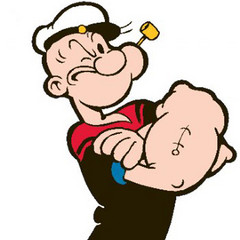

Eight Ethics Observations On Donald Trump’s Prisoner Of War Slur…And Another New Rationalization: “Popeye’s Excuse”

PopeyeFrom the New York Times:

“Mr. Trump upended a Republican presidential forum here [Ames, Iowa] , and the race more broadly, by saying of the Arizona senator and former prisoner of war: “He’s not a war hero. He’s a war hero because he was captured. I like people who weren’t captured.” Mr. McCain, a naval aviator, was shot down during the Vietnam War and held prisoner for more than five years in Hanoi, refusing early release even after being repeatedly beaten.

The only news outlet that isn’t covering this is the Huffington Post, because controversies that directly affect who will be President of the United States aren’t news when they involve candidates the HuffPo ideologues don’t respect.

I thought I should remind you.

Ethics observations:

1. The statement is signature significance that Trump is a jerk as well as a fool, and not very bright as well. The latter is especially important: being an idiot should disqualify anyone for high elected office. Not that Trump’s intelligence, or lack of it, hasn’t been a matter of record for a long, long time, but this is as blazing a tell as anyone could wish for. Anyone who voluntarily places his or her life at risk for their country is a hero; circumstances and moral luck determine what other tests warfare will present to such an individual’s character. When a hero passes such a test with distinction, as McCain did in his prisoner of war ordeal during the Vietnam war, the military makes a special effort to recognize that heroism, in part to inspire others. My father refused to make a big deal about his Silver Star and Bronze Star, because he was aware that the man who was blown up by a shell while virtually standing next to him could have just as easily been the decorated war hero, and my father a statistic, had the shell landed a little bit to the right. My father regarded the man who was killed in his foxhole as much of a hero as he was. Trump would say, “I like people who aren’t killed.”

Only a stupid man could believe that.

2. For Trump to denigrate McCain’s service when he took every possible step to avoid service in the same war is especially nauseating. The ethical values being rejected here are fairness and respect. John McCain displayed courage, patriotism, devotion to civic duty, selflessness and integrity that Trump could not. It’s really that simple. Trump lacks any standing to criticize Senator McCain’s war record.

3. On ABC this morning, Donald Trump was asked about his habit of name-calling and using personal insults as his response to political criticism. He justified his incivility by evoking the Tit for Tat excuse: if you insult him, he’ll insult you, and that includes calling you fat, old, stupid, or–his favorite—“a loser.” This is playground ethics, worthy of a 12-year-old. Your duty to be fair, civil and ethical is not reduced by the unethical conduct of someone else, even when it is aimed at you. Ethical people understand this, often before they are 20. Ethically, Trump is a case of arrested development. Continue reading

The Last Word—Words, Really—On The Ridiculous Rachel Dolezal: “Signature Significance”

Rahcel-Dolezal-plagiarized-painting

From the Ethics Alarms “Concepts and Special Terms” page:

Signature Significance: The concept is the creation of baseball statistics genius Bill James, who applied it to baseball performance. Signature significance posits that a single act can be so remarkable that it has predictive and analytical value, and should not be dismissed as statistically insignificant. Thus, in James’ example, certain outstanding pitching performances can prove that the pitcher involved is an outstanding one, because average pitchers literally never reach such levels of excellence, even as a one-time fluke.  Ethics Alarms employs the term to describe an extreme ethical or unethical act that similarly reveals the true character of the individual responsible for the conduct, and that can be reliably and fairly used to predict future conduct and trustworthiness.

My immediate assumption about now-ex NAACP executive Rachel Dolezal’s charade as a black woman her conduct was signature significance, that anyone who would construct and benefit from such an audacious deception was unreliable, untrustworthy, and a likely sociopath. My posts never got into this issue, in part because I was waiting for a unanimous consensus that the woman was lying–sadly, a lot of stubborn progressives, civil rights advocates, celebrities and culture warriors either ducked the issue or, to their eternal discredit, denied that she couldn’t be black is she said she was. I was waiting for the “she just made a mistake” arguments, and the “anyone can get confused about what race they are” rationalization by playing the signature significance card, and never got to play it.

Fortunately, the Dolezal saga has become its own signature significance card. William Salatan at Slate amassed an impressive list of Dolezals many fictions, scams, fudges, deceptions, false statements and deceits here, but the best is this: Continue reading

The Marco Rubio Traffic Ticket Story: Is The NY Times’ Anti-GOP Bias Finally Undeniable…and Unmanageable??

The New York Times thinks you need to know about this woman's driving record. Really?

The New York Times thinks you need to know about this woman’s driving record. Really?

The New York Times matters, even as newspapers continue their march to oblivion. Centuries of outstanding journalism tend to carry weight, so despite the fact that the paper has befouled itself with hypocrisy, dubious reporting, partisan bias and an inexcusable imbalance among its pundits, it nonetheless still functions as a news media role model and icon. The infuriating debate over whether the news media is overwhelmingly biased in its news coverage (that would be biased in favor of Democrats, progressives, and liberal policy objectives in case you haven’t picked up on it) has special importance now, as again we head into a Presidential election and most Americans—I hope?—would like to see the public’s opinions on the matter prevail, not the biases of journalists, operating through selective or slanted reporting

Last week’s Times investigative scoop that Marco Rubio and his wife had a combined 17 traffic citations since 1997 thus is important, not regarding Sen. Rubio, who is running for President.  Though the Times still defends it—and that’s significant too—pretty much everyone else, Left, Right, and  anywhere, has condemned the Rubio hit. The story told us nothing newsworthy about Rubio,  but told us a lot about the Times, and perhaps whether the U.S. news media plans on placing its heavy thumb on our campaign scales…again. Continue reading

The Trooper,The Law Clerk, And The Deer

This was all YOUR fault...

This was all YOUR fault…

Prof. Jonathan Turley would make this an ethics quiz, but not me.

He is troubled that a law clerk ended up an ex-law clerk after publishing a gratuitously nasty post on Facebook expressing her unseemly lack of sympathy for a New Jersey state trooper who died when his car collided with a deer. (Another trooper traveling with him was injured.) Turley shares my concern regarding the trend of employers punishing employees for their comments on social media, but in this case, I don’t have any sympathy for the clerk at all.

Responding to other Facebook commenters who expressed sorrow for the dead trooper and called him a hero, Leslie Anderson, who clerked for a News Jersey judge, Middlesex County Superior Court Judge Travis L. Francis, expressed strenuous dissent, writing,

“Not that sad, and certainly not ‘tragic,’ Troopers were probably traveling at a dangerously high speed as per usual. Totally preventable. At least they didn’t take any of the citizens they were sworn to serve and protect with them…The ‘victim’s’ employment as a state trooper is irrelevant to the circumstances, other than the fact that he injured a fellow trooper and destroyed state property as a result of his recklessness. He wasn’t running into a burning building or otherwise acting within the course of his employment at the time of the accident. The outcry and ‘thank yous’ are absurd, nonsensical, and completely unwarranted. There are people in this country and around the world dying for much less. There is nothing ‘tragic’ about this. Get over yourselves and your sense of entitlement, people . . .

Nonetheless, I agree that it is sad and heart wrenching for the family members left to suffer the consequences of the Trooper’s recklessness — especially for the deer family who lost a mommy or daddy or baby deer.”

Jerk. Continue reading

Unethical Quote Of The Week: Theodore Beale, a.k.a. Vox Day

“I find it rather astonishing that anyone would be so naive as to imagine, in this day and Information Age, to think that it is a good idea to simultaneously a) be mentally ill and b) play attack dog on the Internet…if you have a mental illness and you are foolish enough to attack me, then you can be certain that I will exploit your weakness to whatever extent I happen to find useful or amusing…If you are weak, then for the love of God and anything else in which you happen to believe, do not attack the strong!”

This Ted Beale, alias Vox Day. Let us never speak of him again.

This Ted Beale, alias Vox Day. Let us never speak of him again.

Theodore Beale, writing as “Vox Day” on his blog, commenting on Popehat blogger Ken White’s post about his clinical depression, which was highlighted on Ethics Alarms here.

The whole post must be read to get the full flavor of Beale’s ego-soaked viciousness. It is also a good example of signature significance: only a self-professed “cruelty artist” would produce such offal, even once. Yes, being a cruelty artist is unethical.

Ken’s interest in gaming and science fiction has the unfortunate side-effect of making him aware of Vox Day, a science fiction writer who has built a following based on his espousal of misogyny, homophobia, and other vile causes metastasizing on the dark side of the far right. He also, obviously, believes in encouraging the stigma of mental illness, which marks him as ignorant.

My only guess as to why Ken bothered to scratch this human boil is that he was annoyed by Beale/Day’s sexist, racist machinations regarding the Science Fiction and Fantasy Writers of America (SFWA) and the.Hugo Awards. It all smelled of Gamergate to me, and like that convoluted mess, my interest in it (and ability to research it sufficiently to comment intelligently on it is best described by reference to George S. Kaufmann’s description of his interest in crooner Eddie Fisher’s love life:

Mr. Fisher, on Mount Wilson there is a telescope that can magnify the most distant stars to twenty-four times the magnification of any previous telescope. This remarkable instrument was unsurpassed in the world of astronomy until the development and construction of the Mount Palomar telescope.The Mount Palomar telescope is an even more remarkable instrument of magnification. Owing to advances and improvements in optical technology, it is capable of magnifying the stars to four times the magnification and resolution of the Mount Wilson telescope.Mr. Fisher, if you could somehow put the Mount Wilson telescope inside the Mount Palomar telescope, you still wouldn’t be able to see my interest in your problem.

Continue reading

Once Again, We Are Reminded That Beauty Is Only Skin Deep. Do ESPN Viewers Care? Should They?

Let me tell you, it's quite a shock when Britt's head spins around and that forked tongue starts flecking...

Let me tell you, it’s quite a shock when Britt’s head spins around and that forked tongue starts flecking…

Anyone who spends much time watching TV knows that “lookism” is the way of the world in the broadcast news business. From Nora O’Donnell on ABC to Robin Meade on HLN to Erin Andrews and the bevy of Fox blondes, it is obvious that if you are female, talent as a reporter won’t get you as far as some beauty contest creds. Plain, even conventionally pretty women are  at a great competitive disadvantage in this field.

One of the more blatant beneficiaries of this bias, ESPN’s Brit McHenry, has just been outed on the web as an ugly human being in a flashy disguise. Her car was towed, and a camera caught the reporter taking out her frustration on the poor clerk who was tasked with collecting her fee.

“I’m in the news, sweetheart, I will fucking sue this place,” McHenry says as the video opens.“Yep, that’s all you care about, is just taking people’s money,” she continues. “With no education, no skillset, just wanted to clarify that. … Do you feel good about your job? So I could be a college dropout and do the same thing? Why, cause I have a brain and you don’t?…Maybe if I was missing some teeth they would hire me, huh? ‘Cause they look so stunning … ‘Cause I’m on television and you’re in a fucking trailer, honey.”

“Lose some weight, baby girl,” she taunted as she left.

Yecchh. Continue reading

Ethics Observations On The Columbia Journalism Review’s Report On Rolling Stone’s False UVA Gang Rape Story

So I guess democracy is in big trouble then..

So I guess democracy is in big trouble then..

The Columbia School of Journalism was tasked with delivering the final verdict on the already thoroughly discredited Rolling Stone story “A Rape on Campus,” which first ran Nov. 19, 2014. The report, which was published yesterday, could not be more critical or devastating to the publication’s reputation and credibility. The one positive conclusion about Rolling Stone that the report documents is that the magazine cooperated fully with the investigation. In light of everything else Rolling Stone has done in this indefinably awful instance of atrocious and unethical journalism, that compliment is like praising a serial killer for leading police to the bodies of his victims.

The news media this morning is full of punditry on the CSJ report, none of it kind to Rolling Stone, so I will confine any new commentary here to the following 10 observations Ethics Alarms has already discussed the matter and related ethics issues extensively.

1. Upon receipt of the CSJ report, Rolling Stone finally took down and retracted the story by Sabrina Rubin Erdely. The story has been on the magazine’s website since mid November, and it has been universally identified as unreliable, misleading and false before the month was over. Why was the piece still up almost five months later? What the reporting of the Washington Post and others demonstrated beyond a shadow of a doubt was that the story was based on unsubstantiated allegations and terrible reporting practices sparked by the reporter’s ideological agenda and her own biases. Once a news article is found to be so sub-standard that it should never have been published, that means it need to be un-published,  and does not belong on a news source website, unless it is under a banner stating: “Retracted and Discredited.”

2. While the Columbia report added some new details and had the name of a university on it, its findings added little to what had already been reported elsewhere. The CSJ’s proper role was to examine the lack of professional and ethical journalism policies and procedures that led to this fiasco, and to make recommendations to prevent similar abuses of the First Amendment from occurring. The fact that the article itself was indefensible did not need confirmation.

To me, it looks like Rolling Stone used the investigation to stall, delaying accountability as long as possible. Continue reading

Fire NYT “Public Editor” Margaret Sullivan

new_york_times_logo

In some professions, an apology isn’t enough.

One such profession is accounting. Arthur Andersen couldn’t fix its reputation by apologizing. Its knee-deep involvement and likely complicity in the Enron debacle rendered its claim to trustworthiness permanently and irredeemable damaged. Its conduct made the company useless as a certifier of transparency and truth. For an accountant or auditor, if there is any doubt that he or she might not be telling the truth, the jig is up. One cannot trust a truth-teller who only is accurate and reliable most of the time.

I think the same applies to newspaper ombudspersons, if that’s the proper term now, and this is what Margaret Sullivan’s job as New York Times “public editor is,” euphemisms aside. She is supposed to bolster public trust by serving as an objective critic of Times reporters, columnists and editors, and ensuring that they hew to the high standards of professionalism and journalism ethics readers should be able to expect from the nation’s most respected newspaper.

Like the Washington Post’s Jonathan Capehart, Sullivan has published a mea culpa for her joining on the “Darren Lewis is a white cop and Mike Brown was an unarmed black kid, so obviously the white cop gunned down the black kid in cold blood because that’s what white cops do and whites want to do” lynch mob last summer as it was being led by Eric Holder, the media, Al Sharpton and others.  But unlike Capehart, who is an opinion columnist and can be forgiven a bit for being led by his biases, Sullivan job is to protect her colleagues from their biases and ensure that the Times at least tries to be objective and fair. Continue reading

The Little Blue Jon Stewart Caboose On The Brian Williams Ethics Train Wreck

Blue Caboose

I’ve stopped updating the passenger list on the rapidly slowing Brian Williams Ethics Train Wreck. Essentially it’s all biased and unethical journalists outing themselves and not being honest or sufficiently self-aware to realize it.

Bulletin: Brian Williams being exposed as an untrustworthy journalist isn’t a “tragedy” for anyone but Brian Williams and NBC’s bottom line, and he was no more a “giant” of broadcast journalism than Joe McCarthy was a “giant” of the U.S. Senate. He was a fraud, and his exposure and fall was a good thing, as exposures of frauds always are. His demise (he isn’t coming back, and NBC should stop the speculation and just say so) does serve as a useful trap for similarly unethical and biased journalists, like TIME’s Joe Klein, who made no sense at all while bemoaning the treatment of Williams in an interview on Fox News, first using a straw man argument:

“I think that we’re living in an era where the ferocity of the prosecution is much greater than the severity of most of these crimes.”

No one’s alleging any “crimes,” Joe. Journalists who are paid huge contracts to deliver the news in a professional and trustworthy fashion can’t be allowed to stay on the air. Absent the “ferocity,” Williams would still have his job today, because news organizations value their profit over integrity and ethics. Plenty of people don’t care if journalists are ethical or not, and can’t tell the difference. If critics don’t make their legitimate complaints strongly enough, the majority’s apathy prevails.

Then Joe went for the rationalizations, this time, #19 and #20:

“And all of us make mistakes. All of us do make mistakes.”

Someone explainsignature significanceto Joe Klein, because Williams’ helicopter fable was a perfect example of it, as I surmised from the first report of the episode. Yes, good journalists make mistakes, but ethical and trustworthy journalists don’t make mistakes like that, even once—telling a false story about being in one helicopter under fire when the reporter was really in another. Sure enough, we have since learned that Williams made up lots of stories that upon examination could not have been true (Joe apparently wants to ignore all that), like seeing bodies floating in the French Quarter after Katrina, like claiming that he was imbedded with elite SEAL team that took down bn Laden. They weren’t doubted at the time because we didn’t know Brian Williams was a serial liar then. “Mistakes” are not the issue. Moreover, Williams’ “false memory” defense, complete with “experts” sent out to the media to explain this phenomenon, was also a lie, and a carefully devised one. His other false reports, slowly becoming known like the endless trail of Bill Cosby victims, prove it.

Next for Joe: euphemisms. Continue reading