The Maryland Supreme Court Clearly Doesn’t Believe In Signature Significance

PeepingTom

But I do.

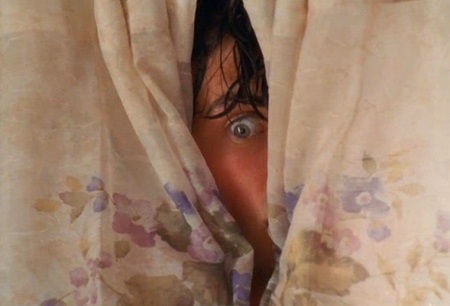
The Maryland Supreme Court just reinstated a Clayton W. Boulware, a Montgomery County attorney who had been suspended for six months after being convicted of covertly filming up the skirts of two women, one of whom was a minor, in a public place.  Boulware was suspended in September for six months with a three-year probationary period to follow the suspension.

In his defense, Boulware blamed his upskirt peeping on an “open relationship” with a younger woman, introducing him to a “swinging lifestyle” that included filming themselves having sex. But that relationship is over now, the court notes, so, hey, no problem.

The bar disciplinary board noted in its report to the court that it believed  a more lenient approach to punishing Boulware was called for because of those “mitigating circumstances.”  Lawyers are, as everyone knows, putty in the hands of swinging young women, and this always results in them shooting up other women’s skirts.

I feel like I am losing my mind. Continue reading

Rationalizing Corruption

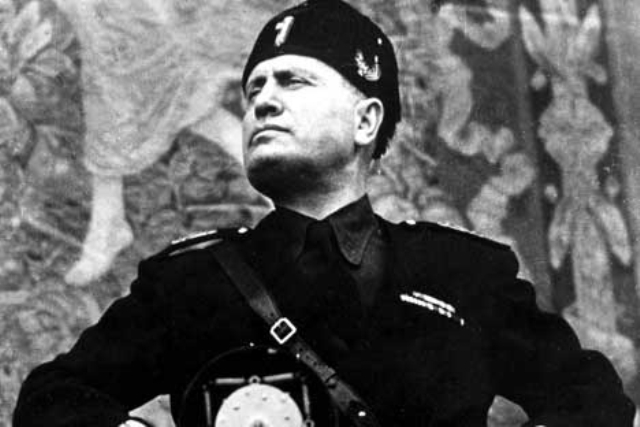
But remember: the trains ran on time!

But remember: the trains ran on time!

It is a debate that erupts here periodically: Do you vote for the honest and trustworthy politician whose policies you despise, or the lying rogue who stands for all the “right” things? Washington Post editor Hilary Krieger raises the issue with gusto in the Sunday Washington Post, with an essay titled (in the print edition) “Is a little political corruption all that bad?”

Yes, Hilary, it is.

Next question?

But perhaps that’s not sufficient to kill this particular snake, so let’s delve a bit deeper into this truly fatuous, ethically obtuse article. Continue reading

Signature Significance Lesson: Pazuzu, The Judge And The Racist Email

"Your Honor, uh, you're not quite yourself today.."

“Your Honor, uh, you’re not quite yourself today..”

How many racist e-mails does one have to send out before it proves one is a racist? At Above the Law, legal affairs blogger Ellie Mystal says the answer is one, and I agree. Mystal writes:

“If you send one horribly racist email that actually manages to leak out into public discourse, it’s probably not your only one. Seeing a racist email from someone is like seeing a mouse in your apartment: there’s never just one. I believe in temporary insanity, but I don’t believe in sudden onset racism that magically appears once and only once and then disappears forever. Of course, whenever anybody gets caught in a racist email scandal, they always say that it’s the only one. It’s always “Whoops, that email was racist, but I’m not racist.” The racist email is always allegedly “out of character,” and the person always claims to have shown “poor judgment.” And that person always has some apologists, as if sending one or two racist emails is just something that “happens” in the normal course of business to non-racist people.”

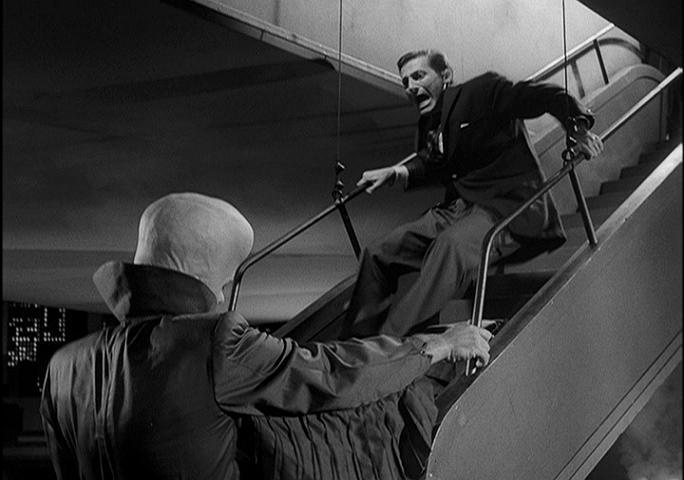
The “out of character” nonsense is what Ethics Alarms refers to as the “Pazuzu Excuse,” as when someone explains that his or her full-throated expression of a vile nature “just wasn’t me” and “doesn’t express how I feel,” as if their being was suddenly possessed by the evil demon that made Linda Blair spit pea soup in “The Exorcist.” People try that excuse—and absurdly often are allowed to get away with it—because, at their core, they realize that signature significance is persuasive when judging character. Non-racists simply don’t send out racist e-mails ever, even once, and one such episode, all by itself, is convincing evidence that the sender is, in fact, a racist.

The racist under discussion by Mystal was retired federal judge Richard F. Cebull, appointed chief judge for the District of Montana by President George W. Bush in 2001. In 2012, Cebull got in trouble when he sent the following e-mail to seven acquaintances: Continue reading

Signature Significance: The Sick Little Girl’s Stolen Puppy

pug-puppy

If you ever want to explain the concept of signature significance in ethics—how one act can be sufficient evidence to make a fair and valid judgment about someone’s character—to a friend or colleague, this story should do the trick.

In California, a kind woman named Shawna Hamon heard about a 7-year-old girl with leukemia whose Christmas wish was for Santa to bring her a pug puppy. So Hamon bought a pug puppy, and gave it to a friend who promised to deliver the little dog to the girl in Sacramento in time for the holidays.

The puppy never arrived, however.  The friend decided to keep it for herself. Hamon sent an animal delivery service and an attorney to the woman’s Los Angeles home, but the woman refused to give the dog back. Then Hamon  filed a theft complaint and police got a search warrant to search the home, but found no pug puppy. After searching some other nearby homes, they eventually found the little dog at a neighbor’s  house, where the pug-napper had hidden it.

Hamon now has the dog back, and learned her lesson. She will deliver it herself this time, a bit late, to the sick little girl. The child is currently receiving experimental treatment for leukemia in Philadelphia.

Now, what are the chances that the woman who took the dog, a desperately sick child’s Christmas gift, for herself, and foiled the compassionate act of a friend in the process, was just having a bad day, just made one mistake, really is a fine, upstanding, trustworthy individual and can’t be judged conclusively as an unethical cur (no offense, puppy…) based on this one incident, because a single episode has no statistical and predictive significance?

None.

____________________________

Pointer: Fark

Facts and graphic: NBC

Shia LaBeouf, Plagiarism Addict, With Much Worse To Come

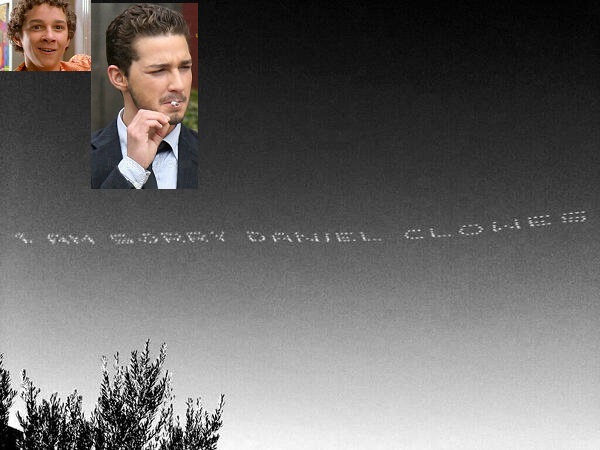
Shia past and present, with apology...

The child star past and present, with apology…

Actor Shia LaBeouf, known to Disney Channel aficionados as the annoying little brother on “Even Stevens” and to movie fans as Indiana Jones’ son and the Transformers Guy, is so much more, and not in a good way. His rapidly expanding list of reckless and socially-clueless episodes, including the obligatory misconduct behind the wheel of an expensive car, signals that he may be the new Lindsay Lohan, a talented former child-star raised to adulthood without basic life-skills, respect for others, and an appreciation of the difference between right and wrong. This is a tragic scenario that we are cursed to witness again and again—we saw it in 2013 in the increasingly obnoxious and desperate conduct of pop star Justin Bieber. Give a child wealth, power and adulation without first imbuing him or her with values, discipline and humility and what do you get? A menace.

As LaBeouf’s acting career has waned with his growing reputation as an untrustworthy (and sometimes violent) jerk, he has refashioned himself into an aspiring artist. Unfortunately, he lacks some basic traits of successful artists, like integrity and creativity. His inclination, being raised, like most child stars, in an unstable environment by self-absorbed and dysfunctional parents, is to cheat. In 2012, LaBeouf attached his name to three short graphic novels and a webcomic series. This year, we learned that at least two of the graphic novels contained text plagiarized from other writers. Then LaBeouf attached his name as writer to the short film (which he also directed) called “HowardCantour.com,” which was unveiled at the Cannes Film Festival and received some praise there. The  short, about an online film critic, included a strong resemblance to Daniel Clowes’ 2007 comic “Justin M. Damiano,” as well as large sections of dialogue directly lifted from it. No one picked up on the plagiarism until LaBeouf  released his film online.  Continue reading

Ethics Dunce: Dallas Cowboys Wide Receiver Dez Bryant

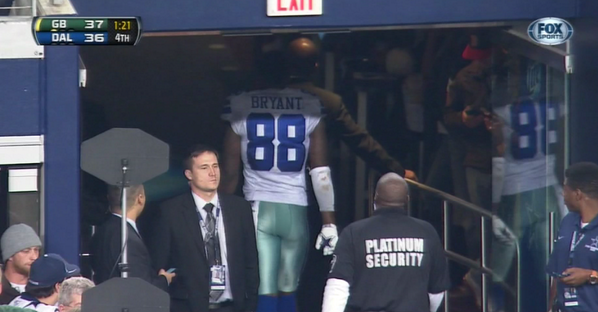
Bryant quits

The NFL appears to be having a collective values breakdown. First the Miami Dolphins lose two players in an alleged bullying scandal, and last Sunday, star Cowboy wide receiver Dez Bryant walked off the field with more than a minute left to play in the game. After Dallas quarterback Tony Romo threw the last of his two second-half interceptions to virtually ensure a humiliating come-back defeat at the hands of the Green Bay Packers, cameras followed Bryant as he left his team for the locker room with 1:21 remaining on the clock. Later, he apologized and explained his actions by tweeting:

“I walked back to the locker room because I was emotional…it had nothing to do with my teammates we had it…We fought and didn’t finish”

Oh. What?

That’s no explanation. To reporters, he said that he didn’t want the cameras catching him crying. On the professionalism scale, this is minus 1000. He’s emotional? So what? Suck it up! He doesn’t like to lose? Who does? He couldn’t take it any more? Tough—he’s paid to take it, and damn well too. Continue reading

Ethics Note To Senator Cruz: You Can’t Begin A Principled Stand With A Lie

Little is more damaging to the public’s trust and faith in government than when elected officials engage in gratuitous lies—statements that can only convince those who don’t bother to check the facts underlying them, made for their momentary impact on the theory that the effect is worth the eventual exposure of the lie for what it is. Such lies are detestable, because they not only reinforce the impression that politicians lie when their lips are moving, they also convey the message that lies are merely tools of the politicians trade, and not even particularly shameful or worthy of criticism. When a politician engages in such transparent dishonesty, he or she is saying, quite literally, that lying is no big deal.

It is a big deal. It is especially a big deal when the point of the lie is to fool the public into believing something the politician is doing is a big deal itself, when it is really a sham.

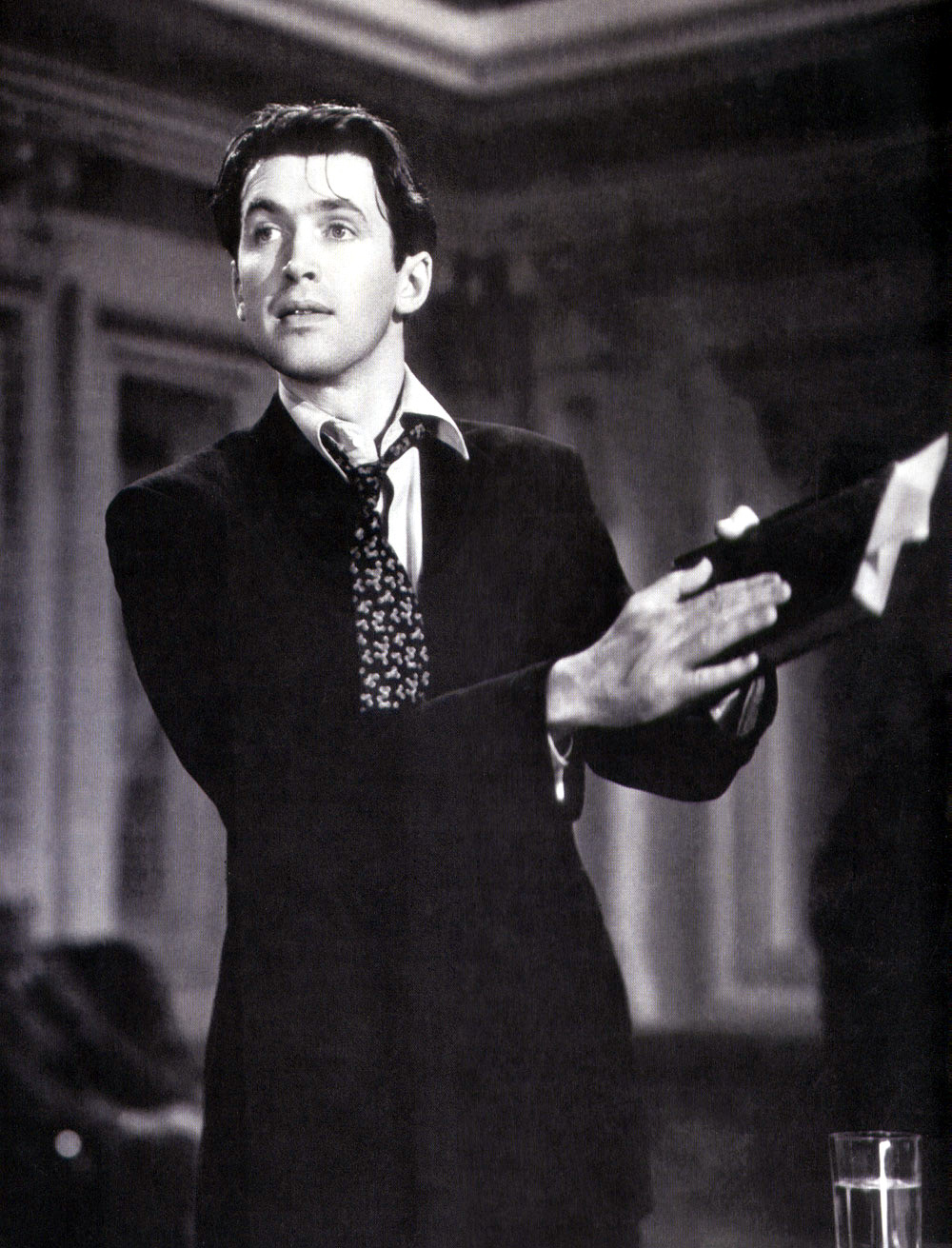
Welcome to Sen. Ted Cruz and his fake filibuster, also known as Ted Cruz’s Bad Jimmy Stewart Impression.

"Ted, I knew Mr. Smith, and you're no Mr. Smith. You're not even Rand Paul..."

“Ted, I knew Mr. Smith, and you’re no Mr. Smith. You’re not even Rand Paul…”

Evoking memories of the Frank Capra classic, “Mr. Smith Goes To Washington,” Sen. Cruz told the world that he was going to talk on the floor of the Senate against Obamacare until he couldn’t stand any more…you know, just like the Jimmy’s idealistic junior Senator in the film, who finally collapses of exhaustion to end his filibuster but whose courage makes the corrupt, manipulating senior Senator from his state confess that he was trying to fund a lousy health care b…no, wait, it had something to do with a kids camp and influence peddling. I haven’t seen the film in a while.

Cruz, however, unlike Stewart, is not engaging in a filibuster, because he is not trying to block a vote or anything else: Senator Majority Leader Harry Reid has scheduled a vote on funding the Affordable Care Act for today, whereupon Cruz has to sit down and shut up whether he can still stand or not. Continue reading

Incompetent Elected Official Of The Month: Sen. Mary Landrieu (D-La)

The Senator thinks its running backwards!

The Senator thinks it’s running backwards!

On the Shreveport Time website, Andre Dean Benton reports…

“I attended the Bossier City VFW Post 5951 discussion of Veterans’ issues with Senator Mary Landrieu last week at 1315 North Gate Road, where she responded to a wide range of issues facing our American veterans from her talking points as well as from questions fielded from the audience. An older veteran stood up toward the middle of the meeting and expressed to her his deep sadness and concern with the massive and constantly growing American debt ($16.9 trillion today and $5.6 trillion in 2000) and the crippling cost to taxpayers to pay for the staggering interest on that debt….

I was stunned to then hear my Louisiana senator defend the massive U.S. debt saying: “That is not true, sir! We do not have an increasing national debt! For the past six to seven years we have been continuously driving that debt down and reducing it and it is NOT increasing.” She then went on to explain the federal costs of Medicare, Medicaid and Social Security as “non-negotiable mandates by law that cannot be changed” and explained that only a small portion of the federal budget was in discretionary spending, where she was working with others in the Senate to further reduce our nation’s debt….

“No one on her staff corrected her or offered a polite “update” for the audience, and the elderly gentleman speaking the question was a little rattled by her vigorous contradiction of his stated facts that he just mumbled something across the table from me about “Congress constantly raising the debt ceiling …” and then was respectfully silent. As he was asking and our senator was responding, I was Googling the US Treasury’s official home page on my iPhone and staring at the government published facts on the history and facts about the U.S. debt: Continue reading

“It’s A Cook Book!”

Nobody listens to me...

Nobody listens to me…

The issues at the core of the Anthony Weiner debacle—which is not the conduct of the ex-Congressman/absurd NYC mayoral candidate/sick puppy, but the fact that so many, like Dan Savage, Huma Abedin (Weiner’s wife, Hillary’s apprentice, carrier of the Clintonian ethisc virus),  Andrew Sullivan, and apparently 16% of New York Democrats still argue that his conduct doesn’t disqualify him from elected office—-are ones which I am especially passionate about, because they are the very issues that launched this blog’s predecessor, the Ethics Scoreboard:

1. There is no division between private unethical conduct and public unethical conduct. It is a false construct designed to assist scoundrels in getting elected. Private conduct is as reliable an indicator of trustworthiness as other prior conduct.

2. Leaders in a democracy should be held to an exemplary level of conduct, not the average or common conduct of those they seek to lead.

3. Some instances of unethical conduct have “signature significance“for the individual involved, meaning that contrary to the common rationalization that “anyone can make a mistake,” there are some things that ethical people never would do even once, and thus the fact that an individual does do it is persuasive evidence that they are generally untrustworthy.

Thus I believe Weiner’s story is more important than the mere sordid political drama involved: if people pay attention, if people learn, if people can get by their partisan biases and convenient ethics misconceptions, maybe we can begin establishing a better, more sensible, beneficial standard for our elected leaders, who, perhaps you have noticed, are, as a group, an embarrassment to the legacy of July 4, 1776. I don’t have illusions that I have any influence, and it is unseemly to say “I told you so,” but sometimes I feel like one of the doomed heroes in science fiction/horror scenarios who end up screaming “They’re already here! You’re next!” or “It’s a cook book!” to unheeding crowds blithely proceeding to their own destruction.

Yesterday the news surfaced that should be the smoking gun on Anthony Weiner’s corrupt character that readers of this blog, at least, did not require to render a verdict—that Weiner’s conduct was not just an irrelevant personal quirk, that his initial lying about it was proof of a corrupt character, and that he is no more trustworthy than John Edwards, Lance Armstrong, Ryan Braun or anyone else who lies to the public to keep its trust. Maybe it will convince Dan, Huma, Andrew and the rest that Anthony Weiner is too corrupt—never mind sick—to lead. If it doesn’t, I think that is signature significance about them. Continue reading

Ethically Depressing Quote Of The Week: NBC News

“It’s unclear if his latest admission will hurt his standing with voters.”

—-NBC News, after revealing on its website that New York City mayoral candidate Anthony Weiner, who resigned from Congress in 2011 amid a sexting scandal, admitted today that there were more episodes like the one that forced his resignation.  He issued the statement after a gossip website published an interview with an anonymous woman who claimed she had a six-month online relationship with him that continued after his earlier online activities were, uh, exposed.

The once and future studmuffin...

The once and future studmuffin…”Mayor Studmuffin?” Really, New York?

Weiner’s  statement was Clintonian with heavy dash of weasel, saying,

“I said that other texts and photos were likely to come out, and today they have. As I have said in the past, these things that I did were wrong and hurtful to my wife and caused us to go through challenges in our marriage that extended past my resignation from Congress. While some things that have been posted today are true and some are not, there is no question that what I did was wrong. This behavior is behind me.”

Note: Weiner also said the behavior was behind him when he resigned. (Actually, based on the photos, the behavior is clearly in front of him.) Given his talent for Clintonesque  deceit, perhaps he means that all past behavior is behind him, since he’s talking in the present, and only future internet flashing is ahead of him.

Whatever. Continue reading