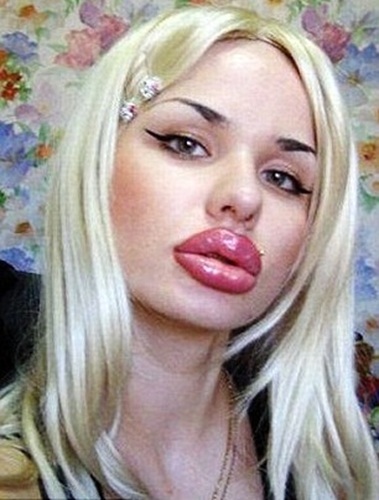
More than 10 years ago I wrote about Kristina Rei, 22, of St. Petersburg, Russia. She wanted to look like Jessica Rabbit, the cartoon character, so she got herself a pair of huge—lips.She has undergone over 100 silicon-injection procedures, and considers it just the initial step in her quest to look like Roger Rabbit’s Toon wife from “Who Framed Roger Rabbit?”. ” At the time, I asked whether it ethical for a plastic surgeon to give her the ridiculous lips she coveted, since plastic surgeons are subject to the Hippocratic Oath like other doctors. My own position then and now, was that it is unethical, though I tried to give both sides of the issue.
“If Kristin can eat, drink and breathe with her mega-lips,” I wrote, “and there is no risk that they might explode, killing everyone near her, the decision to do what she wants is probably ethical, at least by medical ethics standards. The fact that her Chap-Stick costs will be astronomical is not the doctor’s concern, however.” Nevertheless, I concluded that “a plastic surgeon who assists a patient, especially one so young, in disfiguring herself to this extent is unethical. Autonomy is to be respected always, and beauty is in the eye of the beholder. Kristin’s lips are so far beyond reason that a plastic surgeon debases his profession by assisting in what can fairly be called self-mutilation.”
My bias regarding fake puffy lips does not involve such extreme disfigurement; indeed most would agree that young women getting their lips puffed up isn’t disfiguring at all. However, it is increasingly becoming apparent to me that this particular form of supposedly aesthetic enhancement is becoming a norm, and a harmful one.
Continue reading
