The Ethical Christmas Carol

Considering that Christmas is our culture’s ethical holiday, it is remarkable that only one traditional carol—and no modern holiday songs—celebrates ethical conduct. The one carol is “Good King Wenceslas,” and a strange one it is.

The lyrics are by J. M. Neale (1818-66), and were first published in 1853. Neale is a superstar in the Christmas Carol firmament: he also is responsible for the English lyrics of “Good Christian Men, Rejoice,” and “O Come, O Come, Emmanuel,” both of which you hear much more frequently than “Good King Wenceslas.” One reason is that the ethical carol tells a story in ten verses, and if you don’t sing them all, the story doesn’t make sense. There are very few recordings of the song in which all the verses are sung. Ten verses is also a lot to remember for any song. My elementary school used to teach the whole carol to sixth graders for the Christmas assembly, but let them have crib sheets. This was before it was decreed that allowing children to learn, sing and listen to some of the most lovely and memorable songs in Western culture was a form of insidious religious indoctrination.

Here is the whole carol:

Good King Wenceslas looked out
On the feast of Stephen,
When the snow lay round about
Deep and crisp and even;

Brightly shone the moon that night
Though the frost was cruel,
When a poor man came in sight,
Gath’ring winter fuel.

‘Hither, page, and stand by me,
If thou know’st it, telling
Yonder peasant, who is he?
Where and what his dwelling?’

‘Sire, he lives a good league hence,
Underneath the mountain,
Right against the forest fence,
By Saint Agnes’ fountain.’

‘Bring me flesh and bring me wine,
Bring me pine logs hither,
Thou and I will see him dine
When we bear them thither.’

Page and monarch forth they went,
Forth they went together,
Through the rude wind’s wild lament
And the bitter weather.

‘Sire, the night is darker now
And the wind blows stronger;
Fails my heart, I know not how,
I can go no longer.’

‘Mark my footsteps, good my page,
Tread thou in them boldly:
Thou shalt find the winter’s rage
Freeze thy blood less coldly.’

In his master’s steps he trod,
Where the snow lay dinted;
Heat was in the very sod
Which the Saint had printed.

Therefore, Christian men, be sure
Wealth or rank possessing,
Ye who now will bless the poor
Shall yourselves find blessing.

For one thing, “Good King Wenceslas” has little to do with Christmas Day, and doesn’t mention Jesus or the Nativity. The Feast of St. Stephen is also known as Boxing Day, the day after Christmas, December 26. It is a British Commonwealth tradition that never caught on in the U.S. In some European countries like Germany, Poland, the Netherlands and the Nordic countries, the day is celebrated as a Second Christmas Day. Continue reading
Ethics Hero: 11-Year-Old Singer Capri Everitt

Capri Everitt is an 11-year-old girl with a big voice. She set a Guinness World Record earlier this month when she sang the National Anthem before a Washington Nationals baseball game . For nearly a year, you see, Capri and her family have traveled around the world to 80 countries so she could sing 80 different anthems in 41 different languages.Washington D.C. was the final stop for Capri,  in a tour that required her  to learn  a lot of songs and master the pronunciation of many foreign tongues.

“And a lot of the time, I got people that are native to the country to help me with the national anthem – to help me learn it and pronounce it right, ” Capri says.

Some people use national anthems to divide people. Some, like Capri, would rather use them to bring people together.

Her tour raised money for a charity called SOS Children’s Villages, which provides homes for orphaned, abandoned and disadvantaged children in 134 countries.

“There is so much bad news on television and in newspapers that we thought, ‘How can we create a good story? How can we do something with our daughter because she loves to sing,’”  Tom Everitt, Capri’s father. has told journalists. “But we wanted to be something that would be really, really positive, so we got her to practice some national anthems.”

Capri’s anthem tour is documented on the family’s  website AroundTheWorldIn80Anthems.com.

Sing, Capri!  Colin Kaepernick can sit it out if he wants.


Carolyn Hax Sides With Bobby Darin, And Dazzles With Her Ethics Advice Again

Syndicated relationship advice columnist Carolyn Hax is as trustworthy an ethicist as I know. She doesn’t call herself an ethicist, and probably doesn’t think of herself as one, but she is far better qualified in the field than many with advanced degrees and tenured teaching positions, not to mention the corporate compliance hacks who write Ethics Codes for the likes of Enron. Carolyn Hax is an ethicist and a superb one because she has an innate, instinctive, nuanced and perceptive understanding of right and wrong, as well as remarkable skill at ethical analysis.

She proves this routinely in her weekly columns, but occasionally special attention should be paid. That was the case last week, when she was asked her blessing by an annoyed fiance on a decision to exit the relationship because her betrothed had decided to reject an offer to enter the world of high finance in favor of pursuing a career as a carpenter, concluding:

I’m seriously considering walking away because I think he is being really selfish given the long-term prospects. I am a professional and have supported us through his two-year master’s program. I am at my end here — what do you think?

In as nice a manner as possible, Hax nails what is wrong with this, saying in part: Continue reading

CORRECTION! GEICO Ethics Dunce RETRACTED! It’s All Frank Sinatra’s Fault!

Emily Litella1There is apparently a diabolical law regarding Ethics Alarms that the more trivial a subject is, the more likely I will screw it up, or it will be a hoax, or something else. The previous post, chiding GEICO for allowing the lyrics of “You Make Me Feel So Young” to be massacred by Peter Pan in its current TV ad is an epic example.

First, I posted a video of Sinatra singing the song as an example of the right way. It is hard to find a video of anyone BUT Sinatra singing it, for he made it one of his standards. Then LoSonnambulo, a frequent commenter here, properly chides me for using a crooner who regularly changed lyrics as the paragon of lyrical certitude. Yes, that’s pretty stupid. Thus I resolve to change the embedded video, and what do I find? I find that the non-English, slangy abomination, “You make me feel so young, You make me feel so spring has sprung” did not originate with GEICO, or Peter Pan, but Frank Sinatra, who sang the polluted lyric in the earliest recording I could find. It appears to be his invention.

It gets worse. Because Frank sung it like that, everybody started doing it: Ella Fitzgerald, Rosemary Clooney, Jack Jones, everybody.  It’s the wrong lyric, damn it!

But I can hardly blame GEICO for not fixing the version in its ad when most who are familiar with the Sinatra version think those are the lyrics.

Never Mind.

UPDATE (4:00 AM): ARRGH! I just woke up with the song in my head, and realized what Frank was doing, or thought he was doing, with this lyric change. Since I know the correct lyric, I assumed that substituting “so” for “as though” or “like” meant that “so” was supposed to mean “as though” or “like” and so doesn’t mean “as though” or “like,” which is why I also assumed this was some kind of Jersey slang. But no! Frank altered the lyrics more than I realized. What his version is, is a parallel construction comparison:

You make me feel so young,

You make me feel so “Spring has sprung!”

In Frank’s version, “Spring has sprung” is presented as a synonym for “young,” as it replaces “young.” In the original, “You make me feel as though Spring has sprung” is a related but separate thought, as it should be, because feeling young and feeling like it’s Spring are not the same thing. If they were, then so would make lyrical sense. For example, if I write the a song that goes,

You make me feel so old,

You make me feel so Spanish gold…

That works, because Spanish gold is old. But Spring springing isn’t young. It’s a bad lyric change. It makes the song worse.

Nonetheless, I suppose that a singer who didn’t know the real lyrics, and maybe even a listener, would hear the song as making sense, sort of.

There.

Maybe I can get back to sleep now.

Trivial Ethics Dunce That Is Driving Me Crazy Anyway So I Have To Mention It: GEICO

http://www.youtube.com/watch?v=r9qcWljsT7s

The current GEICO ad campaign, “It’s what you do,” has already scored an ethics foul; the latest one is less substantive. Nonetheless, it is in the increasingly common category of “They just didn’t care,” which is a subset of disrespect and lack of diligence. Besides, it involves a great American song.

In the GEICO ad featuring Peter Pan annoying former classmates at a high school reunion ( the kid playing Peter is terrific), the spot concludes with Peter entertaining the class while flying over their heads with a mike and singing, “You Make Me Feel So Young,” a 1946 classic composed by Josef Myrow, with lyrics written by Mack Gordon. It begins,

You make me feel so young.
You make me feel as though (alt. “like”) spring has sprung.
And every time I see you grin,
I’m such a happy individual.

But for some damn reason, Peter sings,

You make me feel so young.
You make me feel so spring has sprung..

..which isn’t even English, and definitely isn’t the lyric. How hard would it have been to fix this? GEICO just couldn’t be bothered, so the song is misrepresented in its first widespread media us in decades.

Here’s the song sung the right way, Peter, you little snot:

UPDATE: See here.

Comment of the Day #1: Ethics Quiz: The Looney Tunes Cartoon Disclaimer

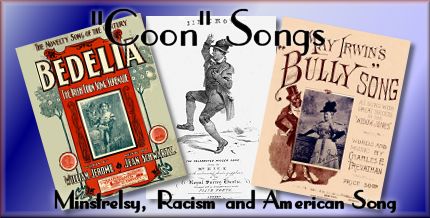
coonsongs

The Looney Tunes post was the latest in along line of those that I never anticipated provoking the rich discussions that they have, and this fascinating post by SamePenn really took off into an unexpected direction—ragtime and racist songs—that is  still relevant to the post. Just read, enjoy, ponder and learn; I did.

Here is SamePenn’s Comment of the Day, and there’s a second COTD coming,  on the post, Ethics Quiz: The Looney Tunes Cartoon Disclaimer: Continue reading

One Class, 114 Valedictorians….W.S. Gilbert Warned Us About This

Apparently this has been going on at Arlington, Virginia’s Washington and Lee High School, from which my niece graduated, for years.  The school calls about a third of its graduating classes “valedictorians,” so 1) the school can put it on their college applications and deceive those who haven’t connected the dots; 3) make certain the school can claim a female valedictorian, a black valedictorian, an Asian-American valedictorian, a trans valedictorian…you know, because everyone is above average, like in Lake Woebegon, and 3) the official rationalization, to eliminate competitiveness for honors among students, because life isn’t competitive.

Back when I wrote about this in June, 2010, the news was that…

In many high schools around the country, as many as fifty graduating seniors were designated “valedictorians…

Now honor inflation ins some schools is  more than double that, so this atrocious practice is obviously catching on. Integrity is such a chore. Excellence, superiority, achievement…they are all chores too.  As for the genuinely superior students, they are out of luck: this is the high school equivalent of all the gladiators standing up and crying “I’m Spartacus!,” except now it’s “I’m the smartest one in the class!” This Maoist denial of the fact that some of us earn more success than others and that there is nothing wrong with doing so is all the rage, and you can expect to hear more such ideas as the various candidates to lead the nation, one founded on the principle of personal self-determination based on ambition and enterprise, argue about how to deal with “income inequality.” Income inequality is but a subset of talent, industry, risk-taking and ability inequality…and good fortune inequality too. Might high schools sending graduates out into the world with the cuckoo concept that everyone should be regarded as equally accomplished whether they really are or not also contribute to income inequality?

Why yes, I think so. Continue reading

Ta-Nehisi Coates, The Atlantic, Racist Hate….and The Dick Van Dyke Show

Forget what your dad is telling you, kid: listen to Buddy.

Forget what your dad is telling you, kid: listen to Buddy.

Question: If Ta-Nehisi Coates’ racist and hateful, anti-white, anti-US essay for The Atlantic is respectable public discourse, why isn’t Dylan Roof’s manifesto?

I think it is fair to that we know what the standards, or rather double standards, are in Barack Obama’s America. We have repeatedly been told by progressive activists that “hate speech” either isn’t or shouldn’t be protected by the Constitution, but the essay “Letter to My Son” by a regular Atlantic contributor, published by the magazine as literature, shows that “hate speech” is a narrower category in the progressive universe than its catchy name would suggest. Pompous, pretentious, labored, and smug anti-white, anti-American speech isn’t hate, apparently, but rather wisdom.

I just want to know what the rules are now.

Blogger/law professor Ann Althouse threw a link to the long piece by Coates to her readers without comment, as is often her technique. Actually, she highlighted a comment to the essay by one of the readers of Metafilter, who gushed,

I sat in the parking lot of my gym for 30 minutes reading that amazing, amazing piece. I’m rendered inarticulate by its power, by its purpose, by how fucking important it is and how I wish every person in this country would read it and really hear what he’s saying. And, just, goddamn. It’s so good. It references MLK in the same breath as Wu-Tang, and it’s all woven together so fucking effortlessly, but the references aren’t winky nods to pop culture, they’re buttressing an argument that is already so strong and undeniable and.

Althouse left off the last line, which was…

God. I know this sounds hyperbolic, but fucking hell, I hope this letter is taught in civics classes and literature classes for decades to come.

The Professor is correct: the positive reactions to this monstrosity are at least as fascinating as the essay itself. Read it all the way through, if you can. I found the long article extremely hard to get through. The prose is the sort of over-worked, straining-to-be-poetic slog that black revolutionaries and poets of the Sixties used to excel at, often from prison; Eddie Murphy did some hilarious imitations of them. Style and pretentiousness aside, the essay is tragic, frustrating and deeply sad: if this or anything even close to this is a common state of mind among African Americans, then it is small wonder progress in U.S. race relations is regressing. Continue reading

And Now, A Rueful Parody: “Hillary, Brady and George”

hillary-brady-george

I’ll let Dion set the mood first…

Now my updated version, in its own way even sadder than the original. (You can sing along, if you like…)

Does anybody here care ’bout influence peddling?
Can you tell me why it’s wrong?
She got a lot of money
And it sure looks like quid pro quo
But Hillary’s prospects stay strong.

***

 Anybody here care ’bout conflicts of interest?
Can you tell me why they’re wrong?
George gave a lot of money,
To Hillary’s foundation
(He’s been a supporter all along.)

***

Anybody here care ’bout lying and cheating?
Do you think that they’re wrong?
The quarterback messed with
The balls that he scored with
And still is cheered by the throng.

 ***

Should we admire the values they stand for?
Won’t their lies corrupt it all for you and me?
And society
Some day soon, if we don’t make them sorry…

***

Everybody here see our old friend Bubba?
(I can’t stop my rising gorge)
As I watch  him walkin,’ and laughin’ at all of us…

With Hillary, Brady and George.

Comment of the Day: “Now THAT Was A Rape Culture…”

Blogger and esteemed commenter here Rick Jones shares my passion for theater and is also, like me, a stage director, but seldom has a chance to weigh in on that topic. My post about the troubling lyrics in “Standing on the Corner,” the best known song in Frank Loesser’s “The Most Happy Fella” gave Rick a chance to swing at a pitch in his wheelhouse, as the baseball broadcasters like to say, and he didn’t disappoint.

I want to clarify something from the original post. Having noted the lyrics, I was no way  criticizing them or the song, or the musical itself. Older shows are valuable and fascinating in part because they serve as windows on past cultural values and attitudes—that was one of the reasons for the ambitious, important and doomed mission of the theater I have been artistic director of for the last two decades. Such politically incorrect references should never be excised in performance.

“The Most Happy Fella” is a slog, however. Ambitious, sure, but too long, too sentimental, and with too many unavoidable “wince points,” as I call them, to make the show worth the huge investment in talent, money and time that it takes to produce competently. Any time the best songs in a musical are the ones that have nothing to do with the plot (“Standing on the Corner,” “Big D,” and “Abondanza!”, which in in the clip above) it’s ominous. The 1925 Pulitzer Prize-winning hit play this pseudo-opera was based on, “They Knew What They Wanted” by Sydney Howard, is much better.

Here is Rick’s Comment of the Day on the post, “Now That Was A Rape Culture…”: Continue reading