Comment of the Day: “Unethical Quote of the Month: Patriots Quarterback Tom Brady”

––New England Quarterback Tom Brady, in the course of denying culpability in the latest New England Patriots cheating scandal.
Tom Brady now joins the Ethics Alarms Rationalization Spouter’s Hall of Fame, which I just started. You just can’t embody Rationalization #22, Comparative Virtue, or “It’s not the worst thing” any better than this obnoxious attempt to minimize the significance of Deflategate.
That’s the way to teach the kids to be fair competitors and good citizens, Tom! And does a star athlete whose attitude regarding cheating in his profession amounts to this fill you with trust in his integrity, honesty, and sportsmanship?
Not me.
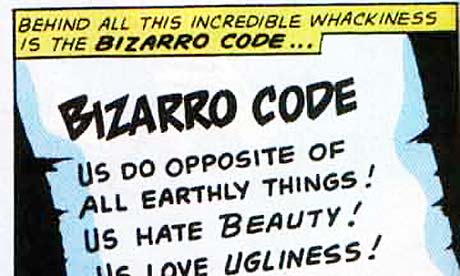
“Us punish little boys playing football for scoring touchdowns!”
Combine political correctness, the thoughts of Chairman Mao, incompetent administrators, kids and football, and this is the disgusting mess you get.
The Gwinnett Football League, a children’s sports program, allegedly fined one of its teams $500 and suspended its coach after an 8-year-old playing for the Lawrenceville Black Knights intercepted a pass and ran it back for a touchdown. In a normal sports league, run by sane people, where victory and achievement are appreciated, encouraged and celebrated rather than being stifled to allow losers to preserve their self-esteem when what they need is to be motivated to play better, the child would have had a joyful, memorable childhood experience. Not in the Gwinnett Football League, however. The young player was to learn that his failure to realize that taking advantage of his opponent’s poor play was considered bad sportsmanship in this Bizarro World* league —cruel, unkind, psychically scarring—and would result in his team being fined and his coach being suspended. You see, the touchdown constituted an infraction of league rules, because the GFL has a so-called “mercy rule” that prohibits a team from throttling a weaker squad by more than 33 points.
The parents of the child protested that their son had no idea he should do. Miss the throw intentionally? Run it back the wrong way for an opposition touchdown? Beg the other team to forgive him? The parents of the rest of the team’s players insisted that the fine and suspension were far too severe….for, you know, playing football in a football game. Being fined and penalized for breaching an appallingly misconceived rule that nobody with the brains of an egret thought through? Yes, I think that’s a reasonable cause for complaint.
Hilariously, the president of the league, who must have risen to his place in life after his planned career as pin setter didn’t pan out, told the media that news reports about the reason the team was fined were false. Erik Richards said the team was fined because it made a “mockery of the game” in other respects besides running up the score: laying on the ground, running off the field and mocking the other players. He explained that the penalty for violating the mercy rule is “only” $100.
What the league needs is a fine for incompetent and irresponsible oversight of a kids football league: Continue reading

There was another baseball Ethics Hero who emerged on the last day of the regular season yesterday. File it under “Sportsmanship.”
Houston Astros secondbaseman Jose Altuve (at less than 5′ 5″, the shortest athlete in a major professional sport) began the day hitting .340, three points ahead of the Tigers’ Victor Martinez, who was at .337. Even with all the new stats and metrics showing that batting average alone is not the best measure of a baseball player’s offensive value, a league batting championship remains the most prestigious of individual titles, putting a player in the record books with the likes of Ty Cobb, Ted Williams, Rogers Hornsby, George Brett, Ichiro Suzuki and Tony Gwynn. It’s still a big deal. If Altuve didn’t play in Houston’s meaningless last game, Martinez would have to go 3-for-3 to pass him, giving the DH a narrow .3407 average compared with Altuve’s .3399. By playing, Altuve would risk lowering his average, providing Martinez with a better chance of passing him.
Many players in the past have sat out their final game or games to “back in” to the batting championship, rather than give the fans a chance to watch a head to head battle injecting some much-needed drama to the expiring season. ESPN blogger David Schoenfield recounts some of those episodes here.
Altuve, however, gave Martinez his shot. He played the whole game, had two hits in his four at-bats, and won the American League batting title the right way—on the field, not on the bench. (Martinez was hitless in three at bats.)
The conduct, simple as it was, embodied fairness, integrity, courage, respect for an opponent, and most of all, respect for the game.
Sportsmanship lives.
—Rookie Cleveland Browns quarterback Johnny Manziel, aka “Johnny Football,” brushing off his raised middle finger flashed at the Washington Redskins bench during their exhibition game.

Johnny’s Number One!
Good luck to the Cleveland Browns, who drafted a player that earned a reputation for being a a hard partying, rules-defying jerk in college, and then watched him get his first publicity as a pro by, surprise, being a jerk. Then, true to form, Manziel chastised himself, not for behaving in an uncivil, unsportsmanlike, unprofessional fashion, but for being caught at it. And he’s supposed to be the field leader of the team.
Great role model, that kid. If he does well, I think Cleveland may have a real juvenile delinquent problem in a few years.
Stay classy, Johnny.
______________________________
Source: The Blaze

“Boy, I’m glad Wainwright threw me a pitch a Little Leaguer could hit, because I’m just about done. I sure hope he tells everyone about it,..”
St. Louis Cardinals pitching ace Adam Wainwright lost MLB’s 2014 All-Star Game for the National League (though he was not the official losing pitcher). He gave up three quick runs in the first inning, and his squad never overcame the deficit, losing 5-3. As a result, his league’s champion at the end of the season, which could conceivably be his own team, will labor at a disadvantage: the league that wins the All-Star game get the home advantage, which recently, at least, has been decisive.
None of that reflects poorly on the pitcher. He got hit hard by a group of likely Hall of Famers (Derek Jeter, Mike Trout, Robinson Cano and Miguel Cabrera) in an exhibition game that doesn’t count in the standings. So what?
This, however, does reflect poorly on Wainwright:
The game began with a long ovation for AL lead-off batter Derek Jeter, the Yankee shortstop who is retiring after this season following a storied career. Wainwright, in what appeared to be a class move, placed his glove and the ball on the mound in Minnesota’s Target Field and stepped off to applaud, becoming, for a moment, just another fan giving a well-earned tribute to an all-time great. Then, three pitches into Jeter’s at bat, the living legend lined a ringing double to right field as if scripted, giving the crowd another chance to cheer, and triggering the American League’s winning rally. Later, in the dugout being interviewed on live TV, Wainwright announced that he had given Jeter “a couple of pipe shots”—that is, grooved his pitches so Jeter could get a hit.
Horrible. This is wrong in every way, no matter how you turn it—poor sportsmanship, disrespectful to Jeter, damaging to the game, and dumb: Continue reading
 As you probably know by now, California Chrome attempted to become the 12th horse and first since Affirmed in 1978 to win the Triple Crown and join a fabled group that includes such esteemed equines as Gallant Fox, Whirlaway, Citation and Secretariat…and fell right on his long face, finishing fourth. The winner of the Kentucky Derby and Preakness lost the Belmont Stakes to 9-1 long-shot Tonalist, who did not run the opening two races of the series. Ah, there’s the rub. Part of the challenge of the Triple Crown, a not insubstantial part, is that it is an endurance test. CC lost to a fresher horse.
Well, you know, that’s why winning the Triple Crown is so special and the horses who achieved it are the sport of racing’s four-footed immortals. It’s hard. When your horse loses the final and most difficult (it’s longer) of the three races after winning the first two, as many horses have, the correct, classy and ethical response is well established. It doesn’t take any imagination. You say that you congratulate the winning stables, the owners, the horse and the jockey, that of course you are disappointed, that your horse ran the best race he could but on this day it was not good enough. Then you shut up, and let sportswriters make excuses for the loss, if there are excuses to be made. Continue reading

And that lesson is: sportswriters have no clue when it comes to ethical analysis, or any other kind of analysis, really.
Tomorrow the results of the Major League Baseball Hall of Fame voting will be announced, and those former stars receiving at least 75% of the vote will be officially enshrined as immortals. Every year before the steroid era, the voting was preceded by weird arguments that made no sense, like the one about whether a former player should be a “first time electee.” Some writers would concede that a given player was great enough for the Hall, but not vote for him because “he wasn’t good enough to get in on the first ballot.” This was, and is, ridiculous, and unfair. The question is, “Was this player great enough to deserve enshrinement, when the standards are unchanging?” It’s a yes or no question. “Maybe next year” is not a valid answer.
Thus I suppose that it should be no surprise that these same clods, faced with some really difficult ethical lines to draw in the wake of the so-called steroid era, show themselves to be not merely dunces, but ethics dunces as well. I just heard a sportswriter, Marty Noble, tell a baseball talk show that he won’t vote for any player about whom there is any question whatsoever regarding whether he cheated with steroids, including doubts based on rumors, whispering campaigns, looks, suspicions and drug tests. But he still voted for some players, he says. Well, that’s just wrong, by his own standards—he can’t be 100% sure about anyone. He also said that while he can vote for up to ten players, and agreed that there are more than ten players this year who have strong Hall credentials, he’s only voting for three. Why? Because, he says, the induction ceremony is too long.
Yes, he’s an idiot. Continue reading

Letting a fish you’ve caught swim off to be hooked another day doesn’t exactly place you in the altruism big leagues with Oscar Schindler, but one takes one’s ethical opportunities as they arrive. For Mark Clemishire, a fly fisherman from Skiatook, Oklahoma, this qualifies as exemplary ethics, and attention should be paid.
It was about a month ago that Clemishire was plying his craft in Lake Taneycomo, Missouri, and after an epic battle, caught a monster rainbow trout he immediately dubbed Troutzilla. Measured at 31 inches long with a girth of 22 inches, Troutzilla almost certainly weighed more than 20 pounds, which easily surpassed the existing record for a rainbow trout. To get credit for his achievement, a big deal for a serious fly fisherman, Clemishire’s trout had to comply with Missouri Department of Conservation rules that required the catch to be weighed on department certified scales. But instead of etching his own name in the record books, embracing immortailty and a place in the Fly Fishermen’s Hall of Fame, if there is such a thing, Mark had some photos taken of him posing with his Catch of the Day, and let Troutzilla go free. Continue reading

I decided to start with the Best in Ethics this year, in contrast to other years, on the theory that it would get things off to a positive start in 2014. What it did, instead, was make me realize how negative Ethics Alarms was in 2013. Either there wasn’t much positive going on in ethics, or I wasn’t seeing it. My thanks to those of you who send me nominations for Ethics Heroes (and other stories); even when I don’t write about them, they are valuable. Please keep them coming. In the meantime, I pledge to try to keep the jaundice out of my eye in 2014. Things just can’t be as dire as they seemed last year.
Could they?
The U.S. Supreme Court declared the Defense of Marriage Act unconstitutional, paving the way for the universal legalization of gay marriage. Yes, it was a legal decision, but it was also based, as all such culturally important decisions are, on a societal recognition that what was once thought to be wrong and immoral was, in fact, not. This is ethics, an ongoing process of enlightenment and wisdom about what is right and wrong, and the U.S. Supreme Court did its part. Continue reading
 Ethics Alarms
“Is this a deflated ball I see before me?”
“Inflategate”—-the developing NFL scandal about the New England Patriots’ under-inflated, more easily thrown footballs in the team’s last play-off win and perhaps others—is a big deal to 1) people who hate the Patriots; 2) football fans who care about whether their game has any integrity and 3) people like me, who think there is no justification for cheating, in sports, in business, or in life. Those who argue that it’s “much ado about nothing,” usually without being able to quote a line or explain a plot turn from the Shakespeare comedy they’re alluding to, do so because 1) they are Barry Bonds fans; 2) they don’t know the difference between a football and a plantain, and don’t care. except that they wouldn’t want to eat a football by mistake; 3) they are typical NFL football fans and want to “oh, pshaw!” anything that reflects badly on the sport that gives their brutal lives meaning, 4) they are John Edwards, or 5) they are members of the New England Patriots organization, and perhaps were involved in the ball deflation.
Pats quarterback Tom Brady (that’s how you know I’m from Boston: I call the team the “Pats”) gave a highly unconvincing press conference yesterday in which he maintained that he would never notice that the tool of his trade that he has plied approximately since he exited the womb felt different than usual, and, like his coach, the brilliant and soulless Bill Belichick, has no idea how the team’s balls got deflated. The credibility of that claim was severely undermined for me by Brady’s use (“This isn’t ISIS…”) of my least favorite rationalization of them all on the Ethics Alarms compendium, the infuriating #22:
(Or someone whose coach had the equipment guy deflate the footballs.)
Now comes blogger Windypundit to expand on my derision of Brady’s embrace of #22 from a different and useful perspective. Here is his Comment of the Day on the post, “Unethical Quote of the Month: Patriots Quarterback Tom Brady”: