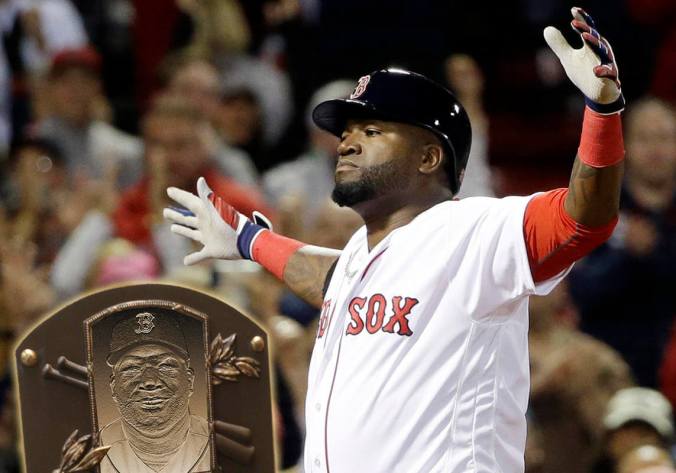
Ethics conflicts force us to choose when multiple ethical principles and values point to diametrically opposed resolutions. Often, a solution can be found where the unethical aspects of the resolution can be mitigated, but not this one. It is a tale of an ethics conflict without a satisfactory resolution.
I didn’t want to write this post. I considered waiting five years to write it, when the issue will be unavoidable and a decision mandatory. Today, however, is the day on which all of Boston, New England, and most of baseball will be honoring Red Sox designated hitter David Ortiz, who will be playing his finale regular season game after a 20 years career. His 2016 season is quite possibly the best year any professional baseball player has had as his final one; it is definitely the best season any batter has had at the age of 40 or more. Ortiz is an icon and a hero in Boston, for good reason. Ortiz was instrumental in breaking his team’s infamous 86-year long “curse” that saw it come close to winning the World Series again and again, only to fail in various dramatic or humiliating ways. He was a leader and an offensive centerpiece of three World Champion teams in 2004, 2007, and 2013. Most notably, his record as a clutch hitter, both in the regular season and the post season is unmatched. You can bring yourself up to speed on Ortiz’s career and his importance to the Red Sox, which means his importance to the city and its culture, for nowhere in America takes baseball as seriously as Beantown, here.
That’s only half the story for Ortiz. Much of his impact on the team, the town and the game has come from his remarkable personality, a unique mixture of intensity, charm, intelligence, generosity, pride and charisma. After the 2013 terrorist bombing of the Boston Marathon, which shook the city as much as any event since the Boston Massacre, Ortiz made himself the symbol of Boston’s anger and defiance with an emotional speech at Fenway Park. Then he put an exclamation point on his defiance by leading the Red Sox, a last place team the year before, to another World Series title.
Performance-based arguments against electing Ortiz to baseball’s Hall of Fame are, at this point, untenable. Entering his final game, Ortiz had 541 home runs, (17th all-time), 1,768 RBI, (22nd), and 632 doubles, (10th). He is only the third player in history to have more than 500 home runs and 600 doubles. He ranks among the greatest post season hitters in baseball history with 17 home runs, 60 RBI and 21 doubles. His postseason average is .295 with an on base percentage of .409, a slugging percentage of .553 and a .962 OPS (the sum of the two.) Most great players did worse in the post season than during the regular season, for the obvious reason: the competition was better. Ortiz was better, which informs regarding his character and dedication.
The one lingering argument against admitting Ortiz to the ranks of Ruth, Williams, Aaron, Mays, Cobb, Hornsby, Griffey and the rest is that he has spent most of his career as a designated hitter, the American League’s 1973 invention, much reviled by National League fans and baseball traditionalists, designed to allow real batters relive fans from watching pitchers make fools of themselves at the plate. This makes him “half a player,” the argument goes. No designated hitter has ever been elected to the Hall, so that argument has prevailed so far. It was always a weak one—how did being lousy fielders like so many Hall of Fame sluggers make them greater players than one who never hurt his team at all with his glove? Now that a designated hitter has shown himself to be in the elite ranks of all the greatest batters, the argument sounds more like hysterical anti-DH bias than ever.
I should also note, before getting to the main point of this post, that I love Ortiz. I am a lifetime Red Sox fan, Boston born, bred and marinated, and Big Papi is special. He is one of the most interesting and admirable sports figures of my lifetime, and what he has meant to my city and my favorite sport is beyond quantifying. Few great athletes demonstrate persuasively that they are also great and admirable human beings. Ortiz is one of them.
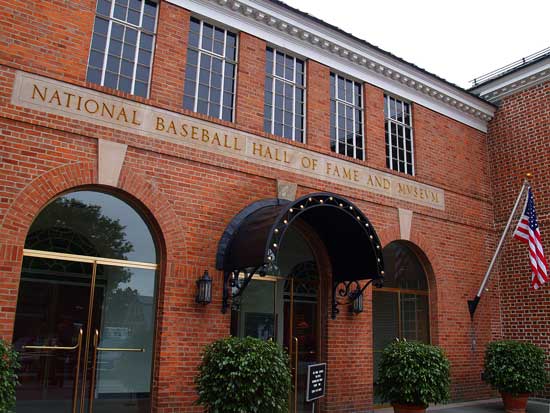
Nonetheless, it is crucial that David Ortiz not be elected to the Hall of Fame when he becomes eligible five years from now, and that he never be admitted. On the matter of assessing the fitness for baseball honors of those who defiled the game by inflating their statistics, changing the outcome of games and harming players who abided by the rules, David Ortiz is a human slippery slope. Ortiz deserves to be in the Hall based on all admission criteria, including character and sportsmanship, but his admission will open the doors wide for players who are unfit, polluting the Hall of Fame and baseball’s values forever.
It’s not worth the trade off. This is the ethics conflict: one cannot be fair and just to “Big Papi” without doing widespread harm to the sport, and I would argue, the entire culture. Continue reading


 Ethics Alarms