KABOOM! The Hypocrisy of Robert Gates

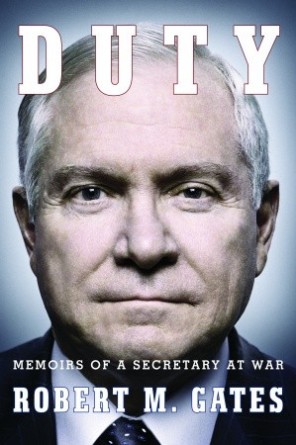
exploding_head2My head, already weakened by the discussion of “Duty,” Robert Gates’s tell-all memoir, finally detonated when I read the following passage:

“I was put off by the way the President closed the meeting. To his very closest advisers, he said, “For the record, and for those of you writing your memoirs, I am not making any decisions about Israel or Iran. Joe, you be my witness.” I was offended by his suspicion that any of us would ever write about such sensitive matters.”

Yes, Gates actually wrote that he was offended that the President would have so little trust and respect in his closest advisors that he believed some of them would betray that trust by including details of confidential meetings in their memoirs, as Gates now betrays the President’s trust by including details of that very same confidential meetings in his memoirs.

How could he write this? Did he really not perceive the obvious hypocrisy? The irony? Is he admitting that he had an unjustifiably high opinion of his own professionalism that he now is recanting? Did he think that statement by Obama gave him permission to reveal such confidences while the President was still wrestling with some of the same matters they involved? Where was the editor who is supposed to keep an author from undermining his own credibility by making blatantly hypocritical statements?

___________________________

Pointer: Althouse

Source: Slate

Betrayal: Robert Gates Gets Even

dutygates

When General George Marshall, World War Two military leader, former Secretary of State, and architect of the Marshall plan, was offered a million dollars to write his memoirs in the 1950s, he demurred, saying that there was no way he could write a truthful memoir without undermining people still at work in the government and military.

And then there was David Stockman…Paul O’Neill

…and Robert Gates.

Bottom line: these people betray their colleagues for money, and often, as is Robert Gates’s case, out of spite. Former Defense Secretary Gates, like the others, was given an opportunity to serve his country in a high executive branch position. He was privy to policy discussions and the inner workings of the administration. He was trusted. To reveal details of his tenure while the administration he worked for is still in office, done in a way designed to provoke criticism and embarrass his former associates and boss, is the height of disloyalty, and a breach of implicit confidentiality.

The honorable and ethical way to write such a book would be to wait until it could not actively interfere with the work of the Executive Branch. The people may have a right to know, but they do not have a right to know everything immediately. People in high policy-making positions must be able to be themselves, express opinions, and have productive meetings with the confidence that those they work with are not collecting notes for a future Book-of-the-Month sellout. Books like Gates’s undermine that trust, make it more difficult to get candid and controversial opinions and ideas into the decision-making process, and ultimately hurt all of us. The former  Secretary and those who appreciate the additional ammunition for administration-bashing can assemble a lot of rationalizations for the  book, but they all boil down to “Everybody Does It,” the most threadbare and cowardly rationalization of all.

The ethical thing would have been for Gates to write the book in a few years, or not to write it at all. The ethical conduct for the reading public is to discourage betrayals, no matter who is the one betrayed, by sending such books to the remainders bin.

I suppose I should mention that except for the substitution of Robert Gates’ name for that of Paul O’Neill, and replacing “Treasury” with “Defense,” every word above was written in 2004, when I condemned the sell-out of fired Bush Treasury Secretary O’Neill, who had just provided the information used in a Bush-bashing tell-all called “The Price of Loyalty: The Education of Paul O’Neill.” (Yes, the old Ethics Scoreboard is coming in handy today.) Every word applies with equal force to the new memoir by Gates, who was President Obama’s Secretary of Defense and whose current tell-all attack has set Washington buzzing, except that Gates’s conduct is ethically far worse. Continue reading

Heeeeeeeeeere’s JOHNNY’S BETRAYAL!!!!

henry_bushkin_johnny_carson

Lawyers are forbidden by the ethics rules of their profession in every state from divulging the secrets of their clients, their former clients, or even their dead former clients, except in the rare circumstances when doing so will save a life or prevent a crime, and often not even then. Client confidences include all information a lawyer learns about a client in the course of the representation whether or not it is germane to the representation or not, if the client would be embarrassed by the information or would want it to remain secret.

The duty to maintain client confidences goes to the core of the professional relationship between citizens and their lawyers, and any attorney who breaches it not only harms his or her client but undermines trust in the entire profession as well. So sacrosanct is the duty that a Massachusetts court agreed with the Fall River law firm that represented Lizzy Borden in her famous murder trial, when Lizzy’s heirs tried to force it to reveal whether she did, in fact, “give her mother forty whacks” (and her father forty-one) with an ax, that it could not reveal Borden’s secrets even in the interests of history.  The firm, said the court, was quite correct: Miss Borden hired it based on its lawyers’ assurances that her secrets were safe with the firm forever, and to allow otherwise now, even a century after the crime, would betray her trust and undermine the profession’s integrity. The Massachusetts Bar agrees.

So how can it be that Henry Bushkin, for decades the late Johnny Carson’s personal lawyer and thus charged with keeping the secrets of the famously reticent comic’s personal life, is now publishing a tell-all book filled with juicy stories about his conveniently dead client? Continue reading

Just What Every President Doesn’t Need…A Traitor

"My observations while serving in the President's trust are held in strictest confidence, and...HOW much? Sure, I'll write a book!"

“My observations while serving in the President’s trust are held in strictest confidence, and…HOW much? Damn! Sure, I’ll write a book!”

President Obama is hardly the first President to be blind-sided by a “tell-all” exposé authored by someone who had an obligation to keep his mouth shut and his keyboard quiet. The unethical practice of a President’s former advisors, cabinet members, secret security agents, servants and others who held his trust cashing in and publishing often bitter, agenda-driven books detailing juicy and uncomplimentary details of what went on behind closed doors began gaining steam during the Reagan years (something else to detest David Stockman for) and has accelerated in every administration since.

The latest sniper shot from a grassy knoll is the work of Vali Nasr, a professor and former senior State Department adviser who worked with Richard Holbrooke, previously Obama’s special envoy to Afghanistan and Pakistan. In his new book, which, of course, had to be published while Obama was still in office to have a chance of making the former advisor the money he craves, Nasr relates details of what he regards as the incompetent White House foreign policy decision-making apparatus, in which vital calls that should have been left to experts were run through Obama’s political team, whose judgment was based on polls and narrow, short-term political considerations. Continue reading

A Secret Service Betrayal

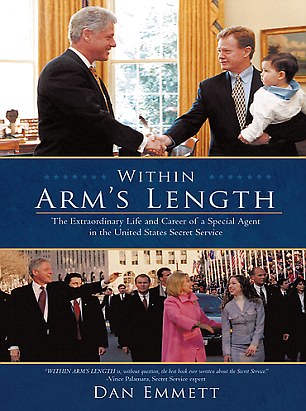
A despicable former Secret Service agent named Dan Emmett has self-published “Within Arm’s Length,” a tell-all  book about his work protecting the Clintons.  I’m not going to repeat any of his stories, and nobody should read his book either. This kind of thing is another fever on the way to the complete death of trust and professionalism.

Emmett’s job was to guard the First Family, and as part of his job he saw them all in private and unguarded moments. The Clintons had to trust that his sole objective was to ensure their safety, not to gather juicy material for a book, and they should not have had to worry about whether every stray remark or imagined slight would later find its way to the internet. “Within Arm’s Length” is nothing less than betrayal, and in my view, it falls just short of treason, and perhaps not short at all. Undermining the relationship between the Secret Service and the President of the United States, which this book does, threatens the safety of future Presidents. For agents to do their jobs, they must be trusted to the extent that nothing is withheld from them out of fear that they will disclose it. Emmett proves that such unquestionable trust is unwarranted, and in this sad era where betrayal is rewarded or shrugged off as predictable, probably impossible. Continue reading

A Batboy Sells Out His Heroes

Don't trust him, Roy...he's doing research for a book!

Luis Castillo became a batboy for the New York Yankees at the age of 15, and for eight baseball seasons shared the clubhouse with his hometown heroes. Now he’s cashing in, having written a tell-all memoir of his experiences  that dishes on Derek Jeter, Alex Rodriguez, Roger Clemens and others, all of whom trusted him to be fair, respectful, and discreet.

The recurrent theme from the media’s commentators, which I heard repeated on CNN this morning as it hosted Castillo in his book-hawking efforts (in this case he told an embarrassing anecdote about Yankee catcher Jose Posada) is that “Castillo is able to divulge Yankee secrets in his new memoir because he was part of the last group of batboys who did not have to sign confidentiality agreements.”

This is accurate, but wrong. It is also typical of what passed today as journalistic ethics. Continue reading

Unethically Leaked Unethical Manuscript Shows That Sarah Palin Is Unethical

The Anchorage Daily News has obtained a leaked (read: stolen) manuscript of an unpublished book detailing a close former aide to Sarah Palin’s discovery of the Republican star’s many character flaws. Among other items, the book suggests that she knowingly violated federal election laws.

Now what? Let’s run down the ethical docket: Continue reading

Ethics Hero Emeritus: Robert M. McElwaine, 1925-2010

Every time I hear about a new tell-all book by a famous person’s former lover, spouse, political aide or appointee, full of embarrassing revelations about what celebrities, political leaders or admired (or reviled) historical figures did or said behind closed doors or in the dead of night, I admire Bob McElwaine just a little more. When he died this month, the Washington Post obituary described him as a man who knew how to keep a secret. He did, but he was much more than that.

Robert McElwaine was a gentleman. Continue reading

The Trouble With Sarah

A toxic mixture of elitism, class bias, sexism and the liberal slant of the media has made Sarah Palin the most unfairly treated public figure in memory. Even when the double standards were obvious–Palin  derided as “unqualified” to lead, when the Democratic presidential choice had even less relevant experience; non-stop portrayals during the 2008 campaign as a loose-cannon flake, while the Democratic vice-presidential candidate was largely ignored despite a long and hilarious career as…a loose-cannon flake; David Letterman’s long refusal to apologize for his joke about Palin’s young daughter being sexually assaulted, despite the taboo against using the young children of public figures as joke fodder—the attacks have never abated or retreated to any reasonable standard of fairness. Continue reading