Ethics Quiz: The 9-11 Memorial Museum Restaurant

" So...who's hungry?"

” So…who’s hungry?”

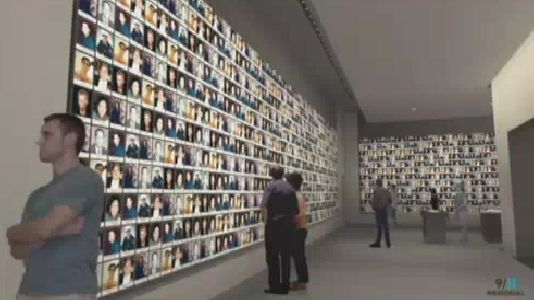
I’m sure this will come as a shock to some, but there are ethics controversies that I do not have strong opinions on, because I think both sides have strong ethical arguments. The dispute over whether the planned restaurant at the recently opened memorial and museum on the site of the Twin Towers bombing is one of them.

Con is  stated succinctly by New York Post columnist Steve Cuozzo, who wrote, “A bar and grill by any name on top of burnt fire trucks and human ashes is just plain gross.” Also being criticized is a black-tie party held at the museum to celebrate the opening. Said a family member of a firefighter who died that day: “This is the final insult and desecration of these 9/11 remains.”

The Pro, or at least the “It’s no big deal” position, is laid out by Ann Althouse, who wrote:

“At some point the taking of offense itself becomes offensive. Maybe out of respect for the dead, no one who still walks the face of the earth should ever laugh or take pleasure in anything every again. More than 100 billion human beings have died, perhaps right where you are standing/sitting/reclining right now. How dare you ever do anything? Look out your window and visualize the ghosts of all the human beings who, over the course of history and prehistory, died within that view. Will you mourn for them… ceaselessly… until you are one of them?”

The ethics issue is obviously respect. What is enough, and what is disrespectful? The analysis involves finding the right analogy, perhaps. There is a gift shop and restaurant at the Gettysburg Battlefield Visitors Center, but not on the site of Pickett’s Charge. The Holocaust Museum has a gift shop and snack bar as part of the complex, but nobody was exterminated in Washington, D.C. There’s no gift shop or snack bar at the Tomb of the Unknown Soldier; you can’t buy a sandwich at the Alamo. Is the 9-11 restaurant like the one at the Pearl Harbor museum, or is it like having a fish and chips eatery over the SS Arizona? The Pennsylvania site where Flight 93 crashed is being treated as hallowed ground, while the section of the Pentagon where its victims perished on 9-11 is back to being a workplace.

Is this just the Ick Factor,  something that feels a little “off,” like watching musicals and comedies in Fords Theater with Lincoln’s empty, ghostly box looming over the stage, or something more?

Your Ethics Alarms Ethics Quiz today…

Is placing a restaurant over the 9-11 Museum, on the site where 3000 people were murdered, disrespectful?

Continue reading

The Cruelest Month And The Duty To Remember

sultana-ablaze

If we have the education, curiosity, perspective and respect for our origins and those who have gone before us, the calendar is a source of constant reminders of what matters in life, and how we can be better citizens and human beings. It is a common belief among Millennials, and a lot of older Americans too, that history is irrelevant to their lives, and this is both a fallacy and a self-inflicted handicap. Not that keeping history in mind is easy: in this month, which T.S. Elliot dubbed “the cruelest,” paying appropriate respect by remembering is especially difficult.

Still, respecting history is our duty. It won’t be remembered, perhaps, but in April, 2012, a 23-year-old drunken fool named Daniel Athens was arrested for climbing over a barrier to urinate on a wall at the Alamo. Monday, a Texas judge threw the book at him, sentencing him to 18 months in state prison for vandalizing a National Monument and a shrine. The sentence seems extreme, and is a good example of how the law is a blunt weapon with which to enforce ethics. The Alamo has near religious significance in Texas, brave men died there, and the ruins serve as a symbol of critical virtues like loyalty, sacrifice, dedication, courage and patriotism. Athens, himself a Texan, defiled the memory of the fallen and symbolically rejected the values and heritage of his community and fellow citizens. Unfortunately, the harshness of the sentence will create sympathy for him: 18 months for peeing? But how else does a culture reinforce the importance of respect for the past? I don’t have an answer. Perhaps I would have sentenced him to take an exam on the lives of Travis, Crockett, Bowie, Seguin and the rest, as well as the siege itself, and imposed the jail term only if he flunked.

Yesterday, Major League Baseball celebrated the heroism and transformative life of Jackie Robinson, who broke baseball’s color barrier on April 15, 1947 by becoming baseball’s first black player, setting in motion powerful forces that propelled the cause of civil rights. Every player wore Robinson’s now retired uniform number 42, and there were commemorative ceremonies in the ball parks where it wasn’t too cold and wet to play ball. This remembrance had a difficult time competing with tax day, as history usually does when our immediate life concerns beckon.

Other important historical events deserving reflection, however, were more or less ignored entirely, for April 15 is a historically awful day: Continue reading

Ethics Hero Emeritus: Aitziz Hasan (1997-2013)

aitzaz

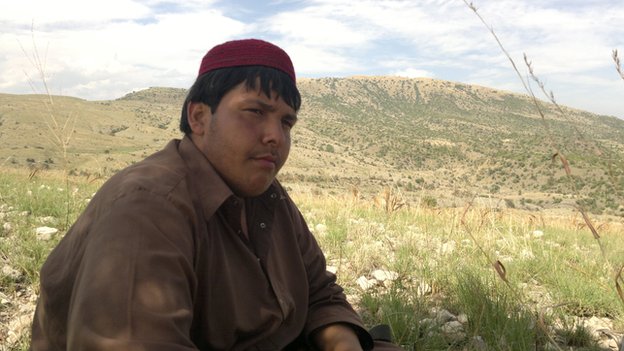
Aitzaz Hasan, 15, was  standing with fellow students outside his school last week in Ibrahimzai, a region of Hangu in north-western Pakistan. They noticed a man approaching wearing a vest laden with explosives.  They knew what was about to happen. There were over 2000 children at the school,and Aitzaz told his friends that someone needed to stop the suicide bomber from getting close enough to harm them.

According to witnesses, Aitzaz approached the terrorist, confronted him, and tackled him to keep him from getting any closer.

The suicide bomber detonated his vest, killing himself and the brave boy.

This is by far the shortest biography of any of the Ethics Heroes enshrined here in the Ethics Alarms  Heroes Hall of Honor. It is far from the least impressive. This young man, whose life had barely begun, made the ultimate sacrifice to save the lives of others. No one of any age should have to face the choice Aitzaz had; no one  should ever have to grow up under conditions that would impose such an ethical challenge on anyone. Yet when the crisis arose, this young man had the  courage and values to do what all nations honor soldiers and other heroes for doing to preserve civilization and human life through the centuries: he faced the challenge, put the lives of others before his own, fixed the problem, ended the threat, and died. Continue reading

Print The Legend Ethics: The “War of the Worlds” Panic

OrsonWellesDailyNews

One of the worst results of an untrustworthy news media is that it becomes difficult, as time passes, to determine with any certainty what the truth is.

A classic example is on display today, in Slate, which celebrates the 75th anniversary of young, svelte, Orson Welles’ famous Halloween Eve broadcast of his radio adaptation of H.G. Wells’ “War of the Worlds,” with no Tom Cruise or Dakota Fanning but a nice conceit that involved telling the story through fake news flashes and eye-witness interviews. (One reporter is fried on the air by the Martian invasion vehicles.) An new NPR program and a PBS documentary both tell the familiar story of how the realistic-sounding radio play caused widespread panic among radio listeners who missed the opening credits, leading them to think that Earth was really under attack. Newspapers of the day headlined mass panic, and gave accounts of citizens running for cover, huddling in the basement, and cringing in terror.  The episode made Orson Welles a national celebrity, and launched him on his meteoric, long and strange career.

According to Slate authors Jefferson Pooley and Michael Socolow, it never happened. Declaring the story of the “War of the Worlds” panic a myth, the authors state without equivocation that the newspaper accounts, headlines, commentary and interviews, were fabricated:

“Radio had siphoned off advertising revenue from print during the Depression, badly damaging the newspaper industry. So the papers seized the opportunity presented by Welles’ program to discredit radio as a source of news. The newspaper industry sensationalized the panic to prove to advertisers, and regulators, that radio management was irresponsible and not to be trusted. In an editorial titled “Terror by Radio,” the New York Times reproached “radio officials” for approving the interweaving of “blood-curdling fiction” with news flashes “offered in exactly the manner that real news would have been given.” Warned Editor and Publisher, the newspaper industry’s trade journal, “The nation as a whole continues to face the danger of incomplete, misunderstood news over a medium which has yet to prove … that it is competent to perform the news job.” Continue reading

More Reasons Not To Vote For Mark Sanford

Mark Sanford evokes that stirring Civil War battle, the Alamo.

Mark Sanford evokes that stirring Civil War battle, the Alamo.

The unethical and increasingly ridiculous Mark Sanford, now in the process of losing what should have been a sage House seat for Republicans in South Carolina, has added the public crime of “making Americans dumber” to his list of disqualifications for public office.

Sanford was the rising star South Carolina governor—married, with children— who went AWOL on the job to have a  clandestine liaison with his South American mistress, using public funds in the process, and lying through his staff to cover his tracks. He didn’t have the courage or the decency to resign, nor did he have the common sense and decency to quietly disappear so he would stop embarrassing his wife, his state, Republicans, men, and Homo sapiens everywhere. Instead he returned to run in a primary for a House seat, and since Republican primary voters will apparently vote for anyone or anything, won. Now he’s running behind in the polls to a Democratic candidate whose key qualification is that her brother is a popular TV comic.

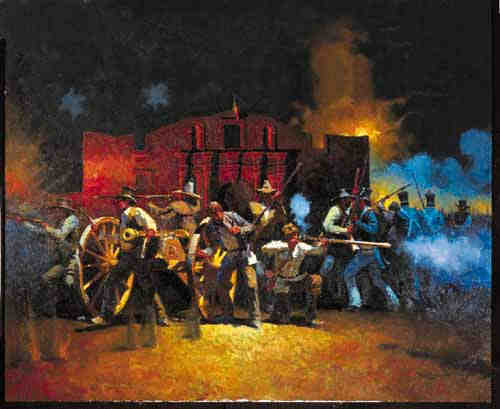
Sanford has run a full page ad in some newspapers, painting himself in heroic terms and comparing himself to the martyrs of the Alamo: Continue reading

Flashback: “What Hugo Alfredo Tale-Yax Can Teach America”

The Late Hugo Alfredo Tale-Yax

[Not many people were checking in on Ethics Alarms when I wrote this post in response to yet another example of bystanders choosing to do nothing when a human being was in peril. Some of the comments to the Alameda post, those making excuses for the 75 faint-hearted or apathetic citizens in that city who would rather gawk at a tragedy than try to stop it,  caused me to recall the essay, which explores related issues.  I wrote it, but I had nearly forgotten about the story; when I re-read it today, I got upset all over again.Here, for the second time, is “What Hugo Alfredo Tale-Yax Can Teach America.”]

The one with the premium-grade ethics alarms bled to death on the sidewalk. The people who never had theirs installed at all took pictures. Is this the way it’s going to be? Continue reading

Dancing With Thomas Jefferson: How Assholes Make the Law Spoil Life For Everyone

Coming to a place of honor and reflection near you.

On Saturday, the U.S. Park Police forcefully arrested five “Code Pink” protesters under the dome of the Jefferson Memorial for defying a recent Federal Appeals Court ruling that dancing at federal monuments was not constitutionally protected expression.

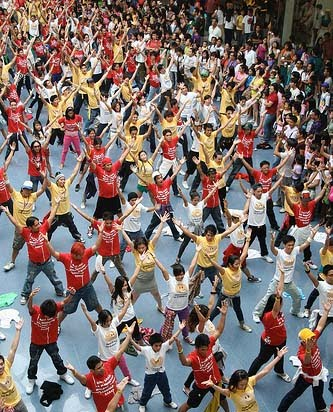
Perhaps you missed that ruling earlier this month, which was, I presume, made necessary by the realization that a flash mob could break out at any moment at the Lincoln Memorial or the Alamo. That was not the threat in 2008, however, when Mary Oberwetter was arrested, also at the Thomas Jefferson Memorial, for hoofing to celebrate Thomas Jefferson’s birthday.

She sued the National Park Service for violating her First Amendment rights, and on May 17 the U.S. Court of Appeals for the D.C. Circuit held that the Jefferson Memorial should have a “solemn atmosphere” and that dancing, silent or otherwise, was an inappropriate form of expression there. The appellate judges concurred with the lower court that the memorial is “not a public forum,” and thus demonstrators must first obtain a  permit. Demonstrations that require permits in the Park Service’s National Capital region are defined as

“…picketing, speechmaking, marching, holding vigils or religious services and all other like forms of conduct which involve the communication or expression of views or grievances, engaged in by one or more persons, the conduct of which has the effect, intent or propensity to draw a crowd or onlookers. [The] term does not include casual park use by visitors or tourists which does not have an intent or propensity to attract a crowd or onlookers.”

The Appellate Court wrote: Continue reading

In Search of Accountability, Fairness, Justice and a Champion: the Unending Persecution of Anthony Graves

Job would pity Anthony Graves

Governments and other bureaucracies are capable of unimaginable callousness, stupidity, and wrongful conduct, allowing individual fools to multiply their power to harm exponentially, and then to see an inhuman computer-driven monstrosity run amuck as everyone denies responsibility. You could not devise a better example of this process than what Texas is doing to Anthony Graves.

He is an innocent man convicted of murder in 1994 who was released last October after spending 18 years in prison, condemned to death. He had been convicted with fabricated evidence and coached testimony employed against him by former Burleson County District Attorney Charles Siberia, and a state investigation got a Texas judge to set Graves free. But the maw of Texas bureaucracy wasn’t through ruining his life. Continue reading

Oscar Ethics: Was Melissa Leo’s Campaign Wrong?

On a difficult day, I am not up to writing about heavy ethics issues, so instead I will comment on an ethics controversy that is as inconsequential as possible—one involving the Oscars.

Melissa Leo, a front-running Best Supporting Actress nominee for her role in “The Fighter,” courted controversy by violating one of the Academy Awards’ unwritten rules: “Don’t promote yourself for an Award—it’s tacky!” Leo personally placed Hollywood trade ads showing her in full glamor mode, a sharp contrast to her character in “The Fighter.” The text simply said “Consider,’ then below that, “Melissa Leo,” and in small print off to the side, the web address http://www.melissaleo.com. She argued that she needed to promote herself because her competitors were getting the benefit of big studio publicity, while she was not. Continue reading

What Hugo Alfredo Tale-Yax Can Teach America

The one with the premium-grade ethics alarms bled to death on the sidewalk. The people who never had them installed at all took pictures. Is this the way it’s going to be?

Hugo Alfredo Tale-Yax was a Guatemalan immigrant who lived in Queens, New York. His life was a mess; he was destitute, ill, and had no job or likelihood of getting one. When he saw a knife-wielding man apparently assaulting a woman on the street two weeks ago, however, he knew what his ethical obligations were. He rescued her by intervening in the struggle, and got stabbed, badly, for his actions. The attacker ran off, and so did the woman, who didn’t check on Hugo after he fell, and  never contacted the police. She also neglected to say, “Thanks for saving my life.” Continue reading