“Right To Offend: The Black Comedy Revolution” and the Duty to Remember

So much of the nation’s cultural health and societal values rely on our fulfillment of the duty to remember. Thanks to our incompetent and unethical education system and the increasing estrangement of American history from our popular culture, recent generations share so little important historical and cultural touchpoints as Americans that effective cross-generational communication is becoming impossible. Television could be a nostrum for this dangerous phenomenon, if only finding the constructive and informative programming were not a task akin to finding, as the saying goes, a needle in needle stack.

I was thinking about this after I stumbled upon the 2022 Starz documentary, “Right to Offend: The Black Comedy Revolution,” a two-part series that I only saw because I am briefly getting Starz free on DirecTV. I missed it entirely when it was new, and have never read or heard anything about it. I haven’t seen the whole series yet either, and only watched an incomplete stretch of Episode One. But that was enough to trigger several thoughts, and to make me schedule a serious viewing of the whole thing from beginning to end.

Among those revelations,

Continue reading

The Unethical Obscurity of Larry Doby

Yesterday was “Jackie Robinson Day” in baseball, with every player wearing the civil rights and baseball icon’s retired uniform number 42. April 15, 1947 is the day Robinson, following the bold plan of Brooklyn Dodgers General Manager Branch Rickey to desegregate baseball, officially broke the game’s color barrier in an event with national, cultural and societal significance. (I’ve written a lot about Jackie, a great man as well as a great baseball player.) Baseball is justly proud of its role in advancing civil rights (and justly ashamed of its long exclusion of black players before and after Robinson’s trailblazing), but commenter “Old Bill” reminded me this morning of the undeserved and unfair relative obscurity of Cleveland Indians great Larry Doby, the second black man to play Major League Baseball.

“It was 11 weeks between the time Jackie Robinson and I came into the majors. I can’t see how things were any different for me than they were for him,” Doby once said. Well, they weren’t. Doby’s courage and fortitude while battling bigotry and hostility to integrate what had been a white man’s game were no less than what Robinson displayed.

Lawrence Eugene Doby was born on December 13, 1923, in Camden, South Carolina. Larry’s father, David, was a stable hand, grooming the horses of many wealthy New Jersey families. When Larry was eight years old, his father died in a tragic accident. After that the boy was cared for by his aunt and uncle as well as his mother and moved from locale to locale, finally settling in Patterson, N.J. Even before graduating from high school, Doby was playing second base in the Negro Leagues under the assumed name of Larry Walker for the Newark Eagles. Despite is tender years, he was considered a rising star. He entered college, where he was a basketball stand-out, and was drafted and joined the Navy during W.W. II. Doby was honorably discharged from the military in January 1946, and inspired by the news that the Dodgers had signed a black player, Robinson of course, he changed his career plans from teaching to baseball. Doby sensed that the times they were a-changing. He rejoined the Negro League Eagles, believing that might be a path to the Major Leagues.

When his team went on to win the Negro Leagues World Series in 1946, Doby attracted the attention of maverick Cleveland Indians owner Bill Veeck, now best known as the man who sent a midget up to bat. Veeck, like Rickey, had long sought to integrate baseball, which for Veeck was the American League. He became convinced that Doby was the right player to do it. Veeck decided that he would purchase Doby’s contract and bring him up to join Cleveland right after the 1947 All-Star break. Doby’s white team mates on the Indians refused to look at or speak to him. Doby told an interviewer in 2002, “I knew it was segregated times, but I had never seen anything like that in athletics. I was embarrassed. It was tough.” 

He didn’t win a place in the Indians regular line-up until the next season, when the Indians won the AL pennant with him playing the outfield every day. That fall Doby became the first black player to hit a home run in the World Series, winning Game Four 2-1 and sending the Indians to a World Series victory the next day. A remarkable photo taken after Game Four showed Doby embracing white Cleveland pitcher Steve Gromek. (I was told that this photo is famous: I’ve followed baseball and baseball history most of my life, and I had never seen it. But there is a statue of Pee Wee Reese with his hand on Jackie Robinson’s shoulder! ) in what was supposedly a watershed for race relations.

Continue reading

The Trailblazer: Sidney Poitier,1927-2022 [Corrected]

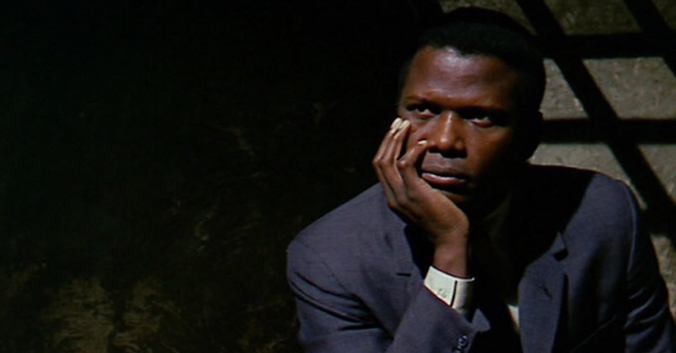
Sidney Poitier was as much a trailblazer for black actors in Hollywood as Jackie Robinson was for black athletes in baseball. I fear, however, that his memory will not be burnished and maintained as Robinson’s has. That will be an injustice. Ethics Alarms, as regular readers here know, is dedicated to the duty to remember, for remembrance is crucial to maintaining our culture and values.

Poitier was already fading from our cultural memory before he died, which he did today at the age of 94. He had only been intermittently active since the Seventies; his last major role in a film was in “Sneakers,” in 1992, and he only made two movies in the Eighties. Yet Poitier, almost single handed, demolished the cultural stereotype perpetuated by Hollywood of blacks as under-educated, poor, inarticulate athletes, musicians, lackeys, clowns or criminals. Doing so took persistence, courage, determination, sacrifice, and, obviously some impressive gifts. He was startlingly handsome, physically imposing, had a wonderful voice and projected strength, likeability and intelligence.

Continue reading

From The Ethics Alarms Archives: Remembering The Amazing Elfego Baca

The previous post was discussing the topic of great Americans, and commenter valkygrrl asked about the statuary in the Capitol, where each state is allotted two statues to honor its past notables. This, in turn reminded me of my favorite New Mexican historical figure (who is not honored in the Capitol) and one of my favorite figures of the Old West, Elfego Baca (February 10, 1865 – August 27, 1945). There’s a post about him (with 11,621 and counting, there’s a post here about just about everything), and I decided that this was a good time to re-visit it, and him.

Baca is not only a Mexican-American, it could be argued that he’d be a more worthy member of the President’s Garden than a number of the “heroes” currently on the list…more fun, definitely.

Here’s the lightly edited post from 2013…Meet Elfego!

As frequent readers of Ethics Alarms know, I fervently believe that history is important, and that we all have a duty to remember and honor the remarkable Americans who have gone before us, their exploits, triumphs, struggles and achievements, both for our sake—for we can learn much from them—and theirs. I am constantly discouraged by the inspirational stories and fascinating historical figures who have nearly been forgotten. The schools don’t teach our children about them, and popular culture ignores them. This weakens the flavor and the power of our shared culture: it is wrong, that’s all.

I want to do my part to help keep alive the name and the story of a Mexican-American who may have faded from memory because the events of his life seem more fictional than real. Indeed, for most of my life, until a couple of years ago, I thought Elfego Baca was a creation of Walt Disney’s creative staff, who wrote a ten episode mini-series  called “The Nine Lives of Elfego Baca” for the “Disneyland” show (“Now…from Frontierland!”) in 1958. I loved that series, but it never occurred to me that the tales of a gunslinging, lawyer-sheriff in Old New Mexico could possibly have any connection to reality.

But they did. The real Elfego Baca was, if anything, even more improbable than his fictionalized counterpart, portrayed by a very young and athletic Robert Loggia, who is best known as the toy magnate who plays “Chopsticks” on the giant keyboard with Tom Hanks in “Big.” Loggia was one of my favorite character actors; he was also the drug lord killed by Tony Montana in “Scarface,” and the tough general in “Independence Day,” among many other memorable roles in a long career

Elfego Baca was born in Socorro, New Mexico in 1865. Elfego’s father was a gunfighter, and he wanted to be one too, though on the side of the law, so he would be less likely to go to jail, like his father did, for winning gunfights. The New Mexico territory was soon in the middle of a silver rush, bringing many outsiders into the region, a lot of them pretty wild. Baca acquired a sheriff’s badge through a mail-order house, and also bought two six-guns, which he taught himself to use with deadly precision.

A cowboy named Charley McCarty got drunk in the town where Baca was working as a store clerk, and did all the things you remember from old Westerns: whooping it up, shooting in the air, breaking windows, harassing townspeople, and bullying Mexicans by making them “dance” as he shot at their boots. Elfego Baca, then 19 years old, deputized himself by pinning on his fake badge and by the authority invested in himself, by himself, arrested McCarty at gunpoint. Continue reading

Let’s Try To Remember Diahann Carroll, Shall We?

The problem is that when it comes time to honor those who have made a positive contribution to our country and culture, nobody remembers who they are. I confess, it drives me nuts. Today a medical technician revealed that she had no idea what “Ben-Hur” was. No chariot race, no galley slave scene. Well, she’s a drag on the culture. Catch up.

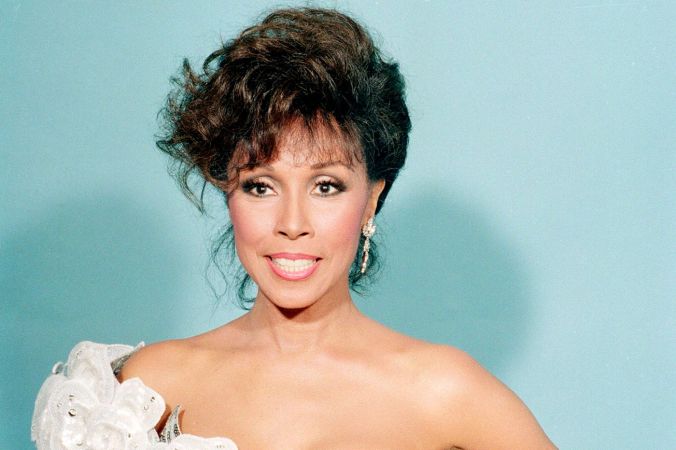
Actress and singer Diahann Carroll, 84, died on October 4, and her death received small and momentary notice. Yet she was another one of the brave, trail-blazing African Americans whose intelligence, charm, talent and willingness to take risks helped move the stubborn needle toward racial conciliation and away from bigotry. Of course, she was remarkable–unusually gorgeous, unusually talented, unusually intelligent. It never seemed like she set out to become a civil rights and cultural icon, but somehow the  position just found her. Most important of all, when she was given the chance to make white people think differently about black people, she did it. She also made it look easy. Continue reading

High Noon Ethics Warm-Up, 7/23/2019: Tennis Players, Baseball Players, An Unethical Football Player, And Tarzan

Where did the morning go?

1. Men don’t matter, so apparently this isn’t worth worrying about or criticizing... The same kind of body dysmorphia that has had feminists and psychologists attacking the media and popular culture for warping women’s concepts of acceptable and desirable body types is affecting men just as negatively, it seems. It’s just that nobody cares.

From Barbie to “Baywatch,” the culture’s emphasis on absurdly proportioned and gorgeous, never-aging women has been blamed for poor self-image, anorexia, breast implants, botox, obsessive dieting and exercising, and weight loss scams. The culture’s relatively recent obsession with male physiques that once would have been regarded as freakish, however, is seldom criticized.

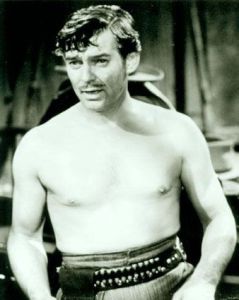
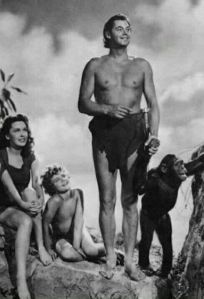
Where once he-men and heart throbs like Clark Gable, John Wayne and even Tarzan himself, Johnny Weissmuller, didn’t hesitate to appear in films looking fit but hardly muscle-bound, like this

and this…

and this…

..now even minor minor male characters on TV, in ads and movies have to show bulging pecs, swollen delts and a rock-like six pack, despite the fact that such bodies, unlike those of Gable, the Duke and Johnny, are impossible for most men to attain while maintaining a healthy and productive life-style.

A study published in June found that 22% of men aged 18-24 reported muscularity-oriented disordered eating. Lead researcher Dr Jason Nagata of the University of California says, “The drive for a bigger, more muscular body is becoming very prevalent. Their entire day is spent at the gym trying to bulk up. They may also be taking illicit supplements like steroids.”

Men, however, seldom seek treatment for the problem, and media and social critics continue to concentrate on the pop culture’s unhealthy effects on the body images of girls, not boys.

2. More reason to detest Tom Brady. Here’s father Tom Brady forcing his 6-year-old daughter to jump off a cliff:

Nice.

Hey! I get to use three favorite Ethics Alarms terms in one mini-post! This is res ipsa loquitur for irresponsible parenting. It is signature significance as well, because no good parent would do this to so young a child, even once. And it is moral luck: if Brady’s daughter had been injured in the jump, and she easily could have been, Brady would be widely and justifiably condemned, and possibly charged with child endangerment. That she was not hurt was just moral luck: it doesn’t change the ethics verdict on his conduct at all. Continue reading

Ethics Addendum: Bill Robinson, Fred Astaire, And The Good “Blackface,” The John Bubbles Connection

The post about Fred Astaire’s dark-make-up-assisted homage to tap-dancing legend Bill Robinson in “Swing Time” was incomplete, both historically and ethically. This post should remedy that.

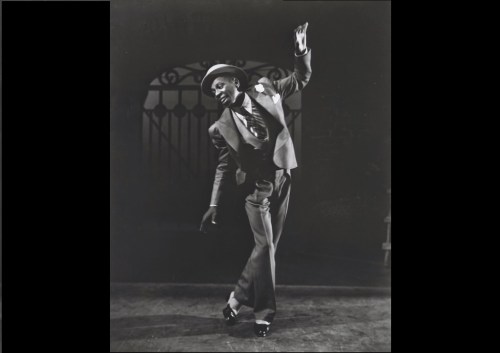
The dance number in question, “Bojangles of Harlem,” was, as I wrote in the introduction, Fred’s homage to two great black tap dancers who were teachers and inspirations for him, Bill “Bojangles” Robinson and John Bubbles.  The post explained why the salute to Robinson was important, but did not elaborate more on Bubbles. He was not as big a star as Robinson nor as well known, either at the time of the film or ever, and is less remembered today. Nevertheless he was an important cultural figure, and it can be argued that Astaire’s number was really more of a tribute to Bubbles than Robinson, not that many noticed.

First, you need to know about Bubbles. Born John Sublett (1902-1986), he teamed at the age of ten  with the six-year-old Ford Lee “Buck” Washington in a decades-lasting act, “Buck and Bubbles.” in which Buck stood and played piano and Bubbles sang and danced.  As adults, “Buck and Bubbles” ultimately  played at New York’s Palace Theatre, the London Palladium, the Ziegfeld Follies, the Cotton Club, the Apollo, and became the first blacks to perform at Radio City Music Hall. Their popularity allowed them to break the color barriers in theaters across the country. Continue reading

Bill Robinson, Fred Astaire, And The Good “Blackface”

We recently came through the usual Halloween bag of “blackface” controversies, and Ethics Alarms, as it has before, tried to guide the discussion to the material distinctions that social justice warriors, who strategically deal in absolutes when seeking power through real and contrived offense, refuse to acknowledge or are intellectually incapable of doing so. The short version of the Ethics Alarms message: make-up for legitimate theatrical purposes isn’t “blackface,” isn’t “racist,” and shouldn’t be object of knee jerk condemnation based on emotion or ignorance.

Today Turner Movie Classics showed “Swing Time,” the 1936 musical that is probably the high water mark in the Ginger Rogers-Fred Astaire canon. It has the best song (“The Way You Look Tonight”), the best novelty scene (Astaire pretending to be a klutz in a dance lesson with Ginger, then shocking her and her boss—and saving her job— by showing “what a great teacher she is” by dancing, well, like Fred Astaire) and arguably two of the best dances by the two, “Never Gonna Dance” and “Waltz in Swing Time.” The film also contains a controversial “blackface” number, “Bojangles of Harlem,” in which Fred pays homage to two great black tap dancers who were teachers and inspirations for him, Bill “Bojangles” Robinson and John Bubbles. Local TV stations have long been reluctant to show “Swingtime” because of guaranteed complaints that the number is racist, or, if they cut the number (which is unconscionable), complaints pour in from film and Astaire fans that they have defaced a classic out of misplaced political correctness.

If one argues that the number is “racist” because of Fred’s make-up, then one is necessarily arguing that no white performer can ever offer an admiring  salute to an African-American great by emulating him. Astaire’s choreography (by Hermes Pan) contained specific references to trademark steps and gestures by both Bubbles and Robinson, though more of the former than the latter. (Some would say, maybe even Fred, that this was because he didn’t dare set himself up to be compared to Robinson, whom many regard as the greatest tap-dancer of them all.) Blackface, as typified by minstrel shows, was a burlesque of negative black stereotypes. There isn’t a hint of this in Astaire’s number: he wears dark make-up because he is honoring two contemporary black dance stars who he knew, learned from, and respected. The make-up is the epitome of a legitimate theatrical device, and racially demeaning neither in intent nor effect. Those who see it as such are either deliberately misconstruing the number, or don’t know what they are talking about. (There is an unfortunate racially demeaning set piece that appears for a couple of seconds at the start, a large caricature of exaggerated black features. You can take the film out of 1936, but you can’t take 1936 out of the film.)

The ironic part of the effort to quarantine “Bojangles of Harlem” is that the number is one of the few reminders in our culture of who Bill Robinson was, and—here’s Jack on his “duty to remember” and cultural literacy soapbox again–he was an important figure in American theatrical, cultural and civil rights history that should be remembered.  Instead, Robinson is almost completely forgotten: I bet most of the NAACP members who get up in arms when TMC shows “Swing Time” have no idea how significant Robinson was, and the contributions he made to art and society. Continue reading

“Bombshell,” Hedy Lamarr, And The Duty To Remember

I alluded to Hedy Lamarr in an earlier post about my favorite celebrities, those who manage to be outstanding in multiple diverse fields at once. The glamorous cult actress is a prime example, being known publicly for her pulchritude and in much more rarefied circles as a brilliant inventor. I had been waiting for the release of the documentary–produced by Susan Sarandon!—about Lamarr, called “Bombshell: The Hedy Lamarr Story” ever since a friend and commenter here told me that it was in the works. Now it is on Netflix, and I watched it. You should too. I’ll just jot down some loosely connected thoughts about the ethics lessons of Lamarr’s life.

  • The sexual exploitation of young women in films may have been worse in the past than it is now, but Lamarr’s life is a reminder of how excruciatingly slowly cultures change. She was made infamous as the star of a sensational sex film in  Germany, shown naked, and also in an apparently explicit sex scene when she was too young (19) and naive to know what the director was doing.

The episode literally shadowed her life. Yet half a century later, very young actresses like Drew Barrymore and Dakota Fanning were similarly abused by directors, the main difference being that public attitudes now make the resulting stigma less permanent.

  • Antisemitism was sufficiently pervasive in the U.S. that Lamarr denied her Jewish heritage for much of her life.

Living a lie is not an ethically healthy existence, but Lamarr had few reasons to trust that she would be accepted for who she was….fewer than most, on fact.

  • There are few more vivid examples than Lamarr of a brilliant woman who rapidly learned that she had to rely on the favor of men based on her physical charms to have any chance of succeeding. Yet it is a bargain with the devil, for the price is not being taken seriously. The suppressed resentment and anger Lamarr reveals in interviews is palpable.

Sometimes I think it’s a mircale that women didn’t rise up and slaughter millions of men while they slept. They deserved it.

  • Hedy Lamarr is primarily remembered now as a running joke in “Blazing Saddles.”

Think about that. Continue reading

Comment Of The Day: “I Worry About Cary Grant”

Today’s Comment of the Day was spawned by the post about the fading of cultural memories of important film artists. texaggo4 has his doubts about my concerns, and whether the phenomenon is worth worrying about, or even a problem at all.

I admit, this topic is an unusually intense and personal one for me. It was the reason why I devoted a large portion of my life and creative energy for twenty years to the quixotic challenge of creating and trying to maintain a professional theater company in the Washington, D.C. area devoted to producing American stage works of quality and historical importance that were in danger of falling out of the American stage repertoire entirely, if they were not already forgotten. We proved that many shows thought hopelessly dated or politically incorrect still worked (“The Boys in the Band,” “The Seven Year Itch,” “Native Son,” “The Cradle Will Rock”…), found genuine masterpieces that almost nobody knew existed (“Moby Dick Rehearsed,” “Machinal,’ “Marathon 33″…), and lost a fortune on artistic gambles that didn’t pan out, for a wide variety of reasons, including bad management, bad luck, or the unpredictability of show biz. Notable disasters that still give me nightmares include ” “Home of the Brave,'” Mr Roberts,” “A Flag is Born,” “Dear World, and “The Pirate.” We had a devoted and loyal following, and I think we proved our point, but basically didn’t make a ripple despite all that work. (Except perhaps in this case, and maybe that was enough…) Heck, our theater was in a school building, and we couldn’t get any teachers to bring their classes to our shows, even for free.

But then, most of my life has been devoted to futile pursuits. After all, I’m an ethicist…

Here is tex’s Comment of the Day on the post,I Worry About Cary Grant:

What exactly are we asking for here? Facial recognition of the actor and an ability to recollect every great movie ever produced? What’s the goal of Cultural Memory? It cannot be the rote memorization of EVERY SINGLE great artist, producer and creator of art & culture. 1, we’d never have time to get around to memorizing ALL of it, 2, we’d never have time to get around to viewing all of it, 3, we’d never have any time to get around producing new examples of it, 4, we’d never have any time to get around doing anything else that life calls us to do.

The great conversation, as it is called, which is the ongoing “dialogue” between artists of the present with their contemporaries as well as with their predecessors. Artists take the concepts that are explored in the past, the debates had between opposing concepts in the past, and rework them in the present, either shedding light on new angles or re-engaging the old arguments, or bolstering new arguments. This long process of cultural production has produced MILLIONS of individual works and, without a doubt, TENS of thousands of artists. Of those countless producers & performers, we can assume there are many many thousands of individual works that could be called “culturally iconic” or “unique” or “ground breaking” and thousands of artists.

Feeling less well read that I ought to, I compiled a list of what several thinkers considered to be the “Western Canon”: a list of essential books that captured the literary and written philosophy component of this “Great Conversation”, with the goal of plodding through them over my lifetime.

930 books. Just the books.

The authors, as I read their names, certainly had recognizable names and I could probably guess relatively accurately the eras they wrote in. Could I reasonably hold a discussion or even mention some prominent idea found in them? Maybe 10% of that list. With any level of deeper understanding? Less than that.

But what I could do, without those books, is hold a relatively well thought out conversation about the ideas that most of those books were also exploring. Why? Because that is what cultural memory does for us, without being able to hold an in depth idea about a particular work of art, we can still be able to hold in depth ideas about the particular notion that a work of art was exploring. Because cultural memory goes a great way towards preserving, through the Great Conversation, all those ideas and philosophies and beauties and art, without me having to memorize in rote detail the specifics of each work.

930 books, considered essential to grasp the great conversation of *just* Western Culture. How many paintings & painters? How many concertos and composers? How many sculptures? How many plays and playwrights and stage actors? How many buildings and architects? How many movies and directors and actors and screenwriters?

The interesting thing of course, is how the growth of culture has accelerated due to population, communication and technology. Whereas one generation in the 1000s may have produced a half dozen *iconic* culture producers, one generation in the 1500s produced several dozen *iconic* culture producers. One generation in the 1700s, maybe 100. A generation of the 1900s, easily several hundred.

Producers. Multiply that by 10 for iconic works. And I think I’m underestimating. Continue reading