“The Ethicist” Gets Lost: Bad Advice, Worse Defense, In The Case Of The Self-Plagiarizing Student

Oh, Chuck, Chuck, Chuck...

Oh, Chuck, Chuck, Chuck…

Chuck Klosterman,The New York Times’ third “Ethicist,” ruffled ethics feathers last week when he decreed that submitting the same paper to multiple college courses was ethical. (You can read his advice to a guilty-feeling student here.) Essentially, his argument in the column came down to three rationalizations, The Compliance Dodge (No rules were broken!), the Trivial Trap (It’s no big deal, and nobody was hurt ) and my least favorite of all, The Comparative Virtue Excuse ( “You’re not betraying the public’s trust,” Klosterman says—in other words, “At least you didn’t kill someone.”),with nods to several more. On the first, which is a close relative of Marion Barry’s Excuse, so you know what I think of it, Klosterman essentially argues that following formal rules constitutes sufficient ethics, which is the hallmark of the unethical. On the second, he himself cheats: he says no one was harmed, yet he ignores the fact that the student intentionally kept the fact that he used one paper for two assignments from the professors involved. Why was that? The student didn’t tell the professors because he knew they wouldn’t approve. Thus the student withheld information that was material, that would have resulted in negative consequences, and that the professors making the assignment had a right to know. That’s a failure of candor and a breach of the duty of honesty in communications. That’s unethical. Continue reading

Chuck Klosterman: Worst New York Times “Ethicist” Ever

Silhouette of a fraud.

First there was Randy Cohen, the original author of The New York Times Magazine’s “The Ethicist” column. Randy had some quirks, mostly ideological, that made his supposedly ethical advice unreliable: for example, he advised a tech worker who stumbled upon child porn on an employee’s office computer not to report it, because Cohen believes the legal penalties for child pornography are too severe. Citizens ignoring the law whenever they think the law shouldn’t apply to them is a blind spot for Randy, a rather large one.

Then there was Ariel Kaminer, Cohen’s short-lived replacement. Her advice was dreadful about 20% of the time, as when she said it was acceptable for a law school applicant to draft his own letter of recommendation for a lazy professor who couldn’t be bothered to write a real one to sign.

But the current embodiment of “The Ethicist,” Chuck Klosterman, officially locked up the title of worst Times “Ethicist” yet with his jaw-dropping, ignorant and wildly unethical advice this week to an inquirer who asked whether it was unethical for him to give leftover wine from a party to “the benign ‘drunkards’ who ‘hang out and drink’ at a nearby corner. Klosterman says no! It’s fine! Go ahead! His “reasoning,” if Reasoning will graciously accept my apologies for calling it that, follows. To save time, I will intersperse my commentary throughout, rather than scream, bang my head against the wall, clean up the blood, and then comment. Here’s Chuck: Continue reading

Please Kill My Dog

“The Ethicist,” whom I have not harassed for a while, a.k.a Ariel Kaminer, handles this week an odd query from a woman who has been asked by an elderly friend to pledge to euthanize her dog after she dies. Kaminer, as she often does, makes the issue more complicated than it is and muddles things by implying some kind of inconsistency on the part of pet owners who find the request unethical but who will dine on cooked animal flesh this evening. She even had to consult Peter Singer, the controversial Princeton ethicist, about whether an animal has a “right to life.”

Every living thing has a right to life, and also a right to live, which is why eating other animals as humans have evolved to do is not incontrovertibly  unethical. Killing an animal just because you can, or because it makes you happy, or because you have convinced yourself that it wants to die when in fact it doesn’t, however, is incontrovertibly unethical. Continue reading

Unemployment Check Ethics: “The Ethicist” Gets It Right

I regularly check the competition, and “The Ethicist,” Ariel Kaminer, has been solid lately. This past week, she avoided falling into a trap that I am certain her predecessor, Randy Cohen, would have charged into.

The questioner asked Kaminer whether it was unethical “for a relatively wealthy person” to receive unemployment checks, even if he or she met  the requirements. Moreover, “Is the answer different in times like the present, when government resources are extremely strained?” Continue reading

The Ethicist, the Farkel Family, and the Perils of “Maybe”

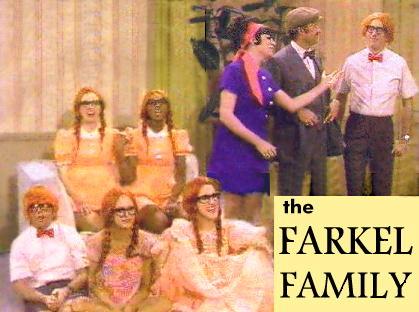
This photo is completely relevant to this post, but if you are under 50, you probably haven't a clue why. Pity. See below for an explanation.*

One of the reasons I started the Ethics Scoreboard, and continued with Ethics Alarms, was my frustration with the ethics profession’s reluctance to render useful opinions on complex ethical problems…unless, of course, the ethicist was being paid for them. Instead, ethicists are prone to issue obtuse and jargon-filled discussions allowing for every possible eventuality and interpretation, usually concluding with vague, equivocal pablum that allows the ethicist to avoid criticism and accountability. The result of this craven preference for “maybe” as the answer to every dilemma is that ethics are rarely included in public discourse or media coverage, as it solidifies its reputation for being technical, ambiguous, and pointless.

A perfect example of the reticence to make a clear choice occurs in this week’s installment of “The Ethicist,” the New York Times Magazine’s ethics column. An understandably anonymous inquirer writes that he unknowingly fathered a child with a married woman in his neighborhood, who raised the child as the offspring of her and her husband.  The mother asked the biological dad to have no contact with the girl, and he has complied. Now he asks, “Does she have a right to know her true parentage upon reaching adulthood? Sooner? Over the objection of the mother? Only when the husband dies? Who can make these decisions and when?” Continue reading

Ethics Malpractice from “Dear Margo”: The Tale of Witchy, Tubby and Sue

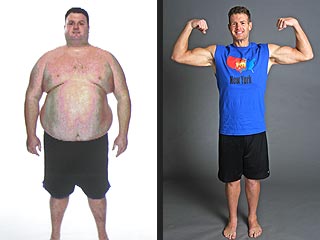
"Well sure---his inner qualities are much more important to me now that he's so hot!"

I read a lot of advice columns, which often involve ethical issues and very often expose the ethical incompetence of the supposed experts who write them. Some advice columnists are ethically spot-on with regularity, like The Washington Post’s Carolyn Hax. Some, like the past and present”Ethicists” of the New York Times, are off-base almost as often as they are on. Then there are the advice mavins like “Margo,” in the Boston Globe. I don’t know how such people get to be advice columnists, but I suspect it either involves picking names out of a hat or the exchange of sexual favors. [Full disclosure: I give out personal ethics advice myself over at AllExperts.com, when a legitimate questioner can find me—ethics isn’t listed as one of the site’s topics—and when the question isn’t a thinly veiled homework question, which it usually is.]

As an example of ethics malpractice, consider this question posed to Margo. “Sue” wrote that she had broken up with her ex-boyfriend over arguments about his weight and eating habits, which “grossed her out.” Eight months later, he’s fit and fabulous, and has a new girlfriend.  “I really would like him back because he’s hot and slim,” Sue writes, plaintively. “How can I step on his witchy new girlfriend so I can get him back?” Continue reading

Loop-Hole Ethics and The New York Times

The NYT’s website paywall plan floats in a sea of holes.

Ariel Kaminer, author of “The Ethicist” column in The New York Times Magazine, made an interesting assertion in her answer to a reader who asked about whether he could exploit several loop-holes in the Times’ new paywall plan for its website.

Noting that he was a struggling freelance journalist who visits the Times website often, he asked if it was unethical for him to use his parents’ free access to the content, since they are subscribers.  Then he Mused about other scenarios. “If I buy online access, can I share the password with my live-in girlfriend, even if I move to New York for the summer? What about our other housemates?” Continue reading

Sunday Ethics Blast: An Overly-helpful Teacher, A Hands-on Youth Counselor, A Poverty Program Slacker and a Redeemed Ethicist

Here are some quick links and observations to get your ethical juices going this Sunday… Continue reading

The Times’ New Ethicist Commits Malpractice

The new Times "Ethicst" shows her dark side.

Randy Cohen’s replacement as “The Ethicist” in the New York Times Magazine, Ariel Kaminer, had a flawless maiden flight last week, but crashes and burns on her first question this week. As was too often true of Cohen, she messes up in the area of honesty and legal ethics.

The inquirer, an applicant for law school, had asked a former professor to write a recommendation.  The professor, an apparent creep, said she was too busy—Honestly: writing recommendations for students applying to graduate students is part of her job, and how long does it take?—but if that if the student would write it, she would gladly “edit as needed” and submit it under her own name. Ariel’s inquirer felt uncomfortable writing her own letter of recommendation, but did not “wish to jeopardize my chances of being accepted into my top-choice school by being overly conscientious.” Ariel’s question to answer: is it ethical to draft the letter? Continue reading

A Shocking Farewell Confession From “The Ethicist”

In Randy Cohen’s farewell column for “The Ethicist” today—he was sacked by the new editor of The New York Times despite providing an entertaining, well-written and provocative column for many years— he makes a statement that I find shocking, and one that challenges the core assumption of this blog and indeed my occupation.

Writing the column has not made me even slightly more virtuous. And I didn’t have to be: it was in my contract. O.K., it wasn’t. But it should have been. I wasn’t hired to personify virtue, to be a role model for the kids, but to write about virtue in a way readers might find engaging. Consider sports writers: not 2 in 20 can hit the curveball, and why should they? They’re meant to report on athletes, not be athletes. And that’s the self-serving rationalization I’d have clung to had the cops hauled me off in handcuffs.
What spending my workday thinking about ethics did do was make me acutely conscious of my own transgressions, of the times I fell short. It is deeply demoralizing.

Amazing. Randy, we hardly knew ye, and we sure didn’t understand ye, either. How can someone possibly spend one’s working day “thinking about ethics” and not become more virtuous in his daily conduct? Continue reading