The Chronicle of Higher Education has a troubling, if not unexpected report, “Cheating Has Become Normal: Faculty members are overwhelmed, and the solutions aren’t clear.” It begins with an anecdote that would be funny if it weren’t so apocalyptic. A professor caught a student cheating, and warned him that the next time this happened, he would be failed in the course. The student wrote an abject apology, full of contrition and assurances. Then his next assignment was found to be composed by an AI bot. Then, just for giggles, the prof asked the same bot to compose a letter of apology for a student who had been caught cheating. The bot produced exactly the apology the student had submitted, word for word.
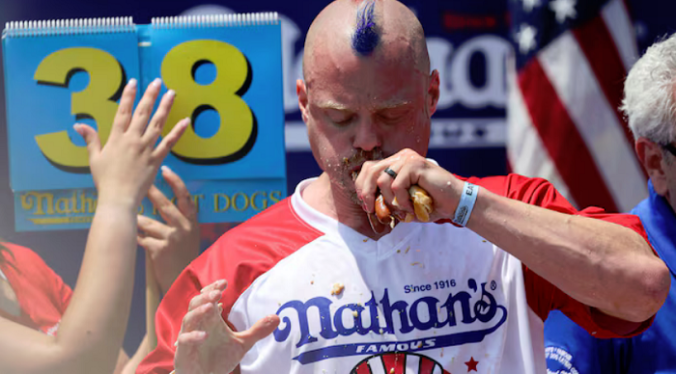
The President of the United States cheated in several ways last night, and we have been watching cheating become an accepted norm in the worlds of government, politics, law, academia, and sports. And so it has come to this: there was either cheating or an “appearance of impropriety” at Nathan’s Famous International Hot Dog Eating Contest over the Fourth of July.
When competitor Nick Wehry finished the 10 minute contest, judges ruled that he had eaten 46.75 hot dogs and buns, placing him 4th. But Wehry asked to have the officials check his results and they determined that there was an additional empty plate in his “finished” stack, which is how judges determine how many wieners an individual has eaten. The recount gave him a new score of 51.75.
Then the New York Post published “Buns of Steal”, reporting that witnesses accused Wehry of tampering with the empty plate total to add to his score. On EatFeats, an anonymous commenter posted links to videos with timestamps seeming to show that Wehry illicitly added to his empty plate count.
Tonight, the Texas Rangers and the Houston Astros, from the same American League Division and with the same regular season record (a modest 90-72), will begin playing the American League Championship Series to decide which team will represent the league in the World Series. If you’re a baseball fan or an ethics fan, you will root for the Rangers. The Astros are ethics villains, and among the worst ethics corrupting teams in all of professional sports history. They do not deserve to be forgiven, for the multiple blights they inflicted on the game are still causing tangible damage, and despite the exposure of the team’s rotten culture in 2019 ( exhaustively discussed on Ethics Alarms) they were never sufficiently punished, and the main perps in the team’s scheme have never adequately acknowledged that they did anything wrong.
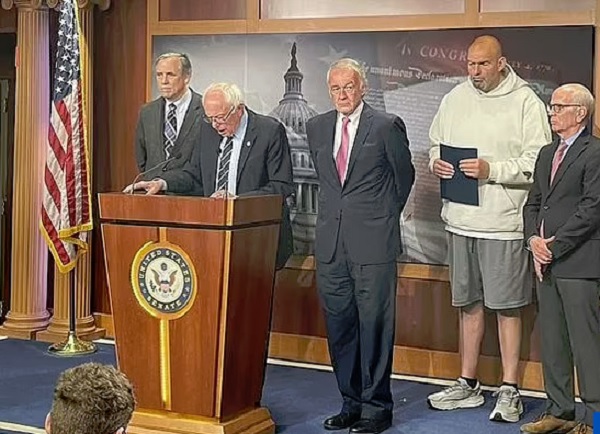
Senate Majority Leader Chuck Schumer has directed the chamber’s sergeant at arms to end the centuries-old rule requiring male U.S. Senators to wear a suit and tie on the Senate floor, with members of the upper house to wear modest business attire. This move was clearly made by Schumer to relieve pressure on Frankensteinian Senator John Fetterman (D-Pa), who has been violating the Senate Dress code and appearing in shorts, T-shirts, and hooded sweatshirts since he returned from a hospitalization for depression. He had been criticized and mocked as a result—as he should be.
The King’s Pass, Rationalization #11 on the List, is a corrosively backwards reaction by organizations to unethical conduct that violates organization norms and values, the value in this case being “respect”—respect for the institution, respect for the public, respect for the United States of America. If the organization’s (company’s, institution’s, industry’s, government’s, sports team’s…etc.) member who is breaching norms, rules, laws and values is deemed sufficiently powerful, important or popular, the rules and norms are not enforced when the King’s Pass strikes. When the most prominent member of a hierarchy is allowed to violate standards of conduct, the conduct of those of lower status will deteriorate in response: this is what “the fish rots from the head down” means, with the head in this case being a brain-damaged one.
Out of the 30,000 participants at last month’s Mexico City Marathon, about 11,000 runners have been disqualified for cheating by using illegal means to beat the 26.2-mile course. More than 1 out of 3 racers used various non-foot methods of transportation or other unethical tactics.
Mexico has become a drug and crime infested hell-hole, with large portions of the country run by cartels. Its presidency has been license to steal and accept bribes for a couple centuries now. No wonder illegal immigrants breaching our laws to get here see nothing wrong with their conduct: their nation has been rotting from the proverbial head down for as long as they can remember. What constitutes ethics in Mexico today? In 2015, Donald Trump was accused of racism and bigotry for saying that Mexico wasn’t sending us “their best people.” It is beginning to look like Mexico’s “best” are the ones who are leaving, and even they aren’t trustworthy.
And it, meaning its unethical and unprofessional leadership, management and employees, was allowed to manipulate public opinion, national politics, and the nation. Think about that.
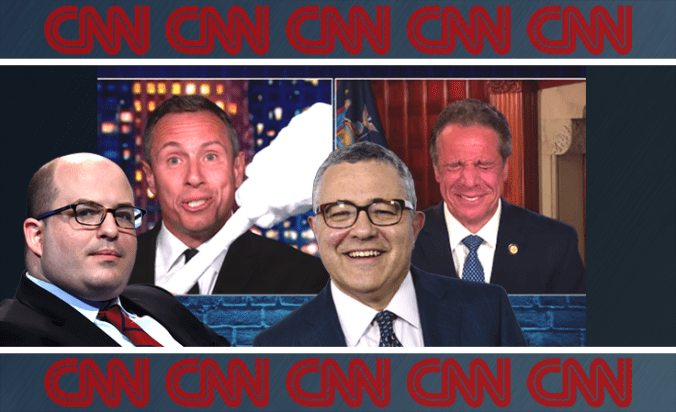
We didn’t need more to know CNN President Jeff Zucker was a slimy, ruthless hypocrite—his network was proof enough— but the unfolding scandal has certainly provided spectacular confirmation. You need to thoroughly update yourself at the links, but here are some basics:
CNN’s President Jeff Zucker announced on February 2, 2022, that he was resigning from the company, over his illicit affair with subordinate Allison Gollust. The spin on this includes calling her a “colleague.” No, she worked for Zucker. That makes the relationship toxic, not just “inappropriate.” Both Gollust and Zucker left their marriages during the affair.
Who knows what employees, or female or minority employees, were passed over so Zucker could advance his lover’s career? That’s a major reason why the boss having affairs with subordinates is always wrong, always destructive, and must be addressed.
CNN talking heads and execs are making excuses for Zucker. One CNN executive told The Daily Beast, “People are pissed. No one thinks the punishment fits the crime.” And that proves how thoroughly ethics brain-dead Zucker has left CNN. When the head of any organization is caught violating that organizations rules and policies, he or she must resign of be fired.
…I have to rely on cute Jack Russell Terrier videos to keep me from heading to the bridge…
1. No, guys, it’s not unethical to retract a bad law. SCOTUS Justices Samuel A. Alito Jr, Thomas and Gorsuch were annoyed that the Supreme Court refused to consider the Constitutionality of a New York anti-gun law after the state not only repealed the law, but passed a law preventing a similar law from being passed again. The Supreme Court today dismissed a major gun rights case that Second Amendment activists had hoped would clarify the right to bear arms. The decision dismissing the case was unsigned, but the dissent was signed, so we also know who made up the majority. “By incorrectly dismissing this case as moot, the court permits our docket to be manipulated in a way that should not be countenanced,” Alito et al. hurrumphed. The law’s removal rendered the case moot and denied the Court an opportunity to explore whether there is a right to carry a gun outside the home.
I’d say that when the prospect of being slammed by the Court makes a state back down from an overreaching law, that’s a win. Stop complaining. Continue reading →
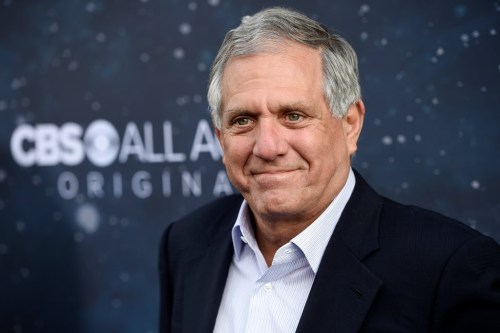
In a new investigative reporting piece, the journalist who revealed that New York State Attorney General Eric Schneiderman was a sexual abuser and who also added to the documentation of Harvey Weinstein’s horrific workplace conduct, revealed in his latest investigative article in The New Yorker that clear sexual harassment was alleged by six women in the entertainment business against Les Moonves, and that, as usual, his fish, CBS, and especially CBS News, had rotted from the head down.
Moonves is as long-established, respected and powerful a figure as there is in the media. He became the president of CBS Entertainment in 1995 and the chief executive of the company in 2006, and is paid $69.3 million a year.
You can close your eyes now and imagine everything that follows from here—it will just be a summer re-run of the Fox News debacle that eventually toppled Roger Ailes. We will need a pool to determine who will play the role of Bill O’Reilly, unless Charlie Rose qualifies. The account of actress Illeana Douglas—you know her face if not her name: she played the woman raped and mutilated by Robert DeNiro in “Cape Fear” and appears in several other Martin Scorcese films–is particularly disturbing, if familiar-sounding.
She describes Moonves grabbing her and violently kissing her during a business meeting in 1997. “What it feels like to have someone hold you down—you can’t breathe, you can’t move,” she said. “The physicality of it was horrendous.” She made a joke and fled, she says, and soon after the episode Moonves fired Douglas from the CBS sitcom she had been cast in and told her that she would “never work at this network again.” Continue reading →
1. What did you expect? Following close on the heels of Scott Pruitt’s firing from the EPA as a result of blatant ethics violations, Commerce Secretary Wilbur Ross said last week that he would sell all of his stock holdings to “maintain the public trust” after the Office of Government and Ethics pointed out that his financial transactions could get him into legal trouble.
“I have made inadvertent errors in completing the divestitures required by my ethics agreement,” Ross said in a statement. “To maintain the public trust, I have directed that all of my equity holdings be sold and the proceeds placed in U.S. Treasury securities.”
To maintain that public trust. Right.
The culture of CEOs and business executives is so alien to ethics that this kind of thing was assured as soon as Donald Trump was elected President. I wouldn’t say the business culture is necessarily more unethical than the political culture, it is juts unethical different ways. However, President Trump brought this brand of malfunctioning ethics alarms with him, and we shouldn’t expect it to abate until he leaves the White House.
Then we will get back to the good old-fashioned political versions of unethical conduct we’re become numb to. Ah, those were the days!
2. A question of degree. Professor Brian McNaughton, a former professor at Colorado State University, is facing a felony charge for fabricating an outside job offer to get a higher salary. This meets the technical definition of fraud. Apparently he presented the school with fabricated offer letter from the University of Minnesota. McNaughton resigned his position and apologized, and returned the fruits of the ill-gotten raise, about $4,000 per year over four years.
He also says that he was urged to use the tactic by other faculty members, who said it was a standard ploy. When does the “I have other job offers” gambit cross the ethics line into fraud? Clearly when you use a forged letter, but short of that, it’s just lying—unethical, but not criminal.
…if an employee is performing a job and is good at it, that person should be compensated for it accordingly and in line with individuals within the same organization at an equivalent level professionally (ideally pay should be bench-marked against similar-sized institutions in states or parts of the country with comparable income ranges). Does a job offer and the suggestion that the employee is desirable to another organization change how well that person is performing? Promotions and rewards should be directly related to performance and an individual’s contribution to the organization and to science.
Well, yes, but competition and reality interferes with this nice, fair but overly simplistic and impractical theory. In fields where employees are not fungible, basic economic theory comes into play: you can’t deny the influence supply and demand. The fact that there is competition for an individual’s services does increase that individual’s value. Just saying “it shouldn’t be that way” doesn’t change reality. That’s what makes McNaughton’s lie fraudulent: he’s misrepresenting his value, and using false means to do it.
3. Would you fire Dan Coats for this?
Naturally the anti-Trump mob loved it, and that was the director of national intelligence’s intent: he was playing to the mob and virtue signaling to the detriment of his boss. Either than, or he’s thoroughly unprofessional and can’t be trusted to be on TV. Washington Post reporter Dan Baltz is either foolish, naive or dishonest when he writes:Continue reading →
1. A Whistle-blowing dilemma.The Ethicist in the New York Times Magazine is no fun anymore, now that a competent, real ethicist is answering queries rather than the previous motley assortment of Hollywood screenwriters and others of dubious qualifications. Even when I disagree with Kwame Anthony Appiah, I find his reasoning arguably sound. I am troubled by his recent answer to a a student who asked if he should blow the whistle on cheating classmates in middle school. The Ethicist advised that on balance it was a bad idea. I think it’s a toss-up, and justifications for staying quiet like Appiah’s are all non-ethical considerations or rationalizations:
“Given how little cheating is caught, reporting them would have meant that they paid a penalty that lots of others ought to — but won’t — pay.” Ugh! A Barry Bonds excuse! So because all guilty parties aren’t apprehended, everyone should get away with wrongdoing?
“Because many people in your generation don’t take cheating very seriously, your friends would most likely have ended up focusing on the unfairness of being singled out, not on their wrongdoing.” That’s their problem. The attitude the Ethicist identifies is 39. The Pioneer’s Lament, or “Why should I be the first?” He’s correct that this will be the likely attitude of the busted cheaters, but since when did how wrongdoers rationalize their wrongdoing become mitigation?
“The intervention you were considering was likely, therefore, to be very costly to you.” Yes, doing the right thing often is.
“The burden of dealing with cheating in your school shouldn’t fall on you.” Boy, I really hate this one. It’s #18. Hamm’s Excuse: “It wasn’t my fault.”
This popular rationalization confuses blame with responsibility. Carried to it worst extreme, Hamm’s Excuse would eliminate all charity and much heroism, since it stands for the proposition that human beings are only responsible for alleviating problems that they were personally responsible for. In fact, the opposite is the case: human beings are responsible for each other, and the ethical obligation to help someone, even at personal cost, arises with the opportunity to do so, not with blame for causing the original problem. When those who have caused injustice or calamity either cannot, will not or do not step up to address the wrongs their actions have caused (as is too often the case), the responsibility passes to whichever of us has the opportunity and the means to make things right, or at least better.
This rationalization is named after American gymnast Paul Hamm, who adamantly refused to voluntarily surrender the Olympic gold metal he admittedly had been awarded because of an official scoring error. His justification for this consisted of repeating that it was the erring officials, not him, who were responsible for the fact that the real winner of the competition was relegated to a bronze medal when he really deserved the gold. The ethical rule to counter Hamm’s Excuse is a simple one: if there is a wrong and you are in a position to fix it, fix it.
Appiah doesn’t feel the full force of my fury because the case involves middle-school, and the questioner is a child. This is what makes it a toss-up. If this were college or grad school, I think reporting cheaters is mandatory. Appiah also says that he doesn’t care for honor codes because they are usually not followed.


 Ethics Alarms