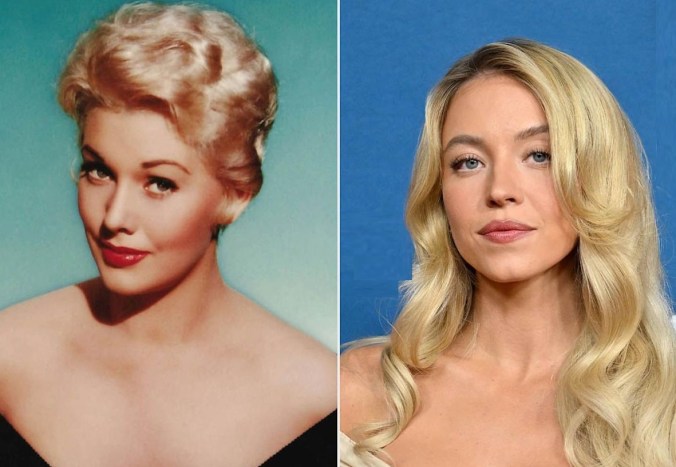
Kim Novak is now 92 years old. She is one of the more forgotten sirens of the Hollywood Fifties Golden Age, and to the extent that she is remembered at all, it is because she was one of Alfred Hitchcock’s interchangeable blondes somewhere between Doris Day and Tippi Hedren. Her Hitchcock vehicle, “Vertigo,” is for some reason regarded by film schools as Hitch’s best, but it can’t be because of Novak, who was cool, sexy, but not much of an actress.
They are making a movie about one aspect of Novak’s life because it can be twisted into some kind of woke message: she had a relationship of some sort with quadruple threat (drama, comedy, singing and dancing) Sammy Davis Jr., at a time when white sex symbols weren’t supposed to hang out with black superstars. Chosen to play Kim is current hot blonde Sydney Sweeney. It’s a high profile opportunity for the young woman, who is looking for opportunities to be taken seriously as an actress before her window of genuine stardom closes, just a Kim was, once upon a time.
So what does Kim Novak do? She gives an interview to the U.K.’s scandal The Times and trashes Sweeney, whom she has never met. Novak called Sydney “totally wrong” to play her in the upcoming biopic “Scandalous,” sneering that she “would never have approved” of Sweeney’s casting in the film, because she “sticks out so much above the waist.”
Funny, the degree that Kim was regarded as “sticking out above the waste” was substantially responsible for her having a career in films at all; Bette Davis she wasn’t. The size of women’s breasts that caused them to be lusted after as unusually busty has increased substantially over the decades: Raquel Welch, whose endowments were the object of endless jokes in the Sixties, would be regarded as unremarkable today.
But never mind the fact that Novak’s complaint is silly: she is 93 after all. Because Kim was a rising young actress once, she demonstrates ethical incompetence by not considering how would she have felt if she got a plum part in a Hollywood film biography portraying an earlier era’s blonde sex symbol like, say, Mae West, and Mae had announced in public that Kim was wrong for the role. She would have regarded Mae as a vicious bitch…and she would have been right.
Now Novak has laid the foundation for critics to crush whatever Sydney does in the film, something many of them are itching to do anyway. Woke World hates Sydney because she made a jeans ad that they absurdly claim advocated white supremacy. Yes, they are that desperate.
Nice, Kim. Here’s a little bit of advice that somehow you’ve managed to miss in your nine decades: “Do unto others as you would have them do unto you.”
Bi…never mind. You owe Sydney an apology, Kim.






 Ethics Alarms