When Ethics Alarms Don’t Ring: The Nebraska Gas Heist

HEY EVERYBODY, FREE GAS!

Weeeell, not exactly free, but close enough, apparently, for a previously law-abiding, 45-year-old Lincoln, Nebraska woman, Dawn Thompson, to embark on a life of crime. I would love to hear what rationalizations she used to convince herself that what she did was okay. I’d bet anything that she employed a bunch of them.

Her gas-stealing rampage began to unravel when Lincoln Police got a call from Bosselman Enterprise’s loss prevention manager on Oct. 20, 2023. A Pump and Pantry had reported that someone was ripping them off. An investigation revealed that the convenience store’s gas pumps had received a faulty software update a year earlier in November of 2022. The update managed orders and reward cards, but it also allowed anyone who swiped a rewards card twice to shift a pump into its “demo mode.” Once it was set in that sequence, gas was free as far as the pump was concerned. One rewards card had been repeatedly used to fool the pumps, and police traced it to Thompson.
Continue reading

Everyday Ethics Dilemmas: The Abandoned Tools

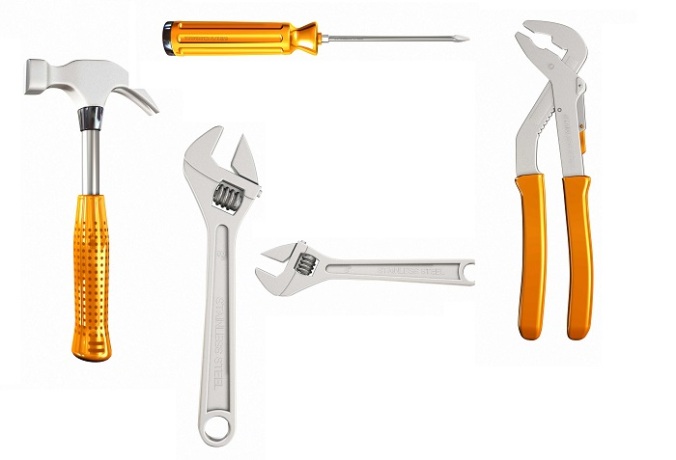
I was walking Spuds down a street in our neighborhood when I noticed a group of tools, five or six, lying in the grass on the strip between the sidewalk and the street. They looked new: I’d guess it was about 50 dollars worth, maybe 75. There was no automobile in front of the house, though that didn’t necessarily mean no one was home.

What’s a good neighbor to do?

These were nice tools, and kids are walking around the neighborhood constantly: maybe no one would take the tools, but maybe someone would. There’s a useful but dishonest rationalization in such circumstances: they’re abandoned! I thought about picking them up and carrying them up to the front door. I considered picking up the tools, carrying them home with Spuds, and driving by later to see if the owners were home. I was tempted to just toss them from the strip to the lawn, where nobody could argue that the strip between the road and the sidewalk is public territory.

If I had not been struggling to keep my exuberant dog under control when the cooler weather makes him especially rambunctious, my calculations might have been different. In retrospect, I see that this was a Golden Rule test: what would I want someone to do if it were my tools being left behind and left to their own resources?

At the time, however, with promises to keep and miles to go before I sleep, I decided to leave the tools where they were. I didn’t feel an obligation to do anything because there isn’t one (and also a useful rationalization that I need to add to the list: “This isn’t my problem”) , but clearly the more ethical course would have been to protect my neighbor’s property.

Pro Ethics Tip To Trump: If You Can’t Learn The Golden Rule, At Least Be Cognizant Of The Glass House Problem…

Donald Trump was on thin ice making fun of Chris Christy’s weight, but he just proved that he had better eschew impugning Joe Biden’s age-related cognitive decline as well.

Addressing the Pray Vote Stand summit in Washington, Trump said, “We have a man who is totally corrupt and the worst president in the history of our country, who is cognitively impaired, in no condition to lead, and is now in charge of dealing with Russia and possible nuclear war. Just think of it. We would be in World War II very quickly if we’re going to be relying on this man, and far more devastating than any war.”

Oopsie! Trump presumably meant (I hope!) World War III, not the conflict that ended in 1945. That was a Bidenesque gaffe, and the equivalent of a pundit making a grammatical error while writing about how current high school grads can’t write. And that wasn’t all. Later in the same speech, Trump started confusing Biden with Barack Obama.

Continue reading

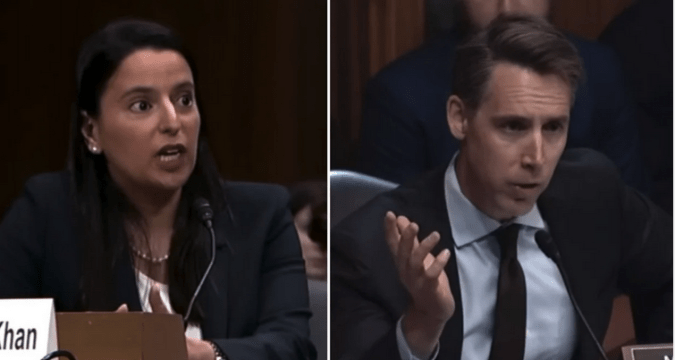
On Senator Hawley’s Unethical Questioning Of Judge Loren AliKhan

I hate this stuff; I condemn it frequently in my legal ethics seminars as a sign of the public’s ignorance regarding the function of lawyers, and when practiced by political parties and the news media, it is particularly disgusting. And here comes supposed GOP star, Senator Josh Hawley (R-Mo), to pull this despicable stunt in a hearing on the qualifications of Judge Loren AliKhan, nominated for a federal district court judgeship by President Biden.

Hawley’s “gotcha!” employed to discredit AliKhan was that in 2020, when she served as Washington, D.C. Solicitor General, she defended the city in court after the Capitol Hill Baptist Church sued D.C. Mayor Bowser for religious discrimination. Bowser (who, as I’ve already mentioned once today, is one of the worst major city mayors) shut down church events to protect public health during the pandemic freak-out, but encouraged and allowed mass Black Lives Matter protests. A federal judge ruled in Capitol Hill Baptist’s favor, and the city did not appeal because as almost everyone with any legal literacy knew at the outset that Bowser’s double standard was pretty much indefensible.

Continue reading

Ethics Quiz: The Milking Class Gaffe

The photo above was taken in a Plains state elementary school in the early 1950s, and depicts a cow-milking exercise. It is, obviously, one of those “Oops!” unfortunate—but funny!—shots that ended up in a local newspaper somewhere because nobody noticed the problem until it was too late.

A Facebook friend posted it on the social media platform for “a chuckle”, and it was clear that the reaction was…restrained.

Your Ethics Alarms Ethics Quiz of the Day is tougher than it may seem…

Is posting that photo unethical, as it will be legitimately offensive to some, or is it innocently funny, and only objectionable to the political correctness scolds?

I thought it was funny when I saw it. I also thought my friend would get a fair amount of flack. But the more I think about the factors involved, the more uncertain I am of the answer to the quiz question…

  • Is posting the photo in a public forum a Golden Rule breach? Obviously the photo embarrasses the teacher who, as my freind wrote, “probably wishes she had been standing for the photo.” My friend, however, was a professional performer, in a field where being able to laugh at moments that would humiliate normal people is essential.
  • Based on the period of the photo, it is certain that the teacher by now must be either dead or too old to care about an old newspaper clipping. Does that take the Golden Rule off the table.
  • It is more likely that the children shown might be embarrassed by the photo, or were when it was originally published. Does that matter? Was showing it more unethical then than now, when parents (unethically, even though “everybody does it”) post videos of their children in embarrassing (but funny!) situations constantly?
  • Some people thought  the photo was very funny, and appreciated seeing it. It brightened their day! Is that enough to make showing the picture ethical? What formula should we use to determine whether utilitarian analysis justifies an action where the benefits are tangible and the “harm” is ephemeral? If the photo brightened one viewer’s day, isn’t that enough?
  • One critic of the photo sniffed, “Photoshopped!” If so, and I note that there is always someone who will try to discredit any photo they object to as photoshopped whether it was or not, does it matter to the question at hand. If it’s funny, it’s funny. Or, since it is theoretically funnier if genuine, does being photoshopped change the utilitarian analysis? Should it?
  • Can showing the photo be justified as a social statement and attempt at a course correction, echoing the common lament that the culture is becoming humor adverse thanks to woke-poisoning, and it is a serious problem?

Revisiting The Celebrity Post-Retirement Photos Ethics Quiz…

Way back in January…at least it seems way back…Ethics Alarms used a shocking photograph of retired actress Bridget Fonda to raise the question of whether it was ethical “to take unflattering photos of former performers and celebrities and publicize them expressly to invite cruel comments and ridicule.” The fact that it was offered as a quiz indicates that I was torn on the matter.

On one hand, such photos could be legitimately called newsworthy, although their main attraction is prurient and mean. There is also a fair argument that if one profits by fame and celebrity on the way up, taking the hit during one’s decline in career, popularity and allure is part of the price.

Never mind all that, though. I’ve made up my mind. The practice is unethical, and a blatant Golden Rule breach. I shouldn’t have made the question a quiz.

Why the change of heart? Yesterday I saw photos circulating in social media, and in various memes, showing Sylvester Stallone in his back yard looking every inch of his nearly 76 years and carrying an enormous gut that made him resemble Don Corleone if he had just swallowed Luca Brasi. This caused much hilarity on the web (“Look! I can finally say I have a body like Rambo!”) but it is just cruelty.

Continue reading

Ethics Quote Of The Month: Kim Phuc Phan Thi

“I thought to myself, “I am a little girl. I am naked. Why did he take that picture? Why didn’t my parents protect me? Why did he print that photo? Why was I the only kid naked while my brothers and cousins in the photo had their clothes on?” I felt ugly and ashamed.”

I always  uncomfortable with that photograph from the moment I saw it, and thought it was cruel and unethical. Would the AP have published a similar photograph of a white American girl? I don’t know, but I don’t trust the Associated Press (or any press, at this point). It won Ut a Pulitzer Prize and helped energize the anti-Vietnam war effort in the U.S., but the photo (shown in the underlined link above) fails two basic ethics systems: Reciprocity, as in the Golden Rule, and Kant’s Categorical Imperative, which forbids using another human being as a means to an end. Can it be justified under Utilitarian principles, as a balancing of outcomes? Was the benefit of publishing the photo sufficient to make it ethical conduct, despite the harm it would do to an innocent child?

 Not on my scorecard.

Continue reading

So You’re A Bigot, Then, And Discard Fairness And Reciprocity As Guiding Values! Thanks, Malcolm Gladwell! Good To Know…

I was once a big Malcolm Gladwell (“The Tipping Point”) fan before I figured out the pop psychology and “airplane book” author’s shtick. This latest revelation completes my disenchantment. On his website, Gladwell, discussing interview questions, wrote that he never hired any job applicants who answered in the negative when asked whether they could drive a manual transmission automobile. Those who have mastered a shift and clutch, Gladwell says,realize that the most fun cars in the world to drive are sports cars with manual transmission, and they like the idea of being able to turn a rote activity (driving) into an enjoyable activity. That, and his belief that people who drive a shift like “knowing how to do things that most people do not,” causes him to conclude that these are the only people he wants to work with

Got it. He’s a bigot and an asshole. If I were asked that question and I wasn’t interviewing for a chauffeur, I would ask, “What does that have to do with anything?” The question is really no different from asking one’s religion or party affiliation, ethnic background or position on abortion. It’s a justification for bigotry. The question would be enough for me to terminate the interview, and walk out. I don’t want to work with unfair people.

Continue reading

Ethics Quote Of The Week: Actor Tim Considine (1940-2022)

“Thank God there’s no justice in this world.”

Disney and “My Three Sons” actor Tim Considine, who died last week at age 82, in an interview quoted in his New York Times obituary.

Considine was referring to his success and rich experiences in life, which he felt were relatively undeserved. He did not regard himself as especially talented or ambitious.

The more I ponder his statement, the more profound I think it is. Understanding that there is no justice in the world is a necessary predicate for committing to an ethical life for the right reasons. Society needs as many people as possible striving to be good, having their lives exert a net benefit on others, and being exemplars of ethical values as often as they can. These habits and objectives must be committed to while fully understanding that they only collectively and on balance result in desirable results, and sometimes not even that. Continue reading

Ethics Quiz: Celebrity Post-Retirement Photos

If the photo above was not already going viral, I wouldn’t print it here. Before the post continues, see if you can guess who that is above. No cheating now; this is an ethics blog… Continue reading