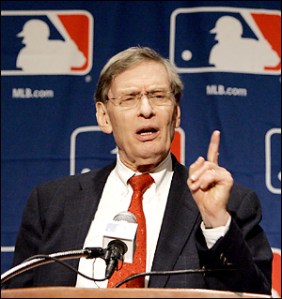
Bud Selig Is The Barry Bonds Of Baseball Commissioners…So Why Was He Just Elected To The Hall Of Fame?

Bud. I had a more descriptive caption, but decided that it wasn't professional...

Bud Selig. I had a more descriptive caption, but decided that it wasn’t professional…

Let me state my bias up front: I detest Bud Selig.

He became Major League Baseball’s first non-Commissioner Commissioner when baseball’s owners decided that Fay Vincent was doing the job of independent, uncorrupted overseer of the game’s welfare and integrity too literally for their tastes, fired him, and installed one of their own. That was Selig, a wealthy auto sales impresario who owned the Milwaukee Brewers and never saw a dollar he wouldn’t debase himself for.

The owners suspected that Vincent, a smart and decent man, might use his power to block the looming baseball labor-management impasse, benefiting the players. They dumped him just in time to give the job to an “independent overseer” who had the Mother of All Conflicts of Interest in the upcoming war: he was management. . Sure enough, under Bud’s fair and balanced leadership, the most devastating work stoppage in baseball history arrived in 1994. It stopped the season late and wiped out the World Series. It killed the Montreal Expos, for all intents and purposes, crushed the baseball card and memorabilia industry (it still hasn’t completely recovered), and nearly sent the sport itself into a death spiral. Baseball was saved, not by Selig, but by a combination of luck, the inherent greatness of the game, and Cal Ripken, who broke Lou Gehrig’s consecutive game streak (I was there to see it!) in the season after the strike to remind fans and the nation of baseball’s glorious past and why they cared about it.

From that point, Selig oversaw explosive growth in the game’s revenues, exposure, merchandising, player salaries and popularity, He shattered a lot of traditions to do it: the elimination of any real distinction between the leagues, expanded play-offs, wild card teams (which I hate, since they allow second place teams to become champions over the teams that defeated them during the season, but then there was the 2004 World Champion Boston Red Sox…) inter-league play, instant replay, penalties for big-spending teams, baseball in November, and more. If you are an ends justifies the means fan, Selig’s your man. He ended his more than two decades as the sport’s top executive with the game stronger and richer than ever.

He did this, however, despite and in part because he quietly enabled the scourge of steroid use among players, permitted cheating to go on right under his nose, and was shocked…shocked! to discover that all those players who began topping their previous best seasons at advanced ages when virtually all athletes go into decline, and all those players who turned up at spring training 25 pounds heavier and looking like Lou Ferrigno, and a few of those players breaking career and season records that hadn’t been approached in decades, were using illegal and banned performance enhancing drugs.  When this dawned on him, two steroid users, Mark McGwire and Sammy Sosa, had shattered Roger Maris’s record for home runs in a season in the same year—what a coinkydink!—and another, the grotesquely inflated Barry Bonds, had not only broken the new record but was on the road to surpass Hank Aaron’s career homer record. Continue reading
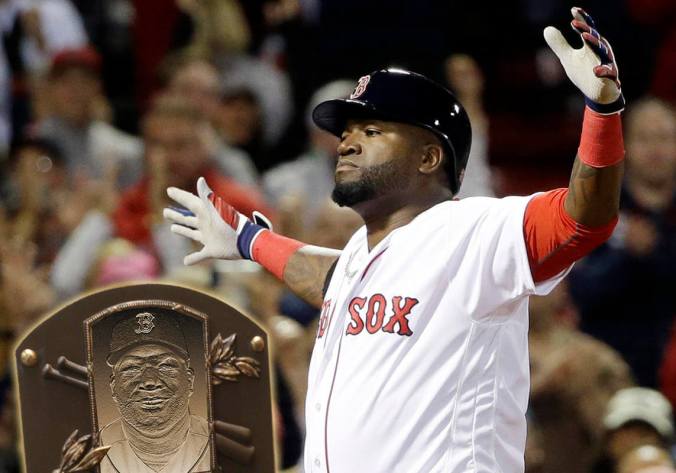
The Wrenching Problem Of David Ortiz, The Human Slippery Slope

papi_fame

Ethics conflicts force us to choose when multiple ethical principles and values point to diametrically opposed resolutions.  Often, a solution can be found where the unethical aspects of the resolution can be mitigated, but not this one. It is a tale of an ethics conflict without a satisfactory resolution.

I didn’t want to write this post. I considered waiting five years to write it, when the issue will be unavoidable and a decision mandatory. Today, however, is the day on which all of Boston, New England, and most of baseball will be honoring Red Sox designated hitter David Ortiz, who will be playing his finale regular season game after a 20 years career.  His 2016 season is quite possibly the best year any professional baseball player has had as his final one; it is definitely the best season any batter has had at the age of 40 or more. Ortiz is an icon and a hero in Boston, for good reason. Ortiz was instrumental in breaking his team’s infamous 86-year long “curse” that saw it come close to winning the World Series again and again, only to fail in various dramatic or humiliating ways. He was a leader and an offensive centerpiece of three World Champion teams in 2004, 2007, and 2013. Most notably, his record as a clutch hitter, both in the regular season and the post season is unmatched. You can bring yourself up to speed on Ortiz’s career and his importance to the Red Sox, which means his importance to the city and its culture, for nowhere in America takes baseball as seriously as Beantown, here.

That’s only half the story for Ortiz. Much of his impact on the team, the town and the game has come from his remarkable personality, a unique mixture of intensity, charm, intelligence, generosity, pride and charisma. After the 2013 terrorist bombing of the Boston Marathon, which shook the city as much as any event since the Boston Massacre, Ortiz made himself the symbol of Boston’s anger and defiance with an emotional speech at Fenway Park. Then he put an exclamation point on his defiance by leading the Red Sox, a last place team the year before, to another World Series title.

Performance-based arguments against electing Ortiz to baseball’s Hall of Fame are, at this point, untenable. Entering his final game, Ortiz had 541 home runs, (17th all-time), 1,768 RBI, (22nd), and 632 doubles, (10th).  He is only the third player in history to have more than 500 home runs and 600 doubles.  He ranks among the greatest post season hitters in baseball history with 17 home runs, 60 RBI and 21 doubles. His postseason average is .295 with an on base percentage of .409, a slugging percentage of .553 and a .962 OPS (the sum of the two.) Most great players did worse in the post season than during the regular season, for the obvious reason: the competition was better. Ortiz was better, which informs regarding his character and dedication.

The one lingering argument against admitting Ortiz to the ranks of Ruth, Williams, Aaron, Mays, Cobb, Hornsby, Griffey and the rest is that he has spent most of his career as a designated hitter, the American League’s 1973 invention, much reviled by National League fans and baseball traditionalists, designed to allow real batters relive fans from watching pitchers make fools of themselves at the plate. This makes him “half a player,” the argument goes. No designated hitter has ever been elected to the Hall, so that argument has prevailed so far. It was always a weak one—how did being lousy fielders like so many Hall of Fame sluggers make them greater players than one who never hurt his team at all with his glove? Now that a designated hitter has shown himself to be in the elite ranks of all the greatest batters, the argument sounds more like hysterical anti-DH bias than ever.

I should also note, before getting to the main point of this post, that I love Ortiz. I am a lifetime Red Sox fan, Boston born, bred and marinated, and Big Papi is special. He is one of the most interesting and admirable sports figures of my lifetime, and what he has meant to my city and my favorite sport is beyond quantifying. Few great athletes demonstrate persuasively that they are also great and admirable human beings. Ortiz is one of them.

Nonetheless, it is crucial that David Ortiz not be elected to the Hall of Fame when he becomes eligible five years from now, and that he never be admitted. On the matter of assessing the fitness for baseball honors of those who defiled the game by inflating their statistics, changing the outcome of games and harming players who abided by the rules, David Ortiz is a human slippery slope. Ortiz deserves to be in the Hall based on all admission criteria, including character and sportsmanship, but his admission will open the doors wide for players who are unfit, polluting the Hall of Fame and baseball’s values forever.

It’s not worth the trade off. This is the ethics conflict: one cannot be fair and just to “Big Papi” without doing widespread harm to the sport, and I would argue, the entire culture. Continue reading

Ethics Dunce And Unethical Column Of The Month: Univision Anchor Jorge Ramos

Who is the traitor, Jorge?

Who is the traitor, Jorge?

There are some positions in some controversies that I really cannot manage to respect, because no matter how much I try to understand the points of view, they seem so obviously wrong and ethically indefensible. On “The View” yesterday, for example, alleged comedian Joy Behar, in discussing the character of Bill and Hillary Clinton, stated without joking that she would vote for a proven rapist for President, as long as he or she was a Democrat. This is the kind of position I’m talking about.

Yesterday, the Hall of Fame voting results were announced. Mike Piazza and Ken Griffey, Jr. were elected to the Hall by the baseball writers, and equally welcome to this ethicist-baseball fan was the fact that Barry Bonds and Roger Clemens, both unrepentant steroid cheats, were not elected, and their still paltry vote totals suggest that they may never be. Yet several baseball pundits, reporting on the voting results, preceded this aspect of the news with “Unfortunately.”

I don’t understand that attitude toward cheating at all. I have written about as much about Barry Bonds as any ethics topic on Ethics, and  the case against him is air-tight, with the only defenses ever put forth being invalid rationalizations, easily rebutted. Nevertheless, otherwise intelligent people keep repeating them, hoping to outlast reason and reality by perseverance and repetition. (Sadly, this often works, as “77 cents on the dollar,” “Bush lied” and “Hands Up! Don’t Shoot!” tragically prove.) In the last 24 hours, I have heard Clemens and Bonds called “great players” so many times that my teeth have been ground down perceptibly. Cheaters are never great, as I explained in one of my favorite posts of 2015.

I was preparing to once again swat down the cultural poison being peddled by the Bonds and Clemens defenders when another of the issues that I believe has no respectable “other side” again raised its uglier than ugly head, so I changed course. That issue is illegal immigration, as in “immigration that occurs in direct violation of U.S. law, making it illegal.” Those who engage in illegal immigration are immigrants, and because their manner of immigration is illegal, they are illegal immigrants. Those who insist on calling them merely immigrants are lying; those who favor euphemisms like “undocumented workers” are engaging in intentional deceit. No, I have no respect for their rhetorical dishonesty–their smug and falsely sanctimonious rhetorical dishonesty—and it should not be tolerated by any U.S. citizen who wants transparent debate on a crucial national policy issue.

The ethics violator in the immediate case is serial offender Jorge Ramos, who uses his position as a broadcast journalist—unethically, since his duty is to report the news accurately, not to spout propaganda—to advocate  unrestricted immigration by Hispanics and Latinos into the United States. It is a logically, historically, demographically, economically, politically and legally irresponsible, outrageous position, but he managed to exceed previously established depths in promoting it by writing, in a column for Fusion, that GOP candidates Ted Cruz and Marco Rubio are engaging in betrayal by “turning their backs on immigrants,” who, he says, just got here a little later than they did. Continue reading

The Lesson Of The Pete Rose Saga: It’s Hard Being Ethical When You’re Stupid

Rose rejected

Pete Rose’s final appeal to have his ban from Major League Baseball lifted was rejected, as Commissioner Rob Manfred delivered a stinging rebuke. (You can read his letter here.) The very first ethics post I ever wrote was about Pete, and I have posted about his character and plight several times since. Rose, the all-time leader in hits and undeniably a great player, was banned from the game in 1989. An investigation concluded that he had bet on baseball games while a manager of the Cincinnati Reds, a violation of MLB’s famous “third rail” no-gambling rule, which makes it an automatic expulsion from the profession to place bets on baseball games as a manager, coach or player. This is regarded as an existential rule for baseball, which was nearly ruined when gamblers fixed the 1919 World Series.

Rose maintained his innocence of the allegations for decades, then admitted(to sell a book) that he had been lying, and did gamble. Just a few months ago, evidence surfaced that he had also bet on baseball while a player, which Rose has always denied.

In his letter rejecting Rose’s appeal, Commissioner Manfred noted that one of the conditions that had long been set for Rose to have any chance of reinstatement—though Rule 21 has no exceptions, MLB was willing to do almost anything not to have the holder of the record for lifetime hits on its blacklist—Rose would have to earn a pardon by showing he had turned his life around, meaning that Pete was no longer a sleazeball.

Manfred wrote that Rose, who had, among other black marks, served time in prison for tax evasion, asserted in his latest appeal that he indeed was a new and better man. Nevertheless, Rose…

1. Refused to admit that he had bet on baseball as a player, when the evidence was incontrovertible, and

2. Revealed that he still gambles on horse racing and professional sports, including baseball.

Manfred came to the obvious conclusion that “Charlie Hustle,” who pretty clearly has a gambling addiction, has taken no positive steps toward addressing it, is still a risk to gamble on baseball games or get himself in debt to gamblers if he returned to the sport, and  can’t be trusted.

All of the above could be more concisely summarized by six words: Pete Rose is a stupid man. As comedian Ron White says, “You can’t fix stupid.” Manfred, in his letter telling Pete that he can forget about any future employment in baseball, noted more than once that Rose does not appear to understand the import and purpose of the rule he violated, which exists  to protect the integrity of the game. Indeed,  Pete Rose wouldn’t know what integrity was if it sat on his face. Continue reading

Observations On The News That Pete Rose Bet On Baseball As A Player After All

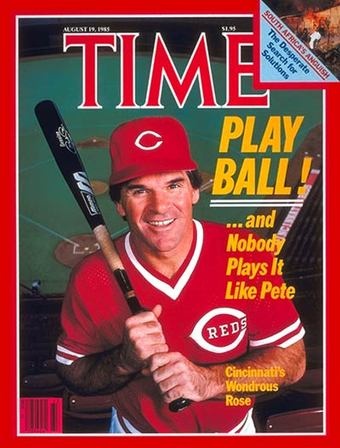
Rose Time cover

The story is here.

To summarize for those new to this story and its various issues:

Because the 1919 World Series fixing scandal nearly toppled the sport, any player, manager or coach who bets on baseball games will be automatically banned from the game for life and from the Major League Baseball Hall of Fame for perpetuity. Pete Rose, the all-time hits leader as a player and a certain Hall of Fame admittee under normal circumstances, was shown to have bet on baseball while a manager, after his playing career. For many years he lied, denying that this was true, then came clean in time to hawk his autobiography.

Rose has always had a lot of sympathy from fans and players, in part because he was such an exciting player, in part because he played with the innocent enthusiasm of a child and  he is a child, at least emotionally, and mostly because it was believed, since Rose insisted that it was true—yes, I know that sounds strange, given Rose’s record of serial dishonesty—that he never gambled on baseball while he was a player.

This season, public sentiment had been building to finally pronounce Rose forgiven. He had even progressed to the stage that some advertisers were using him in TV commercials. Baseball has a new Commissioner, and he had signaled that he would give Rose’s long-standing and ignored petition for reinstatement due consideration.

All of that is gone now, presumably forever.

Some last thoughts on Rose, as with any luck this is the last occasion I will have to write about him: Continue reading

The Absolute Worst Of The Terrible Arguments For Putting Barry Bonds In The Hall Of Fame

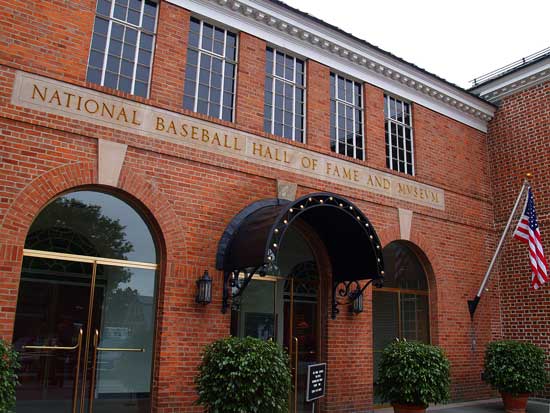
815-Baseball-Hall-of-Fame-CEvery year at this time, I issue commentary on the “steroid-users in the Major League Baseball Hall of Fame” controversy. I’m not going to disappoint you this year.

Today the Hall will announce who the baseball writers deemed worthy, and, as usual, the acknowledged steroid cheats with Hall of Fame statistics will be resoundingly rejected. I don’t feel like revisiting this subject in depth again right now: I have done so before, many times. However, yesterday I nearly drove off the road listing to MLB radio commentators Casey Stern and Jim Bowden, supposedly baseball experts, give their reasons for voting for the entire range of steroid cheats, from Barry Bonds and Mark McGwire to Roger Clemens and the despicable Alex Rodriquez.

Baseball’s Hall of Fame, alone among the sports Halls,  includes ethics in its criteria for entry: a player must exhibit sportsmanship, integrity and have been a credit to the game. The average sportswriter who votes for candidates is about as conversant in ethics as he is in Aramaic, leading to an endless debate involving every rationalization on the list and  analogies so terrible that they melt the brain.For example, I constantly hear and read that the evidence that Barry Bonds used steroids is “circumstantial” so it is unfair to tar him as a steroid user. Such commentators don’t know what circumstantial evidence is. Criminals can be justly convicted beyond a reasonable doubt by circumstantial evidence, which is also known as indirect evidence. Direct evidence, if believed, proves the existence of a particular fact.  Circumstantial evidence proves facts other than the particular fact  to be proved, but reason and experience indicates that the indirect evidence is so closely associated with the fact to be proved that the fact to be proved may be fairly inferred by existence of the circumstantial evidence. There is direct evidence that Bonds was a steroid-user, but the circumstantial evidence, as the well-researched book “Game of Shadows” showed, is so voluminous that it alone is decisive. Literally no one thinks Bonds is innocent of using steroids. [You can read my analysis of the case against Bonds here, here, and here.]

Stern and Bowden, however, claim that it is unfair to refuse the honor of Hall of Fame membership to suspected steroid users because it is inevitable that some players who used steroids and were never caught or suspected will make it into the Hall, if there aren’t such undetected cheat in the Hall already. Continue reading

Ethics Dunce: Skechers

http://www.youtube.com/watch?v=GYEGUzV-tOs

Do you know who the very first Ethics Dunce was? It was Pete Rose. This was in January of 2004, on the newly launched Ethics Scoreboard, and Pete had just admitted that he did indeed bet on baseball while managing the Cincinnati Reds, even though he had been loudly denying it (and smearing the reputation of Bart Giamatti, the baseball commissioner who banned him from baseball and entry into the Hall of Fame for it) for 10 years.

Now another decade has past, and Pete still doesn’t really get it. Helping him make money for not getting it is the “relaxed fit footwear” people, Skechers, with  jaw-dropping TV spot showing Pete in his own home (supposedly), padding down a hallway festooned with his many trophies, Silver Bats and other symbols of his days as “Charley Hustle,” as he revels in the comfort of his Skechers and the joys of being in “the hall.” Then his wife or girlfriend (with Pete, it’s hard to keep up…if she’s his wife now, then someone else is his girlfriend)) sticks her head out of a doorway and tells him, “Pete, you know you’re not supposed to be in the hall!”

HAR! What a hoot it is, being disgraced in your own sport for undermining its integrity! Pete has never quite comprehended what all the fuss is about—after all, his bets were always in favor of his team, never against it, and never affected his management decisions! He says. And why wouldn’t everyone believe him about that, just because he knowingly broke baseball’s biggest taboo (Pete can tell you Shoeless Joe’s batting average down to the 5th decimal: believe me, he knows all about the Black Sox), lied about it everywhere and often, and got himself thrown in jail for cheating on his taxes?

What would make anyone, in any company, think that an unapologetic lifetime sleaze like Pete Rose being associated with their product would make people run out and buy it? Continue reading

The Alex Rodriguez Suspension, Barry Bonds, And The Slippery Slope

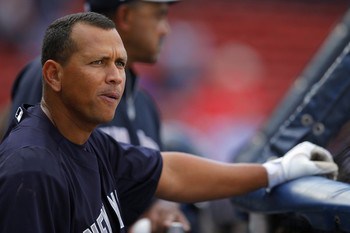
New York Yankees' Alex Rodriguez stretches before American League baseball game at Fenway Park in Boston

In a decision that further defines major league baseball’s cultural standards regarding performance enhancing drugs and the players who use them, New York Yankee Alex Rodriguez was suspended for the entire 2014 season and post-season by an arbitrator yesterday. Rodriguez, a long-time superstar who was once considered a lock to break baseball’s career home run record, and who is the highest paid player in the game, was suspended for illicit drug use without testing positive under the game’s union-negotiated testing system. He was, instead, suspended for a violation of the player’s Basic Agreement under baseball management’s right to police the game and do what is in its best interests.

The evidence that Rodriguez was a flagrant and long-time steroid abuser came from documents obtained from Biogenesis, a lab that developed drugs for athletes and others, as well as convincing testimony. Rodriguez had challenged the suspension in a grievance procedure after MLB handed down a 211 game suspension during the 2013 season. The arbitrator’s ruling, which is confidential, apparently concluded that the player not only cheated, but obstructed efforts to enforce baseball’s intensified anti-drug measures in the wake of the wide-spread use of PEDs in the 90’s and thereafter.

As expected, the result produced the usual complaints and rationalizations from the disturbingly large contingent of baseball fans and writers who remain obdurate regarding the offensiveness of steroid cheating, claiming that it was “a part of the game,” that the objections to it are inconsistent, and that baseball’s vilification of users is hypocritical. They had been practicing these and related arguments for months as they waited for the baseball Hall of Fame voting results announced last week, in which about 65% of the voters showed that they regarded steroid use as a disqualification for the honor, even when a player-user had excelled on the field. Rodriquez’s defeat deeply undermines the cause of the steroid defenders, and the likelihood that their argument will ever prevail. Continue reading

Here’s The Ethics Lesson From The Hall Of Fame Voting Results Tomorrow…

HOF

And that lesson is: sportswriters have no clue when it comes to ethical analysis, or any other kind of analysis, really.

Tomorrow the results of the Major League Baseball Hall of Fame voting will be announced, and those former stars receiving at least 75% of the vote will be officially enshrined as immortals. Every year before the steroid era, the voting was preceded by weird arguments that made no sense, like the one about whether a former player should be a “first time electee.” Some writers would concede that a given player was great enough for the Hall, but not vote for him because “he wasn’t good enough to get in on the first ballot.” This was, and is, ridiculous, and unfair. The question is, “Was this player great enough to deserve enshrinement, when the standards are unchanging?” It’s a yes or no question. “Maybe next year” is not a valid answer.

Thus I suppose that it should be no surprise that these same clods, faced with some really difficult ethical lines to draw in the wake of the so-called steroid era, show themselves to be not merely dunces, but ethics dunces as well. I just heard a sportswriter, Marty Noble, tell a baseball talk show that he won’t vote for any player about whom there is any question whatsoever regarding whether he cheated with steroids, including doubts based on rumors, whispering campaigns, looks, suspicions and drug tests. But he still voted for some players, he says. Well, that’s just wrong, by his own standards—he can’t be 100% sure about anyone. He also said that while he can vote for up to ten players, and agreed that there are more than ten players this year who have strong Hall credentials, he’s only voting for three. Why? Because, he says, the induction ceremony is too long.

Yes, he’s an idiot. Continue reading

Ethics Dunce: ESPN Blogger David Schoenfield

...reason is emotion, and emotion is reason...

…reason is emotion, and emotion is reason…

Every year about this time, a large group of baseball writers, not to mention fans, expose their ethics and analytical deficiencies by making terrible arguments for admitting steroid-using stars of note into baseball’s Hall of Fame. The voting for the Hall is going on now, you see, and this year a bumper crop of candidates were either proven steroid users or reasonably suspected of being so.

Also every year at this time, I pick one of those ethically-challenged writers as an Ethics Dunce. This year, the winner is ESPN’s David Schoenfield, by virtue of a sentence near the end of a recent post in support of Frank Thomas and Edgar Martinez, neither of whom are on the Performance Enhancing Drug suspicion list, as Hall of Fame candidates. Schoenfield wrote,

“The PED disagreements are all about emotion (“Cheaters!”) versus reason (“It was part of the game in that era, we don’t know who did what, etc.”).

Talk about a big, fat, hanging curveball over the heart of the plate! Continue reading