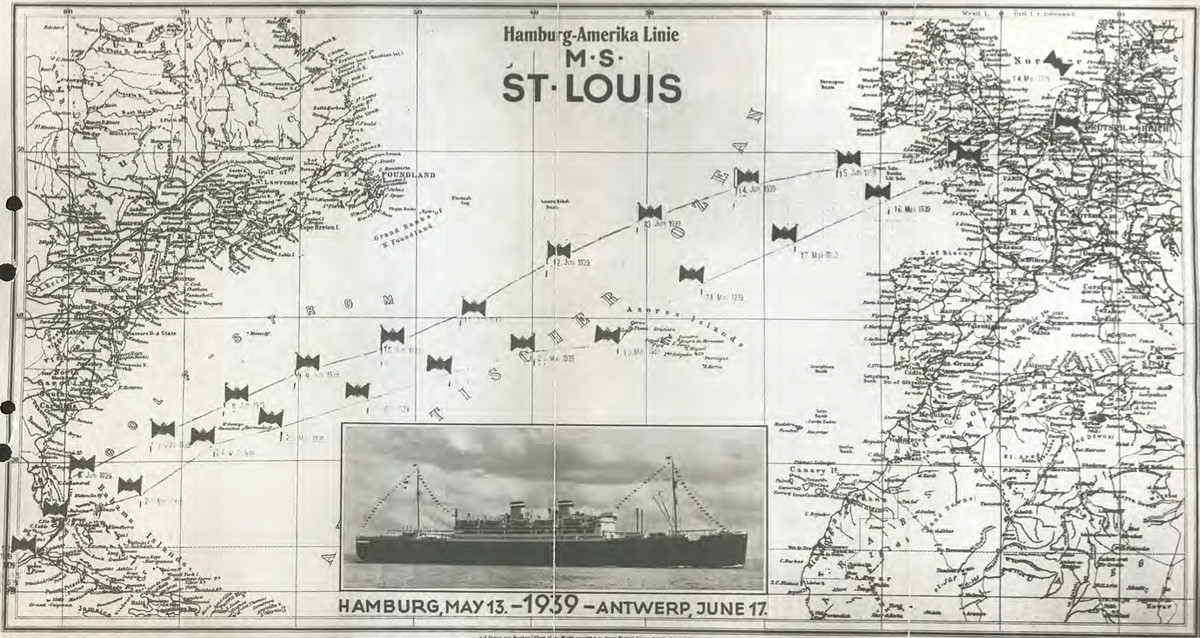
May 27, 1939, qualifies as a “day that shall live in infamy” in Franklin Roosevelt’s famous phrasing, except that he was deeply involved in this particular infamy, and thus would have been unlikely to so describe it.
On May 13, the S.S. St. Louis had sailed from Hamburg, Germany on a route Havana, Cuba. The ship was carrying 937 passengers, most of them German Jews escaping their escalating persecution under the Third Reich. Kristallnacht had hit the German Jewish community just six months earlier, killing 91 Jews and destroying hundreds of business and homes. The Final Solution was just months away from being aggressively implemented.
The official destination of the St. Louis was Cuba, but the real objective of the desperate refugees was to reach the U.S., Land of the Free and the Brave, as George M. Cohan put it. They had applied for U.S. visas and were only going to stay in Cuba until they could enter the United States legally. Cuba definitely did not want them. There had been a huge anti-Semitic demonstration in Havana before the ship set sail, and rumors were spread in the German press that the Jews on board were Communists.
 Ethics Alarms