The Wall Street Journal Steals From A Blogging Lawyer…Luckily For Them, A Nice One

A lawyer asks: Will Google Cars put me out of business? The Wall Street Journal  asks: Why shouldn't we make money off your answer?

A lawyer asks: Will Google Cars put me out of business? The Wall Street Journal asks: Why shouldn’t we make money off your answer?

I always do a double-take when I see that someone has “re-blogged” a piece from Ethics Alarms. Unless there is something in my WordPress agreement that allows other bloggers to lift my work and publish it as their content without my permission—oh, who knows, there probably is—this is a copyright violation, but worse than that, it’s wrong. Apparently they think that if they give attribution, that makes everything fine. Why would they think that? I’m writing for my blog, not anyone else’s. If a blogger wants to reprint all, most or some of my commentary in order to critique it, that’s fine ( WindyPundit is doing this right now). But lifting all or most of my work to fill space on your website, without my permission? Not fair, and not ethical.

This just happened to personal injury lawyer and estimable blogger Eric Turkewitz, but the culprit wasn’t a blogger, it was the Wall Street Journal. It took his post about Google Cars and just slapped it into the print and online editions of the paper. “Lawyer Eric Turkewitz writes that self-driving cars will hurt the business of many personal-injury attorneys,” said the sub-head under “Notable and Quotable.” Hmmm. Usually a writer gets paid to write features for a newspaper. I guess just lifting copy without permission is “Fair Use.”

No, First Amendment expert Marc Randazza points out in his typically irreverent way, it isn’t:

In this case, the Wall Street Journal used 44% of Turkewitz’ post, with no additional commentary, criticism, or discussion.  The WSJ could have called Turkewitz a moron for his views, and quoted the whole thing (theoretically).  Or, the WSJ could have given approval, more discussion, or turned the article into piece of art, with spray painted Che Guevaras and stencils of Paris Hilton, as a commentary on Turkewitz, tomato soup, and golf, or whatever.  But, they didn’t do any of that.  

So lets look at the §107 [Fair Use]factors

(1) the purpose and character of the use, including whether such use is of a commercial nature or is for nonprofit educational purposes;
(2) the nature of the copyrighted work;
(3) the amount and substantiality of the portion used in relation to the copyrighted work as a whole; and
(4) the effect of the use upon the potential market for or value of the copyrighted work.

The purpose and character of the use is certainly commercial and for profit. The WSJ sold its newspaper with Turkewitz’ work in it, and even put it behind its paywall online. Same exact use, except WSJ took what Turkewitz distributes for free, gathered it, and sold it.

The nature of the copyrighted work was Turkewitz’ original opinions and thoughts.

The amount and substantiality of the portion used? 44%. Pretty substantial. Remember, this is not dispositive, but if you used almost half of an original work, you better have a good reason.

The effect of the use on the potential market for the value of the copyrighted work? That’s sorta iffy. It isn’t as if Turkewitz sells his work. But, that is not a requirement. Turkewitz’ blog currency is readership. If you do some quick online searches for some of the content, sometimes the WSJ version comes up above Turkewtiz’ version. Not cool. Ultimately, the WSJ blew it here because they didn’t add anything to the original — they just lifted it and reposted it….

So the verdict? The Wall Street Journal is definitely guilty of copyright infringement for lifting a bloggers’ work without any justification.

It’s worse than that, however. Continue reading
“Knee Defender” Ethics

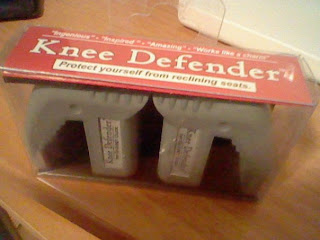
There are no Knee Defender ethics.

Invented for entitled jerks, by one. Is this a great country or what?

Invented for entitled jerks, by one. Is this a great country or what?

The Knee Defender is unethical,  those who advocate them are unethical, its inventor, a slickly rationalizing  ethics corrupter named Ira Goldman is unethical, anyone who uses it is unethical, and anyone who defends it is unethical.

There. Next question?

What gives anyone in the seat behind me the right to appropriate space in the plane I have paid for? I have paid for it, you know: the space that my seat can recline into is within my control, my dominion. If I choose not to avail myself of it, then the person behind me is certainly free to make use of it—until I change my mind. There is no other legitimate, logical or fair interpretation of the rights and privileges involved. Using the Knee Defender, a sinister device designed to unilaterally claim my space, is taking what is mine by force. There’s no other side to the issue.

Oh, the obnoxious, smug marketing for the thing claims otherwise:

“It helps you defend the space you need when confronted by a faceless, determined seat recliner who doesn’t care how long your legs are or about anything else that might be “back there”…

First of all, you can’t defend space you have no right to, and never owned in the first place. And don’t insult me: I have a face, and no, I really don’t care how long your legs are. Mine are pretty long too, You have to be awfully tall not to be able to extend your legs under my seat. Oh—you have baggage under there, because you stowed some obscenely large roller-board in the over-head bins? Tough. I check my large luggage so I can keep the area clear under the seat in front of me, so I can stretch out my legs, so I don’t feel I have to whine about the seat in front of me reclining, and use vigilante devices invented by a trouble-maker to stop me from doing what the airlines say I purchased the privilege of doing, do he can pick up a lousy $29.95. You can check your luggage too, you know. You can also  seat yourself behind the seats that don’t recline. But no, rather than make the effort to deal with your physical limitations by planning ahead, you think it’s acceptable to solve your problem by waging war against the unlucky traveler who happens to get the seat in front of you. Continue reading

Ethics Dunce: Anyone Who Thinks Hillary’s “I Gave It All To Charity” Excuse Excuses Anything

Money-box-giftI apologize in advance for this, because I assume all of you are as sick of commentary on Hillary, her book promotion tour, and her endless stream of statements that validate everything her critics have been saying for over a decade. However, her latest ethically tone-deaf statement is a special category of dishonesty that I vowed long ago to flag every time it was tried by a public figure, and given a pass by the news media. So here we are.

Hillary responded to the growing controversy over her absurd speaking fees, which she charges to universities as well as corporations, by saying this to ABC’s Ann Compton:

“All of the fees have been donated to the Clinton Foundation for it to continue its life-changing and life-saving work. So it goes from a foundation at a university to another foundation.”

Giving money to another individual’s charity of choice is indistinguishable from giving money directly to that individual. If a lobbyist gives corporate money to a politician’s charity, for example, that’s a crime in most states, and should be. The charity dodge is a popular one with corrupt individuals, because the average member of the public, being among those whom Abraham Lincoln noted that you can fool all the time, and also possessing the ethics analysis skills of the typical whippet, just nod and say, “Oh. Okay!” Continue reading

Comment of the Day #2: “Animal Ethics: Now THIS Is An Unethical Veterinarian”

Sid the dog

Rarely has a post generated as many defenders of the target of my critique as the recent Ethics Alarms commentary regarding the Fort Worth, Texas arrest of Dr. Lou Tierce, an aging veterinarian who, according to Jamie and Marian Harris, agreed to euthanize their dog Sid—that’s Sid above— based on Tierce’s diagnosis, but instead kept the dog caged in filthy and inhumane conditions for six months, until a whistleblower on his staff alerted the Harrises. 

Here is a portion of the arrest report, regarding another dog at the same clinic:

“The dog was lying on the floor twitching in pain with one leg missing, one leg dislocated and two dislocated shoulders. I then spoke to the suspect, Dr. Millard Lucien Tierce. He told me that the injured black and white collie was his dog. He said he had given water and food to the dog but had not given any medical treatment to the dog. He said he had not euthanized the dog even though in his professional opinion he knew it needed to be.

Dr. Morris, DVM, of the Fort Worth Animal Clinic, arrived on the scene and performed an evaluation of the dog. He informed me that in his professional opinion the animal was a victim of animal cruelty and the conditions of the clinic were deplorable.

Animal Cruelty Investigator R. Jacobs spoke to Dr. Millard Tierce. Tierce told him he knew the dog needed to be euthanized but he did not allow it. He signed over ownership of his dog to the Fort Worth Animal Control and the Fort Worth Animal Control took the dog to their facility.

On April 29, 2014, Dr. M.L. Morris, DVM examined the black and white border collie. Dr. Morris concluded that the dog was emaciated, had severe mouth disease, cataracts, abnormal overall health, non-ambulatory bottom of foot missing, had a degenerative neurological and untreatable disease and should have been euthanized when originally accepted for treatment. The dog was then euthanized by the city of Fort Animal Shelter.

Due to the aforementioned facts and information being related to me as a result of this investigation, I have reason to believe and do believe that Millard Lucien Tierce, did commit the offense of Cruelty to Non-Livestock Animals, against the laws of the State of Texas as set forth in the Penal Code; 42.092 (b)(l).”

Nonetheless, several loyal clients of Tierce’s clinic wrote to protest. They had entrusted their pets to him for many years, and he was clearly incapable of any kind of cruelty to Sid or any animal. The real villains were the Harrises. Or the tech who alerted them that their dog was still alive and being used for blood transfusions. Just wait, they assured me, when all the facts come out, this veterinarian from Hell will be exonerated. That the only way this could possibly occur would be for it to be proven that what the police thought was Sid was actually a hologram didn’t deter the doctor’s defenders at all.

Luckily, commenter Candy Roberts, a veterinary technician, put their arguments in perspective. Here is her much appreciated Comment of the Day on the post, Animal Ethics: Now THIS Is An Unethical Veterinarian: Continue reading

The “Bernie” Sentence’s Message: The Lives Of Mean People Aren’t Worth As Much As Those Of Nice People

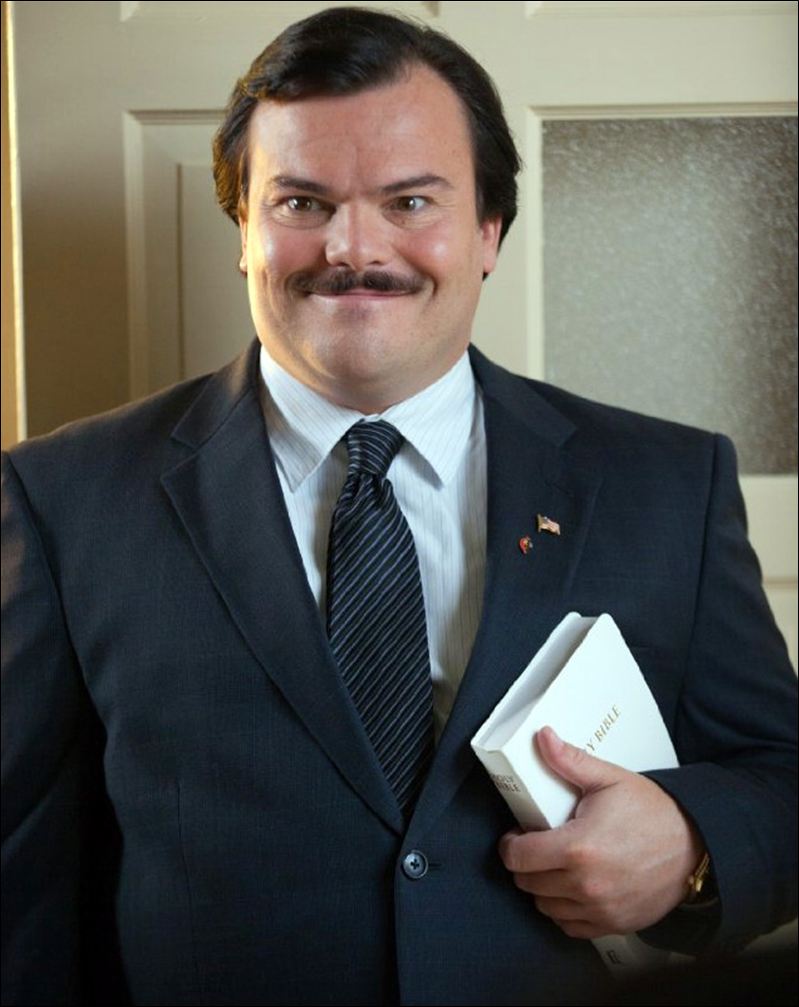
Jack Black as Bernie, the nicest murderer you'd ever want to know.

Jack Black as Bernie, the nicest murderer you’d ever want to know.

“Bernie” is a quirky 2011 movie telling a strange and true story. Jack Black plays Bernie Tiede, an oddly cheery mortician who became a small town community favorite for his kind deeds and upbeat manner. Bernie even befriends the town pariah, a mean, rich old woman named Marjorie Nugent (played by Shirley Maclaine) whom he managed to reform–slightly–until she finally became even too much for him to bear, and in 1996 he shot her dead.

He was loved, she was hated, and the community (Carthage, Texas) rallied behind the murderer even though he hid his friend’s body in a freezer for nine months and spent about 2 million dollars of her money.  The pro-Bernie bias was so strong  prosecutors had to seek a change of venue, since no local jury would convict him. They got it, and a jury that knew neither charming Bernie nor his nasty victim found him guilty (because he was) and sent him to jail for life in 1997.

After the film was released, however, attorney Jodi Cole took up Tiede’s appeal. She discovered that he had a collection of books aimed at survivors of sexual abuse, and got Bernie to admit, for the first time, that he was abused as a child. Cole hired a psychiatrist who testified that Tiede’s abuse probably influenced the murder and his willingness to endure an abusive relationship with Nugent, until he finally snapped. This changed the mind of Panola County District Attorney Danny Buck Davidson, who told a judge Tuesday that he supported reducing the sentence to time served. State District Judge Diane DeVasto agreed. Bernie is now a free man, living in the apartment over the garage of the man who directed the film about him.
Continue reading

Animal Ethics: Now THIS Is An Unethical Veterinarian

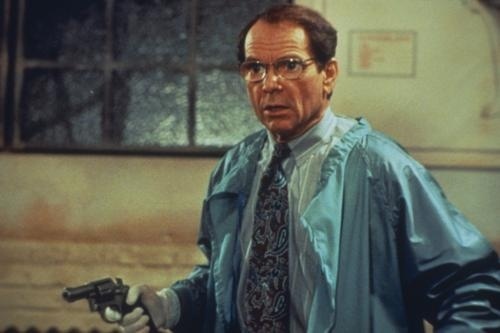
Believe it or not, Dean Jones was a NICE vet compared to Dr. Tierce...

Believe it or not, Dean Jones was a NICE vet compared to Dr. Tierce…

Yechh. This story reads like a sick version of “Beethoven,” which, as all you Charles Grodin fans will recall, featured a villainous veterinarian (Dean Jones, no longer cute) who stole pets to use for medical research.

In Fort Worth, Texas, Jamie and Marian Harris took their dog, a 5-year-old Leonberger named Sid, to the well-respected  Camp Bowie Animal Clinic, to be treated for what they thought was a minor health issue. After undergoing treatment,  Sid developed trouble walking and the veterinarian, Dr. Lou Tierce, told the Harrises that  their dog  had an untreatable spinal condition that would get worse, cause him increasing pain, and ultimately cripple him completely. The family was told the best option was to have Sid euthanized. The couple and their young son agreed, said their goodbyes and authorized the clinic to bury Sid on the vet’s farm.

Six months later, a veterinarian technician named Mary Brewer, who worked at Camp Bowie, contacted the Harrises to inform them that Sid was alive and being kept alive in a cage, surrounded by his urine and feces, so he could be used for blood transfusions to treat other dogs.
Continue reading

OK, OK, He Steals Our Money Too. But I Still Hear Eric Holder’s One Hell Of A Guy….

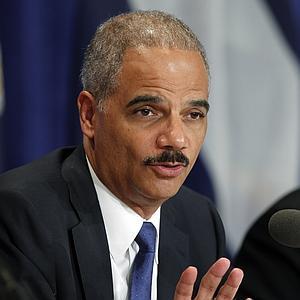
But what really matters is whether he's better than Alberto Gonzalez, right?

But what really matters is whether he’s better than Alberto Gonzalez, right?

From the Washington Post:

The agency that tracks federal travel did not report hundreds of personal and other “nonmission” trips aboard government planes for senior Justice Department officials including Attorney General Eric Holder and former FBI Director Robert Mueller, according to a watchdog report.

Congress’s nonpartisan Government Accountability Office determined that the 395 flights cost taxpayers $7.8 million. But the General Services Administration, which oversees trips aboard federal jets, did not require documentation because of a GSA reporting exemption that covers intelligence agencies, even in cases of unclassified personal travel.

The GSA exemption contradicts decades-old executive-branch requirements, specifically guidelines established by President Bill Clinton and the Office of Management and Budget, according to the report. The report said GSA “has not provided a basis for deviating from executive branch requirements.”

The findings, released Thursday, came out nearly 19 months after Republican lawmakers began questioning Holder’s use of an FBI jet for travel unrelated to Justice Department work. Sen. Charles Grassley (R-Iowa), the ranking member of the Senate Judiciary Committee, asked the GAO to look into the matter.

In its report, the non-partisan Congressional GAO reprimands the GSA, noting that “GSA regulations that allow intelligence agencies not to report unclassified data on senior federal official travel for non-mission purposes are not consistent with executive branch requirements, and GSA has not provided a basis for deviating from these requirements.” Now the GSA is promising to rectify the non-mission exemption.

But never mind all that. The gravamen of the report is that Attorney General Holder and former FBI Director Robert Mueller spent $7.8 million dollars of taxpayer money for personal travel, and haven’t reimbursed it. What does this tell us? Nothing we shouldn’t have been able to figure out before:

Continue reading

Signature Significance: The Sick Little Girl’s Stolen Puppy

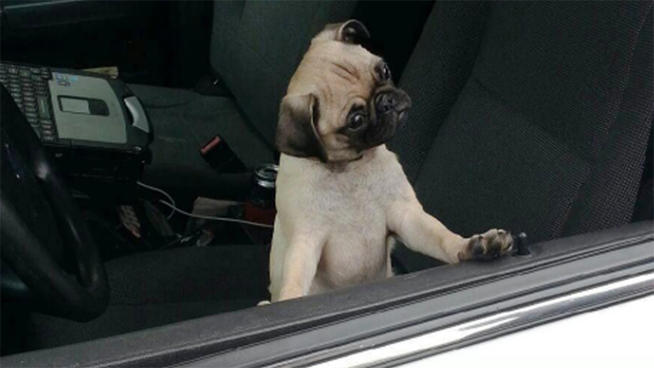
pug-puppy

If you ever want to explain the concept of signature significance in ethics—how one act can be sufficient evidence to make a fair and valid judgment about someone’s character—to a friend or colleague, this story should do the trick.

In California, a kind woman named Shawna Hamon heard about a 7-year-old girl with leukemia whose Christmas wish was for Santa to bring her a pug puppy. So Hamon bought a pug puppy, and gave it to a friend who promised to deliver the little dog to the girl in Sacramento in time for the holidays.

The puppy never arrived, however.  The friend decided to keep it for herself. Hamon sent an animal delivery service and an attorney to the woman’s Los Angeles home, but the woman refused to give the dog back. Then Hamon  filed a theft complaint and police got a search warrant to search the home, but found no pug puppy. After searching some other nearby homes, they eventually found the little dog at a neighbor’s  house, where the pug-napper had hidden it.

Hamon now has the dog back, and learned her lesson. She will deliver it herself this time, a bit late, to the sick little girl. The child is currently receiving experimental treatment for leukemia in Philadelphia.

Now, what are the chances that the woman who took the dog, a desperately sick child’s Christmas gift, for herself, and foiled the compassionate act of a friend in the process, was just having a bad day, just made one mistake, really is a fine, upstanding, trustworthy individual and can’t be judged conclusively as an unethical cur (no offense, puppy…) based on this one incident, because a single episode has no statistical and predictive significance?

None.

____________________________

Pointer: Fark

Facts and graphic: NBC

Can A Prostitute Be Raped?

On Nov. 5, we'll find out if W.C. Fields' low opinion of Philadelphia was justified...

On Nov. 5, we’ll find out if W.C. Fields’ low opinion of Philadelphia was justified…

An unethical and incompetent judge in Philadelphia doesn’t think so, thus making a powerful argument against electing judges, being a prostitute, and living in Philadelphia.

Philadelphia Municipal Court judge Teresa Carr Deni ruled that the 2007 rape of a prostitute at gunpoint was merely “theft of services.”The  woman had agreed to meet a man have sex with him for the bargain fee of $150. He asked her if his friend could join in the fun for an additional $100, and she agreed. When these two sterling citizens arrived for the appointment, however, they held her at gunpoint and forced her to have sex with them free of charge.

If this isn’t rape when a prostitute is involved—forced, unconsented intercourse, through the threat of deadly force—then any prostitute can be raped at will, with the worst charge being “theft.” Selling sex doesn’t convert sexual battery into nothing, a non-crime, once consent for that sale is withdrawn. If you know someone is preparing to sell blood to a blood bank, and you attack him, subdue him, and drain his blood to sell yourself, is this merely theft, or a crime of violence? If he was going to be an organ donor, and you rip out his kidney, is that just theft? There is no route through law or reason that allows us to ignore the fact that a woman was forced to have sex with two men without her consent. Judge Deni clearly has a monstrous bias against prostitutes, and thus believes that they shouldn’t receive equal protection under the law. When criticized, her rationalization was that prosecuting the men for rape “minimizes true rape cases and demeans women who are really raped.” Continue reading

Ethics Hero: Minneapolis Dairy Queen Manager Joey Prusak

"Good job, Joey!You made Dairy Queen proud and brought honor to the store, Here's 40 dollars."

“Good job, Joey!You made Dairy Queen proud and brought honor to the store, Here’s 40 dollars.”

It’s a simple story, trivial in a way, but with an important ethics lesson.

Joey Prusak, the 19-year-old store manager at a suburban Minneapolis Dairy Queen, watched as a female customer with a heart of ice saw a vision-impaired man drop a $20 bill, picked it up, and instead of returning the money to the unaware customer, slipped it into her own purse. When the certifiably awful woman got up to the counter to order, Prusak told her what he had seen and demanded that she return the bill as a condition of service. The woman, as one might expect from someone who would take money under such circumstances, refused, so Prusek reimbursed the visually impaired customer with $20 of his own.

A customer who saw the incident e-mailed Dairy Queen in praise, and now Prusak has become something of a folk hero.

The important ethics lesson is “Fix the problem.” If you are in a position to right a wrong or prevent one, it has become your obligation to do it. Don’t adopt  any of many rationalizations available to persuade you to do nothing— “It’s not my job,” “Mind your own business,” “Who am I to judge?”, “It’s not my fault”, “What if I’m wrong?”—or, in a case like this one, manufacture excuses for the vile miscreant who took the money—–“Maybe she’s desperate,” “Finders keepers”-–and just act. Fix the problem. Continue reading