Sometimes I receive terrific comments to posts via e-mail, and sometimes I decide to make them Comments of the Day. And sometimes I decide to do that and forget, like I did with this comment, from Neil Penny, in response to my July 26 post about Dollywood forcing a patron to cover the mild political message on her T-shirt that “might offend some.” Neil’s comment was about the anecdote included in my post, relating how the dress code at my college was brought down by a concerted effort to comply with its letter rather than its spirit, and how the subsequent loss of decorum in the dining hall was regarded my many students, including me, as a diminishment of the experience. Here is that lost “Comment of the Day”—my apologies to Neil for the delay: Continue reading
tolerance
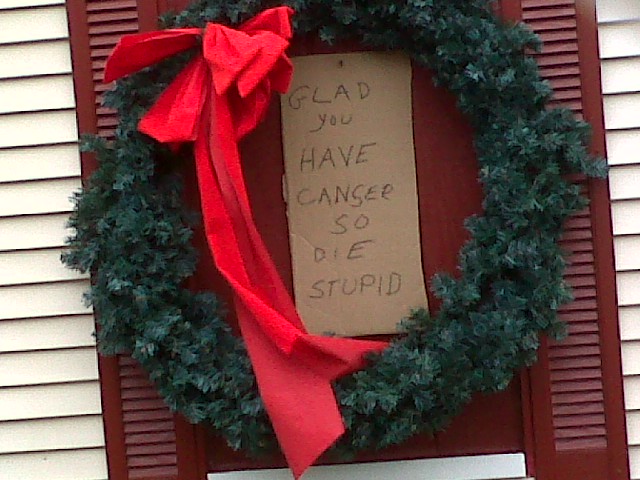
Hate Thy Neighbor: the Cranston Ethics Train Wreck
Cranston, Rhode Island resident Edward Jimmis, it is fair to say, is an idiot.
That’s okay. There are a lot of idiots, and they do very well. Many of them, perhaps a majority, are even in Congress. Now, when the constituents of a Congressional districts represented by an idiot get tired of the idiocy, they have a very effective remedy. They can vote the idiot out of office, and this is fair, ethical, and effective, though not exercised nearly as often as it should be. What is the ethical response, however, when you discover that your neighbor is not only an idiot, but an especially hateful and uncivil idiot? This is the challenge facing the neighbors of Edward Jimmis. They may not have the right answer. Continue reading
Comment of the Day: “The Atheist, the Graduation, and the Prayer”
Tgt, the Ethics Alarms resident atheist, backs graduating high school senior Damon Fowler, voting for “hero” rather than the jerk-in-training assessment of my original posts on the topic, to be found here and here.
“I think impeding the encroachment of religion into schools is important, especially when it is unpopular to do so. While Damon is not actually hurt from school backed prayer, some of the other listeners will be: anyone who gets the impression that the school and government back Christianity, anyone who feels they must believe to fit in.
“The danger in this prayer isn’t that Damon will be hurt or his rights violated. The danger is to the weaker people unwilling or unable to stand up against this behavior. The danger is to the children not yet graduated, that they will learn in an environment that sees a place for superstition and pandering at a ceremony that should be celebratory.”
More on “The Atheist, the Graduation, and the Prayer”
Either by design, bias, or because I was not sufficiently clear (always a distinct possibility), a lot of readers seem to have misunderstood the central principle in my post about Damon Fowler, the Louisiana high school senior who singled-handedly bluffed his school out of including a prayer in his graduation ceremonies. Let me clarify.
The post is only incidentally about atheism vs. religion. The ethical issue arose in that context, but it just as easily could have been raised in other circumstances. The ethical values involved here were prudence, tolerance, self-restraint, proportionality, consideration, generosity, and empathy. Fowler’s actions assumed that preventing what he believed was a violation of the Constitution’s prohibition on the government favoring one religious belief over another justified ignoring all of these. They don’t, and the same conclusion applies whether we are discussing a technical legal violation, a breaching of organizational rules, or personal misconduct.
Anyone who reads Ethics Alarms knows that I believe that the culture only becomes and stays ethical if all its participants accept the responsibility of flagging and, when necessary, condemning and stopping harmful societal conduct, as well as unethical personal conduct that will be toxic to society if it becomes the norm. Nevertheless, society becomes oppressive and intolerable if every single misstep, offense, violation, possible violation, arguable violation or mistaken judgment is cause for confrontation, conflict and policing, without regard for context and consequences. Indeed, much of the challenge in ethical analysis involves deciding what kind of misconduct matters, even once the question of whether something is misconduct has been settled. Continue reading
E-Mail Revelations: Prof. Ellen Lewin’s Unprofesssional Intolerance
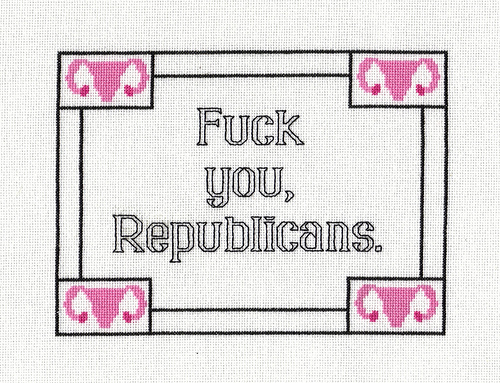
Ellen Lewin, a University of Iowa Professor of Anthropology and Gender, Women’s & Sexuality Studies in the Department of Gender, was so enraged by an e-mail invitation sent to the entire campus by the student Republican group that she fired off an e-mail in reply that said, succinctly,
“FUCK YOU, REPUBLICANS!”
The young Republicans circulated the e-mail, and now many people and groups are calling for her dismissal. The incident has raised more ethical questions than mere civility. Continue reading
Are Citizens of Warring Nations “Innocent”?
“Innocent” and “civilians” apparently go together like a horse and carriage, if one is to believe the cliché used with increasing regularity by journalists, bloggers and even elected officials. The instance that finally provoked me to write about the irresponsible acceptance of this falsehood was the gratuitous appropriation of it by a sportswriter, who, if I understand him correctly, feels the United States has no standing to object to baseball star Barry Bonds’ lying and cheating because it dropped atom bombs on “innocent civilians” in Hiroshima and Nagasaki. (The sportswriter neglects to mention that these act occurred during wartime; perhaps he doesn’t know.) The exoneration of civilian citizens for the acts of their governments is a relatively new phenomenon, one happily endorsed by the habitually politically correct. It is untrue, and it is time to blow the whistle. Ethics foul. Continue reading
Lesson of the Asian-Bashing UCLA Video: Shunning and Intolerance Work. Good.
Alexandra Wallace, the UCLA student who created an obnoxious and offensive video stereotyping her Asian colleagues as gibberish-spouting boors, announced that she was leaving the school as a result of “being ostracized” by “an entire community.” Yes, I’d say that was the idea, and it is how cultures enforce its values. And it works.
Wallace picked the day of the Japanese tsunami to post her anti-Asian rant on YouTube, where it promptly went viral. It also made her an instant pariah on her campus, where over a third of all students are of Asian heritage, and the rest of them, unlike Alexandra, have at least a vague concept of mutual respect and decorum.
You can read a complete transcript of the three-minute diatribe here, but this shortened version gives a sense of what infuriated Asians, UCLA, and just about everyone else: Continue reading
Comment of the Day:”Yes Julea,You Have A Right To Your Beliefs; You Just Don’t Have A Right…”
An Ethics Alarms heartfelt thank you and “I owe you one!” to Ethics Sage, for cutting to the other core ethical point about what was wrong with Julea Ward’s refusal to counsel a gay student, and why she should have been dismissed from the university course as a consequence. It wasn’t just failure of responsibility, which my post was fixated on, but also failure of caring, compassion, and our shared duty as human beings to help each other even if our religion encourages us to regard those human beings as immoral.
Ethics Sage shows his handle ain’t just horn-blowin’ with this Comment of the Day, on the post “Yes Julea,You Have A Right To Your Beliefs; You Just Don’t Have A Right…”
“Julea Ward’s refusal to counsel a gay student is despicable on many levels. What if the student’s life had been threatened and he went to counseling to get some advice? How can anyone not act to help a person in that kind of situation or others we can think of that may or may not have anything to do with being gay? By refusing to counsel the gay student, Ward failed miserably not only to meet the requirements of the course but to act as a human being with compassion for another.”
Yes Julea,You Have A Right To Your Beliefs; You Just Don’t Have A Right To A Job That Your Beliefs Won’t Let You Do. Why Is This Not Obvious?
There are some issues where conservatives are just ethically, logically and legally misguided, and the issue of exercising “religious conscience” in the course of performing specific duties and services is one of them.
Julea Ward was dismissed for failing to meet the requirements of her course when she refused to counsel a gay student while studying counseling at Eastern Michigan University. Ward later sued, saying that she told her supervisor at EMU she believes homosexuality is immoral and being gay is a choice, and that she could not in good conscience counsel a gay client. A federal court dismissed the case in July, but Ward’s lawyers have asked the U.S. Court of Appeals for the Sixth District to step in. She claims that her right to worship as she pleases is being infringed. Continue reading
The NPR Ethics Train Wreck
Ethics train wreck scholars take note: when an organization’s image and existence is based on multiple lies, an ETW is inevitable.
National Public Radio is now in the middle of a massive, six-months long ethics train wreck that began with the hypocritical firing of Juan Williams on a trumped-up ethics violation. The disaster exposes the culture of dishonesty and entitlement at the heart of NPR, and by extension, the Corporation for Public Broadcasting. To the extent that their supporters blame anyone else, it is evidence of denial. This is a train wreck, however, and the ethics violators drawn into the wreckage are many: Continue reading