How The Fact Checkers Cheat: A Case Study

“AHHAHAHAHAHAHAHA!!!”

A promising journalism watchdog website has come to my attention: Media Bias/Fact Check (MBFC News). On the “About” page we learn that it

…is an independent online media outlet. MBFC News is dedicated to educating the public on media bias and deceptive news practices. MBFC News’ aim is to inspire action and a rejection of overtly biased media. We want to return to an era of straight forward news reporting….MBFC News follows a strict methodology for determining the biases of sources….MBFC News also provides occasional fact checks, original articles on media bias and breaking/important news stories, especially as it relates to USA politics…

This is a relatively new site, launched in 2015.  It is unusual in that it aims to find both conservative and liberal bias alike. It will be interesting if it can keep to the middle of the road with all the crazy traffic coming at it from all directions. As Ethics Alarms can attest, this is harder than it looks.

The first example of MBFC News’s work (for me) is promising. As readers know, I distrust  factcheck sites and fact-checkers, as well as the periodic fact-checking exercises by sources like CNN. While sometimes a particular fact-checker may be fair and responsible, the same source can be overwhelmed with bias in another instance, and use dishonest or misleading means to discredit some disliked politician, usually a Republican. Some prominent fact-checkers. like Snopes and Politifact, are routinely biased and exist primarily to make progressives smile. Others, like the Washington Post’s “The Fact-Checker,” Glenn Kessler, have good days and bad days. At least Kessler tries; like many of his breed, however, he never learned what a lie is.

My favorite of the fact-checker services has long been FactCheck.org., which also tries to be even-handed, and is more careful than Kessler. Thus I was impressed to see that when MBFC News set out to see how fair the fact-checkers were when they examined Donald Trump’s State of the Union Message, it examined the best. So did I, and was hunkering down as I prepared a post on what appears to be the Annenberg Foundation’s project’s capitulation to “the resistance.”

How I love it when someone else does my work for me, and does it well.  In an article that factchecks the Factcheck.org factcheck (whew!) of the speech,  Karen O’Connor Rubsam writes,

“First, there are some global observations regarding the Factcheck.org article. Factcheck.org seems only to identify what they perceive as incorrect statements.  To be unbiased there should be some commentary on the entire address along with an overall assessment as to how much was “factual” versus “not-factual.”  A more thorough reporting of the entire address can be found here. Additionally, as shown below, factcheck.org introduces opinion and “biased words” in much of their fact-checking. Further, there appears to be some bias in how factcheck.org transferred the salient points from their analysis to the Summary bullet points.  Accurately reporting in the summary bullet points is important since many readers will just read the bullet points.”

Read it all at the site, which deserves the traffic, much as I would love to put up the whole thing. Two examples should suffice: when I read the Factcheck.org analysis, these points, far from the worst,  caused me to conclude that the site had finally started playing typical factcheck games and gone over to the Dark Side, where bashing the President is deemed more important than being fair and truthful. (I promptly exiled it from the Ethics Alarms links): Continue reading

Morning Ethics Warm-Up, 2/1/18: Bias Makes You Stupid, But “The Big Stupid” REALLY Makes You Stupid..

Gooooooooood Morning!

1 The Big Stupid. There is a regular flow of ideas and theories from academia and politics that I categorize as “The Big Stupid”: irrational, ideologically-loaded, often dangerous assertions that are seductive to the weak-minded and easily-duped. The problem is that to keep these bad ideas from taking root, one has to actively engage in debunking them, which ironically gives their advocates staying power and credibility. One of the most popular of the current crop of Big Stupid positions is the attacks against “cultural appropriation,” which is a deceptive phrase designed to make something unequivocally good sound sinister. In this case, the completely positive and benign cultural process at the heart of the American experiment, the process of diverse people and cultures becoming one by sharing and adopting the best of what each has to offer, is being scorned as a tool of white supremacy, privilege, oppression and capitalism.

The latest screed in this particular Big Stupid is “Yoga and the Roots of Cultural Appropriation,” co-authored by Michigan State University professor Shreena Gandhi andantiracist white Jewish organizer, facilitator, and healer”  Lillie Wolff. Wolff got her degree from Kalamazoo College in Kalamazoo, Michigan, and the article is published in a Kalamazoo College publication.  The river, Michigan city and College take their name from a Potawatomi Indian Tribe word, but that kind of “cultural appropriatiion” doesn’t matter to the authors, or something.

Don’t expect consistency in the Big Stupid.That would be stupid.

The article is full of Authentic Frontier Gibberish, Academic Division, of the sort that used to send me screaming out of late night bull sessions in college, like,

“Yoga, like so many other colonized systems of practice and knowledge, did not appear in the American spiritual landscape by coincidence; rather, its popularity was a direct consequence of a larger system of cultural appropriation that capitalism engenders and reifies. While the (mis)appropriation of yoga may not be a life-threatening racism, it is a part of systemic racism nonetheless, and it is important to ask, what are the impetuses for this cultural “grabbing”?”

and Continue reading

Hillary Clinton Ethics And #MeToo Integrity

But first, a diversion:

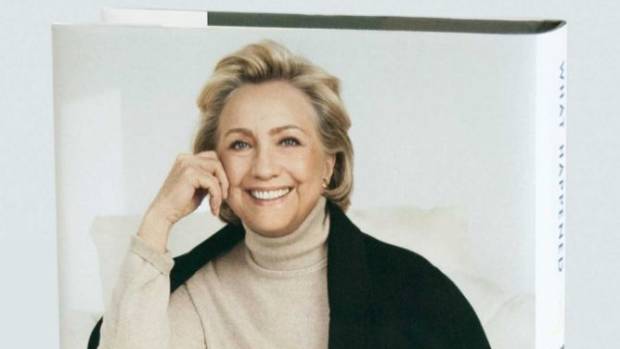
I gave my sister “What Happened” as a gift, I hadn’t turned it over, so I saw the alleged photo of the author for the first time when she took off the wrapping. (This was a late Christmas gathering.) Hilarity ensued. Here is what we saw:

Now here’s an up-to-date picture of me:

Not to be petty or anything, but flattering photos are one thing, and extreme misrepresentation is another. Hillary’s book jacket photo is a visual lie, showing vanity and a lack of integrity….just like her book.

But I digress…

Yesterday  Clinton responded to a New York Times story revealing how she handled allegations of sexual harassment within her 2008 presidential campaign. After  her campaign spiritual adviser, Burns Strider, was accused by a young female staffer of repeated sexual misconduct, Hillary refused to fire him, instead docking him several weeks of pay telling  him to seek counseling. The young woman was moved to a new job. Clinton didn’t dispute the facts. She said this (WARNING: HEAD EXPLOSION RISK!) via Twitter: Continue reading

Comment Of The Day: “Ethics Quiz: ‘NCIS’ Ethics”

[ Again I am awash in Comments of the Day. There’s no question about it: the comments here are getting better, and more commenters are participating. There are also more comments being made to posts than ever before. 2017, despite a 10% drop in traffic from 2016, set a record for comments. This blog was always designed to be an interactive online colloquy on ethics. More views, links and shares would be nice, but I’ll take more and better comments over volume any day. You all are doing a terrific job. I may  have to make “Comment of the Day” a daily rather than an occasional feature. That would be progress.]

The latest Ethics Quiz was about this week’s “NCIS” episode in which the federal agency’s director got all misty eyed and proud to learn that his daughter had accepted the blame (and the charges) for her friend’s shoplifting because her friend was 18 (and a habitual shoplifter) and the offense would end her dream of college. Ethics Alarms readers were asked whether this was a responsible ethics message for Mark Harmon’s long-running procedural to send, especially to any children watching.

The quiz attracted uniformly excellent responses (my take is here).

Here is Greg’s Comment of the Day on the post, Ethics Quiz: “NCIS” Ethics:

I would say that the daughter acted foolishly and the father acted unethically.

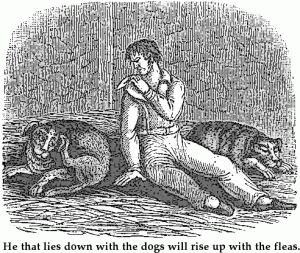
The father has a duty to teach and protect his children, which he utterly failed to fulfill in this case. His daughter is showing disastrously poor judgment, placing her future seriously at risk, and he needed to set her straight. He should have lectured her on the enduring truth of the adage, “Lie down with dogs, rise up with fleas.” She should not be spending any time at all with an incorrigible thief. This other girl is big trouble. She has already gotten the daughter arrested once and if the daughter continues to hang out with her, the odds are high that she will do it again. The lesson that the daughter should have learned from this incident is that she needs to shun the company of this supposed friend. Instead, the incident has bound them together even more closely. Continue reading

Morning Ethics Warm-Up, 1/17/18: Have You Heard About The Adulterous Governor?

Good Morning!

Just one issue to warm-up with today, but a juicy one, with sex, lies, and tape! Two kinds of tape, in fact…

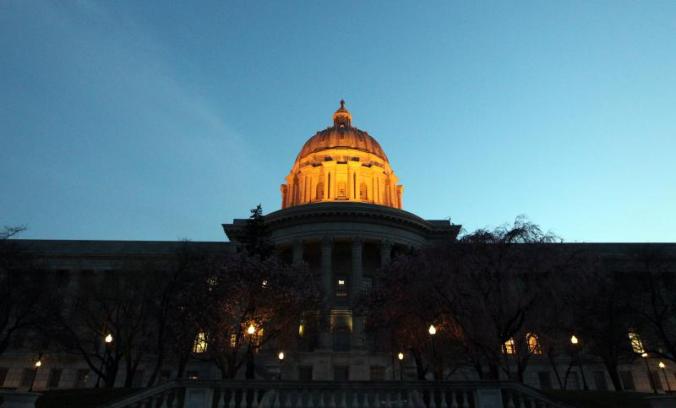
I find it peculiar that the travails of Missouri Governor Eric Greitens have received such light coverage in the news media; after all, this is great chance to embarrass a Republican. If you missed the story, it goes like this:

During his campaign later during his first year in office as Missouri’s Governor (he began his term a year ago), Eric Greitens proclaimed himself a family values guy. During his campaign announcement, he stated: “I’m Eric Greitens, I’m a Navy SEAL, native Missourian and most importantly, a proud husband and father.” Rumors of past extra-marital dalliances surfaced, and the Governor denied them.

An un-named lover’s ex-husband,however, blew the whistle to the news media, providing an incriminating tape in which the woman said she had a single sexual encouter with Grietens  and that he tried to blackmail her to ensure her silence.  “He took a picture of my wife naked as blackmail. There is no worse person,” the ex-husband told reporters. There are also allegation that Grietens slapped her. The woman  has not made an on-the-record comment about the story.

In a recording released by CBS News, the unnamed woman is heard saying,

“I knew he was being sexual and I still let him. And he used some sort of tape, I don’t know what it was and taped my hands to these rings and then put a blindfold on me. He stepped back and I saw a flash through the blindfold and he said you’re never going to mention my name, otherwise, there will be pictures of me everywhere….He tried kissing my stomach and tried to kiss me down there but didn’t quite get there because I flipped out and I said you need to stop.”

Last week, the Governor and his wife released this statement:

“A few years ago, before Eric was elected Governor, there was a time when he was unfaithful in our marriage. This was a deeply personal mistake. Eric took responsibility, and we dealt with this together honestly and privately. While we never would have wished for this pain in our marriage, or the pain that this has caused others, with God’s mercy Sheena has forgiven and we have emerged stronger. We understand that there will be some people who cannot forgive – but for those who can find it in your heart, Eric asks for your forgiveness, and we are grateful for your love, your compassion, and your prayers.” 

Sheena Greitens added:

“We have a loving marriage and an awesome family; anything beyond that is between us and God. I want the media and those who wish to peddle gossip to stay away from me and my children.” 

The allegations of blackmail and now of battery are being investigated. Some lawmakers from both parties are calling on the Governor to resign.

Last week, an attorney for Governor Greitens released the following statement:

“We have been asked repeatedly by reputable news outlets why we believe this nearly three-year-old news story is coming out now. The latest reporting has finally disclosed that the reporting was being driven by a “source” who is the former Democrat state party chairman and who apparently has not spoken to the person in question. This goes a long way to explaining what is going on – this is a political hit piece.

This is and remains an almost three-year-old private matter with no matter of public interest at stake. Eric and Sheena have worked through those issues long ago and I think that Sheena put it best: ‘We have a loving marriage and an awesome family; anything beyond that is between us and God. I want the media and those who wish to peddle gossip to stay away from me and my children.’ Now we know who has been peddling that gossip.”

Thoughts: Continue reading

Ethics Update On The “Shithole” Scandal: More Dunces, Hacks, Hypocrites And Liars

When we last left the ‘Shithole’ scandal, now being cited routinely up and down the news media as proof positive that the President is a racist, we knew the following:

1 Unnamed sources “briefed on” or “familiar with” the President’s meeting with select lawmakers regarding an immigration deal told the Washington Post and others that President Trump “grew frustrated with lawmakers” when he learned that part of the proposed deal protected immigrants from Haiti, El Salvador and African countries, and said,

“Why are we having all these people from shithole countries come here?”

2. Despite the fact that these “sources” had no direct knowledge of what was said in the meeting they did not attend, the New York Times characterized them as having “direct knowledge,” which was impossible. The news media also represented these accounts based on briefings as fact, with headlines such as the Times’ “Trump Alarms Lawmakers With Disparaging Words for Haiti and Africa.”

3. In a series of tweets, the President denied the characterization of what he had said.

4. Senator Dick Durbin, while not expressly quoting the President, told reporters that Trump had said things “in the course of his comments which were hate-filed, vile and racist,” and added, “I use those word advisedly. I understand how powerful they are. But I cannot believe in the history of the White House in that Oval Office that any president has ever spoken the words that I personally heard our president speak yesterday.”

5. Nonetheless, the news media, in its subsequent coverage in cable news shows and on the web, treated the claim that Trump had said what the second-hand, anonymous sources had claimed, and used this as a departure point for a general discussion of how racist and vulgar the President was. CNN commentators used the term “shithole” over a hundred times.

6. Websites and blogs with commentators capable of fairness and objectivity, like Ethics AlarmsAlthouse, and Powerline, were forced to accept arguendo (I’m sorry, but I love using that word) the anti-Trump narrative’s assumptions in order to point out that calling countries that are, in fact, “shitholes” is not a racist statement about the people in those countries. This, of course, is how Big Lie propaganda works. You have to accept the lie in order to debunk it.

To sum up, then: The news media reported as fact what were in truth  disputed comments in a private meeting, and the representation of these as truth solidified during the day and evening, and through yesterday.  Now we get headlines like this one, in Entertainment Weekly: “Anderson Cooper chokes up while discussing Trump’s ‘sh–hole’ comment”

Updated Comments and observations: Continue reading

Morning Ethics Warm-Up: 1/12/2018: Sigh. It Never Ends. (Part II) [UPDATED]

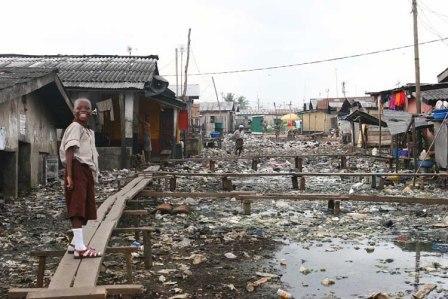
A Nigerian locale, and not an atypical one.

From the Washington Post:

President Trump grew frustrated with lawmakers Thursday in the Oval Office when they discussed protecting immigrants from Haiti, El Salvador and African countries as part of a bipartisan immigration deal, according to several people briefed on the meeting.

“Why are we having all these people from shithole countries come here?” Trump said, according to these people, referring to countries mentioned by the lawmakers.

Trump then suggested that the United States should instead bring more people from countries such as Norway, whose prime minister he met with Wednesday. The president, according to a White House official, also suggested he would be open to more immigrants from Asian countries because he felt that they help the United States economically.

In addition, the president singled out Haiti, telling lawmakers that immigrants from that country must be left out of any deal, these people said.

“Why do we need more Haitians?” Trump said, according to people familiar with the meeting. “Take them out.” 

Ethics Observations:

I. “According to several people briefed on the meeting”? What? Not even according to people AT the meeting?

Based on this, without any attributions, the news media is stating that Trump making those alleged comments are fact. Here’s the Times version,

“…according to people with direct knowledge of the conversation.

No, they don’t have “direct knowledge.” What someone tells you about what someone else said at a meeting you were not attending is indirect knowledge. It is, in fact, hearsay. If the Times and the Post did not get confirmation on the record from someone who heard what he said, then this is not fact, but rumor, inadmissible in court because of extreme prejudice and lack of reliability.

Never mind. The Times headline is Trump Alarms Lawmakers With Disparaging Words for Haiti and Africa, as if the second-hand accounts were  confirmed fact. This is unethical journalism. Outrageously so, in fact. Meanwhile, all of the news channels, including Fox, were basing hours of reporting on it.

This is not acceptable. It is not professional, and it is not justifiable. It is a disgrace, and if you accept it, you should be ashamed of yourself.

II. Trump denies that he uttered those words, on Twitter, of course:

“The language used by me at the DACA meeting was tough, but this was not the language used. What was really tough was the outlandish proposal made – a big setback for DACA!…Never said anything derogatory about Haitians other than Haiti is, obviously, a very poor and troubled country. Never said “take them out.” Made up by Dems. I have a wonderful relationship with Haitians. Probably should record future meetings – unfortunately, no trust!”

The denials mean nothing, I know. The President has such a bizarre view of reality and such a record of misstatements and reversals that he has no credibility and deserves none. However, that doesn’t mean that he did make the alleged statements either. I wouldn’t be surprised if he did. I certainly wouldn’t be “shocked.” It sounds like something he would say, because nuances of language and tone, not to mention civility ande diplomacy, are alien concepts to him. In other words, it rings true. That doesn’t mean it’s ethical to report it as fact. Continue reading

Comment Of The Day: Public Confidence And Trust (2): Observations On Gallup’s Confidence In Institutions Poll

After Charles Green‘s recent  Comment of the Day on the post, Public Confidence And Trust (1): Observations On Gallup’s Trust In Occupations Poll, I was pretty sure that there would be an encore when I posted Part 2, an overview of the Gallup poll on public trust and confidence in American institutions. Charlie didn’t disappoint, so here is his Comment of the Day on the post, Public Confidence And Trust (2): Observations On Gallup’s Confidence In Institutions Poll:

…I agree with you that this stuff is as mission-critical as anything.

As you know, my life’s work is studying trust, and while I focus on interpersonal trust, you can’t ignore the systemic institutional issues either. In fact, they are connected.

In fact, I agree with your fundamental point that the cure for what ails our institutions must lie in personal behaviors, personal relationships, personal ethics.

Without taking anything away from that fundamental and massive agreement, let me suggest two tweaks to the issue as you have presented it.

The first is that this is NOT simply a US phenomenon. I recommend even more sobering reading from the Edelman Trust Barometer, a study that has been ongoing for over a decade. See the 2017 version here: https://www.edelman.com/global-results/

That survey covers about 18 western countries: fully half of them report the level of distrust in institutions – business, communications, NGOs, CEOs, etc. – not materially different from what we see in the US. Continue reading

Comment Of The Day: “Public Confidence And Trust (2): Observations On Gallup’s Trust In Occupations Poll”

British commenter  Andrew Wakeling has a harsh take on professional ethics, but one worth pondering.

Here is his Comment of the Day on the post, Public Confidence And Trust (1): Observations On Gallup’s Trust In Occupations Poll:

I worked very hard to qualify as an ‘xyzist’ (initially in the UK finance industry in the 1970s) and the profession has served me very well, across much of the world. Part of the reason why I could earn big bucks was that I was trusted. My employer needed my sign off. The head regulator was generally a qualified ‘xyzist’ too. No Board would dare go far without support from a qualified ‘xyzist’.

The professional body (The Institute of ….) was strong, controlling entry (with hard exams), and policing behaviour with professional standards, codes of conduct and a disciplinary system. The profession largely wrote the rules and regulations for the industry. We always maintained we were acting in the ‘public interest’. At least superficially, we took our version of ‘noblesse oblige’ very seriously.

We, of course, weren’t the only elite and cosy profession, and in times of stress we could join together with others (lawyers, accountants, elite civil servants etc.) to present a united front against ‘unsound’ proposals.

That cosy world has now largely disintegrated, and perhaps it deserved to. Margaret Thatcher viewed the professions with particular suspicion as being self serving and in restraint of trade. The tide in academia has been towards open competition and ‘freedom with disclosure’, and quite unsupportive of unaccountable elites (largely male and similarly educated) setting the rules. Continue reading

Public Confidence And Trust (2): Observations On Gallup’s Confidence In Institutions Poll

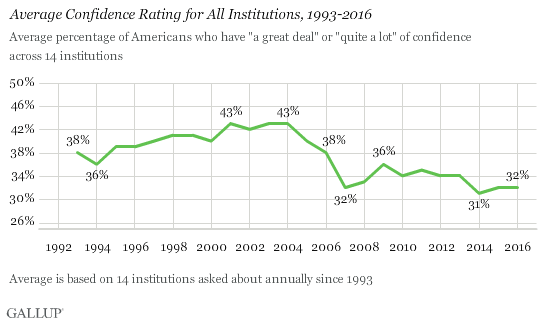
In Part 1, we looked at the implications of Gallup’s 2017 polling on Americans’ beliefs in the trustworthiness and honesty of various occupations.  This post looks at institutions, and what Gallup’s research shows us when those polled answer the question, “Now I am going to read you a list of institutions in American society. Please tell me how much confidence you, yourself, have in each one — a great deal, quite a lot, some or very little?”

As with the occupations poll results, what is most interesting—or depressing— is how the public’s attitude has changed over time. Gallup has been taking this poll at the end of every year since 1993, and in some years, for some institutions, before that.

The most important finding is that Americans have less trust and confidence in our institutions than ever before, and have been in this state for three straight years. (See chart above.) The 32% average confidence level in all institutions measured was one point above 2016, which came in at a record low 31%, but that difference is not statistically significant. This is the third straight year that the number has been under 33%. That has never happened before.

I have written about this issue in the past (and discussed it with professional groups, like newly elected state legislators, in ethics seminars), with the same alarm. For a democracy to lack confidence and trust in its institutions portends disaster, and the danger cannot be understated. Of all forms of government, it is democracy that is most built on a foundation of public trust. This erosion in public trust—the average level of trust has fallen about 26% in just ten years—is collectively frightening. Look at the first line and the last in many of these charts: Continue reading