Ethics Dunce: Suspended Giants Outfielder Melky Cabrera (And Not For The Reason You Think)

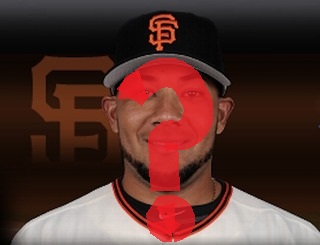
Who is “Melky Cabrera” really?

Melky Cabrera shocked Major League Baseball by getting caught mid-season using banned metabolic steroids, it’s true. It is also true that this marks him for all time as a cheater, and something of an idiot, since the penalties for PED (performance enhancing drug) use are devastating to a baseball player’s reputation and wallet, and because, unlike when Barry Bonds was breaking records and racking up MVP trophies while being juiced, the game has belatedly decided that it isn’t going to let games, championships and records be distorted by chemical means.

Melky, however, is special among baseball’s cheaters. Only he, as far as we know, decided to attempt an elaborate internet deception to try to duck responsibility after he had been caught.

From today’s New York Daily News: Continue reading

Ethics Dunce: The ACLU

I suppose they just can’t help themselves, sometimes.

So handsome…and so foolish to mess up with partisan politics.

I support the American Civil Liberties Union because of its mission, and because it is on the correct side of issues more often than not. Still, it is stocked with left-wing ideologues, and too often is blatantly political, which damages its reputation, perceived integrity and effectiveness. Every American should be a supporter of a non-profit organization that stands for individual rights and freedoms as defined by the Constitution. Once such a group aligns itself clearly with one side of the political spectrum, however, this is impossible. At very least, the organization should refrain from partisan political attacks, which raises questions of conflict of interest, fairness, and independent judgment. The ACLU is too important to sully with political bias, but since it is run by people full of it, such taint is inevitable.*

Thus we have the embarrassing “report” by ACLU Liberty Watch. I can’t tell what the affiliation with the ACLU is; I assume that the ACLU approves and oversees an entity that leads with its name. This report attacks Mitt Romney’s running mate, Rep. Paul Ryan, as being “anti-civil liberties,” using the most dubious and extreme rationales to do so. My instant reaction: How can I trust an organization that proudly publishes such slanted trash with such obvious partisan intent to be a dispassionate watchdog on my civil liberties?

The answer: I can’t. Neither can you. Continue reading

The Despicable Ryan Holiday

Sub-title: “Buy This Book—You’re An Idiot”

You know those science fiction movies where a scientist can’t get anyone to listen to him about the threat of a man-made virus getting out of control and destroying the world decides to prove his point by creating a virus that then gets out of control and destroys the world? Or the ones about the government computer geek who drives people crazy complaining that the nation’s systems are vulnerable to cyber-attack, so he creates a bug to prove his point and it sends the country back to the stone age?

Ryan Holiday is like those guys. Fortunately, he isn’t a scientist or tech whiz, just an unscrupulous writer and a liar, so his unconscionable stunts to “prove a point” don’t risk ending civilization. Ethically, however, he is no better than those fictional characters, and arguably he is worse. At least those brilliant boobs were trying to prevent a catastrophe. Holiday is just trying to sell his book.

The book is about the news media’s vulnerability to bad information, so Holiday, a 25-year-old marketing director for American Apparel, decided to prove his thesis with an “experiment.” He got himself listed as an “expert” on an online resource for reporters, and when they contacted him, he lied to them. One of the media sources that fell for his deception was the New York Times, which subsequently published this after a story using Holiday’s lies made it into the News That’s Fit to Print, when it wasn’t: Continue reading

Signature Significance, Jonah Lehrer, and That Sinking Feeling

Yes, uh, a little TOO MUCH creativity there, Jonah…

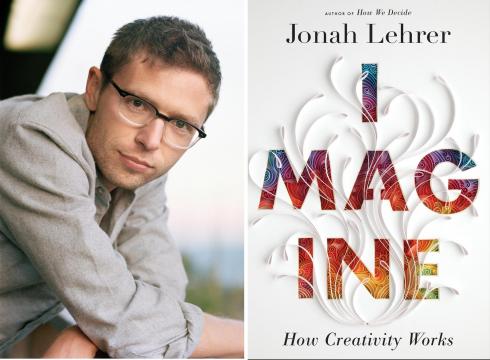
At the New Yorker, star writer Jonah Lehrer has resigned after it was shown that he fabricated quotes from Bob Dylan for his well-reviewed book “Imagine: How Creativity Works.”

This was the final shoe dropping that began with one untied shoelace, the discovery in June that Lehrer had plagiarized from himself, lifting a section of a piece published earlier in one publication to include in a piece written for The New Yorker. This is a minor ethical incursion—-Lehrer had represented the second essay as original, so using prior published material was dishonest even if he was the author—but it launched his employers on a mission of scrutiny, investigating to see if the one transgression was part of a trend.

When it comes to professional ethics, you see, it often is. The principle of signature significance holds that in some pursuits just one episode can be enough to make certain conclusions. A writer of true integrity never borrows from his own published work without flagging the fact. Doing so even once indicates shaky integrity, and a willingness to cut corners. It may well indicate a proclivity to cheat in more egregious ways. Continue reading

Ethics Quiz: Who Is More Unethical…the Coward Who Left His Girlfriend and Child to Die, Or the Girlfriend Who Agreed To Marry Him Anyway?

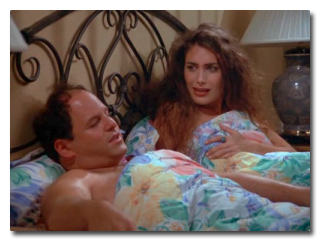
Would an ethical woman marry George?

I am a great fan of the old Seinfeld show in general and the George Costanza character in particular (all ethicists love George, who  exemplifies how messed up a life without ethical instincts can be), but I didn’t laugh at the episode when he smelled smoke at kids’ birthday party and trampled the children as he escaped in panic from the apartment. And that was just a TV sitcom; the actions of Jamie Rohrs, the Colorado man who ran out of the Aurora movie theater when James Holmes started shooting and drove away in his truck, leaving behind his girlfriend and her two young children—one of whom was fathered by him— go beyond unfunny to revolting. Luckily, and no thanks to Rohrs, Patricia Legaretta and her kids did not die, because a stranger, Jarell Brooks, helped them escape the theater and the massacre.

Then comes the rest of the story, revealed to Piers Morgan on CNN: after his act of aggravated cowardice, Rohrs had the gall to propose to the mother of his child, and Legaretta, incredibly, accepted.

Your Ethics Quiz:

Who is more unethical—Legaretta, or Costanza, er, Rohrs? Continue reading

Banning the Privacy Bomb

Yes, I think posting this photo is a lousy thing to do to your dog, too.

The stories come out routinely, and the opposing opinions are predictable. A boorish date dumps a woman via arrogant e-mail, which is promptly forwarded to thousands, making him a national laughing stock and pariah. A movie star sends an angry and mean-spirited message to his teenage daughter, who places it in the hands of the celebrity-devouring media…which then use it to savage the star’s reputation.  A Harvard law student takes an e-mail sent by a friend and fellow-student as a follow-up to a contentious discussion about race, and forwards it to minority advocates on campus, who then condemn the “friend” as a racist. A model live-tweets her encounter with the married actor sitting next to her on a flight, as he engages in awkward flirtation. In each case, defenders of the punitive distributor of the embarrassing communication argue that the victim deserved it, while critics of the conduct insist that it is a betrayal of privacy and trust.
We need to decide, as a culture, whether we believe that reasonable expectations of privacy should be respected or not; indeed, whether they should survive or not. Those who endorse, defend and encourage the kind of conduct in these incidents and many more are, whether they realize it or not, fouling the nest of our national culture and community, making not just privacy, but also friendship and intimacy, almost impossible. Continue reading

Unethical But Irresistible: The Trouble With Anonymous Sources

“Hello, CBS? Jan Crawford, please. Jan? I can’t talk too loudly because I’m on Justice Roberts’ wall…listen, I’ve got a…DAMN! Lost the signal again! That’s it, I’m dumping Sprint…”

The reverberations of Chief Justice Roberts’ surprise parsing of the Affordable Care Act continue unabated. He is, according to which pundit or analyst you read, a patriot, a fool, a traitor, a Machiavellian, a genius, a coward, a patsy or a hero. Now CBS reporter Jan Crawford has the Washington, D.C. elite chattering from their Manassas hotel rooms, where they have fled to find electricity and air conditioning, with a story that is headlined: “Roberts Switched Votes To Uphold Health Care Law.” Her story begins…

“Chief Justice John Roberts initially sided with the Supreme Court’s four conservative justices to strike down the heart of President Obama’s health care reform law, the Affordable Care Act, but later changed his position and formed an alliance with liberals to uphold the bulk of the law, according to two sources with specific knowledge of the deliberations. Roberts then withstood a month-long, desperate campaign to bring him back to his original position, the sources said. Ironically, Justice Anthony Kennedy – believed by many conservatives to be the justice most likely to defect and vote for the law – led the effort to try to bring Roberts back to the fold”

It is attributed to two anonymous “sources with specific knowledge of the deliberations.”

In the absence of named sources whose credibility can assessed for their own motives and reliability, Crawford’s report should be treated as no better than rumor. It is not being so treated, however. The story is headlined as fact, and the media is treating it as fact in many cases, though more responsible media sources are using the headline, “CBS: Roberts Switched Votes To Uphold Health Care Law.” Although all newspapers and legitimate news organization have ethical guidelines urging “caution,” “retraint”and “circumspection” in the use of anonymous sources to support a story, they are also addicted to them like crack. Most anonymous sources have good reasons to stay anonymous, prime among them the fact that they are breaking laws, regulations, professional ethics codes and bounds of trust by talking to reporters. Others have axes to grind and personal objectives served by planting stories. We can’t assess any of these things without knowing the identifies of the sources, and, of course, the targets of anonymous stories can’t defend themselves against ghosts. Continue reading

Comment of the Day: “Nomination For Enshrinement in the Hall Of Bad Ethics Ideas: A Hippocratic Oath For Scientists”

Zoebrain, the Aussie researcher who has enlightened many Ethics Alarms debates, provides delicious perspective to the post regarding scientific ethics, specifically regarding the question of whether scientists can or should pledge, like doctors, to “do no harm.”

Here is her Comment of the Day to Nomination For Enshrinement in the Hall Of Bad Ethics Ideas: A Hippocratic Oath For Scientists:

“Tell the truth, the whole truth – but possibly not nothing but the truth, as long as any opinion is unmistakably marked as such. Correct your past mistakes as you find them. Also be prepared to accept responsibility for the moral consequences of the power you provide to others being misused. Unless you feel it right to give them the power, you must accept personal responsibility and so withhold it. That’s not a Scientific sin, it’s a personal one.

“Providing the sharpest possible scalpel to a surgeon is one thing. Providing it to a vivisectionist of “untermenschen” another. Providing it as a toy for a 6-month-old baby yet another.

“The only scientific sins are knowing falsification of results, and omitting contradictory evidence. But scientists have responsibilities as humans too.

“Please have a listen to this song [ by musical satirist/scholar Tom Lehrer’s “Werner Von Braun,” about the amoral Nazi-turned-U.S. rocket-scientist.]:

Continue reading

Nomination For Enshrinement in the Hall Of Bad Ethics Ideas: A Hippocratic Oath For Scientists

Nope. No sewing machine. It will cause too much “harm.”

A blogger for the Lindau Nobel community asks, as a follow-up to a discussion raised in one of the august group’s recent meetings, whether scientists should have to take an oath similar to that traditionally (but not universally, by the way) taken by physicians, a pledge to “do no harm.”

No. Next question!

This is not merely a bad idea, but an arrogant and ignorant one. The medical profession is dedicated to healing, without regard to who is being healed. “First, do no harm” is a rational and excellent absolute principle, one that relieves the profession of the burden of many (but not all) complex utilitarian dilemmas that doctors and other health professionals may not be equipped to solve. Medicine is much narrower than science, and its limitations more clear. Most people would agree with doctors on what constitutes “harm” in 99% of the situations where the issue would be raised. Not so science, where one man’s monstrosity is another’s giant step for mankind. Continue reading

Comment of the Day: “Fast and Furious: An Open Letter To Columnist Colbert King”

Glenn Logan scores the Comment of the Day with his answer to the questions I posed in my open letter to Colbert King, the anti-corruption Washington Post columnist who nonetheless regards Congress’s inquiry into a possible Fast and Furious cover-up as trivial. He also penned a worthy candidate for ethics quote of the week: watch for the last sentence, which I bolded. Love it, Glenn!

I’ll have some additions to Glenn’s thoughts at the end; meanwhile, here is his Comment of the Day on the post, “Fast and Furious: An Open Letter To Columnist Colbert King.” Continue reading