“Uh, do you think we should say something to Brian?”
Yesterday Brian Williams announced that he was removing himself temporarily as anchor of the NBC nightly news broadcast, as NBC revealed that it was conducting an independent investigation, which certainly sounds like eyewash to me (and others.) The ethics issue, however, has expanded rapidly to the point where Williams’ fate—and at this point, I think he’s doomed—is almost incidental to the larger broadcast and news media ethics issues involved.
Maureen Dowd and others have revealed that NBC executives had been well aware that Williams was, to put it kindly in Dowd’s terms, “inflating his resume” and yet declined to stop it. In other words…
…they were aware he was lying to the public, which means that
…they were aware that he lies in public, which meant that
…their face, voice, anchor and head of their news division was a liar, indeed perhaps even a pathological liar, meaning that
…Williams was unquestionably untrustworthy, and
…a constant risk to misinform the audience, and
…they still didn’t remove him because his ratings were good and he was making money for the company.
It’s so discouraging. What chance has Ethics Alarms to help people learn the art of sound ethical analysis and problem-solving when the web is teeming with prolific ethics dunces like Matt Wilstein?
On Mediaite, which is supposed to specialize in news media commentary, analysis and criticism, staff writer Wilstein has delivered an archetype of atrocious ethics reasoning, packaged as a rationalization-fest to save Brian Williams’ imperiled job. It’s called Why NBC Shouldn’t Even Think About Firing Brian Williams, and the title is the most ethical thing about it. After all, it fairly and openly informs anyone tempted to read this trash that the writer is addled. It’s bad enough to argue that NBC News shouldn’t fire the man who is its public face after he proves that he cannot be trusted to convey facts accurately, but to argue that a network shouldn’t even consider ridding itself of such a public relations and professional disaster requires a naive, cynical and illogical view of business, the media (Wilstein’s field!) ethics and life. Anyone reading such a headline is duly warned not only not to read what follows, but to avoid any website that would allow such an author to pollute its pages and its readers’ minds.
Here are Wilstein’s reasons NBC should not fire Williams, and I’m not making this up:
2. He’s funny. That’s right: Viewers won’t care if they can’t believe the head of your news division and anchorman, as long as he’s amusing.
3. “Besides his “Slow Jam the News” segments and edited rap songs on Jimmy Fallon’s show, Williams has also leant his talents to other NBC properties by hosting Saturday Night Live and appearing on 30 Rock.” Translation: Versatility is what you look for in a journalist, not integrity or competence at reporting.
4. NBC has had to replace other key personnel lately, like David Gregory. In other words, convenience trumps trust. Or perhaps Wilstein is making the dubious argument that you shouldn’t replace your car’s defective engine right after you re-lined the brakes. It’s hard to tell.
5. Lots of people want to fire Williams, but lots of people want to fire most news anchors. Wilstein really writes this. He is arguing that 70% of his own website’s readers wanting to fire Williams for serious professional misconduct is meaningless because so many people want to fire other anchors for other reasons.
6. Maintaining a network’s integrity alone is not sufficient reason to fire your news anchor. Well, I guess in today’s journalistic environment, where integrity means nothing, he has a point.
Harvard used to just say “it’s wrong,” but left it up to the faculty’s ethics in the school’s infinite faith in its own superior virtue. My Freshman Humanities professor, poet William Alfred, was married to a former student. As is usually the case in this matter, ethics alone often wasn’t enough to restrain the lust of many aging, prestigious, powerful professors facing a veritable cornucopia of luscious, young, ambitious co-eds they could court using brains, worldly wiles, charm and the promise of good grades. Now the profs have more to bolster their self-control…from the New York Times:
Harvard University has adopted a ban on professors having sexual or romantic relationships with undergraduate students, joining a small but growing number of universities prohibiting such relationships. The move comes as the Obama administration investigates the handling of accusations of sexual assault at dozens of colleges, including Harvard.
The ban clarifies an earlier policy that labeled sexual and romantic relationships between professors and the students they teach as inappropriate, but did not explicitly prohibit professors from having relationships with students they did not teach.
Harvard said in a statement released Thursday that the change was made after a panel reviewing the institution’s policy on Title IX, the federal law prohibiting sex discrimination in education, determined that the university’s existing policy language on “relationships of unequal status did not explicitly reflect the faculty’s expectations of what constituted an appropriate relationship between undergraduate students and faculty members.” It said the committee revised the policy “to include a clear prohibition to better accord with these expectations…Besides banning sexual and romantic relationships between professors and all undergraduates, the policy also bans such relationships between teaching staff, such as graduate students, and the students who fall under their supervision or evaluation.
Good. Long overdue.
This is also an excellent use of Harvard’s status and leadership, as the oldest and most famous institution of higher learning. Other universities will now suddenly be responsible as well.
The key question in any ethics problem is usually “What’s going on here?” With Brian Williams’ bizarre admission that he had been telling a false story involving his experience covering the Iraq War for over a decade, it’s impossible to say with confidence what is going on.
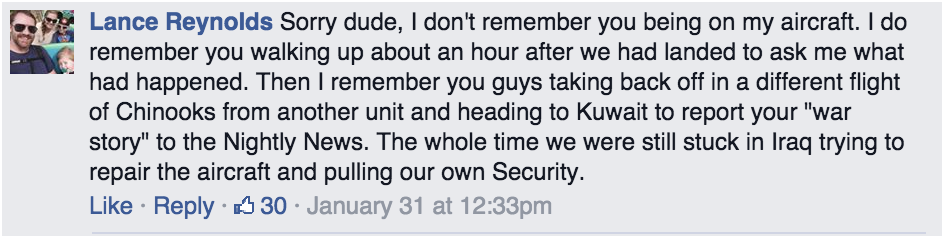
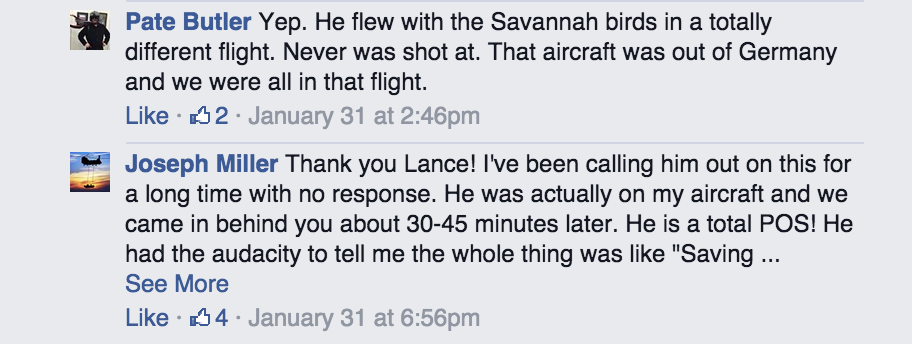
We know this: Williams told viewers on his evening news broadcast last week about an incident when he was covering the Iraq war, saying that a helicopter he was flying in was hit and forced down by an RPG. After the broadcast, soldiers began complaining on Facebook:
“Stars and Stripes” noticed, investigated Williams’ account and found it to be false. Williams quickly apologized, both on Facebook and in his Wednesday broadcast. Here is his Facebook recant:
“To Joseph, Lance, Jonathan, Pate, Michael and all those who have posted: You are absolutely right and I was wrong. In fact, I spent much of the weekend thinking I’d gone crazy. I feel terrible about making this mistake, especially since I found my OWN WRITING about the incident from back in ’08, and I was indeed on the Chinook behind the bird that took the RPG in the tail housing just above the ramp. Because I have no desire to fictionalize my experience (we all saw it happened the first time) and no need to dramatize events as they actually happened, I think the constant viewing of the video showing us inspecting the impact area — and the fog of memory over 12 years — made me conflate the two, and I apologize. I certainly remember the armored mech platoon, meeting Capt. Eric Nye and of course Tim Terpak. Shortly after they arrived, so did the Orange Crush sandstorm, making virtually all outdoor functions impossible. I honestly don’t remember which of the three choppers Gen. Downing and I slept in, but we spent two nights on the stowable web bench seats in one of the three birds. Later in the invasion when Gen. Downing and I reached Baghdad, I remember searching the parade grounds for Tim’s Bradley to no avail. My attempt to pay tribute to CSM Terpak was to honor his 23+ years in service to our nation, and it had been 12 years since I saw him. The ultimate irony is: In writing up the synopsis of the 2 nights and 3 days I spent with him in the desert, I managed to switch aircraft. Nobody’s trying to steal anyone’s valor. Quite the contrary: I was and remain a civilian journalist covering the stories of those who volunteered for duty. This was simply an attempt to thank Tim, our military and Veterans everywhere — those who have served while I did not.”
Research has revealed that Williams has been telling various versions of the story for over a decade, sometimes saying he was in a helicopter behind the one hit by fire, sometimes saying, as he did on the David Letterman show last year, that he was actually a passenger on the helicopter forced down. Thus his Facebook apology is misleading, and the one he gave last night even moreso. At Powerline, John Hinderaker explains:
This is the statement that Williams read on-air tonight:
“After a groundfire incident in the desert during the Iraq war invasion, I made a mistake in recalling the events of 12 years ago….”
No: Williams has been telling the false story since shortly after the incident occurred. He told it for the last time, not the first, last week.
“It did not take long to hear from some brave men and women in the air crews who were also in that desert….”
Not since last Friday, but it took a decade or more since Williams first told the false story.
“I want to apologize. I said I was traveling in an aircraft that was hit by [rocket-propelled grenade] fire. I was instead in a following aircraft. . . .”
Again, Williams tries to mislead: his “following aircraft” landed an hour after the one that took the hit from the RPG.
“This was a bungled attempt by me to thank one special veteran and, by extension, our brave military men and women, veterans everywhere, those who have served while I did not…”
A bungled attempt last Friday evening at the Rangers game. Williams implies, once again, that this was the first time he has told the false story. But he is on video telling the same story at least 13 times since 2003.
Williams’s on-air apology, like the Facebook version, was disingenuous. I doubt that it will help him in the long term.
Hinderaker, a prominent conservative political blogger, believes that Williams is certain to be fired as a result of the controversy, the convoluted details of which you can read about here, here, and here in addition to the Washington Post story linked above.
—-Daily Beast editor Justin Miller, in a tweet to U.S. Senator Rand Paul (R-Ky) Miller was irate that Paul blamed media bias on the uproar over his irresponsible and foolish comments regarding mandatory vaccination. The tweet continued: “Today I am getting my booster vaccine. Wonder how the liberal media will misreport this.”
After Paul’s office pronounced the tweet “unacceptable,” Miller deleted the tweet, and apologized, telling Politico, “I replied from my personal account to what I felt was spin after Senator Paul said factually incorrect things about vaccines. It would’ve been better to respond with facts than an obscenity, and I deleted the tweet so it wouldn’t reflect on the Beast. I’m sorry for the insult.”
Observations:
1. Did Miller personally apologize to Paul? There is no indication that he did. This, therefore, is not an apology to the person directly aggrieved. We are seeing more and more of this: “I am sorry, Politico, that I behaved wrongly toward X.” That’s lazy, deceptive and cowardly.
2. A respectable, professional news organization would fire Miller, apology or not. In fact, any organization would fire a high placed executive who delivered a public “fuck you” to an elected official, and should. It is outrageously unprofessional conduct. It reflects badly on the organization. It shows miserable judgment, and makes trust all but impossible. I cannot think of a single job I ever held, in academia, in associations or in the non-profit sector where a tweet like that to a member, donor or customer, never mind a member of Congress (or, heaven forbid, a judge), wouldn’t have gotten me fired so fast the words “I’m sorry” would have been completed after I was locked out of the building, and rightly so. Continue reading →
It would be nice if a genuine, rational libertarian candidate could be part of the national political debate. The problem is that there are no genuine, rational libertarians. To be genuine, a libertarian has to decide on his or her policy positions based on the dictates of the ideology, which is backwards: as a leader, rather than a professor or theorist, one must figure out what is going to work, and what you wish would work or what a pre-determined formula says should work are not germane to the issue. For proof of the flaw in the latter approach, all we have to do is consider the past seven years.
Thus libertarians are prone to saying things like, “The United States should never have entered World War II.” This has been a staple of Rand Paul’s deluded father, Ron Paul, and properly places pure libertarianism with pacifism, also known as Cloud Cuckoo Land. The Berrigans used to say the same thing, you know. I believe it was Philip who said that nobody tried passive resistance to defeat Hitler, so we’ll never know if it would have worked. When you say things like this for public consumption, you forfeit the privilege of being taken seriously. It is signature significance: your judgment can’t be trusted.
For me, Rand Paul’s libertarian moment of signature significance was when he questioned the need for the 1964 Civil Rights Act, essentially saying that the nation would have been just fine allowing people like Lester Maddox to chase African-Americans out of his restaurant with an axe handle, or bus drivers to force Rosa Parks to sit in the back of the bus until change occurred naturally, you know, like after the race war. Such statements are not isolated instances of momentary madness; they are markers of serious ethical and cognitive problems, and it was inevitable that the source of that opinion would have more of the same, and perhaps worse. Continue reading →
Ruthless mob “Godfather” Michael Corleone had lied to the fictional Congressional committee investigating organized crime. The smoking gun witness who had cut a deal to destroy Michael’s fake stance as a persecuted patriot and honest businessman had just been intimidated into recanting, seeing his older brother sitting with his targets and knowing that if he betrays the Family, his brother’s head would end up in his bed. So lies and corruption have triumphed, and as the scene from “Godfather Part II” fades, Michael Corleone’s lawyer, Tom Hagen, is shouting over the gavel and the crowd noise, to the disgusted and defeated Committee chair,
“SENATOR! SENATOR! This committee owes an apology, this committee owes an apology — an apology Senator!”
This memorable scene was immediately what my mind was jerked back to when I read New England Patriots’ owner Robert Kraft’s defiant statement regarding his team’s latest cheating scandal, in the section where he said…
“If the Wells investigation is not able to definitively determine that our organization tampered with the air pressure in the footballs, I would expect and hope that the League would apologize to our entire team and in particular, Coach Belichick and Tom Brady for what they have had to endure this past week. I am disappointed in the way this entire matter has been handled and reported upon. We expect hard facts as opposed to circumstantial leaked evidence to drive the conclusion of this investigation.”
I see now from a brief Googling of “Tom Hagen Robert Kraft” that I was not alone, and no wonder. Kraft’s guys have stonewalled, denied, mocked, deflected, tap-danced, and allowed loyal ethics-challenged sportswriters, bloggers and fans to block for them. Belichick and Brady almost certainly have covered their tracks sufficiently to avoid their just desserts, and Kraft is demanding an apology when it is he who should be apologizing—to the NFL, to opposing teams, to New England, to Boston, and to the fans, for allowing a corrupt and unethical culture to flourish under his ownership. Has any criminal, having avoided conviction because he or she could not be found guilty beyond a reasonable doubt, had the chutzpah to demand an apology from the prosecution? Did Casey Anthony or O.J., as despicable as they are, dare to rub society’s nose in their triumph like that? Continue reading →
White House chief of staff Denis McDonough suffered a slip of the tongue Sunday when he offered the first name of an American woman held hostage by the Islamic State of Iraq and the Levant.
In an interview with host George Stephanopoulos on ABC’s “This Week” about the ongoing situation with a Japanese hostage held by ISIL, McDonough mentioned the woman’s first name, which is not public knowledge.
No, Politico, this is not a “slip of the tongue.” McDonough was appearing on a full slate of Sunday morning shows, and he had certain objectives and parameters which, as a professional and a high-ranking advisor to the President of the United States, he was bound and obligated to be competent to fulfill, or he should not have accepted the assignment. There weren’t that many of them. One was not to reveal the name of an ISIS hostage, and he couldn’t do that. He was not properly prepped, or trained, or focused on his assignment.
It’s not because “anyone can make a mistake.” Professionals do not make such mistakes, and if they do, they are in the wrong profession. This occurred, as so, so, SO many other fiascos have, because this entire Administration is led by, staffed by and advised by hyper-partisan incompetents who learn nothing, understand nothing, and place the interests of the United States at constant risk; because a culture of arrogant incompetence has been allowed to flourish under the abdication of journalists to call it to account; and because the potential critics whose allied philosophies would make them the most effective voices to call for accountability are too biased, cowardly, or lacking in integrity to do so.
You can’t trust our national leadership. If you do, you are a fool. This has nothing whatsoever to do about policies, parties, or loyalty.
As I ponder this, I am trying to understand the character of a man who could preside of over such a incompetently staffed and managed administration and still deliver the defiant, dishonest, destructive and divisive speech he gave to the Congress last week.
That may be a futile effort. But I doubt that I can continue to muster respect for those who continue to offer excuses and rationalizations for this ongoing tragi-comedy of unapologetic ineptitude rather than to face reality and try to help the nation survive the next two years.
[This post took so long to write that I am posting it on Sunday. Pretty stupid.]
Every few months an ethics story erupts that convinces me that I’m wasting my time. I started writing about ethics online in disgust over the Clinton-Lewinsky scandal, which revealed to me that no politicians, few journalists and a tiny minority of the public understood the difference between, right, wrong, and a desperate rationalization. I was aghast at the vigorously nodding heads on talk shows when some ethically-challenged dolt would say that “everyone lies about sex” (so it’s okay), or that because other leaders may have had illicit sex, that made it acceptable, or that Clinton deserved special dispensation because he was an effective and popular President, or that he and Lewinsky were consenting adults, or that personal conduct was irrelevant to the job, or that other Presidents had done worse. These were all just lazy, poorly reasoned and culturally corrupting rationalizations, but nobody except a derided few seemed to know it.
So I’ve been writing about these and other ethics issues, including rationalizations, for about 15 years, and nevertheless, when something like the Patriots cheating scandal arises, I hear the same unethical, ignorant crap, as if nothing has changed. And, of course, nothing has. All I can hope to do, in conjunction with others who don’t want to see society devolve into a Hobbesian Hell, is to try to convince enough rational people that we can, by constantly explaining, arguing, and pointing the way, just keep things as barely endurably corrupt as they are now.
I got depressed just writing that last sentence.
The issue regarding the New England Patriots giving their quarterback an edge by cheating—deflating the balls so he could throw more accurately–isn’t controversial or hard to understand. If the team broke a rule that relates to sportsmanship, the fairness of the competition and the integrity of the result, and it is hard to see how it didn’t, then the NFL should punish the team severely. [ The NFL, true to its black heart, has made it clear that its investigation will not allow a resolution of this until after the Super Bowl, meaning that it hopes the controversy will deflate. I’m sure it could resolve all questions and identify the accountable parties faster if it wanted to—it doesn’t want to.] To do otherwise essentially endorses cheating. Moreover, since the team involved has a head coach who has made it clear that he is willing to cheat (having been caught before), that coach must be held accountable for the unethical culture he has nurtured whether he was directly involved in this particular episode or not. This is truly Ethics 101, Management 101, Culture 101, Sports 101—let’s just call it “101.” Yet so many, from the elite among sportswriters to the public that devotes an obscene amount of their passion, time and money to following football just don’t get it.Continue reading →
“Inflategate”—-the developing NFL scandal about the New England Patriots’ under-inflated, more easily thrown footballs in the team’s last play-off win and perhaps others—is a big deal to 1) people who hate the Patriots; 2) football fans who care about whether their game has any integrity and 3) people like me, who think there is no justification for cheating, in sports, in business, or in life. Those who argue that it’s “much ado about nothing,” usually without being able to quote a line or explain a plot turn from the Shakespeare comedy they’re alluding to, do so because 1) they are Barry Bonds fans; 2) they don’t know the difference between a football and a plantain, and don’t care. except that they wouldn’t want to eat a football by mistake; 3) they are typical NFL football fans and want to “oh, pshaw!” anything that reflects badly on the sport that gives their brutal lives meaning, 4) they are John Edwards, or 5) they are members of the New England Patriots organization, and perhaps were involved in the ball deflation.
Pats quarterback Tom Brady (that’s how you know I’m from Boston: I call the team the “Pats”) gave a highly unconvincing press conference yesterday in which he maintained that he would never notice that the tool of his trade that he has plied approximately since he exited the womb felt different than usual, and, like his coach, the brilliant and soulless Bill Belichick, has no idea how the team’s balls got deflated. The credibility of that claim was severely undermined for me by Brady’s use (“This isn’t ISIS…”) of my least favorite rationalization of them all on the Ethics Alarms compendium, the infuriating #22:
The Comparative Virtue Excuse: “There are worse things” : If “Everybody does it” is the Golden Rationalization, this is the bottom of the barrel. Yet amazingly, this excuse is popular in high places: witness the “Abu Ghraib was bad, but our soldiers would never cut off Nick Berg’s head” argument that was common during the height of the Iraq prisoner abuse scandal. It is true that for most ethical misconduct, there are indeed “worse things.” Lying to your boss in order to goof off at the golf course isn’t as bad as stealing a ham, and stealing a ham is nothing compared selling military secrets to North Korea. So what? We judge human conduct against ideals of good behavior that we aspire to, not by the bad behavior of others. We should each aspire to be the best human being that we can be, not to just avoid being the worst rotter anyone has ever met.
Behavior has to be assessed on its own terms, not according to some imaginary comparative scale. The fact that someone’s act is more or less ethical than yours has no effect on the ethical nature of your conduct. “There are worse things” is not an argument; it’s the desperate cry of someone who has run out of rationalizations.
(Or someone whose coach had the equipment guy deflate the footballs.)
In a way, Brady has a point, but it’s not what he thinks it is, and it doesn’t cut in his favor. In the grand scheme of things, nothing that happens on the field of play is very important. In fact, most of the rules of sports are arbitrary — the location of the free throw line, the number of bases the runners have to tag, the pressure in the football. The rules don’t have any higher meaning. And that’s precisely why there’s no excuse for not following them.
The big issues — when you can disconnect the life support, when a cop can shoot an unarmed person, when the President can order a drone strike — are full of complications and nuance. It’s hard to come up with a clear set of rules that will apply in every possible situation. You may think you have it all figured out, and then a scenario arises that you never thought of, and your simple set of rules, if followed blindly to the letter, would produce a terrible result. So maybe after you think through all the consequences, you decide that you’ve found a valid exception, and you change the rules. Or maybe, if the matter is important enough and you believe the rules are immoral, you break the rules as an act of conscience.
But I can’t see that happening much in sports. There is no greater good that could be used to justify breaking the rules. What terrible result could arise from blindly following the rules of football to the letter? A team loses a game? That might cost the team a bit of money, and I can see where crazed fans would get upset, but you know what? Nobody dies if the Patriots don’t make the playoff. This isn’t ISIS after all.




 Ethics Alarms
“Is this a deflated ball I see before me?”
“Inflategate”—-the developing NFL scandal about the New England Patriots’ under-inflated, more easily thrown footballs in the team’s last play-off win and perhaps others—is a big deal to 1) people who hate the Patriots; 2) football fans who care about whether their game has any integrity and 3) people like me, who think there is no justification for cheating, in sports, in business, or in life. Those who argue that it’s “much ado about nothing,” usually without being able to quote a line or explain a plot turn from the Shakespeare comedy they’re alluding to, do so because 1) they are Barry Bonds fans; 2) they don’t know the difference between a football and a plantain, and don’t care. except that they wouldn’t want to eat a football by mistake; 3) they are typical NFL football fans and want to “oh, pshaw!” anything that reflects badly on the sport that gives their brutal lives meaning, 4) they are John Edwards, or 5) they are members of the New England Patriots organization, and perhaps were involved in the ball deflation.
Pats quarterback Tom Brady (that’s how you know I’m from Boston: I call the team the “Pats”) gave a highly unconvincing press conference yesterday in which he maintained that he would never notice that the tool of his trade that he has plied approximately since he exited the womb felt different than usual, and, like his coach, the brilliant and soulless Bill Belichick, has no idea how the team’s balls got deflated. The credibility of that claim was severely undermined for me by Brady’s use (“This isn’t ISIS…”) of my least favorite rationalization of them all on the Ethics Alarms compendium, the infuriating #22:
(Or someone whose coach had the equipment guy deflate the footballs.)
Now comes blogger Windypundit to expand on my derision of Brady’s embrace of #22 from a different and useful perspective. Here is his Comment of the Day on the post, “Unethical Quote of the Month: Patriots Quarterback Tom Brady”: