When The Truth Hurts, But A Lie Will Hurt More

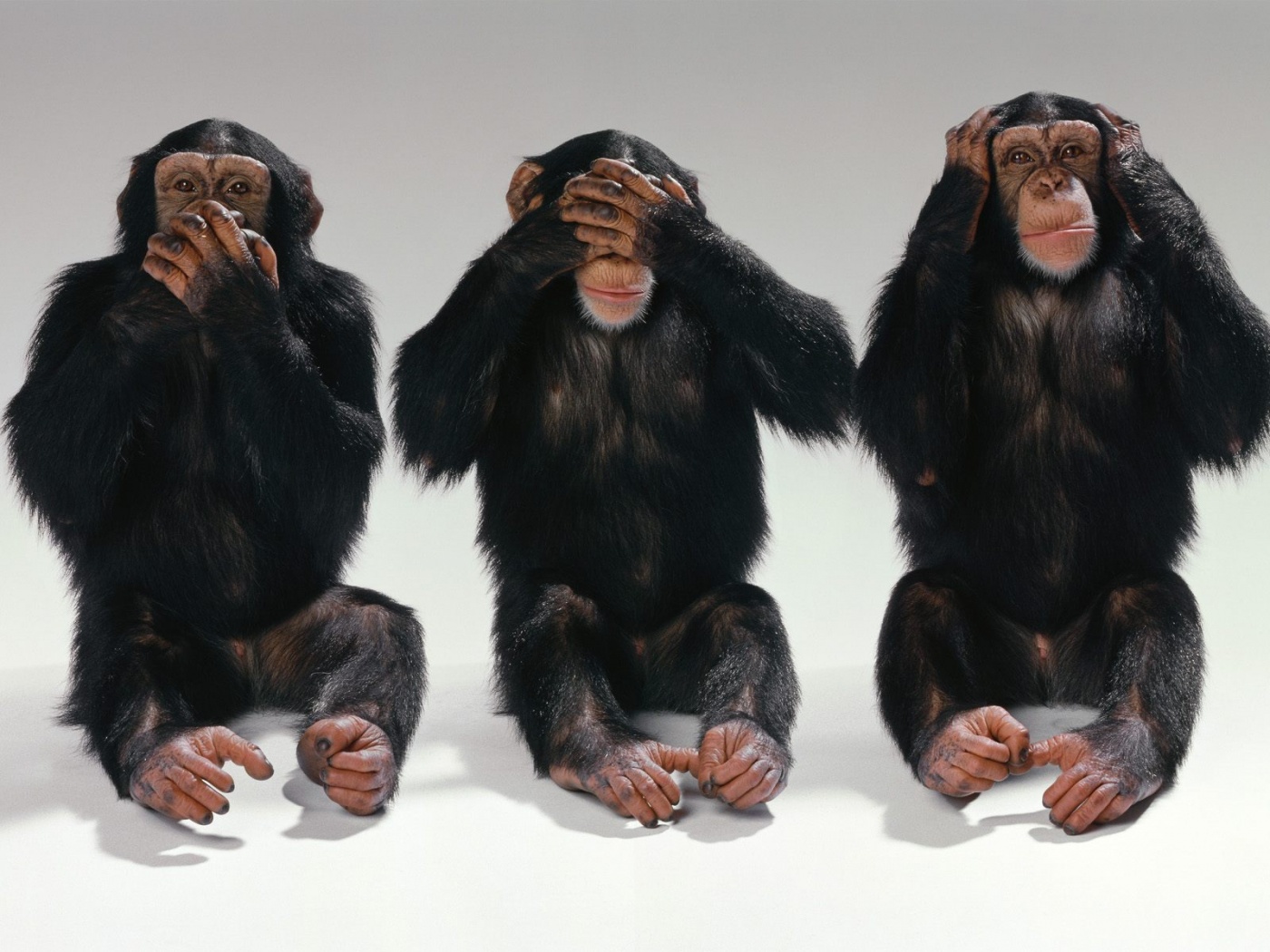
see_no_evil_hear_no_evil_speak_no_evil

In the early stages of the  Monica Lewinsky scandal, President Bill Clinton infamously asked his then advisor-polster Dick Morris to research whether a lie or the truth would best serve Clinton’s purposes.  (Morris’s recommendation based on his polling data: “Lie your head off.“) The attitude that truth is just a conduct option with no more or less to recommend in it than various versions of spin, deceit, obfuscation, misrepresentation, fabrication and denial is endemic to politics, which is not to say that it is necessary or healthy. Lies can be justifiable tools of the trade in the utilitarian world of politics and government, but if there isn’t an accepted recognition that they are inherently harmful, lazy, undermine trust and tend to become addicting (See: Dick Morris and Bill Clinton), then the cure becomes worse than the disease.

The Presidency of Barack Obama should be remembered as a stark lesson in the danger of avoiding unpleasant truths. What focused my attention on this was an interview that featured journalist Geraldo Rivera opining that describing President Obama’s performance in the wake of the Ukrainian incursion “weak” was “unhelpful,” “borderline patriotic” and “accomplishes absolutely nothing but scoring cheap political points in the near future.” At the same time, this morning’s Washington Post is filled with commentators struggling with the Democratic Party’s Obamacare problem, following the disheartening defeat of Alex Sink in a special Congressional election in Florida. Some of those commentators argue that beleaguered Democrats should aggressively make the case that the Affordable Care Act is a roaring success. Or as Dick Morris would put it, “Lie your head off.” Continue reading

“Print the Legend” Ethics (Again): Does It Matter If Matthew Shepard’s Death Was Really A Hate Crime?

Powerful story; moving story; useful story. Does it matter if it isn't a true story?

Powerful story; moving story; useful story. Does it matter if it isn’t a true story?

It apparently matters to a lot of people for the wrong reasons—unethical reasons, in fact. As a result, legitimate efforts to determine what really happened to the gay rights icon, then a 21-year-old University of Wyoming student, who was beaten,  tortured and murdered  in Laramie, Wyoming  in 1998, have been exploited for ideological goals by adversaries of gay rights, and attacked by the media, gay rights advocates and good progressives everywhere. Just as it is important to the civil rights establishment, the black grievance community and anti-gun advocates that Trayvon Martin be seen as the innocent victim of a racist vigilante with murder in his heart—a characterization of Martin’s murder at war with all known facts and rejected by a jury after a fair trial—thus is it crucial to gay advocacy groups and others that Shepard be remembered as the victim of a hate crime, brutally killed because he was gay.

And facts be damned. Continue reading

Culture, Truthteller Ethics, And Richard Dawkins’ Tweet

What can a leading intellectual say of value in 140 characters?

What can a leading intellectual say of value in 140 characters?

Philosopher/biologist Richard Dawkins, best known as the world’s most formidable atheist, does not shy away from rustling the feathers of some pretty fierce birds. Recently he even infuriated many of his admirers by tweeting, “All the world’s Muslims have fewer Nobel Prizes than Trinity College, Cambridge. They did great things in the Middle Ages, though.” He was immediately called an anti-Muslim bigot by some, while others chose to challenge his assertion with false analogies. Making a strong statement worthy of a treatise in 140 characters is a tricky enterprise, and perhaps an unwise one, but the politically incorrect observation he was making was not about the Nobel Prize’s perfection as a measure of accomplishment, but rather about how the Muslim culture has strangled human progress, creativity and advancement for centuries. In this he is correct. Continue reading

Keeping Terrible Secrets

shhhhSomeday I should have an ethics quiz asking which advice columnist is more unethical, Chuck Klosterman, “The Ethicist,” or Emily Yoffe, Slate’s “Dear Prudence.” That horrible exercise is for another day, however. Right now, I am only considering Emily’s latest botch, in which she urged a mother with a guilty conscience to take her terrible secret to her grave.

The secret in question is that the woman asking Emily’s counsel conspired to get pregnant via her gullible, not-ready-to commit boyfriend, who thought she was using birth control. Now it’s 13 years later. She and the double-crossed father are  happily married to other people, in different states, though he “is involved” in his daughter’s life, whom he accepted as his own. Mom never told him what she had done, and he believes that his daughter was an accident, leading him to stay with the family for the child’s first three years.  “Prudence’s” questioner concludes,

“…I had decided that I would go to my grave never telling anyone what I had done. Recently, a friend became pregnant after a one-night stand. Everyone assumes that was an accident, but she confided in me that she had been seeking out sex with the purpose of getting pregnant. I was so relieved to meet someone else who planned an “accidental” pregnancy that it made me wonder if I should open up about my secret. But I’m afraid if I told Ben it might change the way he interacted with Holly. My questions are: Am I some kind of monster for getting pregnant on the sly? And should I come clean, and if so, who should know?”

What? The reply to this should take about 20 seconds of thought to answer:

  • You’re relieved that one of your friends is a lying, betraying fraud? Don’t turn your back on her; I’m warning you.
  • Of course you should tell “Ben,” since he’s the one whose life was turned upside down by your selfish perfidy and deception.
  • “It might change the way he interacted with Holly,” eh? You mean “he might not send quite so much money to you to take care of Holly,” don’t you? Too bad. This is your doing, your lie, and your fault. “I don’t like the potential consequences of telling the truth” is not a justification to keep lying.
  • Yes, indeed you are some kind of monster. What you did was despicable, cowardly, cruel and wrong. Ben might be a prince about it (“Ah, that’s all water under the bridge now! The important thing is that we have our beautiful little girl, and nothing else matters!”), or he might call his lawyer. That’s his choice, and he has an absolute right to have the facts to make it his choice.

Emily, however, reasons otherwise. Don’t tell him, she counsels…

  • “Your act doesn’t make you a monster…” Yes, it really does. Didn’t we establish this in “An Officer and a Gentleman”?
  • “…nor do I think there’s any benefit to enlightening everyone now.”  That’s Ben’s call. The Golden Rule says that he’d want to know that he was tricked, and has been living a lie for over a decade. I sure would. I like to know just how trustworthy the people I associate with really are.
  • “Both you and Ben rose to the occasion and neither of you would express regret that you’re parents to Holly.” Consequentialism! So what? What if she were a rebellious, hateful, crack-addicted thief? The fact that thing turned out all right doesn’t justify the lie or keeping it hidden now.
  • “…At this late date, however, your coming clean would only cast a shadow over your character.” A character that richly deserves such a shadow.
  • “You are deeply remorseful for what sounds like a singular act of substantial deceit.”  What difference does it make that it’s a single act? A single act is enough. And this wasn’t “deceit.” This was a lie.
  • “There’s nothing to be gained by telling your husband and making him uneasy about your essential honesty.” I’d say one’s husband has the right to know the character of who he’s married to. 
  • “You and your friend are also hardly the only women to deliberately get pregnant without letting the man in on your plan, as objectionable as that behavior is.” Oh, that’s terrific, Emily. The old “you’re not the first” rationalization, a particularly dumb variation on “everybody does it.” The conduct is horribly wrong, and the first person to do it is no worse than the 2,342nd.

Gee, I wonder what Chuck would say.

________________________________________

Facts: Slate

The Oscar Nominee Truth Squad Goes After “Argo”

argo-poster

The ethics of using artistic license in films based on fact isn’t only being debated in the case of “Lincoln” as we approach the Oscar ceremonies: “Argo” is also under fire.

For some reason conservative radio hostess Laura Ingraham is fond of James Lipton, the unctuous host of PBS’s “Actor’s Studio” interview program. He sounds off frequently on her show, usually about films, and in his most recent gig was pontificating about the Academy Awards. Lipton seems to believe that bias is a condition one is helpless to adjust for: he kept announcing his preferences for various nominees based solely on their association with him or the Actor’s Studio, and explaining his choices by saying, “I’m biased, you see.”

Recognizing bias is just half the job, James. The other half is getting over it. Continue reading

Artistic License, History, and Lincoln’s Green Socks

Of course, some historical fabrications are harmless.

Of course, some historical fabrications are harmless.

Several well-placed critics are taking “Lincoln” screenwriter Tony Kushner to task for what they believe are unethical misrepresentations of fact in the much-praised, and supposedly scrupulously accurate film. He, on the other hand, is annoyed. Kushner counters that unlike in history books where a historian gives a well-researched “a blow-by-blow account,” it is reasonable and ethical for a screenwriter to “manipulate a small detail in the service of a greater historical truth. History doesn’t always organize itself according to the rules of drama. It’s ridiculous. It’s like saying that Lincoln didn’t have green socks, he had blue socks.”

I’m going to spare Kushner lawyerly word-parsing and not hold him to “a greater historical truth,” though I suspect that in his hands (he is a skilled political propagandist as well as writer), we would not be pleased with what that license would bring. A politically sympatico film director named Oliver Stone, for example, thought it served a greater historical truth to present completely fictional evidence that Lyndon Johnson was complicit in John F. Kennedy’s assassination, even though Stone’s vehicle, “JFK,” was marketed as a veritable documentary on the “truth” of the Kennedy assassination. Let’s just say that Kushner feels that in a work of entertainment and drama, strictly accurate representation of all historical facts is impossible and unreasonable to expect or require.

I agree. But there is a big, big difference between the ethics of showing Lincoln wearing the wrong color socks, and representing a highly dubious story as fact to denigrate the reputation of a probable hero, as James Cameron did in “Titanic” when he showed First Officer William Murdoch taking a bribe to let a passenger on a lifeboat ( fantasy), shooting a passenger (pure speculation), and committing suicide (denied by a fellow officer under oath at the inquest). Continue reading

Danger! Shameless Opportunists At Work!

Lance Armstrong wouldn't understand this movie at all.

Lance Armstrong wouldn’t understand this movie at all.

Less than two weeks after Ethics Alarms wrote about the ethics-free deliberations in the Lance Armstrong camp about whether or not to finally tell the truth and “apologize,” Armstrong prostrated himself in a 90 minute confession to Oprah Winfrey, who has branded herself as America’s confessor, capable of washing away sin and shame with a hug, a tear, and a stern word.

It makes me want to vomit, frankly.

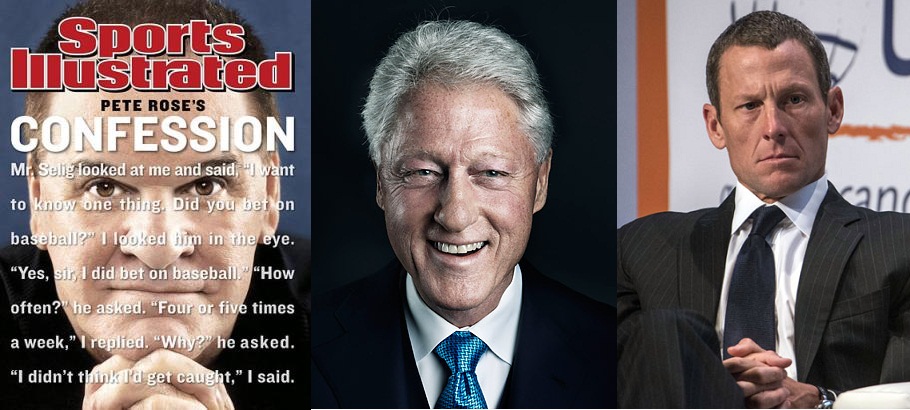
I saw this coming, of course, as did you. One thing we could count on with Lance (and Bill, and Pete, whose odious club Armstrong joins with the Oprah tactic) was that he would do whatever was necessary to benefit him. There is nothing, absolutely nothing, in common with a genuine confession and a real apology in Armstrong’s 180 degree reversal with Oprah, or in the necessary preparations for it he engaged in, like apologizing to the cycling community and the Livestrong staff. When Armstrong thought he could continue to fool some of the people all the time by lying, posturing, and viciously attacking—sometimes with lawsuits—those who he knew were telling the truth about his cheating, he continued to lie. Now that the jig is up and he has no other options, he’s going to come clean and weep softly with the Big O. Sociopaths are usually very good actors. Some of them have won Academy Awards. Continue reading

Lance Armstrong and the Sociopath’s Dilemma: When Honesty Is No Longer Ethical

Welcome to the club, Lance.

Welcome to the club, Lance.

Rose

In 2004, 15 years after he had been banned from baseball after a finding by the Major League Baseball’s Commissioner’s Office that he had violated the games rules against betting on Major League Games, Pete Rose publicly admitted that his denials over that time were all lies. Yes, he had bet on baseball, and he was very, very sorry. Rose’s admission did little to change the verdict in and out of baseball that he was a rogue and a liar. His confession was obviously part of a cynical and calculated strategy to get reinstated in the game, after the strategy of denial and waiting proved ineffective. In addition, Rose needed money, and the confession was part of the hook for his new autobiographical book, which was released at the same time he withdrew his protestations of innocence.

For Pete Rose, honesty was not an ethical value that he respected or returned to in penance after years of straying. It was just another means to an end.

Clinton

In 1998, President Bill Clinton was in the midst of the Monica Lewinsky scandal, denying that he had ever “had sex with that woman.” He called up his old friend, advisor and pollster, Dick Morris, and asked what he should do. Together they decided that Morris ought to take a poll to see what the public’s reaction would be if Clinton retracted his denials and admitted the affair. Morris reported back, after taking such a poll, that while the public would forgive the sexual relationship, anger over the President’s untruthful denials might sink his administration. Clinton decided that honesty would not work to his advantage, and continued to lie.

To Bill Clinton and Morris, honesty was just one of several tactical options to solve a political crisis. If had nothing to do with ethics, or doing the right thing.

Armstrong

It is 2013, and the New York Times reports that Lance Armstrong, now stripped of all his cycling titles, banned from athletic competition worldwide and separated from his commercial sponsors and the cancer charity that bears his name,

“has told associates and antidoping officials that he is considering publicly admitting that he used banned performance-enhancing drugs and blood transfusions during his cycling career, according to several people with direct knowledge of the situation. He would do this, the people said, because he wants to persuade antidoping officials to restore his eligibility so he can resume his athletic career.”

Armstrong, it is clear, is traveling in the well-worn and slimy footsteps of Rose and Clinton, fellow sociopaths to whom conscience, shame, contrition and remorse are alien concepts and for whom atonement and redemption are just games to win, with honesty being an indispensable, if unpleasant, tactic. When one is considering whether or not to be honest and admit what one has long denied based on cold calculations of personal costs and benefits, truth-telling is no longer a matter of ethics, or doing the right thing regardless of consequences. It is merely another weapon, along with lies, manipulation, deceit and posturing, in the arsenal of one of the lifetime predators whose sole goal in life is to prevail and profit over the rest of the trusting suckers who share the Earth with them, and who will do anything, even to the extent of briefly embracing ethical principles, to get what they want.

Should he decide to finally admit what everyone knows and he has long denied, even to the extent of suing those who declared his guilty, Lance Armstrong should be seen as no more ethical or noble than the criminal who pleads guilty in court on the advice of his lawyer, because the evidence is overwhelming, conviction is certain, and confession is the only route to a lighter sentence.

Individuals like Pete Rose, Bill Clinton and Lance Armstrong defile ethical values by their brief embrace of them.

Jury Summation: 20 Conclusions Regarding Elizabeth Warren’s Law License Controversy

1. Elizabeth Warren may have engaged in the unauthorized practice of law in Massachusetts at various times.

2. It is not as clear that she has done so as her primary accuser, Prof. Jacobson, appears to believe, nor is it as certain that she has not done so as her reflexive defenders assert.

3. If she did practice Massachusetts law without a license, it is very unlikely that she did so intentionally.

4. It is also likely that at this moment, she herself is unsure whether she did or not.

5. I very much doubt that if she did as Prof. Jacobson asserts,  that would lead to discipline by the Massachusetts Bar. The discussion of the issues surrounding Warren’s situation make it clear that a) the whole area of unauthorized practice when it involves state and Federal law is relatively unresolved and murky, with even  legal ethics experts in disagreement, b) it would be impossible to separate the professional regulation of the matter from its political content, and 3) any time members of the disciplinary committee slap their foreheads and say, “Damned if I know!” when the discussion turns to what the rules require, discipline is unlikely, and properly so.

6. The fact that Warren may have blundered into UPL between the varying requirements of her two bar memberships and her intermittent practice in Massachusetts does not make her unfit to practice law.

7. It may, combined with her unwillingness to candidly and thoroughly reveal all documents that bear on the issue, call into question her fitness to be a U.S. Senator, especially one running on the proposition that regulations on another profession (the financial sector) need to be strictly followed and tightly enforced. It definitely is worth exploring and explaining to voters, which the mainstream media clearly does not intend to do. Continue reading

Ethics Quote of the Day: Fox News Anchor Shepard Smith

 “…We really messed up. And we’re all very sorry. That didn’t belong on TV. We took every precaution we knew how to take to keep that from being on TV. And I personally apologize to you that that happened. Sometimes we see a lot of things that we don’t let get to you – because it’s not time appropriate, it’s insensitive, and it’s just wrong. And that was wrong. And that won’t happen again on my watch and I’m sorry.”

—-Shepard Smith, Fox New Anchor, in his immediate apology to viewers after a live police chase Fox News had been showing to viewers ended with the pursued car’s driver suddenly committing suicide with a pistol shot to the head.  Apparently the network had gone to a 5 second delay in the eventuality of such a development, but technicians still failed to stop the feed in time.

“CUT AWAY! CUT AWAY!!”

Jack Ruby shot Lee Harvey Oswald on live TV. Those of us who saw the twin towers fall saw 3000 souls die as it happened. I understand Smith apologizing pro forma for an unexpected moment of violence, but the statement,

“Sometimes we see a lot of things that we don’t let get to you…”

…is troubling. Continue reading