“Flipping A Man’s Meat” Ethics

Is this what the culture has accomplished with its hard won respect for and acceptance of gay Americans? Really?

Neil Patrick Harris has done a series of quirky, benign spots  for Heineken Light, perhaps to lure us into a false sense of ease.  For in his most recent commercial,  Harris notes, as he stands next to a man grilling barbecue, that Heineken Light makes it OK “to flip another man’s meat.”

This is another in a long and growing list of TV ads based entirely on the assumption that adults think it’s hilarious to suggest obscene or vulgar innuendos. I’ve written about this phenomenon before, which is merely the normalization of crudeness in our discourse, nothing more, but nothing less either. So now we have gay sexual innuendo  by an openly gay actor to advertise beer. Isn’t that great? Boy, Heineken must be so proud.

The grill guy replies to the puckish—or flirtations?—former-Doogie that no man can do that, but late,  Harris asks him: “Can I flip your meat?”

Wow, that’s just hilarious! Why is it hilarious? Because it’s naughty? Because it’s daring? It’s certainly not clever, and if virtually defines the word “gratuitous.” It it a challenge to viewers, daring them to question the taste of joking about “flipping a man’s meat” when they routinely accept gross commercials with vulgar and gratuitous—you know, like this —heterosexual double entendres?  Is the assumption that gays will giggle, guffaw and slap each other on the back when they see this! “Good own, Neil!” Really? How insulting.

I can’t wait for the masturbation double-entendres in credit card and bank commercials. Continue reading

About That Obviously Dishonest Disclaimer On Movies And TV Shows

“The story, all names, characters, and incidents portrayed in this production are fictitious. No identification with actual persons, places, buildings, and products is intended or should be inferred.”

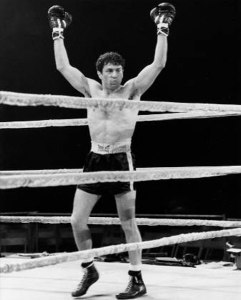
The character of Jake LaMotta is fictional, and any similarity to Jake LaMotta is purely coincidental...

The character of Jake LaMotta is fictional, and any similarity to Jake LaMotta is purely coincidental…

This and disclaimers like it on movies and TV shows have driven me crazy for a long time. So often the text is an obvious lie. I first began obsessing about it during the early days of “Law and Order,” when Dick Wolf’s show would herald the fact that its episodes were “ripped from the headlines,” then end with a disclaimer that said it was completely fiction. Sometimes, an episode was obviously based on a specific crime and specific individuals, and the actors were made up to look like the actual criminals. The disclaimer was and is a lie, and since it was obvious, why did they bother? Legally, it does no good to publish a boilerplate disclaimer that says, “We’re not really doing what any fool can see we are doing, ” except to discourage potential lawsuits by stupid people. I am of the (minority, unfortunately) position that it’s unethical for lawyers to author legally meaningless language like this for the sole purpose of misleading the ignorant.

The background of the disclaimer is interesting; Slate just published the story, which I realized I once knew but had forgotten.

The 1932 MGM film “Rasputin and the Empress”, was based on the events leading up to the fall of the Romanovs, and starred John, Ethel and Lionel Barrymore. Its most famous sequence was a version of the antic assassination of Rasputin, an event largely known because of the book written by one of the assassins, Prince Felix Yusupov, portrayed as “Prince Paul Chegodieff” in the film. The film also suggested that the Prince’s wife, “Princess Natasha,” was raped by Rasputin—suggested but not shown, since Rasputin was played by John Barrymore (Drew’s grandfather) and the princess was played by his sister, Ethel.  Princess Natasha was the avatar for Princess Irina Alexandrovna of Russia, who, like her husband Prince Felix, had escaped Russia before all the royals were killed.

Yusupov, living in Paris, heard about the film and decided that since audiences would recognize him as  the fictional killer of Rasputin, they would also assume that his wife was raped by Rasputin. She wasn’t, or if she was, only she and the Mad Monk knew about it. Officially, Irina and Rasputin had never met. An MGM researcher had pointed out this factual discrepancy to the studio during production and warned that the Yusupovs could sue, but was pooh-poohed off the lot. She was correct, however, for Irina Yusupov sued the studio, and after watching the movie twice, the British jury awarded her £25,000, or about $125,000. MGM took the film out of circulation for decades, and when it turned up on Turner Classic Movies, the pseudo-rape scene was gone. Continue reading

Nipplegate Ethics: No, We Don’t Owe Janet Jackson Any Apology At All

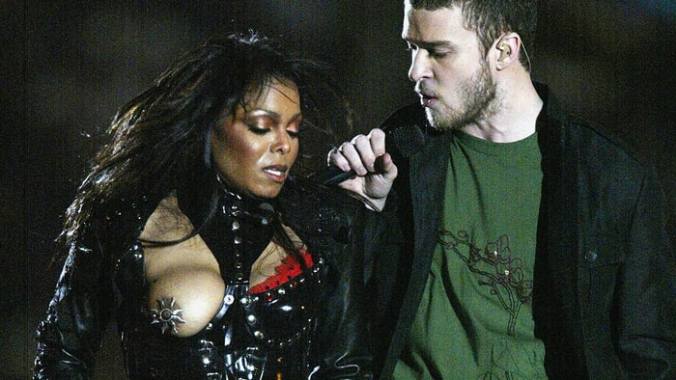
nipplegate

A wonderful, if infuriating, example of race- and gender-baiting was delivered earlier this year by pop culture pundit Emmanuel Hapsis, and a more ridiculous analysis you will seldom see. I missed it, but the post was no more valid then than it is now.

Returning, for some reason, to the infamous episode during the 2004’s Super Bowl halftime show, when Janet Jackson and Justin Timberlake conspired to turn the supposedly family-friendly Super Bowl into a strip tease, Hapsis’s piece is called “Nipplegate Revisited: Why America Owes Janet Jackson a Huge Apology.” During a choreographed duet with Jackson  and while singing “Better have you naked by the end of this song,” (talk about rape culture!) Timberlake ripped a pre-rigged portion of Jackson’s bustier to reveal her naked breast. Jackson was severely criticized, as she should have been: after all, it was her breast, and she obviously agreed to allow it to make a surprise appearance, however brief.

Never mind. Hapsis sees the episode as exemplifying America’s “patriarchy,” “racism” and “sexism,” because obviously no white singers flashing ten-year-olds in TV land would be criticized, and no male singer who decided to let Mr. Wiggly make a guest appearance would be similarly pilloried. Continue reading

From “The Ethics Incompleteness Theorem” and “The Ends Justify The Means” Files, The Pautler Case: My Favorite Legal Ethics Dilemma Ever!

"Irena's Vow" Pictured L to R: Maja Wampuszyc, Tracee Chimo, Tovah Feldshuh (kneeling), Gene Silvers

The Sundance Channel was doing a “Law and Order” marathon this week, and I happened to see an episode from 2002 that I had missed. It was based on the Pautler case in Colorado from the same year.

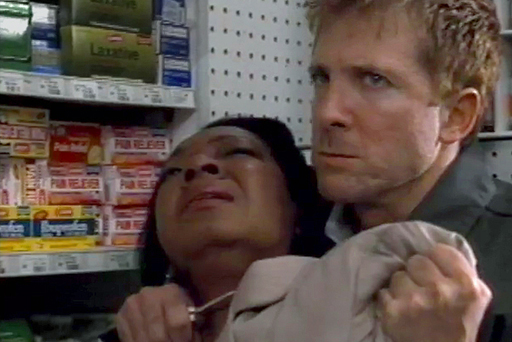
In “DR 1-102,”  Assistant DA Serena Southerlyn (Elisabeth Rohm) deals with a hostage crisis in which a man suspected of bludgeoning two women to death claims he will release his captive, held at knifepoint (above), if he can consult with an attorney. Southerlyn volunteers to enter the scene, and obtains both the hostage’s release and the killer’s  surrender, but only by deceiving him into believing that she is his lawyer, and not a prosecutor working for the police and the State. Although Southerlyn is hailed as a hero, the bar seeks to disbar her, charging her with violating Disciplinary Rule 1-102 (now New York RPC 8.4 d., which prohibits lawyers from lying.  .

Actually, Serena did a lot more than that, as did her model, Mark Pautler, the Jefferson County (Colorado) assistant D.A. whose real life conduct created a legal ethics dilemma that is debated to this day.

On June 8th, 1998, Chief Deputy District Attorney Mark Pautler  arrived at a gruesome crime scene where three women lay not just murdered, but chopped in the skull.  All had died from hit in the head with a wood splitting maul. The killer was William Neal, who had apparently abducted the three murder victims, one at a time, and killed them over a three-day period. Now, police said, he was at another locale, having released three hostages he had held in terror for about 30 hours. Neal left in the apartment a tape recording that detailed all of his crimes, including a fourth murder and rape at gun point.

Neal contacted police at the apartment using his cell phone and personally described his crimes in a three-and-a-half hour conversation. The officer speaking with Neal took notes of the conversation and occasionally passed messages to Pautler and other officers at the scene. A skilled negotiator, she urged the maniac to surrender peacefully. Efforts to ascertain the location of Neal’s cell phone were unsuccessful, and it was feared that if Neal did not surrender, others would die.

Neal made it clear he would not surrender without legal representation. The police did not trust the public defenders office to handle the situation, fearing that a defense counsel’s advice might lead Neal not to place himself in police custody. Pautler also believed that a public defender would advise Neal not to talk with law enforcement. Neal was savvy enough, he felt, that a police officer could not effectively pretend to be his lawyer, so Pautler agreed to impersonate a defense attorney over the phone He told Neal that his name was was “Mark Palmer.”

Though in the ensuing phone conversation Pautler tried to avoid giving direct legal advice, it was clear that Neal believed “Mark Palmer” worked for the public defender’s office and represented him. And the deception worked: Neal eventually surrendered without further incident.

Not surprisingly, the Colorado Bar had problems with Pautler’s conduct. He was charged with violating two ethics rules, the equivalent of the one used in the “Law and Order” episode and also Colorado Rule 4.3, which requires a lawyer to inform an unrepresented party so it is clear that he isn’t representing him, and to give no legal advice other than to get an attorney. They could easily have charged him with violating others. like Rule 1.3, requiring diligent representation (Call me a stickler, but trying to trick your client into surrendering to police isn’t what the rule has in mind), Rule 1.4, which requires a lawyer to keep a client informed (“Oh: I’m really a prosecutor!“), Rule 1.6, Confidentiality (Pautler shared what Neal told him with police; a lawyer can’t do that! ) Rule 1.7, Conflicts of Interest (Ya think?) and Rule 4.1, which prohibits lawyers making false statements of fact, like “I’m here to help you.” Continue reading

“Grace And Frankie” Ethics

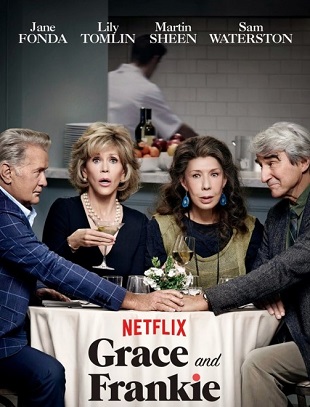
“Grace And Frankie”Grace_and_Frankie_Season_1_poster_9 is a mostly fun Netflix series featuring Jane Fonda (as creepily “Death Becomes Her”- like,  70-going on 40-looking Grace Hanson) and Lilly Tomlin (Frankie Bergstein, an old, adorable hippie) as an odd couple of septuagenarians  brought together when their respective lawyer husbands, Robert ( Martin Sheen, looking very old) and Sol (Sam Waterson) declare that they have been carrying on a 20 year gay love affair. It’s now Season Two, both couples are divorced but friendly, and Robert and Sol are preparing an elaborate wedding.

Ah, but at the end of last season, cleaning out their old house and being soaked in photos, regrets and fond memories, Sol and Frankie had one last sexual fling (they had a kid: this was not unprecedented). The final episode saw Sol in anguish, feeling like he had betrayed the love of his life (that is, Robert) and not knowing how or whether to confess that he cheated with his former wife.

As Season Two gets underway, Robert has a heart attack, so the wedding is much reduced in grandeur with him still recuperating. Frankie officiates, having received her legal authority to do so over the internet. All is romantic bliss until Sol, after Robert, now recovered has prepared a romantic dinner and they have belatedly exchanged rings, can’t hold his terrible secret back any longer. He tells Robert about his one-night stand. [As he should. Everyone else in the extended family knows about his dilemma, and Robert and Grace’s children urge him to never reveal a secret that can only cause unhappiness. Sol, correctly, asserts that he can’t begin a marriage with secrets and lies. For better or worse, he has to come clean.]

And Robert throws him out! Continue reading

Jimmy Kimmel Once Again Proves He Is An Ethics Corrupter And A Disgusting Agent Of Cultural Rot

As you can see above, last night Jimmy Kimmel highlighted numerous parents who thought it was just hilarious to employ their own infants as objects of national ridicule. Encouraging child abuse for laughs is Jimmy’s specialty, as I’ve noted before. This was a bit different, because the children didn’t know they were being abused.

After using social media to recruit parents to participate in the segment called “Fat Baby Bingo,” Jimmy joined the couples in mocking their own kids’ chubby thighs and folds of fat as the audience laughed. I bet Jimmy could recruit enough couples for a segment if he wanted them to set their kids on fire.

Of course, this will be on the web forever. My son has pronounced himself mortified by his baby pictures, as many of us are embarrassed by ours. These parents held up their unaware children to the camera, all but naked in diapers, so Jimmy could make jokes about how fat they were. Abuse of power, breach of trust, infliction of humiliation without consent, cruel and irresponsible. Just because a child doesn’t know he is being made the object of ridicule doesn’t make it right.

The talking heads on CNN today, however, thought it was all hilarious.

To these parents, egged on by Jimmy’s usual contempt for the humanity of kids, their babies were just props, like the gag items used by Carrot Top in his act.

Go ahead, defend Jimmy Kimmel and the parents betraying the privacy and dignity of their own infants, by saying it’s all in good fun and harmless.

I’m ready for you.

It’s Corporation For Public Broadcasting Fundraising Time, Which Means Deception At NPR And PBS

The "Car Talk" brothers today, or so we are told.

The “Car Talk” brothers today, or so we are told.

It is fundraising time for the Corporation of Public Broadcasting, and once again, perhaps more than ever, NPR and PBS are lying to you. If you watch the PBS broadcast of “Downton Abbey” this weekend, for example, you will find the show introduced by a series of promotions for such companies as Viking Cruise Lines. These spots look, feel, sound and smell like commercials, but because PBS describes them with the euphemism “promotional considerations,” it thinks it can magically make them non-commercial, and thus, within seconds of running these ads, and while making its audience wait fifteen minutes to actually see the programming, describes PBS as “commercial-free television.”

If you can sell commercials, guys, don’t tell me that the survival of Western civilization depends on my tax-payer dollars going into your pockets.

Over at National Public Radio, it’s also deception and hypocrisy, but worse. I just turned on WMAU, a local NPR affiliate, and heard the familiar strains of Boston townie accents talking about automotive issues on “Car Talk,” where  the Tappet Brothers made the banter between Cliff and Norm sound pedestrian by comparison. After the last segment, in which “Click and Clack” answered a query from an LA area student about whether he should buy a car (Their answer, after much foolery: “No.”) Tom Tappet came on and explained that if this were commercial radio and they were sponsored by an auto manufacturer, the bothers might have felt pressured to give a different answer, or perhaps been fired for giving the honest one they did. And this is what is so important about NPR being listener-funded, he explained. It is independent radio. NPR is only interested in the objective truth, and isn’t swayed by conflict of interest.

Right, Tom! Ask Juan Williams about how independent NPR is. Continue reading

“Code Black” Glosses Over A Medical Ethics Imperative

Code Black

In TV’s medical drama “Code Black‘s” episode “Diagnosis of Exclusion,” we were plunged, as is too often the case in such shows, into a freak situation that might not occur in any U.S. hospital for a century, but that somehow happens on TV routinely.

A lunatic stalker named Gordon (Jesse Bradford) tried to rape doctor Malaya Pineda (Melanie Chandra) in the hospital garage, after stabbing a hospital administrator, perhaps fatally. Dr. Pineda fought back, the stalker stabbed her in the stomach, and then mild-mannered Dr. Angus Leighton (Harry Ford) arrived in time to pull the stalker off of his wounded friend and save her life. In the struggle that ensued, crazy Gordon was stabbed in the neck with his own knife.

This was presented in flashback, in the form of an official inquiry where Dr. Leighton explained that he told the stalker not to pull out his knife, but he did anyway, causing uncontrollable bleeding. “Maybe I could have done more but, I was out of my mind,” Angus explains. Leighton says he tried to stop the bleeding as he screamed for help. By the time the paramedics got the murderous patient into the ER, he was beyond saving.

Ahhh, but that’s not exactly what happened, we learn! First we saw Angus’s older brother, also a doctor, tell him that he did the right thing, that Gordon tried to kill two women that day and would have gone on to kill more if Angus hadn’t acted as he did.

Wait, what? Continue reading

Keep It Up, Vulgarians

This morning I was listening to a CNN reporter in New Hampshire interviewing an ordinary, middle aged woman who is a Trump supporter, and she dropped a word inappropriate for TV live. The interviewer said, “You just said a cuss word!” and she just ignored him. In Phoenix, Don Harris, the head of Arizona’s largest NAACP chapter, was discussing the somehow national scandal over six white teenage Desert Vista High School students posting a photo of themselves aligned so the letters on their T-shirts spelled N-I-*-* E-R when he just couldn’t resist saying that a TV reporter who had just interviewed him had “nice tits”as he was speaking to another TV interviewer.

The recording was posted, and Harris had to resign as Chapter president. Called about the incident by another reporter, Harris said, among other things, “I’m really fucking sorry. I’m going to slash my wrists . . . Better yet, I’m going to throw myself out of a fucking window, except I’m on the first floor . . . I’m one of the best goddamned people in the state. They’ve seen me now, they’ve seen what I’ve done. I’ve given up my law practice. I’m down here six, seven days a week. That’s what my commitment is. I support NOW, the women’s organization — goddamn! — are you shitting me? Are you going to write this up?”

Why yes, Don, you vulgar fool, they are.

Harris and the dumb New Hampshire woman (I did say she was a Donald Trump supporter, right?) are victims of the crude and ugly culture of rudeness and incivility being imposed on the culture. If you don’t fight back, you will be sucked in: your civility and decency ethics alarms will become rusted and useless. At the 2016 Golden Globes awards, knowing they were on live TV and in front of an audience of adults, various presenters and award winners used the words cunt, sugar tits, fuck and fucking (twice). Speaking like this in private or controlled workplace surroundings is as old as the hills, but somewhere the principle has been lost in which such gutter discourse was understood to be ugly, lazy and the mark of an unmannerly lout when it leaks into more formal, or public settings. Who thinks this is a positive development? Continue reading

X-Files Ethics: There Is Nothing Weird About Offering Scully One-Half Mulder’s Contract

X-Files

Gillian Anderson reported that when the producers approached the actress about reprising her co-starring role in the re-boot of “The X-Files,” she was offered only one-half of the salary that her male partner, David Duchovny, had agreed to. From the Daily Beast’s shocking account:

The work Anderson put into securing equal pay back in the ’90s seemingly came undone when it came time to negotiate pay for this year’s event series. Once again, Anderson was being offered “half” of what they would pay Duchovny.“I’m surprised that more [interviewers] haven’t brought that up because it’s the truth,” Anderson says of the pay disparity, first disclosed in the Hollywood Reporter. “Especially in this climate of women talking about the reality of [unequal pay] in this business, I think it’s important that it gets heard and voiced. It was shocking to me, given all the work that I had done in the past to get us to be paid fairly. I worked really hard toward that and finally got somewhere with it.

“Even in interviews in the last few years, people have said to me, ‘I can’t believe that happened, how did you feel about it, that is insane.’ And my response always was, ‘That was then, this is now.’ And then it happened again! I don’t even know what to say about it.”

That’s all right, Gillian. I know what to say about it. This was not unfair, disrespectful. or an example of discrimination against women in the workplace. This is called negotiation, and there is nothing unethical about it at all.

Continue reading