On Peter Pan, Pippi Longstocking, And Ethics Of Applying Political Correctness To Art And Literature

Cultural events earlier this month brought to light, on two continents, the problem of maintaining the integrity of art and literature under the onslaught of political correctness.

In Sweden, a controversy has erupted over the re-broadcast of a 1969 television adaptation of the Pippi Longstocking books, the children’s classics authored by Astrid Lindgren. The Swedish national TV station, SVT, announced that it is revising a scene from the 1969 television series about Pippi  which she says her father is “king of the Negroes,”a direct quote from one of the stories. Believe it or not, this has set off a contentious national debate.

The family has approved the station’s  desire to change the TV version, but is keeping the term in future editions of the books. In 2006, the family added a preface explaining that today, the word is considered “offensive,” but that when the books first appeared, “Negro was a common expression for people with black skin who lived in other parts of the world than ours.” That’s a sensible solution. Period and context is important in art and literature: the urge by some to constantly purge the world of any reference, word or attitude in past creations that seem out of place now leads to a form of cultural self-lobotomy. Erik Helmerson, a columnist at Dagens Nyheter, an influential Stockholm newspaper, called the changes a form of censorship. “I’m very sensitive to the fact that people are offended by the N word,” he said in an interview. “I’d never use it myself.” He even called revising the TV series  “a huge interference into freedom of speech.”  “Where do we draw the line? What do we cut and what do we keep? Who should decide? Who needs to be offended before we cut a word?” Continue reading
Watch “Blue Bloods”

Blue Bloods

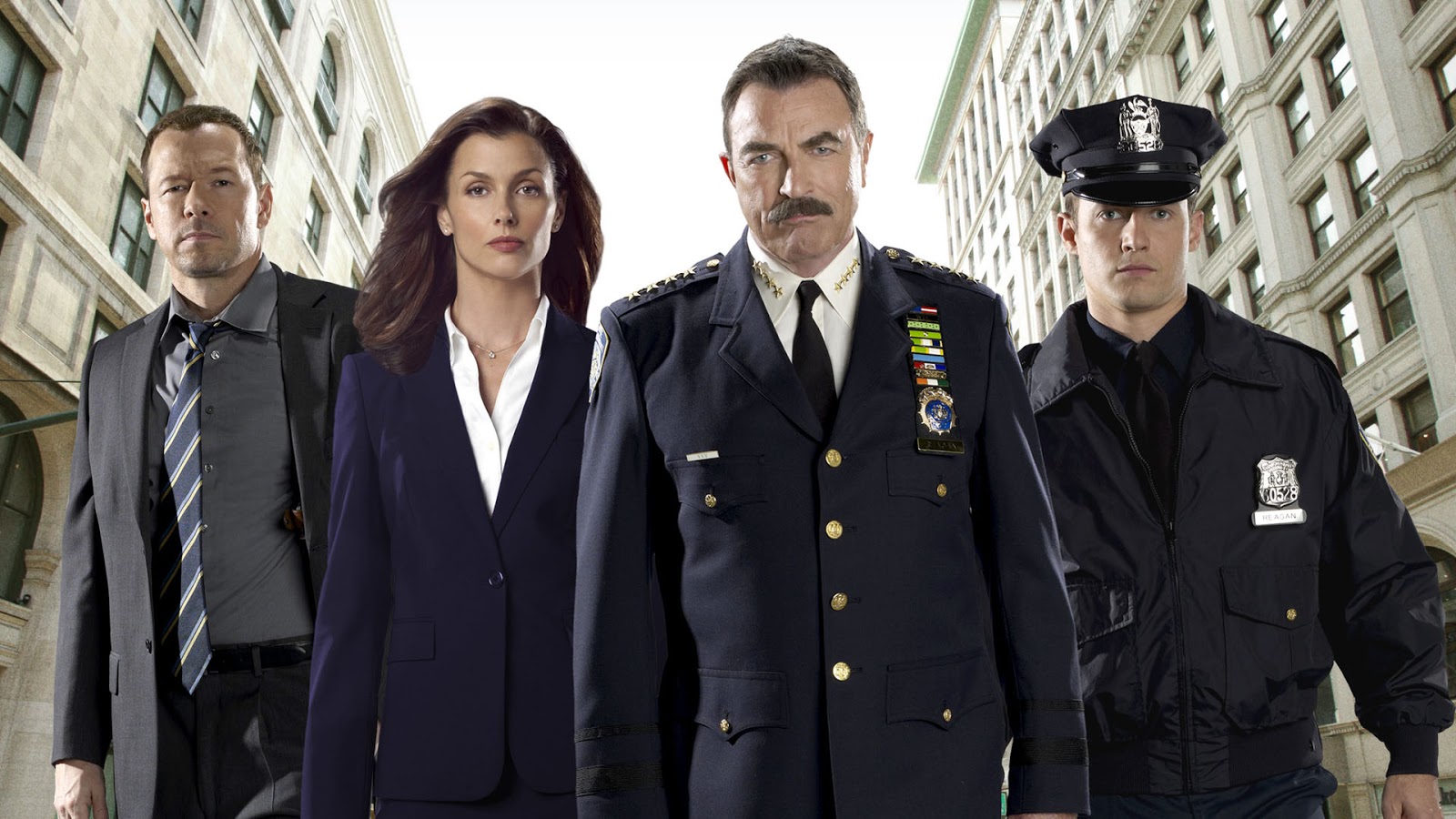
I owe Tom Selleck an apology. The long-time genial hunk, famous as “Magnum, P.I.” and notable in show business lore for missing the career opportunity of a lifetime when contractual obligations forced him to turn down the role of Indiana Jones in “Raiders of the Lost Ark,” has guided his CBS police series “Blue Bloods” to five seasons, exploring tough ethics dilemmas in virtually every episode, and usually doing it very well. For some reason, I’ve only cited the show a few times, once critically, and it deserves better. Netflix started streaming the show, and my wife has been watching about three a day. I really hadn’t been paying sufficient attention, or respect. It’s a wonderful ethics show, the best since “Star Trek, the Next Generation’s” hay day, and one of the very best ethics TV shows of all time.

Selleck plays fictional New York City police chief Frank Reagan. The show could be called “The Conflicts of Interest Family, ” because law enforcement is the family business, and Selleck’s large brood includes two sons, one a patrolman and the other a detective, under his command, and a daughter who is an assistant district attorney. Reagan delicately balances the jobs a father, mediator and boss, all while being given back-seat advice from his father, who is retired but was also a NYC police chief.

I have found myself thinking about how Selleck’s character would react to the Ferguson ethics train wreck. Police shootings have been frequent topics of episodes, as have political efforts to demonize police. Frank was a fan of New York’s controversial stop-and-frisk policy, and accusations of profiling do not reduce him to a mass of apologetic jelly. Meanwhile, he has forged a working relationship or trust with the City’s black mayor, whose loyalties to the black community, and more than a few dubious civil rights headline-seekers.

Selleck is a credentialed, if low-key, Hollywood conservative, and his show’s demographics are just short of Social Security territory.  It’s too bad: teachers should assign the show and discuss the episodes in class. The episode I wrote about earlier was an entire ethics course on its own, but hardly unique in the series: What should an undercover cop do when a child is imperiled in a burning building, and he is the only one who can get to the kid in time? If his photo is taken by the media that arrive on the scene, not only is his cover blown, but his life and family may be in danger. He hands off the child to his partner, who is the on photographed and becomes a hero. The city is clamoring for the Chief to decorate him as a hero. Naturally, the real rescuer is a Reagan.  Should the partner be willing to live a lie? Should the Chief deceive the public and preside over a fake ceremony to preserve an undercover operation that might bust the mob?  This was a memorable “Bluebloods” episode. but many reach this level of ethics complexity, and the duds are far and few between. This season the show has explored many ethics problems that have been debated in the news, such as campus rape, police body cameras, the “blue line,” news media bias, and others.

I apologize, Mr. Selleck. I have neglected your excellent efforts to present ethical dilemmas in law enforcement, leadership and parenting to the public in an intelligent, balanced, courageous and entertaining manner. Great job, on a great show. Please keep it up. I promise to pay closer attention.


“Drunk Girl In Public”: This Trend Will Ruin Trust, Spontenaity, Kindness and Fun, and There Is Absolutely Nothing We Can About It Except Complain

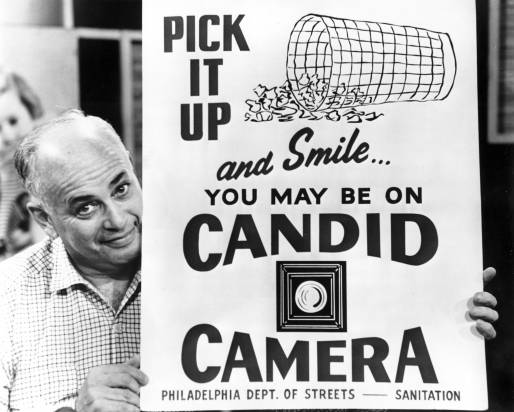
I guess it all began with Allen Funt.

If Allen knew what he would be starting, he would have opened a deli.

If Allen knew what he would be starting, he would have opened a deli.

Back in the Fifties, he came up with the idea of using a hidden camera to record the reactions of innocent bystanders “in the act of being themselves.” He staged situations, sometimes Twilight Zones set-ups like a door that opened for everyone but the target, and filmed the results, first for a guest segment on TV talk shows and finally on his own, long running hit, “Candid Camera.” Funt would never have dreamed of using actors and faking the reactions, because first, he didn’t need to; second, if he was caught, it would ruin him; and third, he was an honest professional. The idea, however, has thoroughly metastasized in all directions, to “practical joke shows,” reality shows, and such monstrosities as ABC’s “What Would You Do?” and James O’Keefe. Perversions were limited as long as the shows were restricted to television, but now YouTube makes everyone a potential producer, and among the thousands trying to create a viral video, there are many, perhaps most,  who are not decent, ethical professionals like Allen Funt, but just greedy jerks who will gladly cheat, lie to and humiliate others to gain fame and fortune. Continue reading

Esurance Wants You To Know That Old People Are Ignorant And Pathetic

It was the Candy Crush commercial that did it. I nearly red-flagged Esurance for its commercial earlier this year showing “Lucille,” an elderly, technologically clueless auto insurance consumer whose version of a Facebook wall consisted of posting photographs on an actual wall in her home, but decided, “OK, maybe that’s just Lucille. After all, the ad shows another senior trying to put her straight.”  The recent Esurance ad featuring an elderly idiot who plays “Candy Crush” by hitting hard candies with a hammer was too much, though.

The dirty little secret of the political correctness culture is that the groups most associated with political conservatism—males, seniors, whites and Christians—are acceptable targets for bigotry, denigration and ridicule. Add to that the overweight, who are always fair game for derision today, and the double standard in mockery is clear. Continue reading

“CSI” Ethics: Now THAT Was An Unethical Fictional Lawyer…

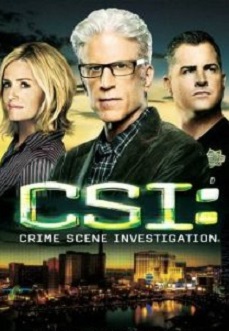
CSIWow. That was one unethical lawyer on CBS’s “CSI” last night, and I mean even before we found out that he had stolen a vile of an Ebola-like virus and used it to murder a doctor, almost setting off a viral epidemic in Las Vegas. (Gee, I wonder where the writers got the idea for that story? See, we don’t have to argue about politicians causing panic over Ebola: the entertainment media is way, way ahead of them.) Among the lawyer’s ethical transgressions:

1. He set out to use his law degree to gain access, through employment, to a company he blamed for allowing a deadly virus to wipe out his family in South America. Needless to say, this is a blatant conflict of interest, indeed, the worst one for a lawyer I have ever heard of in fact or fiction. He wanted to represent a corporate client so he could destroy it.  This is a clear breach of Model Rule 1.7:

(b), a lawyer shall not represent a client if the representation involves a concurrent conflict of interest. A concurrent conflict of interest exists if:

(2) there is a significant risk that the representation of one or more clients will be materially limited by… a personal interest of the lawyer.

Now, that conflict could be waived if the client were fully informed of the fact that its lawyer wanted to destroy it, and the client didn’t mind. That seems unlikely to me.

2. When it looked like his murder was going to set off a deadly epidemic, the lawyer decided to let CSI know that his client the biotech firm had lied about none of its supply of the virus being missing. He knew it was missing, because he had stolen it. The failure of a lawyer to remedy a client’s lie to police about a crime isn’t unethical in a criminal defense setting, but it is unethical if the lawyer would be aiding in another crime by doing so, which was the case here. Moreover, he is involved in the crime, unknown to his client. This would be a disqualifying conflict even if the one described above didn’t exist.

3, He also has an obligation under the ethics rules (Model Rule 1.4) to inform his client about matters relevant to the representation that the client needs to know, like “By the way, about that missing vial of deadly hemorrhagic virus you don’t want to tell the police about? I took it.”

4. THEN, he surreptitiously taped an employee and representative of the company who thought he was also representing her (if he wasn’t, he has an ethical obligation to make that clear—it’s called a “corporate Miranda warning.”) While it is legal in Nevada to secretly tape a conversation you are participating in, it is virtually never ethical for  a lawyer to do this with a client (That’s misrepresentation, violating Rule 8.4 in Nevada) , who is assured that her communications with her lawyer will be privileged, and held in strictest confidence under the attorney-client relationship.

5. Now, if the reason for the lawyer making the recording and handing it over to Ted Danson had been what CSI first assumed it was—that he was trying to save lives in imminent danger and deemed the revelation of a client confidence the only way to prevent it—he would have some support in the ethics rules, for there is an exception to the duty of confidentiality that can justify that.*  That wasn’t his motive, however, at least not all of it. He was also trying to make sure that the company—his client, which he was trying to destroy in revenge for his family’s deaths—was blamed for the virus that he had released. He had no justification for violating Rule 1.6, which says that a lawyer must keep client confidences.

6. Also, since he was representing both the employee he secretly taped and the company itself, he would have been obligated to report what she told him—evidence of a crime implicating the company–to his corporate client before reporting it to authorities, so the corporate client could report the lost vial itself, or at least have that option. If the attorney was going to exercise the “death or serious bodily injury” exception, he needed to tell the client that, too.

Yes, this was a very unethical lawyer.

Then there was that killing part…

* There was no reason to make the recording at all. This was a lame plot manipulation by “CSI.” Danson and his team used the biological residue on the recorder to prove that the same person who made the recording also stole the vial. But the lawyer could have just told the police about what his client admitted regarding the missing vial. No recording was necessary.

Note To Ethics Dunce Norman Lear: That’s Not “Reverse Racism,” Norman. That’s Just Racism.

Norman Lear, Ethics Meathead..

Norman Lear, Ethics Meathead…

On what has become racism Friday for some reason, I read with annoyance excerpts from Norman Lear‘s new autobiography. The relentlessly liberal ( and smugly so) TV writer, producer/director and liberal activist who created “All in the Family,” “Maude,” Sanford and Son,” and People for the American Way, tells this tale:

“Mike Evans, the actor who played Lionel, the son of George Jefferson on All in the Family, wanted to write as well as act, and I suggested he take a crack at the Good Times pilot script. He brought in Eric Monte, a black writer he wished to team up with. Eric (who later sued me, Jerry Perenchio, Tandem and CBS for something like $185 million) came from the Cabrini-Green housing project in Chicago, so we settled the James and Florida Evans family there. [Editor’s note: The suit was settled for $1 million.] I was charmed by Eric Monte and, having worked for years with Mike, liked him a lot, too. A number of black writers worked with us through the years, but thus far none had created a show. Mike and Eric now had the opportunity to be the first.

They blew it creatively with a poor copycat of a script. But even though what they wrote was a far cry from what we shot, we did not seek to change their credit as the sole co-creators. I could be confessing to a bit of inverse racism here when I admit that it even pleased me to see them credited and paid. That would not have happened, at least not gratuitously, if they were white.”

I have news for Lear: that’s straight up racial bias, also known as racism. He is admitting that he gave excessive credit to two writers for a subpar script because they were black. Continue reading

Emmy’s Transgender Nomination: Important, Inspiring, and a Breach of Integrity

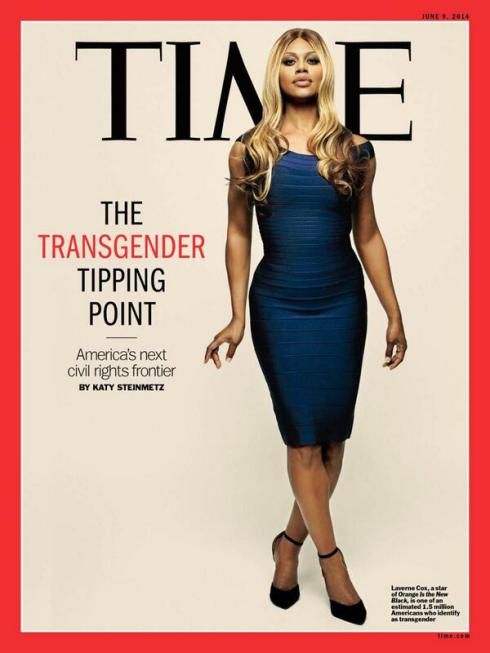
laverne-cox-timeThe Emmys made cultural history yesterday, nominating Netflix’s “Orange Is the New Black” actress Laverne Cox, who plays Sophia Burset in the prison drama, in the category of outstanding guest actress in a comedy series. It is the first time an openly transgendered actress has been nominated for an Emmy.

She joined several of her colleagues  on the show who were also recognized in various acting categories: stars Taylor Schilling, Kate Mulgrew, Uzo Aduba and Natasha Lyonne.

The problem is that Cox received the nomination for political and social reasons unrelated to her performing skills. This will be denied, of course, and since all awards are subjective, no one will be able to prove this is the case. It is, however. In the large, uniformly superb ensemble cast, Cox’s role is relatively minor, and I have a difficult time believing that anyone would objectively identify her as a standout in the show based on her acting. (In the current season, which I have seen in its entirety, her character is almost invisible). This isn’t intended to diminish Cox in any way, for in the role she plays, I cannot imagine it being played better. Nevertheless, there are many un-nominated actresses in that show—as well as other shows— whose characters are more vivid, who have to show more range, and who are more deserving of a nomination once the process is stripped of irrelevant political baggage. Among them: Taryn Manning, whose transformation into the complex religious fanatic Tiffany “Pennsatucky” Doggett is frightening; Yael Stone, as the heartbreaking stalker Lorna Morello; Samara Wiley, as te alcoholic moralist Poussey Washington, and several others.

Everyone is thrilled for Cox, with Cox, reasonably, leading the way. “I’m on cloud nine. I’m through the roof,” said the actress, whose path to an award was  paved when she was featured on the cover of Time magazine.“What a wonderful, wonderful day for “Orange” and for black trans-women,” she said.

Undoubtedly. It’s not such a great day for the acting profession generally, the Emmys, or the principle that awards based on merit should be decided based on merit, and not social and political agendas. I would say, “But that’s Hollywood,” except that it isn’t just Hollywood. Continue reading

Ethics Dunce (Live Performance Division): “Fox and Friends” Host Steve Doocy

Daughtry

Boy, do I hate when someone does this.

Especially when they do it to me. Unfortunately, for him, the victim this time was Chris Daughtry.

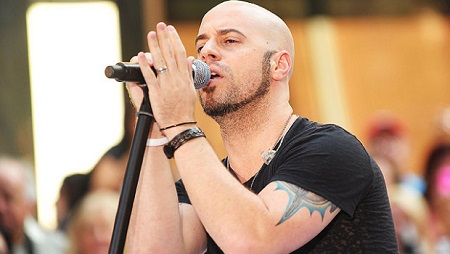
On June 6, the 70th anniversary of the D-Day, Fox and Friends had rocker Chris Daughtry and his band performing (for some reason: D for Daughtry?). Later, during the after-show, host Steve Doocy was overcome with patriotism and bad musical taste and suggested that Daughtry return to sing a “My Country ‘Tis Of Thee” extemporaneously with the other hosts, Anna Kooiman, Clayton Morris, and Heather Childers.

Daughtry, nicely but unequivocally, refused, causing an awkward scene, and also bringing down a barrage of abuse on himself from Fox viewers, so much so that he later felt the need to explain and apologize in a video.

He shouldn’t have. Doocy was way out of line, incredibly so, for someone supposedly in a branch of show business. It is rude and unfair to put a performer on the spot in front of an audience and 1) ask him or her to perform something unplanned and unrehearsed; 2) to request musical services that were not required in the contract, essentially as free entertainment,  and 3) worst of all, to frame it as a patriotic act, making Daughtry look like a villain when he refused, as he should have, when the singer was in truth the victim of Doocy’s clueless presumptuousness.

Doocy and Fox owe Daughtry an apology. No performer, ever, should be put in this  position without his prior knowledge and consent.

________________

Pointer and Facts: Mediaite


Political Correctness Files: X-Men, People Magazine And The Case Of The 6’4″ Dwarf

"Hey, look! It's Tom Selleck!"

“Hey, look! It’s Tom Selleck!”

Apparently political correctness in the media now requires affirmative misrepresentation.

The People Magazine review of “X-Men: Days of Future Past” contains this sentence:

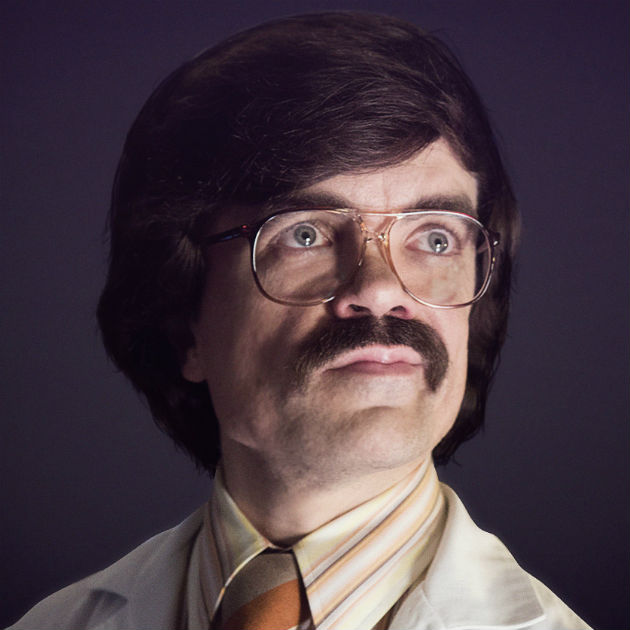
“You’ll understand her motivation when you meet Dr. Bolivar Trask (Peter Dinklage), a government type who creates the sentinel project, and is even more sinister than his Magnum P.I.-by-way-of-IBM looks would suggest.”

For anyone who has seen the movie, or even anyone familiar with the (excellent) actor, Peter Dinklage, I have this question: What is odd about that quote?

For it is extremely odd. Continue reading

The Academy’s “In Memoriam” Snubs: Much Better This Year—Thanks, Oscar

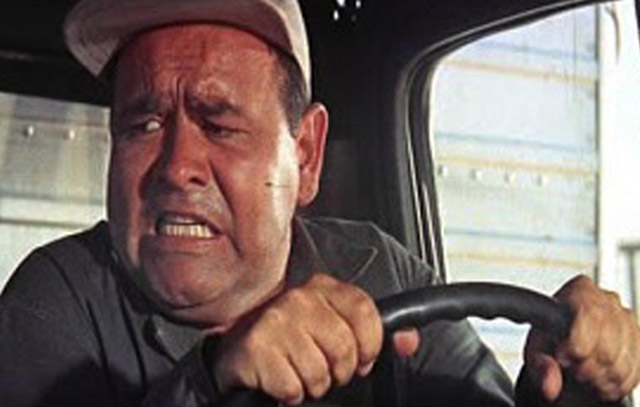
The great Jonathan Winters in the not-so-great "It's a Mad, Mad, Mad, Mad World"

The great Jonathan Winters in the not-so-great “It’s a Mad, Mad, Mad, Mad World”

In past years I have taken the Academy of Motion Picture Arts and Sciences to task for the ethical breach of ingratitude and disrespect, as the honor roll of the year’s deceased film notables have omitted important figures who deserved their final bows. Omissions are inevitable, I suppose, but some of the past examples were unforgivable—last year alone, for example, the Academy snubbed Ann Rutherford, Andy Griffith, R.G. Armstrong, Russell Means, Harry Carey, Jr., and Susan Tyrell. 2012 was worse.

2013, however, shows that the Academy is being more careful, and Oscar deserves credit for cleaning up its act. I have ethical and historical objections to bestowing the prestigious final slot on actor Phillip Seymour Hoffman, dead prematurely of self-inflicted drug abuse, when a genuine, bona fide Hollywood legend, Shirley Temple, was on the list. I understand the thinking: Hoffman had friends and colleagues in the room, and Temple is of another generation; his premature death was a tragedy, and she lived a long and productive life. Still, the priorities and relative values such a choice exemplifies is disturbing. Great actor that he was, Hoffman was a criminal, an addict, and left his children fatherless. Shirley was the greatest child star who ever will be, a ray of sunshine in the dark days of the Depression, a one-of-a kind talent and icon, and later a lifetime public servant who raised a family. She represented the best of Hollywood and the profession; Hoffman represents its dark side. Naturally, he’s the one who received the greatest recognition. I will suppress my dark suspicions that Shirley was docked because she was a Republican. A  Facebook friend actually wrote that Shirley deserved to be penalized because some of her movies were racist. My response to this slur was not friendly. Continue reading