Comment of the Day: “Unethical Website Of The Month: Michael T. Slager Support Fund”

Now, let's not jump to conclusions...

Now, let’s not jump to conclusions…

UPDATE (MAY 3): I have been convinced that the original post that generated this Comment of the Day went too far. Asking for support for Slager’s defense cannot be unethical: Slager has a right to a defense, and the best one available. My thoughts on that issue, in relation to the Freddie Gray cops, are here. I still think it is obvious that the individual who posted the appeal is doing so for unethical reasons, and is likely a racist, an apologist for a bad cop, and an idiot. But the appeal itself is not unethical, hence the website was not unethical to post it.

________________________________________________

How can a website dedicated to paying for the defense of fired police officer Michael T. Slager be unethical, when every citizen is guaranteed the right to a defense before a jury of his peers? I thought I made my ethical objections to the site clear when I wrote:

Slager deserves a fair trial and will get one, but anyone whose immediate reaction to seeing the horrific video is sympathy for this killer cop needs psychiatric treatment, and quickly.

I also made it clear—I thought–that the text of the appeal betrayed a strange and ugly urge to shield Slager from the consequences of his conduct, which was per se, on its face, undeniably illegal under the laws of every state in the land, including South Carolina. He shot a fleeing man in the back; he cannot claim self-defense. Deadly force is forbidden in such situations. Unless Slager noticed that victim Walter Scott had death-ray shooting eyes in the back of his head, Scott’s death is a homicide, and it’s an open and shut case. The only remaining question is what level of homicide.

The appeal said that the poster supported Slager. Wrong. We should not support police officers who shoot citizens in the back. It attempted to minimize Slager’s offense by calling it a “mis-step.” Intentionally shooting someone illegally is not a mis-step. It’s murder. Then the appeal reminded us that Slager has a family, and didn’t do anything bad before he shot a man to death. Well, “first offense” is not a big mitigating factor when it comes to executing people.

However, I appreciate Ethics Alarms newcomer Gustav Bjornstrand‘s comment, though I don’t think this is the best context for it. Here is his Comment of the Day on the post “Unethical Website Of The Month: Michael T. Slager Support Fund.” I’ll be back at the end.

I venture to say that to offer support to Slager is certainly ethical, in and of itself. That is, if one believed that he or anyone deserves monetary support in order to raise a defence. It is conceivable that even someone who was certain he had committed a crime would choose still to aid him in getting good representation. It is unethical, I suggest, for anyone to assume that Slager is guilty of murder before a court decides the issue. It is possible, even if improbable, that there were circumstances prior to Slager firing that may shed light on his decision to fire. Additionally, there are a few other factors that need to be taken into consideration: Continue reading
Musings On The “You Can’t Even Spell” On-Line Debate Tactic

dooleyIn a debate on a live thread here between two esteemed commentators, one of the contestants expressed vivid annoyance when the other derided the quality of his text in a retort. I’ve witnessed this many times online, as have you, I’m sure: someone registers an opinion while making a blatant typo, a bad misspelling, a misuse of a word, or a grammar gaffe and the opponent immediately focuses on it. What is this, exactly, and is it always wrong?

1. What is it? As I mentioned on the thread in question, it’s pretty close to an  ad hominem attack once removed, right? The sense of such a comment is, “Why should I respect your opinion? You can’t even spell “inaugural!” which in turn suggests that the individual is an ignoramus rather than a worthy adversary. It needs a name though. Is there one?

2. Is the tactic ever justified? Clearly it is not fair and indeed an unethical deflection if the issue is a typo or two. Or, in my case, or six. Anyone who visits here often knows that I have a serious typo problem, paired with an even worse proof-reading problem. I have dinged job applicants for resumes and job letters that contain “your” for “you’re” and “recieve” for “receive”? Indeed I have. Is there a difference? I think so: if someone wants to make a good impression and still makes these mistakes, I am justified in concluding that this is really the best that applicant can do, or, in the alternative, that he or she doesn’t care very much.

I wasn’t blogging 2000 words a day then, however.

3. Mentioning a gaffe seems to be mandatory if the comment or text containing it was complaining about carelessness, illiteracy or stupidity generally. Again, though, what does this mean? Is it essentially another variation of an ad hominem attack: “Hey, you’re so dumb you make the same kind of error you’re bitching about! Your argument must be dumb too!”? I think it is, but it also falls in the category of “Boy, I asked for that!” In “Twelve Angry Men,” the bigoted Juror 10 derides the character of a witness, saying, “He’s an ignorant slob! He don’t even speak good English!” Whereupon the heavily-accented naturalized citizen in the group corrects him, saying, “He doesn’t even speak good English,” humiliating his fellow juror. Ethical? In that setting perhaps; generally, however, I would think that the Golden Rule should apply, but most of us can’t resist the hanging curve over the center of the plate. Continue reading

Unethical Quote of the Week: Sen. John McCain, and also “WHAT????”

U.S. Senator John McCain gestures as he arrives to address the third session of the Republican National Convention in Tampa

“It was kind of a very rapid process. Everybody was looking forward to getting out of town because of the snowstorm. I think we probably should have had more discussion about it, given the blowback that there is.”

—- Sen. John McCain (R-Az) to Politico, explaining and making excuses for 47 Republican Senators injecting themselves into sensitive U.S. negotiations with Iran over nuclear weapon development..

1. I am speechless. Luckily, I can type.

Well, sort of.

2. The silver lining: at least the Senator just made those regretting President Obama’s election in 2008 feel better. We were spared embarrassing moments like that of President McCain, asked why he sent missiles to destroy Toronto, explaining, “Yeah, I was watching “Family Feud,” had to run to the can, and was distracted. Hey, it happens.” Continue reading

Woody Allen, James Shigata, And Diversity Casting Ethics

You have no idea who this is, do you? Well, it shouldn't have turned out  that way...

You have no idea who this is, do you? Well, it shouldn’t have turned out that way…

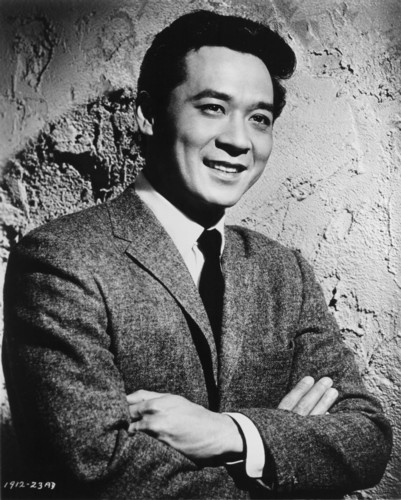
I’m sure you heard about James Garner’s recent death, but were you aware of James Shigata’s passing? Shigata, who died July 28 at the age of 85, was a contemporary of Garner’s, a superb actor, and like Garner, a leading man with leading man looks. James Shigata, however, was of Asian descent, though American through and through, and never escaped the perceived limitations of the shape of his eyes. Though he had a starring role in the hit film adaption of  the Rodgers and Hammerstein musical “Flower Drum Song” and routinely received critical acclaim for all of his film work, but though he got roles on television through the ’80s, he never was able to break through the typecasting straightjacket that deemed him only suitable for “Asian” roles. If you remember him as all, it is probably as the brave Japanese executive shot by Allan Rickman in “Die Hard.”

I thought about Shigata when I read a piece in Salon, noting that director Woody Allen didn’t cast African-Americans in his movies, and that his explanation why didn’t justify the neglect. Prachi Gupta writes, Continue reading

LEGO Ethics: When Political Correctness Doesn’t Hold Up To Reality

LEGO is under fire from gender equality activists for offering a feminine-oriented version of the brightly-colored construction blocks, dubbed the Friends line, that is aimed to appeal to the tastes of little girls. This special  version of plastic bricks and mini-figures was launched in 2011:

“Unlike the bright primary colors of the regular Lego sets, the Friends colors tend toward pink and purple and soft pastels. The comical mini-figures of the regular Lego lines have been replaced by five slender and stylish plastic tweens of various ethnicities, each with her own narrative story, along with puppies, kitties, “My Little Pony”-style horsies and baby animals ranging from penguins to lions. Little girls are encouraged to build things, all right: patios, cozy kitchens, cafes, beauty shops, doghouses for the puppies, stalls for the horses, all characterized by a level of decorative detail unknown in the regular Lego universe.”

And guess what? Girls like it! LEGO had found that its market was 90% male, so it came up with LEGOS that indeed do engage little girls more than the traditional sets.  Friends ended 2012 as LEGO’s fourth-best-selling product line. The number of girls playing with and enjoying LEGOs tripled. Continue reading

Sandy Hook Ethics Train Wreck Update: President Obama and the Rhetoric of Hate

Juror 10 (Ed Begley), apparently Obama's inspiration

Juror 10 (Ed Begley), apparently Obama’s inspiration

Reginald Rose, together with Rod Serling and Paddy Chayefsky, formed the liberal writing troika that created some of the most memorable and important dramatic works of the live television era. None were better than Rose’s “Twelve Angry Men,” a unique, brilliant, real-time portrayal of ordinary men trying to wend their ways through their own limitations and biases to achieve justice under the law. Among its memorable characters is the bigot in the room, a nasty, hate-filled man who ultimately explodes in a rant against the defendant in a murder case, a member of some minority group—Rose never tells us which, because it doesn’t make any difference which. The bigot, Juror 10, says in part…

“…If somebody gets killed, so somebody killed. They don’t care…oh, sure, there are good things about them. Look, I’d be the first one to say that. I’ve known some who were okay, but that’s the exception.”

Rose, who was a Jew, knew that kind of rhetoric well, the condescending, sneering faint praise of the hate-monger. I wonder what Mr. Rose, whom I once had the pleasure of speaking to, would have said about a U.S. President who had pledged to reject the “politics of divisiveness and hate,” and went on to say this to a partisan audience, as Barack Obama did yesterday:

And I do believe that there are well-meaning Republicans out there who care about their kids just as passionately as we do.” Continue reading

My 15 Hollywood Cures For A Paterno-Penn State-Sandusky Hangover, Part 1

For this hangover, movies work better.

The past week, as much as any week within memory, has caused me to despair about the culture, the state of ethical values in America, and my own futile efforts to try to bring some light to the darkness. My mood was not only ravaged by the Penn State scandal (and Penn State’s students’ scandalous reaction to it), but also the continued drift and incompetence in our government and the lack of any apparent leadership or courage to address the problems of our economic system, other than to complain about them.

In such times—there have been others, though happily not many—my spirit urgently needs an infusion of inspiration and hope, and fast: as Al Pacino reminds us in “Scent of a Woman,” there is no prosthesis for an amputated spirit. This is when I turn to the movies that speak to me of courage, redemption, and ethical virtues validated. They are my lifeline; I can’t write or think about ethics from the bottom of a pit. I’ve got only a few days before Thanksgiving, after all. This is no time to be cynical and dubious about the course of humanity and the United States of America, a nation I love and admire.

Thus I am going to take a brief detour from the usual format of Ethics Alarms, with your leave and forgiveness, and share with you the fifteen movies that I will turn to as I try to recharge my enthusiasm, inspiration, and hope. Here are 1 though 7; the rest will be along shortly:

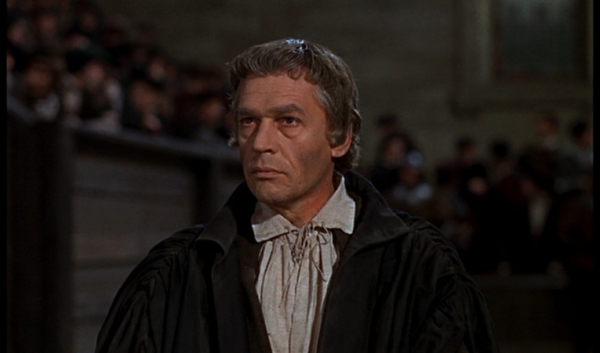
1. A Man For All Seasons (1966)

Hardly the most upbeat film to start the list, but probably the greatest ethics movie ever made.

Ethical issues highlighted: Integrity, honesty, courage, leadership, corruption, abuse of power.

Favorite quote: “Why Richard, it profits a man nothing to give his soul for the whole world… but for Wales?” [Sir Thomas More (Paul Scofield)] Continue reading

Trust the Science, Not the Scientist?

The Wall Street Journal has a depressing piece about recent examples of unethical and fraudulent conduct in the world of science, including, naturally, the latest global warming flap resulting from the UN mistakenly warning that the Himalayan ice caps were melting away,  and would be gone by 2035. This story, coming on the heels of the East Anglia email revelations, has added to justifiable public confusion over climate change, how fast it is happening, how well it is understood, and why governments are so eager to throw billions at a “solution” when there seems to be so much uncertainty. Continue reading