I won’t make a habit of this, I promise: a Comment of the Day deserves its own post. However, the comments on the question of whether Mayor Buttigieg’s brother-in-law was crossing ethical lines or not by making an inter-family disagreement into media fodder have been uniformly excellent, and bundling the three of moderate length coming up makes sense to me.
Incidentally, the polling shows a real split of opinion, but 59% agree on the basic question: they feel the pastor was ethical. (I’m still not sure about that.)
As a pastor, Pastor Ryan Glezman has an obligation to attempt to resolve his conflict with his brother-in-law in a way that respects Biblical teachings. (If he doesn’t respect the wisdom of the Bible, he’s probably in the wrong line of work…)
Fortunately, the Book of Matthew, Chapter 18, has some straightforward instruction for dealing with such conflicts. Since both profess to be believing Christians, they are “brothers”, and Matthew’s Gospel gives clear direction:
Verses 15-17: 15 “If your brother or sister sins, go and point out their fault, just between the two of you. If they listen to you, you have won them over. 16 But if they will not listen, take one or two others along, so that ‘every matter may be established by the testimony of two or three witnesses.’ 17 If they still refuse to listen, tell it to the church; and if they refuse to listen even to the church, treat them as you would a pagan or a tax collector.
Pastor Glezman has expressed his concern that Pete Buttigieg’s frequent forays into Biblical interpretation pose a risk of leading others astray. He didn’t go public over this right away: Mayor Buttigieg has been bloviating about what he thinks Christians should do for quite some time now. Based on that, I’d guess that the pastor has already attempted to privately address the issue with his brother-in-law, and has now moved to treating him as if he were “a pagan or a tax collector”.
Since Chapter 18 gives dire warnings to us all not to cause others to stumble in their faith, Pastor Glezman has ample cause for his concern. Pete Buttigieg’s religious pronouncements do pose a risk of misleading others.
The chapter also emphasizes the vital importance of practicing forgiveness and grace when we deal with others. Now, some people think that means that Christians need to let bad actors continue to cause problems, “turning the other cheek” and “going the extra mile”. That is only part of the truth. Our obligation as Christians includes helping bad actors to understand whatever they’re doing wrong and repent of doing it. We’re not doing a bad actor any favors if our compliance leads him to continue screwing up. We need to approach the problem with love for the bad actor, but we may also cause the bad actor significant heartburn if that’s what it takes to deal with their behavior.
Next is first time commenter Barbara Ravitch. I love when a new commenter enters with such a high-level splash, and with some recent defections and unexplained disappearances, the Ethics Alarms binders full of women could use some replenishment.
1. On torturing the homeless with earworms. The city of West Palm Beach, Florida has been blaring the horrible kids song “Baby Shark,” as well as another annoying song in the genre, “Raining Tacos,” outside an event center to drive homeless people away. Listen…
The homeless and their advocates object to the tactic as cruel and counter-productive. The city says it only wants to make them go to homeless shelters.
This is a case of “ick” rather than unethical conduct. Music is used to keep subjects of torture awake in some cases, and auditory assault by kids’ songs is only different in kind from high-pitched beeps and other more direct methods used around the country, such as recordings of chain saws . Some cities have even outfitted parks and public spaces with devices that blast a high-frequency sound that only teenagers and young people can hear.
The use of annoying songs passes the utilitarian test, I think. In this case, the desired end justifies the means. I will change that assessment of there is evidence that one or both of the two songs are literally driving the homeless insane.
That is a distinct possibility. Here’s “Raining Tacos”:
2. Let’s try to think of the least qualified, most objectionable candidates who would still be better than this trio...It’s official! Mark Sanford, who had to resign as South Carolina governor to avoid being impeached after going AWOL and conspiring to cover it up as he secretly visited his soul mate, a South American seductress, or, as such were called in less politically correct times, “firecracker,” has now declared that he will accept the GOP nomination for President. He now joins failed semi-Republican Senate candidate and Gary Johnson running mate William Weld, who is 74 and hasn’t held office in 22 years; he distinguished himself as a nominee of the Independent Party by announcing that he would vote for Hillary Clinton. Then there’s Joe Walsh, who spent all of one term in the House, and was reduced to being a radio talk show host after it was revealed that he was a deadbeat dad.
The news media is faking fainting spells because the Republican National Committee is not going to hold debates among this ridiculous crew, and is cancelling primaries as well. The RNC’s position isn’t unethical, it is responsible. I held in 2015 that the GOP had no obligation to allow Trump to run for the GOP nomination, and he was a more acceptable and serious candidate than any of these fools—which is not to say that he was serious or acceptable. These are three dead in the water political failures trying to use NeverTrump hate to breath life into the corpses of their careers.
Here’s how bad they are: I’d vote for Newt Gingrich (ugh) or Mitch McConnell (ugh X infinity) over any of them.
3. And this is why our rights are in real and immediate danger. From the Washington Post:
“Americans across party and demographic lines overwhelmingly support expanded background checks for gun buyers and allowing law enforcement to temporarily seize weapons from troubled individuals, according to a Washington Post-ABC News poll, as President Trump and Republicans face fresh pressure to act.”
“Allowing law enforcement to temporarily seize weapons from troubled individuals,” aka the “red flag” laws, is a violation of due process, the Second Amendment, and also a “pre-crime” measure. The public support sit because a) unscrupulous politicians demagogue the issue of gun control, b)the average American, thanks to our incompetent public school system, can’t distinguish a constitutional right from prickly pear, and c) limiting the rights of hypothetical “bad people” is so easy, compared to when one’s own rights are being infringed.
This is a useful poll, because it shows how vulnerable the ignorant are to politicians who want to take over their autonomy and weaken our democracy under the impetus of “do something.” Who is going to explain to these millions of inattentive people with weak critical thinking skills why “red flag” laws are the totalitarian camel;s nose in the tent? President Trump, with his junior high school level rhetoric? Me, with my essays that violate Facebook standards? The news medi-ack! Ack! Gag! Cough! I couldn’t even that ridiculous possibility out. Who?
And who gets to define a “troubled individual”? Anyone with symptoms of depression, anxiety, or stress? That describes 90% of the people I know. Those with irrational anger and obsessions? That’s the entire Trump-hating Facebook Borg, based on my reading this week. People with rocky marriages, conflicts at work with supervisors and co-workers; ranting bloggers? Charles M. Blow? Kurt Schlicter? Stephen Colbert? Alec Baldwin?
We have a dumb, ignorant, lazy, badly educated, civically incompetent electorate that the news media and politicians want to make worse on all counts, and work constantly to accomplish that goal.
In what appears to be a case of the Popeyes (“It’s all I can stand, ’cause I canst stands no more!”), the evangelist minister brother-in-law of cult candidate for the Democratic Party nomination Pete Buttigieg found it necessary to publicly rebuke the young mayor of South Bend.
Buttigieg, who has hardly been an unqualified success in his only elected executive office so far, has also distinguished himself, if that’s the right word, by embracing Ocasio-Corte- level climate change fear-mongering, has suggested that the nation should not honor Thomas Jefferson, and is all-in on with his party’s determination to remake our system to make it easier to dictate progressive policies to the public, as he has endorsed abolishing the Electoral College, packing the Supreme Court, and eliminating the Senate filibuster. He has called for a National Service, forcing or enticing teens to participate in government-dictated social programs.
Most significantly, Buttigieg has been at his most arrogant and obnoxious when he uses Christianity and God as crude weapons against conservatives.
For example, he has accused Christians who don’t support the $15 an hour minimum wage of being poor Christians and hypocrites. Paul Miragoff nicely explains the intellectual bankruptcy in that claim, writing, ” Why isn’t Buttigieg a hypocrite for not supporting a $20 an hour minimum wage? For the same reason that other Christians aren’t hypocrites for opposing $15 an hour. The Bible doesn’t address the minimum wage rate and there are public policy arguments against raising it.”
Ah, but God is on this candidate’s side, you see.
Now he is arguing that the Bible can be read to favor late-term abortions, meaning that if one opposes killing the unborn, one is a bad Christian. In an interview this morning on “The Breakfast Club” radio show, Pete Buttigieg said, Continue reading →
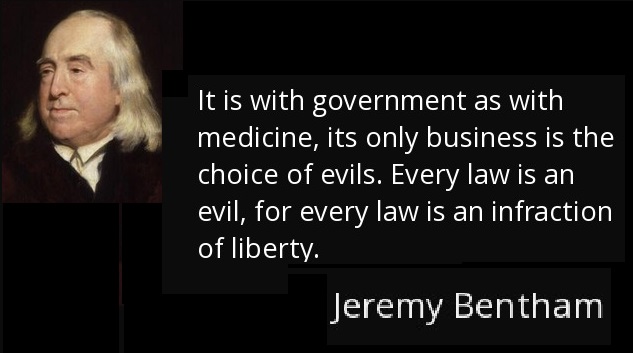
“Choice of Evils,” taken from the utilitarian philospher Jeremy Bentham’s (1748-1832) famous quote above, is an ethically rich “Law and Order” episode from 2006 that I recent watched again. Assistant DA Jack McCoy decides to prosecute a mother for murder after she admits to shooting her homeless, psychopath son. Her defense: she did it to protect the community, or, in cruder terms, he needed killing. She had met his girlfriend who was pregnant, and told her that her son would eventually kill her and the baby if she didn’t get away.
The mother explained that her first husband and the dead man’s father is in prison for murder, and like his son. lacked empathy or a conscience. She related how her son displayed all the traits of a psychopath growing up, such as torturing and killing animals. In sympathy for her plight, McCoy offered the mother a manslaughter plea and short prison time, but she turned the deal down, adamant that she hd done nothing wrong. She was then charged with second-degree murder (that’s also generous, since the killing was premeditated), and the trial began.
The problem of how to deal with “bad seeds” is a societal dilemma of long standing, and one without a satisfactory solution. It is easy to sympathize with the mother’s plight, but a society that approves of preemptive executions when an individual seems likely to harm someone before he or she actually does is on a fast track to chaos; it’s not even a slippery slope. Once again, the seductive appeal of pre-crime measures has to be resisted decisively, or individual rights and justice mean nothing.
Does society have to wait until a loudly ticking time bomb goes off? If it’s a human time bomb, absolutely, and no exceptions. Sometimes, that metaphorical bomb turns out to be a dud, and every human being has the same right to be judged on the harm, if any, he or she actually does rather than the harm some feel they are certain to do.
In the episode, it is discovered mid-trial that the son had in fact murdered a man, which his mother did not know at the time she murdered him. McCoy argued to the judge that this was irrelevant to the case and likely to mislead the jury. He was correct. The mother’s act was exactly as illegal and intolerable whether her son was a likely killer or a proven one. The discovered homicide is an example of moral luck: it changes how the mother’s act is perceived, but doesn’t change the ethical analysis at all.
In the end, the jury votes guilty, and sends the mother to prison for 25 years. This is because she admits on the stand that her current husband had threatened to leave her if her son moved back into their home, which he announced he would soon do. Thus the preemptive murder began to look less like an altruistic act to spare society, and more like one for the mother’s personal benefit.
Again, it shouldn’t have mattered. Killing a human being based on probabilities and presumed future harm to society can never be deemed just or tolerable.
Apparently President Trump lobbied Prime Minister Benjamin Netanyahu’s government to bar two of the President’s least favorite members of Congress, Representatives Tlaib of Michigan and Ilhan Omar of Minnesota, from entering Israel for official visits. Israel then reversed an earlier decision to admit the two Muslim Democrats, both supporters of the international Israel boycott movement.
From the Times:
An Israeli official close to the prime minister’s office said on Thursday that a call came from the Trump administration as recently as this week pressing Mr. Netanyahu to bar the congresswomen. The official, who spoke on the condition of anonymity to discuss delicate information, said the prime minister found himself in a “lose lose” situation, having to choose between upsetting Mr. Trump or the Democrats.
Of interest but irrelevant to the ethics issue is this morning’s news that Tlaib is now being allowed to enter Israel on humanitarian grounds in order to visit her 90-year-old grandmother, provided the Congresswoman pledges “not to promote boycotts” while in the country. That’s nice. But it doesn’t change the analysis of what Trump did.
One of the “Big Lie” attacks (I haven’t yet added this one to the Ethics Alarms Big Lie Directory, but it will be #6) on President Trump, spurred by partisan academics and gullibly swallowed whole by history-challenged members of the public, has been that this President uniquely ignores or violates so-called “democratic norms,” meaning that he frequently takes actions that may be within his power, but that traditions, precedent and the practices of his predecessors have established as un-Presidential or even taboo. For the most part, this is contrived criticism representing a double standard and requiring historical amnesia. Presidents break norms, and the stronger ones break them frequently. Democrats attempting to equate breaking precedents as the equivalent of “high crimes and misdemeanors” are showing their hand: this complaint is just one more unethical justification for a “resistance” coup.
The fact that there is nothing automatically wrong with breaking norms does not mean that all norms should be breached, or that breaching a particular norm is wise, responsible, or ethical. A President enlisting a foreign ally to take negative action against a member of Congress is one norm that shouldn’t be violated.
The action is unethical by any ethical standards. From a Golden Rule standpoint, no President would tolerate members of Congress lobbying foreign governments to take adverse action against him, though I have little doubt that this has been attempted by legislators in the past. Kant’s Rule of Universality would reject the practice as a new norm, and from a utilitarian standpoint, it’s hard to see how such conduct by a President would result on balance in more beneficial consequences than negative ones. Continue reading →
This is going to start out as a history-heavy day at Ethics Alarms, and Zoe Brain’s terrific Comment of the Day regarding Wernher von Braun, the abuse of science, and the moral compromises of war gets it off to a smashing start.
Unit 731 was set up in 1938 in Japanese-occupied China with the aim of developing biological weapons. It also operated a secret research and experimental school in Shinjuku, central Tokyo. Its head was Lieutenant Shiro Ishii.The unit was supported by Japanese universities and medical schools which supplied doctors and research staff. The picture now emerging about its activities is horrifying.According to reports never officially admitted by the Japanese authorities, the unit used thousands of Chinese and other Asian civilians and wartime prisoners as human guinea pigs to breed and develop killer diseases.
Many of the prisoners, who were murdered in the name of research, were used in hideous vivisection and other medical experiments, including barbaric trials to determine the effect of frostbite on the human body.
To ease the conscience of those involved, the prisoners were referred to not as people or patients but as “Maruta”, or wooden logs. Before Japan’s surrender, the site of the experiments was completely destroyed, so that no evidence is left.
Then, the remaining 400 prisoners were shot and employees of the unit had to swear secrecy.
Special thanks is due to Zoe Brain for raising the topic of these horrific Japanese war crimes, which have received so little publicity compared to their Nazi equivalents.
I am a sometime Rocket Scientist. I am also a sometime senior engineer on military projects – in this context, “Defence Industry” is an unhelpful euphemism to sanitise a regretably necessary evil.
Von Braun is an object lesson. Although a member of the Nazi party, he joined to further his passion of developing rocketry. His later membership of the SS was coerced, though any man of principle would have resisted rather harder than he did.
His boss, Dornberger, who arguably had more influence on the US space program than Von Braun, was a nasty piece of work. He wasn’t just an amoral mercenary with overly flexible ethics, he was quite approving of working slave labourers to death.
I am in no danger of becoming a Dornberger. A Von Braun? Well, apart from the lack of talent on my part, yes, I could see myself becoming like him if I was careless. Just by getting too wrapped up in a technically sweet solution to an intractable problem, by telling myself I was advancing Science for all Humanity, and a hundred other justifications and excuses for selling my soul, one compromise at a time.
Maybe I already have done. Some work I did 25 years ago is now in the hands of a regime I do not trust. Had they been in power then, I would not have worked on that project, just as I refused to work on some others. Continue reading →
Tim Browne, a retired teacher and musician from Wiltshire, England, was diagnosed with colon cancer. He was operated on a week before his daughter’s wedding, but the cancer had spread to his liver and lymph nodes. Doctors said it was terminal.
While he was undergoing chemotherapy, his daughter suggested an unconventional treatment: her breast milk. She had seen a TV report about an American man who had made a miraculous recovery from prostate cancer by drinking it. Soon Tim was having his morning cereal with daughter Georgia’s milk.
Georgia was nursing her 8-month-old son Monty and offered to set aside a few ounces of milk every day for Browne. Browne started calling Monty his “milk brother.” “If I have a lactating daughter, why not take advantage of her? As long as Monty didn’t mind,” Browne said.
There’s no evidence that breast milk really does treat cancer, but doctors said that as long as Browne believed it did, the succor might have a genuine placebo effect.
What do we properly call a father consuming his daughter’s breast milk? Is that too close to incest for comfort?Does it matter if it’s close, as long as it isn’t quite? Continue reading →
Is shooting a big, beautiful male lion who was minding his own business ethical?
The two lovebirds are Canadians Darren and Carolyn Carter, who like killing big, beautiful wild animals. They also are in the taxidermy business, so they create the “art” of preserved beautiful dead animals for those who also either enjoy killing them or who like having the stuffed dead creatures, or just their heads, as trophies or decoration.
It is fair to say that at this time in human culture in North America, simply killing big game for the thrill of it is considered cruel and wrong. The fact that the Carters are taxidermists gives them a little more ballast in a utilitarian argument. In general, killing anything just to kill it is unethical: it ends a life, and life has positive value. Killing an animal to eat it helps balance out the ethical considerations, as we regard human life as having higher value than animal or plant life. Killing a lion to save a human life—as in the situation where a lion is deliberately stalking and killing people, like the two “Tsavo Man-Eaters” responsible for the deaths of construction workers on the Kenya-Uganda Railway between March and December 1898 (dramatized in the film, “The Ghost and the Darkness”) would also be ethical.(Those lions are stuffed and on display in the Marshall Fields Museum in Chicago.)
If one doesn’t deny the value of taxidermy as art, furnishings or as museum exhibits for historical or educational purposes, then maybe the practice has sufficient value to human life to sustain the argument that killing even a harmless lion to stuff it is ethically defensible. Personally and professionally, I find that to be a weak and rationalization-stuffed argument, but let’s give the Carters the benefit of the doubt for now.
The killing was legal. It was, however, the result also a so-called “canned hunt” in South Africa, where a company called Legelela Safaris arranges opportunities to shoot magnificent wild animals for a fee. If it’s sport, it’s barely sport, and, of course, there are many, many sports that do not require killing anything. If one can do something without causing harm (like killing a living creature), it is unethical to deliberately do it while causing harm. Yes, the circumstances surrounding the kill are ethically dubious at best.
Prison labor is an ethics issue that I have never considered before. Apparently that’s true of a lot of people. In Massachusetts, an Amherst-Pelham Regional High School student named Spencer Cliche (great name!) was challenged to undertake an investigative journalism project, He eventually published a 3,000-word exposé on prison labor topic in his school’s newspaper.
The high school, it seems, had contracted with a local prison to re-upholster its auditorium seats, taking its low bid for the job over another bid by a local business. As a result of the uproar sparked by Spencer’s work, the school superintendent issued a statement to school staff members promising never to contract with the prison again.
It does not appear, however, that this decision was based on careful balancing of the ethics issues involved, but rather, as usual, a lazy capitulation to avoid an emotion-based controversy.
In addition to routine prison labor, which is usually handled in a prison facility, there are also state-run “correctional industries,” such as MassCor, which arranges for inmates to do work for schools, nursing homes, towns, non-profits and other institutions. Obviously, their costs are lower than competing businesses, because prisoners earn less than a dollar an hour on average for their labor, according to Prison Policy Initiative.
Thus we have multiple looming ethics issues, among them…
Is it ethical to force prisoners to work at all?
I don’t see how an honest argument can be formulated that argues that it is not. Work organizes the time and attention of the jailed, keeps them occupied, minimizes boredom and the opportunity to get into trouble. Social justice advocates seem to think that prisons should be like summer camps, with sports, crafts, and other pleasant diversions. That approach is both expensive and undeserved. Prison, among other things, is and ought to be punishment.
Is it ethical to pay prisoners less than the minimum wage? Isn’t forced labor with no compensation or minimal compensation virtual slavery?
Convicted prisoners forfeit most of their constitutional rights. Some forms of forced labor might rise to the level of cruel and unusual punishment, and prison labor is ripe for abuse (just ask Andy Dufresne, the protagonist of “The Shawhsank Redemption”), but criminals are a burden on society, and warehousing them is expensive. There is nothing unethical about requiring those who have imposed that burden to help alleviate it.
Are prison-based businesses like MassCor unethical?
Cara Savelli, a spokeswoman for the Massachusetts Department of Correction interviewed by the student journalist, defended the program, saying,
Why can I almost never can find a lot of encouraging ethics stories on a Sunday?
1. Climate change thought. I just watched a PBS round table consisting of non-stop doom-sayng and Trump-bashing on climate change policy. I don’t know if these scientists/pundits/activists are using climate change as a ploy to eliminate democracy and install a Leftist totalitarian (benign, of course) world government, or if they really believe that such a system is the only way to save the Earth. Either way, however, it is impossible to listen to them objectively and not think, “Huh. The only way the draconian [that’s a word named after a despot, you know] solutions that you claim are our sole chance at survival can be implemented is with a massive dictatorship. And after the solution has “worked,” if it works, that totalitarian government will of course dissolve itself and go back to supporting liberty and democracy. Sure it will. How stupid do you think we are?”
If the only way to save the Earth is to forfeit liberty, I, for one, stand with Patrick Henry. The climate change radicals are good matches to the anti-war and anti-nuke activists in the late Fifties and early Sixties who chanted, “Better Red than dead!”, and who thought “Eve of Destruction” was profound prophesy.
2. Cuba, Obama, Trump and Baseball. I don’t know what to make of this one.: it’s a fascinating utilitarian question.
President Trump cancelled an agreement negotiated by the Obama administration that allowed Major League Baseball teams to pay the Cuban Baseball Federation for Cuban players who would then join MLB teams. Under the previous system, only players who defected to the United States, often at great peril and sometimes using human traffickers, could ply their baseball talents in the U.S. and be paid accordingly.
The Trump administration saysthat the deal constitutes a violation of trade laws because the Cuban federation is part of the Cuban government. In other words, the Obama deal allowed the Cuban government to sell human beings to U.S. companies—baseball teams. “The U.S. does not support actions that would institutionalize a system by which a Cuban government entity garnishes the wages of hard-working athletes who simply seek to live and compete in a free society,” said Garrett Marquis, a spokesman for the National Security Council. “The administration looks forward to working with M.L.B. to identify ways for Cuban players to have the individual freedom to benefit from their talents, and not as property of the Cuban state.”
The cancelled deal was always suspect as one of several concessions President Obama gave to Cuba without Cuba instituting any human rights reforms in exchange. And why were baseball players the only Cuban citizens allowed to escape to freedom this way? Why not doctors, scholars, and scientists? Continue reading →
 I won’t make a habit of this, I promise: a Comment of the Day deserves its own post. However, the comments on the question of whether Mayor Buttigieg’s brother-in-law was crossing ethical lines or not by making an inter-family disagreement into media fodder have been uniformly excellent, and bundling the three of moderate length coming up makes sense to me.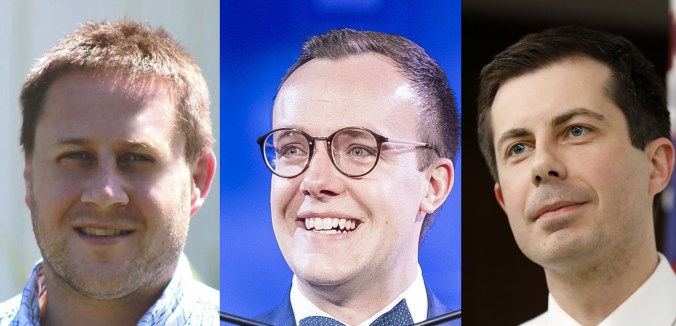






Next is first time commenter Barbara Ravitch. I love when a new commenter enters with such a high-level splash, and with some recent defections and unexplained disappearances, the Ethics Alarms binders full of women could use some replenishment.
Here is her Comment of the Day: Continue reading →