Planned Parenthood Videos Surprise: Forced To Defend Abortion Ethics Acknowledging The Existence Of A Second Human Life In The Equation, Advocates Run Out Of Arguments (Part One)

The Center for Medical Progress released a trailer yesterday promoting its yet to be released eighth undercover investigative video, this one, like the last, focusing on StemExpress, a biotech company in northern California, that has worked with Planned Parenthood to obtain aborted fetus tissue to be used in research. In the clip, StemExpress CEO Cate Dyer explains that her company receives “intact” aborted fetuses from the abortion clinics they work with.

“Oh yeah, I mean if you have intact cases – which we’ve done a lot – so we sometimes ship those back to our lab in its entirety,” Dyer says on the trailer.

Later, she jokes about shipping little aborted heads. “Tell the lab its coming,” she chuckles. “They don’t want to open the box, go, ‘Oh God!’”

I can’t wait.

Undoubtedly the allies of abortion-on-demand feminists and progressives will attack this video as they have the rest, focusing on anything and everything but the single powerful issue it raises that the abortion movement has successfully obscured, denied and obscured since Roe v. Wade and before. These are small, helpless, innocent human beings being killed, chopped up and distributed like prime beef, and the adults doing it and insisting on it have devolved into callous, cold-eyed mutants incapable of considering what their conduct is. They have not had the courage or integrity to confront the ethical conflicts that abortion raises. These videos are making that avoidance increasingly difficult. As I wrote yesterday, bravo for the The Center for Medical Progress and their allies, who are finally forcing the passive public and cynical political class to consider the issues.

The most fascinating revelation is how weak the case for abortion appears to be, once its advocates are required to stop pretending that there is only one human being—the mother—involved. We know it is weak because the attacks on the videos have largely not addressed the ugly fact on display in them—that human, unborn babies with beating hearts and functioning organs are being killed—nor found a persuasive justification for it.

They haven’t had to do either since Roe v. Wade. “It’s my right!” has been enough, though this is a rationalization that does not address the question of right and wrong. Meanwhile, by adopting the deceitful and misleading label “pro-choice,” aided by lazy and sympathetic journalists to facilitate a deceptive framing of the issue (we are seeing the same process now as “immigrant” is substituted for “illegal immigrant”), the pro-abortion lobby has warped all policy debates into a discussion of the effect of an unwanted pregnancy on women, and never about the effect of ending those pregnancies on the women’s’ off-spring. (They die.)
Suddenly, the videos have made the existence of other human beings in the abortion dilemma is unavoidable, so what are the pro-abortion advocates and their allies doing? Let’s survey them; I’m not going to rehash all the earlier deflections of the videos by Planned Parenthood and pundits (“All medical procedures are hard to look at!”) and the usual hyperbolic accusations of evil motives (“This is a war on women! They want to control our bodies!”). I’ve covered them before, and they should be self-rebutting anyway.

“The videos are illegal!”

Continue reading

Ethics Hero, Maybe For The Ages: The Center for Medical Progress

As I said with the release of the first surreptitious “sting video” of Planned Parenthood released under auspices of the anti-abortion group, the Center for Medical Progress, such videos are, in principle, unethical. However, while the unethical should be used in pursuit of a greater good only with great reluctance, moral certainty and a minimum of harm, there are instances when utilitarianism must apply.

This is one of them.

In the case of abortion, the prospect of saving the lives of millions of unborn is certainly worth the incursion on the ethical values of honesty and respect for privacy implicated by these videos. Indeed, it is worth a great deal more. With the seventh video, released yesterday, the conclusion is unavoidable that we, the public, the nation, and humanity, owe a debt of gratitude to the Center for taking radical action to force  confrontation with the reality of abortion so that there can be a real, open and honest debate  that doesn’t duck the central issue. That issue  is not women’s control over their lives, but the ethics of killing innocent human beings to achieve it.

The latest video, like the earlier ones, compels any fair, emotionally functioning and rational observer to accept the brutality and near complete callousness towards human life that the abortion machine creates and requires. In this respect the seven videos—with more to come— are abortion’s equivalent of “Uncle Tom’s Cabin,” forcing genteel, moral, good people by their own confident assessment to confront the horrors that have been occurring under their noses with their passive approval. Because they chose not to think about what abortion really involved, just as so many Americans had no idea what  slavery was like until Harriet Beecher Stowe forced them to consider it as more than an abstraction, abortion advocates, passive and active, have an ethical obligation to watch these videos. Those who refuse are admitting that they are incapable of letting facts disturb their ideologies. Continue reading

Ethics Quiz: Good Samaritan Drug Overdose Laws

heroinoverdoseI know how this one will break down, but it’s an interesting issue nonetheless. And it doesn’t involve Hillary, Donald Trump of Bill Cosby!

Many states have addressed drug-related deaths by allowing junkies using illegal drugs to call 911 for a fellow shooter or snorter in life-threatening distress and be immune from prosecution.   New Mexico passed a “Good Samaritan law” in 2007 that granted limited immunity from prosecution on simple possession charges for people who used 911 to report a drug overdose going on in front of them. The Drug Policy Alliance reports that 28 states and the District of Columbia have passed laws differing in exact provisions but providing limited freedom from prosecution in exchange for saving lives.

There is an explosion of heroin use nationwide, and therefore heroin deaths, right now. (The government abandoning its vital statements via law that drug use is wrong has a lot to do with causing this, but that is for another day.) As always, the first proposals to address a drug crisis involve loosening enforcement. Slate writes,

“In the end, of course, it doesn’t much matter how or why states pass these laws, as long as they pass them. A University of Washington study evaluating the initial results of Washington state’s Good Samaritan policy found in a survey that drug users who were aware of the law were 88 percent more likely to call 911 in the event of an overdose than before. “Despite lingering concerns about possible negative consequences of the new law, such as prosecutions being impeded, no evidence of negative consequences has been found to date,” the study concluded. Good Samaritan laws are humane and sensible. There are no compelling reasons to oppose them.”

Your Ethics Alarms Ethics Quiz of the Day:

Are there really “no compelling” ethical reasons to oppose such laws?

Continue reading

“I think abortion is evil, but it is a necessary evil.” Discuss.

Foetus-435110

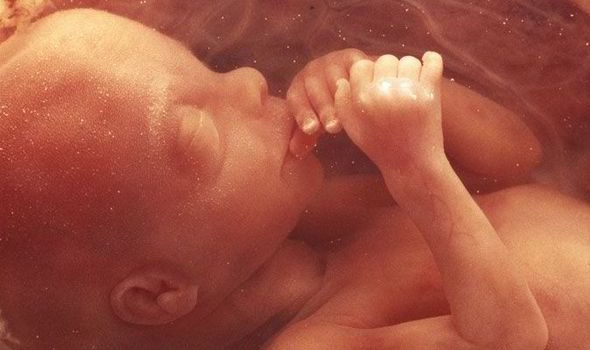
This blog doesn’t discuss evil very often because it is not a term appropriately associated with ethics. Evil is a concept related to morality. In an ethics discussion, I would take evil to mean something extremely, irredeemably unethical by any ethical analysis or system. The statement “I think abortion is evil, but it is a necessary evil” appeared parenthetically in a comment by Beth, a frequent commenter on Ethics Alarms who is a mother and a lawyer, regarding the Planned Parenthood videos. Though the news media appears to have successfully distorted that story by focusing only on whether the videos were evidence of illegal “trafficking in body parts” by Planned Parenthood, that was not the reason I posted the essays, and it is not the reason those videos are significant in the ongoing debate over abortion rights. Two high ranking individuals in the organizations casually discussed the crushing and crunching of the heads and torsos of living and helpless individuals with the sensitivity I would associate with stepping on a roach. If this doesn’t disturb you, it should. If it does disturb you, as it did Beth, what does that mean?

Abortion is one of the most important and difficult ethics issues in the culture, indeed in world culture. It involves millions of lives and millions of deaths, law, bioethics, religion, social policy, science, human rights and feminism, as well as society’s ultimate respect for life itself. I have written about the ethics of the abortion debate frequently (you can find most of the relevant posts here), but to summarize the Ethics Alarms views on the topic:

1. Abortion is an ethics conflict, meaning that there are ethical principles in opposition to each other, requiring society to set priorities.

2. The absolutist position on the anti-abortion side is that abortion involves the taking of innocent human life, which begins from conception, and is thus unethical in all cases. It is a strong position if one accepts the underlying assumption.

3. However, no absolute position is really absolute. Every ethics absolute has an exception, or several: there must be some circumstances when abortion is necessary and right. (This is not true of moral absolutes, since moral absolutes are self defining. If the power dictating a moral precept says it is absolute, it is so.)

4. The absolutist position on the abortion side of the argument holds that a woman’s right to have complete dominion over her body, reproductive activity and health justifies abortion in all cases. This is not a strong position, and in fact is one that cannot be honestly argued or sustained. It supports abortion on demand for any purpose or preference, entirely at the mother’s discretion.

5. To make that argument, extreme pro-abortion advocates have had to deny the humanity and human rights of unborn children, even to the point of arguing that they are not individuals at all, but mere “parasites,” or “tumors.” The removal of a second life from the equation that is at the core of the abortion problem makes the abortion decision easy and guilt-free; it also settles the debate by pretending the central issue doesn’t exist. That issue is that there is another life involved, not just the mother’s.

6. The debate over the ethics of abortion has been handicapped by the tactic of both sides to pretend a legitimate interest championed by the other doesn’t exist. A woman’s ability to control her own life, career and what happens to her body is an important societal issue, yet the term “pro-life” ignores it entirely. It is not the only important interest involved in the abortion decision, however, as the term “pro-choice” suggests.

7. Neither absolute position, whatever its theoretical virtues, is practical from a policy perspective. Desperate women who are pregnant will seek abortions, people will help then (or exploit them, or kill them), and public policy cannot pretend otherwise. Society will not tolerate punishing women for aborting their unborn children, whether they deserve to be punished or not. Yet allowing mothers to have unborn children killed on a whim leads to the callous, ugly, dangerous attitude toward innocent life on display in the Planned Parenthood videos. Callousness toward any human life, history has shown us, is a slippery slope with the potential of doing terrible harm to the culture.

8. Roe v. Wade was a premature Supreme Court decision and a badly reasoned one. Until and unless it is overturned, abortion is a right. That does not mean, and never meant, that abortion necessarily is right.

9. Because absolutism fails here, abortion is a problem that demands utilitarian analysis–balancing of interests and values, in the best interests of society, long and short-term, and everyone in it, according to the facts as we understand them.

10. Balancing requires an honest acknowledgement that there is something to balance. The “pro-choice” and “pro-life” dichotomy doesn’t acknowledge that in their most extreme incarnations, and since abortion is currently a right, the pro-choice lobby detects no reason to yield to logic, science and reality. Continue reading

Ethics Quiz: “Rear Window” Ethics At The Ball Game

RearWindow1

The New York Daily News recounts the tale of two sisters attending an Atlanta Braves game who exposed a man’s cheating wife by taking photos of her as she apparently sexted another man with her arm around her husband. Delana and Brynn Hinson posted photos of her texts on Twitter.

The sisters said they slipped a note to the woman’s suspected husband as he was leaving, which read,

“Your wife is cheating on you. Look at the messages under Nancy! It’s really a man named Mark Allen.”

You can read the details—accurate or not—here.

I don’t care if the story is exactly as it was reported. Let’s assume it is.

The Ethics Alarms Ethics Quiz for the day is this:

Did the sisters behave ethically when they informed the husband about his wife’s secret texting?

Continue reading

Ethics Quote Of The Week: The Washington Post

“The court’s legal analysis in Arizona State Legislature v. Arizona Independent Redistricting Commission was something of a reach. But the ruling’s practical implications are unequivocally positive.”

—–The Washington Post in an editorial praising the Supreme Court’s approval of Arizon’s unconstitutional solution to the persistent problem of gerrymandering abuse.

"IGNORE WHEN INCONVENIENT" Really?

“IGNORE WHEN INCONVENIENT” Really?

The Post’s quote means nothing more nor less than “the ends justify the means.” “Something of a reach” is a shameless equivocation: John Roberts’ dissent to the 5-4 majority’s “legal analysis” —there really is none—resembles Mike Tyson slapping around Honey Boo-Boo. The decision’s argument approving the Arizona end-around the Constitution’s Elections Clause that reads, “The Times, Places and Manner of holding Elections for Senators and Representatives, shall be prescribed in each State by the Legislature thereof” can be fairly summarized as “this will work, so the Constitution be damned.” It’s not a “reach.” It’s  obvious defiance of what the document says.

It that so bad? It depends on what you think is more important, integrity or solving a problem. All of the big Supreme Court decisions in the past week have essentially raised this ethics conflict, and it is clear that the liberals on the Court is on the side of solving problems—at least as they see them— even when it means compromising what the Constitution says and what the Founders intended who drafted it, with the libertarian Justice Kennedy, who tends to lean away from laws constraining citizens anyway, often joining the  colleagues to his left. This issue is as stark an example as there can be,

Gerrymandering is unethical and anti-democratic. It was not foreseen by the authors of the Constitution, who can’t be expected to have predicted every devious political maneuver their successors would come up with to pollute their ideals. Unfortunately, the Constitution doesn’t provide a way for the public to stop the practice, other than electing less corrupt legislators, and legislators use gerrymandering to make that exceedingly difficult. A tweak of the wording in the Constitution could carve out an exception, but the Founders also made amending the Constitution in any way at all an almost impossible chore, including amending it to allow easier amending.

What’s a country to do? Well, sometimes the ends really do justify the means: that’s what utilitarianism means. If the Court can kill or limit gerrymandering by, as John Roberts felicitously put it in his dissent, gerrymandering the Constitution, it might be a good choice on balance. It benefits democracy. The conservatives argue, however, and legitimately so, that such a decision also creates a dangerous, even sinister precedent despite its good intentions (none of the Justices seem to think that gerrymandering is anything but unhealthy for democracy). What other laws that violate the plain words of the Constitution will the Court approve because its “practical implications are unequivocally positive,” to the cheers of partisans?  How many times can the Court do this before the Constitution is a dead letter, and any executive–or despot— can claim that government action, regardless of what Constitutional guarantees oppose it, is to be rubber stamped because it solves a real problem? Continue reading

Comment of the Day: “Ethics Hero: Toya Graham, The Baltimore Riot’s ‘Mom of the Year’”

Baltimore mom

I don’t know if a 24 hour period has ever produced as many provocative, passionate and well-argued comments on Ethics Alarms before. This, commenter Holly’s reaction to my designation of the viral  Baltimore mom Toya Graham clobbering her rioter son during the Freddie Gray disruptions in Charm City, is just one of several. I’ll address some of the issues she raises after the post; in the meantime, here is Holly’s Comment of the Day, in a day that will probably have more than one, on the post, “Ethics Hero: The Baltimore Riot’s ‘Mom of the Year’”:

I am surprised at this response. For a number of reasons. In any other circumstance, this woman probably would be going to jail. But if we watch the video more closely, the following observations can be made:

1. This child was leaving with his mother and she was so angry that she chases him to pull him back towards her to continue the beating. He appeared to be complying and in her anger continued to the assault the kid during the walk away.

2. The child was not in imminent danger. There are bystanders all around I saw no rocks being thrown in this video nor police for that matter. It does not appear the threat of losing his life was immediately in front of them.

3. The assault starts with a few close-fisted strikes as well as continuing with open-fisted strikes or what people are calling “smacks”.

Exemplary action on the part of this mother would not have been beating her son as he walked away from the riot, however.  It would have included not allowing a 16 year out of her supervision to wander in the riot in the first place. Continue reading

Ethics Hero: Toya Graham, The Baltimore Riot’s “Mom of the Year”

It is odd that the now-anointed “mom of the year” is a woman videotaped beating her son, and rather violently at that. That’s the Ethics Incompleteness Principle for you: even conduct that is “always” unethical may be made ethical by unusual circumstances. Seeing your grown son participating in looting and rioting that are destroying your neighborhood changes the rules, or perhaps makes them inapplicable.

Here is what the unidentified woman (UPDATE: Her name is Toya Graham) was doing that is an ethical duty: she was fixing the problem to the extent she could. Utilitarian? Yup. Would Kant approve? Well, if every mother of those rioters intervened, they would have had more success than the Baltimore police did.

As for the Golden Rule, her conduct passes that test as well. If I were getting pulled into violent, mindless mob violence like that kid, I would want my caring parents to stop me by any means short of shooting me. If it were my son wearing that hood, I’d be tackling him.

I don’t know if she’s really “Mom of the Year”—I’d like to think that a really exemplary mother won’t raise a rioter.  She’s an Ethics Hero, though, beyond question.

Rationalization #30 (“It’s a bad law/stupid rule”) Chronicles: Vijay Chokalingam’s Affirmative Action Fraud

Affirmative Action

Actress Mindy Kaling, whom you might know from the sitcom she created and now stars in called “The Mindy Project,” has a brother who has exploited both his relationship to his famous sister and an ethically indefensible fraud to gain some momentary fame and perhaps a book deal. Vijay Chokalingam has revealed that 17 years ago he gained acceptance to St. Louis University’s School of Medicine by falsely representing himself as an African-American.

On his new website, Almost Black, Chokalingam explains,

In my junior year of college, I realized that I didn’t have the grades or test scores to get into medical school, at least not as an Indian-American. Still, I was determined to become a doctor and I knew that admission standards for certain minorities under affirmative action were, let’s say… less stringent? So, I shaved my head, trimmed my long Indian eyelashes, and applied to medical school as a black man. My change in appearance was so startling that my own fraternity brothers didn’t recognize me at first. I even joined the Organization of Black Students and started using my embarrassing middle name that I had hidden from all of my friends since I was a 9 years old.

Vijay the Indian-American frat boy become Jojo the African American Affirmative Action applicant to medical school….I became a serious contender at some of the greatest medical schools in America, including Harvard, Wash U, UPenn, Case Western, and Columbia. In all, I interviewed at eleven prestigious medical schools in 9 major cities across America, while posing a black man.

Continue reading

Sliding UP The Slippery Slope: NO To Forced Sterilization, And A Belated NO To Forced Vasectomies Too

"OK, now this is entirely your free choice..."

“OK, now this is entirely your free choice…”

This has turned into Revisiting Old Posts Day on Ethics Alarms.

Last July, I posted an Ethics Quiz regarding a Virginia judge’s sentence offering a profligate and irresponsible serial father to choice between an extra four years in jail and a vasectomy at his own expense. After asking readers whether they thought the sentence was ethical, especially in light of the state’s ugly history of forced sterilizations, I demurred, writing,

I am not ready to make a call on this one. Since neglected children often become the responsibility of taxpayers, the argument that the state has no legitimate interest in regulating profligate reproduction by irresponsible parents falls flat. Is taking away someone’s ability to have more children (after seven) really a greater intrusion on his freedom than locking him up? Yet this sentence seems to cross lines that government should cross with caution, if at all. I’m not sorry that Herald won’t be inflicting more of his line on us. I am uneasy, however, with the way this result came about.

I am now ready to make an ethics call in the quiz in light of this news report: Continue reading