A Brief Ethics and Culture Lesson For First Amendment Pedants

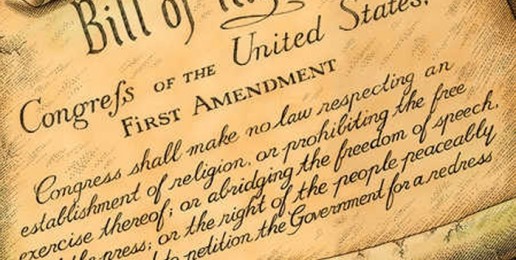
First-Amendment-on-scroll1

Thousands or pundits and web commenters, perhaps hundreds of thousands, in their concerted effort to justify the speech and thought police, (at least as long as the Enforcers are not likely to disapprove of their thoughts and speech), are mocking those who cite the First Amendment as authority for the proposition that the treatment of Donald Sterling, and others, are harmful, sinister, and un-American. The pedants are technically correct, of course. When someone who is fired for posting something offensive on Facebook screams, “My First Amendment right of free speech has been violated!”, that typically speaks of a poor civic education. The Bill of Rights only constrains government action, not private transactions. No rights, which are enumerated and protected from government incursions by the Constitution, have been lost or affected when only private action is involved.

That does not mean, however, that when private action opposes an individual’s Constitutional rights, it is necessarily acceptable, fair, harmless, reasonable or right. Indeed, the government and law serves a crucial function by delineating and encouraging cultural and ethical values. The principles articulated in the Declaration of Independence, the Constitution and the Bill of Rights do not merely constrain government. They form the basis of the ethical values that make the United States a unique culture, and point the way to what Americans, as Americans, regard as right and wrong.

Thus, while searching though a friend’s private e-mail account isn’t a violation of one’s right to privacy under the 10th Amendment, violating a fellow citizen’s privacy is wrong, and the Bill of Rights stands as authority that it is something important to each individual that should be respected. The Constitution and the 13th, 14th, and 15th Amendments won’t and can’t stop Americans like Sterling from being bigots in their private dealings, but they send a clear message that bigotry is not approved by the United States and was not by those who have charted our ethical course. Privately interfering with someone’s right to worship as they please is wrong, and the fact that the government is prevented from doing it tells us so. The First Amendment’s existence also tells us that preserving free speech—open, fearless, speech—is essential to core American values, because it also supports free thought, that which tyrants and dictators fear. Yes, we all have the right to make free speech, thought and discourse costly, difficult and painful, but we should not. We have the right to punish severely the non-conformist, the iconoclast, the rebel, or the citizen who may be a little late, or slow, or reluctant, to accept the conventional wisdom of the moment. We have the right to do it, but it is wrong. It is un-American. The Constitution tells us so.

Addendum: After I wrote the post, I encountered this.


All Aboard The Sterling Train Wreck: The Foolish, The Grandstanders, The Dishonest And The Irresponsible

Hypocrites

The question is, which is which?

I’ll let you puzzle it out; I’ll be busy retching:

And now, the latest and deplorable passengers on this distasteful Ethics Train Wreck…

Sen. Harry Reid

Reid saluted NBA Commissioner Adam Silver for his “work to swiftly move to stamp out bigotry in its ranks,” as if that had any thing at all to do with what Silver was doing. Reid’s endorsement, however, places a high elected official’s stamp of approval on the proposition that those with unpopular ideas and biases should be punished and have their property taken away from them. Reid said that the league has set a new standard for how professional sports leagues should respond to racism. Of course, Sterling did nothing racist at all, not did he attempt to, or publicly announce such intent. The “new standard” that Reid is applauding is economic penalties for non-conforming beliefs. Finally, Reid attempted to make the absurd parallel to the Washington Redskins’ controversial name: “How long will the NFL continue to do nothing — zero — as one of its teams bears a name that inflicts so much pain on Native Americans?” Reid asked Continue reading →

KABOOM! Does Everyone Upset About The “Affluenza” Sentence Feel Better Now?

Top: Morris. Bottom: Me.

Top: Morris. Bottom: Me.

Today we travel cross the pond for a head explosion-prompting episode. A charming young woman and mother named Loren Morris, now 21, began having sexual intercourse  with an 8-year-old boy five years ago, and continued for two years until he was ten years old, involving about 50 forced sexual acts.

The boy, now 14, was overheard bragging about his premature sex life at school, and that led to his molester’s arrest and trial. This week a judge today gave Morris a two-year prison sentence at Worcester Crown Court. She will be eligible for release on parole after only a year.

This case is relevant to a couple of recent Ethics Alarms controversies. Presumably Morris is being sentenced leniently on the basis of her horrific crime being committed while she was a juvenile, even though she is an adult now. As I asserted in the stateside case of the juvenile assault ripening into a murder, I think a juvenile whose crime is only discovered and proven after he or she enters adulthood should be tried and punished as an adult. Continue reading →

50 Years After Kitty Genovese, Inhumans On A Bus

The title describes the public transit riders who watched this disturbing scene unfold on a Philadelphia bus, and did nothing:

2014 is the 50th anniversary of the infamous Kitty Genovese case, and dueling books on the incident either recount the accepted version that 38 people in an apartment building heard the 28 year-old woman’s screams as she was being stabbed to death but “didn’t want to be involved” and let her die, or adopt the revisionist theory that the apathy of bystanders was unfairly and inaccurately hyped by the news media. The incident on the Philadelphia bus tells me that the revisionists have a burden of proof that will be hard to meet. There was plenty of evidence already, like here, or here, or here, or here, or more recently here, that Kitty Genovese might not fare any better today. Continue reading →

The Academy’s “In Memoriam” Snubs: Much Better This Year—Thanks, Oscar

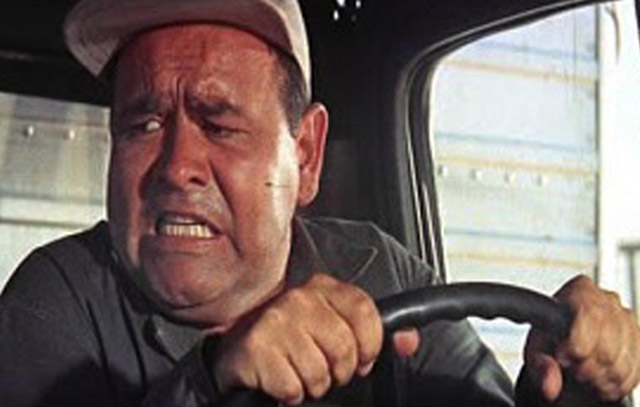
The great Jonathan Winters in the not-so-great "It's a Mad, Mad, Mad, Mad World"

The great Jonathan Winters in the not-so-great “It’s a Mad, Mad, Mad, Mad World”

In past years I have taken the Academy of Motion Picture Arts and Sciences to task for the ethical breach of ingratitude and disrespect, as the honor roll of the year’s deceased film notables have omitted important figures who deserved their final bows. Omissions are inevitable, I suppose, but some of the past examples were unforgivable—last year alone, for example, the Academy snubbed Ann Rutherford, Andy Griffith, R.G. Armstrong, Russell Means, Harry Carey, Jr., and Susan Tyrell. 2012 was worse.

2013, however, shows that the Academy is being more careful, and Oscar deserves credit for cleaning up its act. I have ethical and historical objections to bestowing the prestigious final slot on actor Phillip Seymour Hoffman, dead prematurely of self-inflicted drug abuse, when a genuine, bona fide Hollywood legend, Shirley Temple, was on the list. I understand the thinking: Hoffman had friends and colleagues in the room, and Temple is of another generation; his premature death was a tragedy, and she lived a long and productive life. Still, the priorities and relative values such a choice exemplifies is disturbing. Great actor that he was, Hoffman was a criminal, an addict, and left his children fatherless. Shirley was the greatest child star who ever will be, a ray of sunshine in the dark days of the Depression, a one-of-a kind talent and icon, and later a lifetime public servant who raised a family. She represented the best of Hollywood and the profession; Hoffman represents its dark side. Naturally, he’s the one who received the greatest recognition. I will suppress my dark suspicions that Shirley was docked because she was a Republican. A  Facebook friend actually wrote that Shirley deserved to be penalized because some of her movies were racist. My response to this slur was not friendly. Continue reading →

Unethical Website Of The Month: Get Covered America, But Hey, These Are All Just Bumps In The Road And The Fact That The Same People Who Keep Making These Stupid Decisions Are The Same Ones Who Are Supposed To Make The Law Work Shouldn’t Cause Anyone To Get All Negative And Cynical Or AnyThing!

"hey...hey...I gotta toast! HERE'S TO OMABACARE!!"

“hey…hey…I gotta toast! HERE’S TO OMABACARE!!”

The government taxpayer-funded Affordable Care Act promotional entity called Get Covered America is either desperate, stupid, or the invention of Saturday Night Live.

Via its website, the same crack public servants who brought you Obamacare have designated this Saturday as National Youth Enrollment Day for the new system, a day designed to increase the  youthful sign-ups for the law that are both essential to its success  and lagging badly, in part because the HealthCare.gov was and is a disaster, but mostly because the bill’s architects had no idea what they were doing, or at least not enough.

National Youth Enrollment Day will be marked by various keen events. One of them, happily promoted on the GCA website, is a pubcrawl through Austin.

From the CDC:

“There are approximately 88,000 deaths attributable to excessive alcohol use each year in the United States.This makes excessive alcohol use the 3rd leading lifestyle-related cause of death for the nation. Excessive alcohol use is responsible for 2.5 million years of potential life lost (YPLL) annually, or an average of about 30 years of potential life lost for each death. In 2006, there were more than 1.2 million emergency room visits and 2.7 million physician office visits due to excessive drinking. The economic costs of excessive alcohol consumption in 2006 were estimated at $223.5 billion.”

I guess the planned smoker to promote the AFA, as well as the pork pig-out and orgy were vetoed for some reason, so the pub crawl was the best they could come up with. Continue reading →

Colorado’s Astounding Pro-Obamacare Ads: What Kind Of Values Are We Nourishing In This Country?

brosurance

When I saw the ad above, my first assumptions were 1) This is a spoof, or 2) Some insane Republican group who didn’t pay attention to what happened in the Rush Limbaugh-Sandra Fluke tiff made it as an attack on Obamacare.

No such luck. It’s real. I would have made the website (DoYouGotInsurance.com) that features this and many other such ads the Unethical Website of the Month (it’s also the ungrammatical website of the month), but it has been down for the last 12 hours or so, and hopefully will never get up again, except in Hell. And there is a lot more alarming about these ads than the website they come from.

For example, the organizations who paid to have the ads developed—ProgressNow Colorado and Colorado Consumer Health—plus the Colorado progressives, Democrats and brain-injured who run them, and the millions of entitled, ethically clueless Americans who perceive nothing wrong with the messages they convey all perfectly illustrate the unethical reasoning and motives driving many of the architects and defenders of the Affordable Care Act. Here…let me show you some more, assuming you have head-explosion insurance: Continue reading →

Encore: “The Ethics of Letting a Lying Defendant Testify”

"Objection! The defendant's pants are clearly on fire!"

“Objection! The defendant’s pants are clearly on fire!”

I’m in Ohio today, talking about legal ethics with a large law firm, and the discussion there turned to the difficult problem of the lying criminal client. Here is a post on the topic from the early days of Ethics Alarms, slightly updated, and the disturbing thing is that we are no closer to finding a satisfactory and ethical solution to the problem.

What do you do when your guilty client wants to claim he’s innocent in the witness chair, under oath? Continue reading →

Celebrity Values: The Good, The Bad And The Ugly

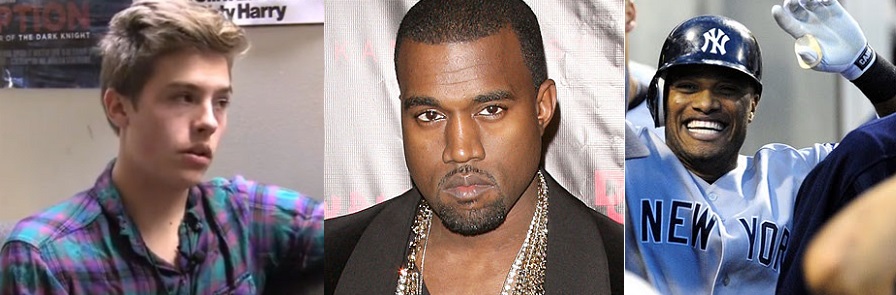
Sprouse-West-Cano

Celebrities have the opportunity to use their disproportionate and sometimes unexplainable fame to pass along good values, priorities and ethical habits to those who admire and follow them. The problem is that the U.S. culture’s current values are in a muddled state, with virtues sometimes being treated as embarrassments, and the enthusiastic embrace of non-ethical goals that once were regarded as the seven deadly sins are now often looked upon as the norm, and even appropriate. Here are some recent events in the strange world of celebrity values:

The Good: This headline on numerous web sources piqued my interest: “Dylan Sprouse Defends Restaurant Host Job.” Dylan Sprouse is a former Disney child star, a long time lead, with his brother, on the long-running “The Suite Life of Zach & Cody,” one of those loud, hyper-frenetic tween comedies that Disney and Nickelodeon acquire from some production company in Hell. Dylan was seen working in a restaurant, and this immediately spawned multiple rumors that he was broke, had blown through his millions, and was, in brief, a pathetic loser….because he has the same kind of job most American twenty-somethings fresh out of college would be thrilled to have.

Thus Dylan, who along with his brother decided to get out of the child star rat-race that has recently put Lindsay Lohan in rehab, Amanda Bynes in a mental health treatment facility and Miley Cyrus naked on a wrecking ball, and start a more conventional life with a college education (at NYU). Sprouse decided to address the weird criticism being sent his way on social media and in the gossip blogs by writing, Continue reading →

Ethics Hero: Glen James

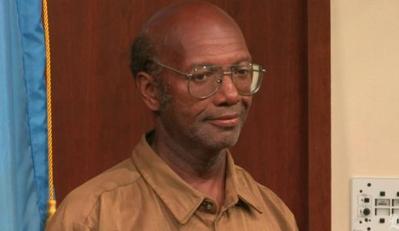
Glen James, role model.

Glen James, role model.

This is straightforward: Glen James, a Boston man who lives in shelters and has no money, found a backpack over the weekend that contained $2,400 in cash, $39,500 in traveler’s checks, passports, and other personal items. James flagged down a passing Boston police officer and gave him the backpack.  As is often the case with stories like this, he doesn’t think what he did was a big deal: after all, isn’t this what anyone would do?

We all know the answer to that question. Continue reading →