The Ethics Conflict In The Daniel Penny Case

With yesterday’s developments in the Daniel Penny trial, it is appropriate to ponder the various ethical issues involved.

Below I have reposted the 2023 essay titled “Ethics Quote Of The Month: Heather MacDonald.” Its main thrust was to highlight MacDonald’s excellent article about how his arrest and prosecution reflected another outbreak of the “Black Lives Matter” bias of presumed racism. Penny is white, the violent lunatic who was menacing NYC subway riders when Penny stepped in and, the prosecution claimed, murdered him in an act of vigilantism, was black. It is highly doubtful that any prosecution would have followed the incident if the races were reversed. For example, the colors were reversed in the Ashli Babbitt shooting by a Capitol cop on January 6, 2021, and the black officer was not only exonerated but given a promotion.

Yesterday, Judge Maxwell Wiley dismissed the second-degree manslaughter charge against ex-Marine Penny in the death of Jordan Neely at the request of prosecutors after jurors said they were deadlocked on the primary charge. He then told the jury to continue deliberating on  the lesser charge of whether Penny committed criminally negligent homicide when he put the black, disturbed, homeless man in a choke-hold resulting in his death. The dismissed second-degree manslaughter charge carried a maximum 15-year sentence; criminally negligent homicide carries a four-year maximum sentence. While this was happening, Rep. Eli Crane (R-Ariz.) told reporters that he was planning to introduce a resolution to award Daniel Penny the Congressional Gold Medal. “Daniel Penny’s actions exemplify what it means to stand against the grain to do right in a world that rewards moral cowardice,” said Crane, a retired Navy SEAL.  “Our system of ‘justice’ is fiercely corrupt, allowing degenerates to steamroll our laws and our sense of security, while punishing the righteous. Mr. Penny bravely stood in the gap to defy this corrupt system and protect his fellow Americans. I’m immensely proud to introduce this resolution to award him with the Congressional Gold Medal to recognize his heroism.”

You can hardly highlight an ethics conflict in brighter colors than that. Penny could be found guilty of a crime, and at the same time be officially recognized as a hero. An ethics conflict is when two equally valid ethical principles oppose each other and dictate a different result. That’s the situation here, and the answer to the starting point for ethical analysis, “What’s going on here?

The racially biased motivation for charging Penny may be another example of authorities doing the right thing for the wrong reasons. If you listen to Fox News regarding the trial, you will hear laments that the prosecution sends the wrong message to Americans. One commentator cited the 60-year-old Kitty Genovese incident, which Ethics Alarms has frequently referenced. A woman was murdered as many residents of a nearby apartment complex heard her screams, but none of them called the police or sought to intervene. The prosecution of Penny validates their non-action, the commentator said. It encourages passive citizenship and rejects the duty to rescue.

No, that’s an analogy too far: the man threatening passengers on the subway was right in front of Penny; the people who ignored Genovese’s screams only had to pick up a phone. Nobody held them to blame for not running out to rescue the woman and fight off her attacker. They didn’t perform the minimum acts of good citizenship required in such a situation. Penny’s trial raises the legitimate question of when maximum intervention is justified, and what the consequences should be if something goes wrong.

Does society want to encourage and reward vigilantes? The “Death Wish” movies explored that issue, albeit at an infantile level. At very least, shouldn’t part of the message sent to citizens be that if you choose to intervene in a situation that would normally be handled by law enforcement, you had better be careful, prudent and effective or else you will be accountable for what goes wrong as a result of your initiative? After all, isn’t it certain that a police officer whose choke-hold killed Neely under the same circumstances would probably be tried, or at very least sued for damages (as Penny will be, if he is ultimately acquitted)? Indeed, based on the George Floyd fiasco, Neely’s death at the hands of an over-zealous cop might have sparked a new round of mostly peaceful protests and Neely’s elevation to martyr status.

As a society and one that encourages courage, compassion, and civic involvement, we should encourage citizens to intervene and “fix the problem” if they are in a position to do so and have the skills and judgment to do it effectively. Yet a society that encourages vigilantes is courting chaos and the collapse of the rule of law.  I absolutely regard Penny as a hero, but even heroes must be accountable for their actions. What is the most ethical message to send society about citizen rescuers?

I don’t think it is as easy a question as Penny’s supporters claim.

Now here’s the article from past year:

***

“When government abdicates its responsibility to maintain public safety, a few citizens, for now at least, will step into the breach. Penny was one of them. He restrained Neely not out of racism or malice but to protect his fellow passengers. He was showing classically male virtues: chivalry, courage and initiative. Male heroism threatens the entitlement state by providing an example of self-reliance apart from the professional helper class. And for that reason, he must be taken down.”

—Heather Mac Donald, in her scorching essay, “Daniel Penny is a scapegoat for a failed system”

That paragraph continues,

A homicide charge is the most efficient way to discourage such initiative in the future. Stigma is another. The mainstream media has characterized the millions of dollars in donations that have poured into Daniel Penny’s legal defense fund as the mark of ignorant bigots who support militaristic white vigilantes.

There is no way law enforcement can or should avoid at least exploring a manslaughter charge when an unarmed citizen is killed after a good Samaritan intervenes in a situation that he or she sees as potentially dangerous. Nevertheless, what appears to be the planned vilification of ex-Marine Daniel Penny by Democrats and the news media to put desperately-needed wind back in the metaphorical sails of Black Lives Matter and to goose racial division as the 2024 elections approach graphically illustrates just how unethical and ruthless the 21st Century American Left has become. (I know, I know, we don’t need any more evidence…). Mac Donald’s essay is superb, as many of hers often are. Do read it all, and them make your Facebook friends’ heads explode by sharing it.

Here are some other juicy and spot-on excerpts:

Continue reading

Sunday Ethics Warm-Up, 1/12/2020: Broken Ethics Alarms, An Ethics Conflict, And “Who Are You Going To Believe, Me Or Your Own Eyes?”

Well, Hel-LO!

“Seinfeld” fans remember Jerry’s Uncle Leo, whose trademark was an over-enthusiastic, “Hel-LO!” The recurring character was played by the late Len Lesser, an obscure Hollywood bit player until the “Seinfeld” gig made him a familiar face. Well, I was watching “Bells Are Ringing, the 1960 film version of the hit Broadway musical known for the standards “Just in Time” and “The Party’s Over” (one of my Mom’s favorite songs), on TCM. The film is a reminder of just how luminous Judy Holliday was; she had won the Tony for playing the musical’s starring role on Broadway, and attention should be paid. Tragically, his was her last movie—during filming she was fighting the cancer that eventually killed her —-and I don’t know if there has ever been a female musical comedy star of greater range and presence. Anyway, there’s a number in the film where Judy tells Dean Martin that New York’s grim mass of humanity during rush hours will thaw if strangers only say “hello” to each other. Dean is skeptical, but he tries it on a dour-looking man waiting in the mob, whose face instantly breaks into a brilliant smile at the greeting. “Hel-LO!” the man responds to a surprised Dino, and soon everyone is happily saying hello to each other. You guessed it: the dour-looking man was played by “Uncle Leo” himself, Len Lesser. His catch phrase in “Seinfeld” was a deliberate reference to that bit, one of the very few memorable moments in the elderly actor’s career.

This is really a long introduction to a different point: I get a lot of ethics ideas from watching old movies. For example, I watched 1967’s “The St. Valentine’s Day Massacre, one of schlockmeister Roger Corman’s few films with an A-list cast and a big budget. The film’s solemn narrator is uncredited, but he is obviously meant to make the casual audience member think it’s Orson Welles. It wasn’t Welles, however: it was master vocal artist Paul Frees, who had a great, and often used, Welles impression. I assume he was uncredited so no one would realize that the narrator wasn’t the weighty Welles, but the voice of Boris Badinov from “Rocky and Bullwinkle.”

I don’t know how Corman got away with this.

1. Ah, the accurate, trustworthy news media. Reuters reports, “A South African military plane crash-landed on Thursday at the Goma airport in eastern Democratic Republic of Congo, a U.N. spokesman said….two sources at the airport, speaking on condition of anonymity, said there did not appear to be major damage to the plane.”

Here’s the plane:

2. Apparently the Democratic Party’s strategy regarding the economy is to just flagrantly lie about it. “The U.S. economy is working just fine for people like me. But it is badly broken for the vast majority of Americans,” Mike Bloomberg said this week. That counter-factual statement echoes Joe Biden, Elizabeth Warren, Bernie Sanders…pretty much the Democratic field, and it is demonstrably false.

The Atlanta Federal Reserve Bank’s monthly Wage Growth Tracker shows that Americans in the lower wage brackets are making more money, and at a better rate than they have for a very long time. Here’s a graph: Continue reading

Ethics Dunces: The Catlettsburg (KY) Police Department

punisher-logo2

This story does not fill one with trust and respect for the judgment of our warriors in blue.

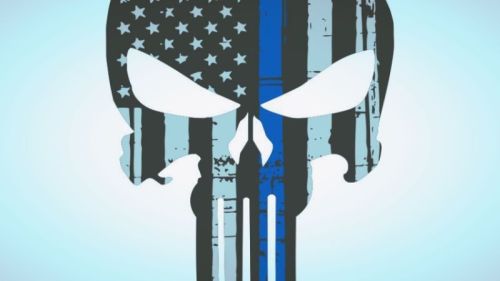
The Catlettsburg, Kentucky, Police Department placed large decals on its police vehicles that show the comic book character “The Punisher’sskull logo emblazoned with the “Blue Lives Matter” slogan. Behold:

punisher-logo

The city council and mayor approved the design and decals, which were funded by local taxpayers.

Morons.

The Punisher is a Marvel Comics anti-hero who is a murderous vigilante.  He summarily executes bad guys. From Wikipedia (which apparently they don’t get in Kentucky)…

The Punisher (Frank Castle) is a fictional character appearing in American comic books published by Marvel Comics. The character… is a vigilante who employs murder, kidnapping, extortion, coercion, threats of violence, and torture in his war on crime.

Exactly the image that police departments want to convey to the public!

The Punisher’s  logo has become a symbol of “Blue Lives Matter,” featured on merchandise and Facebook posts supporting police officers against the “forces of evil,”  as in those who view the police as enemies of minorities and justice.  “American Sniper,” the 2015  film based on Navy SEAL  Chris Kyle’s life, popularized the Punisher comics, which Kyle admired. Catlettsburg Police Chief Cameron Logan thought it was just  a “warrior logo,” and didn’t know it was associated with the vicious and lawless comic book character, even though the comic itself was featured in the film. He knows now, though.

“We’re getting so many calls, and they’re saying that the Punisher logo [means] we’re out to kill people, and that’s not the meaning behind that,” Logan says. “That didn’t cross my mind.”

Wait…mind?

The logo is a death’s head! What do you think a death’s head means?

Now that his police have removed the car decals, the Chief say he regrets using the image, calling it an oversight, and  promises that in the future he’d do “a little more research” …before emblazoning death symbols associated with lawless killing on his vehicles.

That’s nice.


Yup, Joe Morici Is A Hero, And CVS Is Right To Fire Him

batman

Joe Morici says his military instincts kicked in when he saw two thieves jump over the counter at the Beltsville, Maryland CVS where he worked and grab narcotics. Despite CVS’s strong (and typical) policy against employees playing Batman, Morici chased them to the front door, fended off a screwdriver attack, and retrieved most of what was stolen, though the criminals fled.

“He tried to hit me again with the screwdriver. I disarmed him of the screwdriver, while having the other guy pinned against the one door,” Morici said.

CVS fired him. Of course they did. The company can’t have clerks risking their own lives and those of customers by reckless interference with robberies.  Morici happened to have some training, but he wasn’t hired as a security guard, and chasing down bad guys isn’t in his job description. CVS had to fire him. It couldn’t give him a reward, either, because then it would have clerks all over the country trying to be heroes.

Thus Joe behaved, irresponsibly and CVS behaved responsibily, but allover the news media, this story is being played up as a great injustice, showing how cruel, heartless and ungrateful corporations are. That’s ignorant, and in the case of the news media, willfully so: their employers know CVS was right.

“Ah,” those Trump supporters will say. “This is why we need someone to make America great again! We don’t appreciate heroes any more!” It’s a visceral position, and like many visceral positions, simple-minded. This is, however, the way our culture encourages demagogues.

To be fair, Bernie Sanders supporters probably think CVS is wrong too.

Thoughts On Tatiana Duva-Rodriguez, An Especially Dangerous Ethics Dunce

Quick, Tatiana! Michele Bachmann is on "The View" in 3 minutes!

Quick, Tatiana! Michele Bachmann is on “The View” in 3 minutes!

The “dangerous” part is illustrated by the section of the Washington Post headline that reads Mich. woman who shot at shoplifters gets 18 months probation….”  Then there’s the part that briefly made me think that the Post was becoming a hoax site: “…vows to ‘never help anybody again.”

A Michigan judge sentenced concealed carry permit holder Tatiana Duva-Rodriguez to 18 months of probation and took away the permit, as punishment for her shooting several  rounds at a shoplifter’s fleeing auto outside a Home Depot on October. 6. Disillusioned that the law took a dim view of her playing amateur “Starsky and Hutch,” she wailed, “I tried to help. And I learned my lesson that I will never help anybody again.”

Thoughts:

1. What an idiot. There is more stupidity packed into that statement than you will find in a room full of Ben Carson fans. She “tried” by shooting a gun at shoplifters? What she tried to do is irrelevant. Good intentions matched to moronic conduct mitigates nothing. Now, because she was properly punished ( I would say leniently punished) for irresponsible vigilante use of her weapon and what would have been excess force even if she had been Starsky, she’s going to punish humanity by never helping anyone ever again, so there!  Continue reading

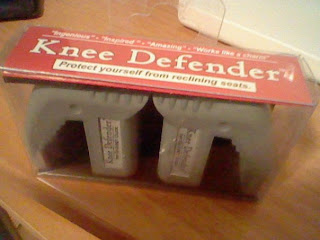
“Knee Defender” Ethics

There are no Knee Defender ethics.

Invented for entitled jerks, by one. Is this a great country or what?

Invented for entitled jerks, by one. Is this a great country or what?

The Knee Defender is unethical,  those who advocate them are unethical, its inventor, a slickly rationalizing  ethics corrupter named Ira Goldman is unethical, anyone who uses it is unethical, and anyone who defends it is unethical.

There. Next question?

What gives anyone in the seat behind me the right to appropriate space in the plane I have paid for? I have paid for it, you know: the space that my seat can recline into is within my control, my dominion. If I choose not to avail myself of it, then the person behind me is certainly free to make use of it—until I change my mind. There is no other legitimate, logical or fair interpretation of the rights and privileges involved. Using the Knee Defender, a sinister device designed to unilaterally claim my space, is taking what is mine by force. There’s no other side to the issue.

Oh, the obnoxious, smug marketing for the thing claims otherwise:

“It helps you defend the space you need when confronted by a faceless, determined seat recliner who doesn’t care how long your legs are or about anything else that might be “back there”…

First of all, you can’t defend space you have no right to, and never owned in the first place. And don’t insult me: I have a face, and no, I really don’t care how long your legs are. Mine are pretty long too, You have to be awfully tall not to be able to extend your legs under my seat. Oh—you have baggage under there, because you stowed some obscenely large roller-board in the over-head bins? Tough. I check my large luggage so I can keep the area clear under the seat in front of me, so I can stretch out my legs, so I don’t feel I have to whine about the seat in front of me reclining, and use vigilante devices invented by a trouble-maker to stop me from doing what the airlines say I purchased the privilege of doing, do he can pick up a lousy $29.95. You can check your luggage too, you know. You can also  seat yourself behind the seats that don’t recline. But no, rather than make the effort to deal with your physical limitations by planning ahead, you think it’s acceptable to solve your problem by waging war against the unlucky traveler who happens to get the seat in front of you. Continue reading

Forgetting The Unwritten Boy Scout Law: “A Scout Is Not A Destructive Idiot”

David Hall, Glenn Taylor and his son—the first two are scoutmasters—face felony arrests after posting video, taken by Taylor’s son, of the two men destroying a 200 million-year-old rock formation at Goblin Valley State Park last week. They knock over the rock, high-five each other, cackle with joy, and then say—and this is now their defense—that a child could have been killed if the rock fell on its own. Moe, or perhaps it is Curley, also says, perhaps more significantly, “We have modified Goblin Valley!”

Some observations: Continue reading

Ethics Dunce: Knight Warrior

Knight Warrior and Knight Maiden

Knight Warrior and Knight Maiden

Actually, his first mistake was probably revealing his secret identity, but that’s not today’s topic, which comes from the little explored realm of Ethics Alarms known as “Wacko Ethics.”

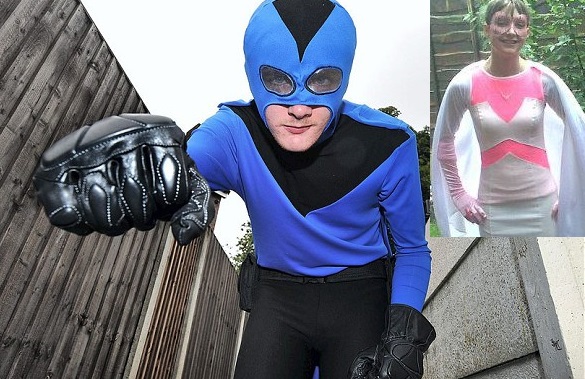
For there dwells Roger Hayhurst, also known as Knight Warrior, a self-proclaimed British superhero who began fighting minor crime and disturbances near his home in Swinton, Greater Manchester. Hayhurst wears a custom-made blue and black lycra costume and even had a sidekick, his 18-year-old fiancee Rebecca. She is called “Knight Maiden.” Now, however, Roger and Rebecca may be out of the superhero business, because some young toughs in Clifton beat the snot out him while he was “on patrol.”

“My face was all swollen,” Knight Warrior sniffed. Now he’s discouraged, and confesses, “I mainly dress up for charity appearances.” Rebecca, meanwhile, has turned in her tights. Continue reading

Comment of the Day on “Ethics Quiz: Jury Nullification For A Molestation Victim”

Here is the Comment of the Day, Eeyoure’s deliciously indignant dressing-down of the jury whose verdict was discussed in today’s post, “Ethics Quiz: Jury Nullification For A Molestation Victim”:

“The jury’s verdict was absolutely perverse.  The jury ignored truth about specific law for which they were responsible for finding guilt or innocence, where evidence existed beyond reasonable doubt that the law was broken.  Simultaneously, the jury concluded that irrelevant evidence, plus the defendant’s testimony, proved guilt beyond doubt of a person who was not charged, not on trial, for breaking of law for which the jury was not responsible for finding guilt or innocence.

“The jury’s verdict was the culmination of an orgy of medieval reparations-groupthink, a determined seizing of lowest available ground in the terrain of societal unrest.  The members of the jury made themselves a proud, self-serving, self-satisfying gang of “justice”-dolers, caught-up in extolling the glories of vengeance.  This was a jury that obviously considered with the utmost gravitas (that is sarcasm) the notion that “justice delayed is justice denied.”  No matter how long was delayed the justice THEY felt was due, they saw it as their sovereign right to determine that such justice would not be denied, and to determine who would deliver (that is, who did deliver) that justice, blameless.  (more sarcasm coming) What a shining moment in jury-rigged righting of historical wrongs! (end sarcasm)

“Well, chances are rather high that none of the jurors will ever read here.  So, they can just each go their merry way, keep marching merrily along as ignorantly and unthoughtfully as ever, proud of the “justice” they have served.  Without ever taking the simplest, tiny, extra step of considering, for example, by their own jury-“reasoning,” how their verdict thoroughly justifies any friends, allies, or sympathizers of the old man who was beaten in the retirement home stalking THEM (the jury members and their hero) for the rest of THEIR (the jurors’ and hero’s) days – then suddenly, at a convenient and opportune moment, beating every one of THEM every bit as savagely as was beaten the man by the assailant whom they let off the hook.

“With “justice” like this jury has upheld, who needs to hold a stinkin’ court?”

Ethics Quiz: Jury Nullification For A Molestation Victim

Really?

A San Jose jury acquitted William Lynch of criminal assault, despite his admission that he had beaten a former priest who had molested him as a child. After the acquittal, Lynch was cheered outside the courtroom.

Lynch told reporters he fully expected to be convicted, but had hoped that his testimony would call more attention to the child abuse problems in the Catholic Church. He visited his victim, Rev. Jerold Lindner, at the retirement home where he now lives.  The 65 year-old who allegedly molested Lynch and his younger brother in 1975 was confronted by Lynch, and when he told Lynch that he didn’t remember him, Lynch attacked him and “beat him almost to death” according to witnesses.

Your Ethics Alarms Quiz question:

Was the jury verdict ethical? Continue reading