“Mad Men” Ethics: The Motive vs. Conduct Conundrum

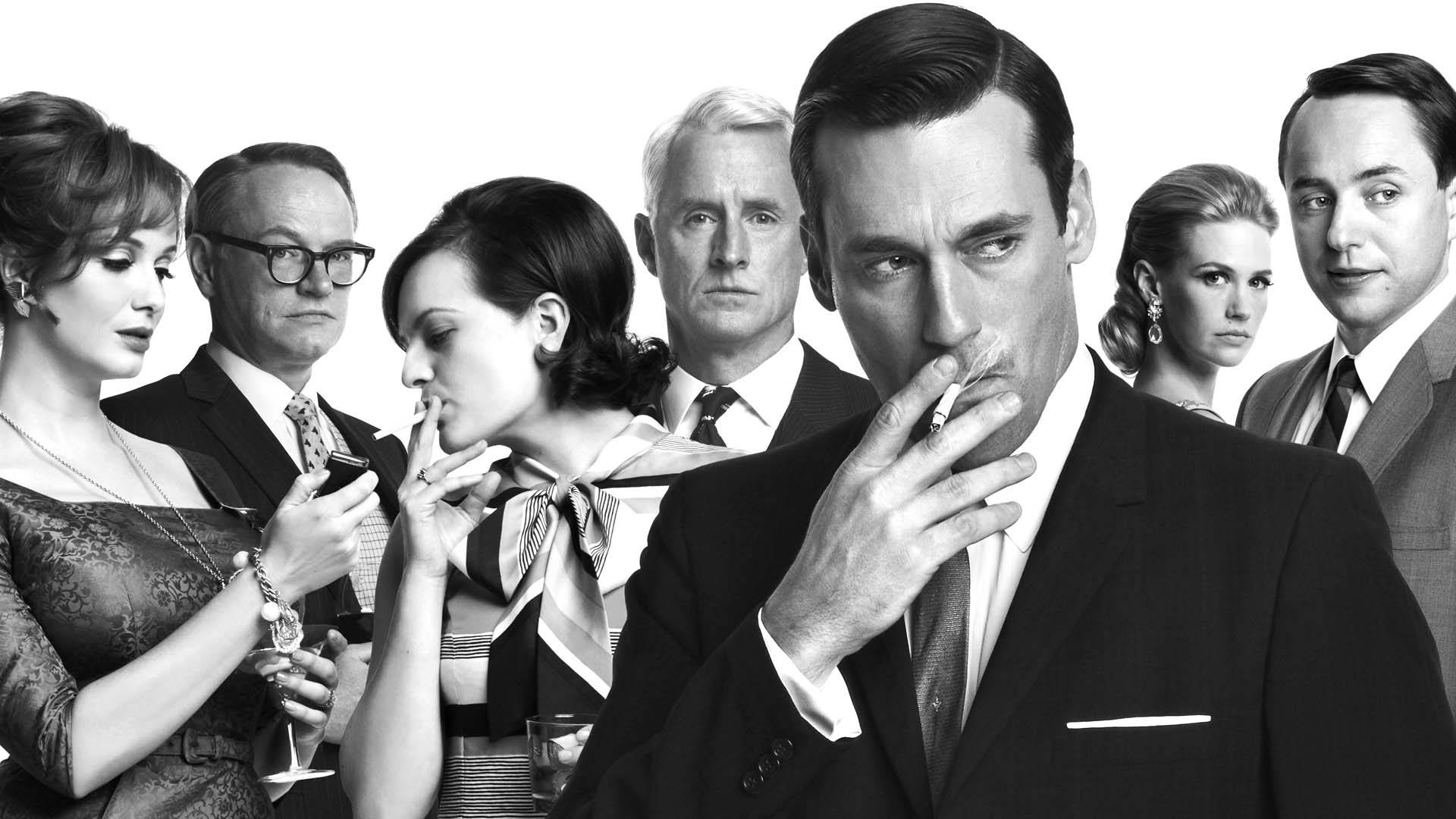
I’m finally watching the acclaimed AMC series “Mad Men.” I’m impressed: the character development is deft and complex, the evocation of the Fifties and early Sixties is fairer and more accurate than it usually is, and the ethical issues explored are many and complex.

At the end of season five the series presented as good an example as you will find of how motives behind conduct usually don’t change the analysis of whether the conduct was ethical or not. Series anti-hero Don Draper, a talented advertising innovator, finds the Madison Avenue firm where he’s a partner facing ruin because its biggest client, Lucky Strike cigarettes, has defected to a bigger agency. Now all of his agency’s clients are spooked, and potential clients are waiting to see if it survives.

Impulsively and without consulting his other partners, Draper buys a full page ad in the New York Times, announcing that he, and therefore his firm, is giving up tobacco and cigarettes because they kill people, and marketing such a deadly product is wrong.

Draper doesn’t do this as a matter of conscience. He does it to take control of his firm’s fate, to make it seem like the loss of a large cigarette client was in fact a proactive decision made in the public interest, and by virtue-signaling and grandstanding, to attract new clients impressed by courage and integrity. The ad is, in short, self-serving, desperate, and cynical: ethics have nothing to do with it. Appearing ethical is the point.

Yet that does not change the fact that the public condemnation of smoking was the right thing to do regardless of his motives. The results of the declaration will be the same, whether the reasons behind it were pure or not. Thoughts are not ethical or unethical. Conduct is ethical or unethical.

The complicating factor in the “Mad Men” scenario is that advertising is a Bizarro World culture, like war and politics. It is inherently unethical, so applying traditional standards of right and wrong often don’t make sense, nor are ethical and unethical actions dependably likely to have the same effects they might have in other contexts. Conduct that may have salutary consequences outside of Madison Avenue may be disastrous in the weird world of advertising. Don Draper only cares about whether his shocking public attack on tobacco saves his firm, not how many lives it saves, if any.

Ironically, however, it may do both.

But even if it accomplishes neither, it is still an ethical act.

Virtue-Signaling Saps Of The Decade: The NFL

The NFL, which maims its players for profit, presumes that its fans are cretins whose attitudes and conduct will be influenced by fatuous messages in stadium end zones. How insulting.

All 32 teams will feature an inspiring (gag!) end zone message of at each home game. The options are “End Racism,” “Stop Hate,” “Choose Love” and “Inspire Change.” “It Takes All of Us” will be stenciled in the opposite end zone for all games.

This is so cynical and transparently insincere that I don’t know how to characterize it. I thought the kneeling was stupid, but these messages are beyond belief. All these years trying to conquer hate and racism, when the solution was so simple! Just put messages in football stadium end zones! Problem solved.

Flagrant Virtue-Signaling of the Year: CEO of Olympic Broadcasting Services Yiannis Exarchos

I’m sure glad I ignore the Olympics as the corrupt, greed-infested fiasco it had been for decades, because if I gave a rip, the Paris Olympics would have my head exploding more frequently than Old Faithful blows. The whole enterprise appears to be run by silly, incompetent, unethical bureaucrats and con artists.

Here’s a particularly nauseating example: the CEO of Olympic Broadcasting Services (OBS) Yiannis Exarchos decided to burnish his woke creds by telling reporters in Paris that his organization updated its guidelines for camera operators, most of whom are men, to inveigh against “sexist” portrayals of female athletes at the 2024 Summer Olympics. “Unfortunately, in some events they are still being filmed in a way that you can identify that stereotypes and sexism remains, even from the way in which some camera operators are framing differently men and women athletes,” Exarchos said, making no sense at all. “Women athletes are not there because they are more attractive or sexy or whatever. They are there because they are elite athletes.” Exarchos said that the problem primarily stems from “unconscious bias,” which leads to camera operators and TV editors favoring more close-up shots of women than of men.

Oh, shut the HELL up! TV editors favor more close-up shots of women than men because women are more attractive than men, the demographics of Olympic viewing for many events slants male, and there is nothing offensive or disrespectful about showing Olympic athletes like this German sprinter,

Continue reading

Ethics Quiz: Harvard’s Human Skin-Bound Book

As if it doesn’t have enough to worry about, Harvard University announced yesterday that its copy of Arsène Houssaye’s “Des Destinées de L’Ame,” or “The Destiny of Souls” had been stripped of the very feature that made it unusual enough to be worth collecting. The book (above) had been bound in human skin, just like the book in “The Evil Dead” movies. Its first owner, Dr. Ludovic Bouland, a French doctor, had inserted in the volume a handwritten note saying that “a book about the human soul deserved to have a human covering.” The alumnus who gave the book to Harvard in 1934, the American diplomat (and the famous hat family heir) John B. Stetson, had informed the Houghton Library (Harvard’s rare book collection), that Bouland had taken the skin from an unknown woman who died in a French psychiatric hospital.

Harvard removed the binding and said it would be exploring options for “a final respectful disposition of these human remains.” “After careful study, stakeholder engagement, and consideration, Harvard Library and the Harvard Museum Collections Returns Committee concluded that the human remains used in the book’s binding no longer belong in the Harvard Library collections, due to the ethically fraught nature of the book’s origins and subsequent history,” the university’s statement read.

Incidentally, the word for binding books in human skin is anthropodermic bibliopegy.

Your Ethics Alarms Ethics Quiz of the Day is…

Was this really ethically necessary?

Continue reading

Ethics Dunce: Yale Law School Deputy Dean Ian Ayres

Yale-Law-School

Ian Ayres, the deputy dean at Yale Law School—I worked in the administration of a law school, and I must admit that I never heard of a “deputy dean”— decided to signal his virtue and lock-step wokeness as well as, presumably, that of Yale by submitting an op-ed to the Washington Post titled “Until I’m told otherwise, I prefer to call you ‘they’.” I welcome it, if only because the essay shows that it isn’t only Harvard among the Ivies that has been corrupted by “The Great Stupid.”

I realized, as I read this foolishness, that I have cited or thought about the Abe Lincoln riddle about calling a dog’s tail a leg (“If you call a tail a leg, how many legs does a dog have? Four—because calling a tail a leg doesn’t make it a leg!”) more often in the past few years than I had done previously during my entire life. This is because Rationalization #64,Yoo’s Rationalization or “It isn’t what it is,” which easily could have been named “Orwell’s Rationalization” except that John Yoo really deserves to be remembered as the lawyer who tried to justify water-boarding on the grounds that it wasn’t torture, has become a core operating principle of the progressive moment on a dizzying number of fronts.

One of the silliest of all, and signature significance regarding how far the left end of the ideological scale has traveled mid-air over the proverbial shark, is the Woke Wonderland’s insistence that gender is just a construct, and if you want to be a different sex than what all biological and anatomical markers say you are, “Poof!”, you are! Not only that, you are now able to condemn, and some maintain even sue, anyone who doesn’t bow to your peculiar version of reality.

Continue reading