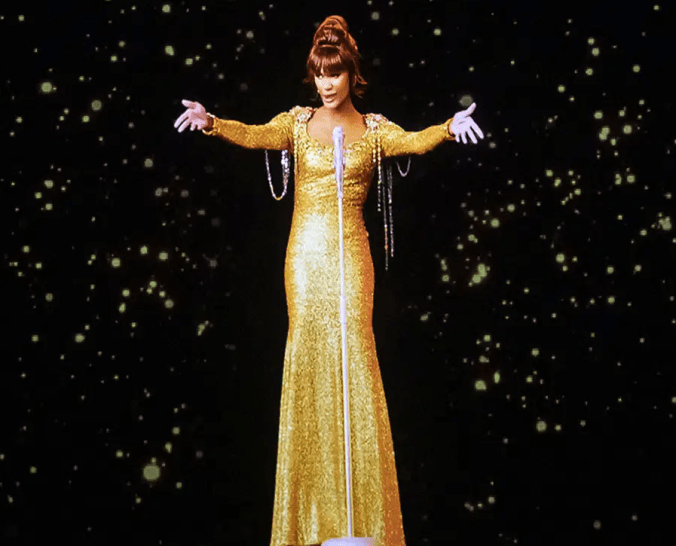
…as long as they don’t materially misrepresent the performer or the performance. They may be icky, but they aren’t unethical. This is in ethical contrast with the Ethics Alarms position on zombie performers in films, as examined here several times, most recently upon the unveiling of zombie James Dean.
The issue has arisen because a holograph of Whitney Houston, mercifully in a form before her physical and vocal decline due to drug abuse, is touring the country. Here’s a review of one of the performances; Zombie Whitney will make her debut in the US soon. Big plus: she doesn’t have to worry about the Wuhan virus, just holograms of the Wuhan virus. Fans have been less than ecstatic, as much because of the quality of the image as the ickiness of the concept. Here’s part of one review:Continue reading →
If the long Presidents Day weekend took you hither and yon and away from ethical dilemmas and controversies, welcome back! Here is what went on here in a lively three days:
The controversy of the weekend involved ESPN suspending an anchor for “racial insensitivity” who innocently used a fine, old idiom in an appropriate context.
New Jersey Governor Chris Christie ordered New Jersey’s flags flown at half-staff in official mourning for Whitney Houston, and a lot of people are outraged. The critics of the honor fall into two categories: those who believe that the honor should be reserved for military heroes and high government officials, and those who believe that Houston is especially unworthy because of her well-documented substance abuse problems.
For his part, Governor Christie defiantly declares that Houston, as a daughter of New Jersey, deserves the state honor because of her contributions to the culture.
Technically and officially, Christie is out of line. Federal law is very specific about the proper treatment of the flag, including when it can be flown at half-staff. Simply put, celebrities don’t qualify, no matter who they are. A state governor can proclaim that the flag be flown at half-staff in his or her state for fallen soldiers, but not for non-military individuals. But governors ignore the law routinely, and have for decades. Tennessee’s governor lowered the flag when Elvis died. Massachusetts did the same for Red Sox great Ted Williams, though he was also a war hero, so no one was going to object. The law, in terms of custom and enforcement, is a dead letter, and probably should be.
True, some governors have abused the spirit of the law, including Christie, when he lowered the flag for Clarence Clemons, the saxophonist for Bruce Springsteen’s E Street Band—a great musician, but hardly a figure of transcendent national significance. If 4 USC Section 7 isn’t going to be followed or enforced, then we need some new standards, or before we know it they’ll be lowering the flag for Joan Rivers. Continue reading →
Whitney Houston, she of the musical gift we may see only once in a lifetime, is dead at 48. There has been no final determination, but there is little doubt: drugs killed her.
Houston, they say, and I have no reason to doubt it, was troubled by the pressures of show business, celebrity and stardom, and with a little help from her dead-beat, abusive husband, singer Bobby Brown, sought to relieve the stress with a variety of illegal substances, including cocaine. Over the past 15 years or so, Americans have been able to watch the relentless deterioration of Houston, once the epitome of a beautiful, intelligent, ebullient and charismatic presence, into an emaciated, ruined shell with only a hint of the glorious instrument that once, in the middle of a war abroad, delivered the most stirring rendition of the Star-Spangled Banner I have ever heard, or ever will hear.
This happened to Whitney Houston because when illegal drugs were among the options she could have chosen to accept or reject as a way to get through difficult days and troubled times, she did not have the instant reaction, hard-wired in her brain, that has to stop all of us from doing terrible, dangerous, irresponsible and anti-social things. There can be little doubt that some theoretical options would have triggered that reaction. They would be the options that did not seem like options at all, because the culture Whitney Houston lived in was unequivocal and unshakable in its verdict, a verdict virtually all members of that culture naturally adopted and accepted—because that’s what cultures do. And when that option presented itself, Whitney Houston, like the culture she was a part of, would have said “No.”
That she didn’t say no to drugs, and is dead because of it, was the direct result of an American culture that does not give its constituency a clear message and verdict. Instead, the clearest and most unequivocal signal from the culture, the fact that recreational drugs are illegal and that America enforces the laws against them, is progressively weakened by ridicule, attack, popular culture, and the defiance or hypocrisy of role models and public figures. Incredibly, though the deaths by drug-abuse among the tiny proportion of the world that is famous and talented—Michael Jackson, Amy Winehouse, Whitney—should make it obvious how massive the number of anonymous victims of drug abuse there must be, the destructive refrains grow louder: Legalize drugs! End the War on Drugs! And those calls weaken the cultural resolve further. Actually doing what they advocate would cripple it….and that day might come.
Whether they are preventing the culture from rejecting drug use because enforcement is expensive, or because they have a relative or friend in prison for drug-dealing; whether they are calling for legalization because they are libertarians and academics or Ron Paul, or because they are public officials who see a new revenue source; whether they are longing for the halcyon days of Haight-Ashbury and the Strawberry Alarm Clock, or just like getting stoned, these are the people whose advocacy continues to nurture a competing culture that killed Whitney Houston, as surely as if she had been shot her between the eyes.
I would say that if their insistence on legalization is followed, and the nation’s laws join the popular throng in pronouncing addictive and life-destroying drugs as legitimate “options,” many more like her will die….except there aren’t many more like her. But there are countless lives to destroy, and unimaginable losses to families, businesses and America to be endured.
I just watched the video of Whitney Houston’s glorious performance of our National Anthem at the Super Bowl, before the drugs had finished their work. She radiates confidence, strength and character, as well as that special joy that the fortunate few with magical gifts have. She brings a stadium full of Americans to their feet in cheers, with an exhibition of artistry that will continue to inspire forever. Drugs took all of that away, from Whitney Houston and from us.
Because our culture could not say no with enough conviction to save her.
Update (2/15/12): With some regret, I am closing comments on this post. Too many commenters refused to discuss the issue it was intended to raise, which was how cultural approval and disapproval of conduct is more powerful, ultimately, than the law in establishing standards. I have committed on this blog to responding to as many comments as possible, but the onslaught of pro-drug zealots whose tactic was to keep repeating the same arguments no matter how many times I gave my response led me into too many frustrated responses, too many nasty exchanges, and too many hasty replies that I wish I had stated more clearly. For those I apologize, both to the visitors involved and other readers. I also apologize for ending the discussion here, but I don’t have the time to monitor it. You are welcome to e-mail me personally.
 Ethics Alarms