“How Not To Be A Hero” by Edward Snowden

“If his motives are as he has represented them-–“I understand that I will be made to suffer for my actions,” but “I will be satisfied if the federation of secret law, unequal pardon and irresistible executive powers that rule the world that I love are revealed even for an instant,” he wrote in a note accompanying his first set of leaked documents—-then he acted courageously and selflessly.”

—- Ethics Alarms, June 10, 2013, referring to the conduct and statements of Edward Snowden, NSA “whistleblower.”
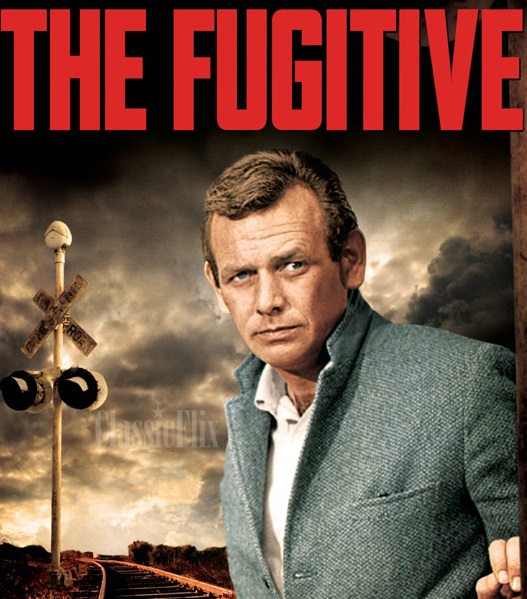
That's outrageous! They are collecting our phone records and our...hey, "The Fugitive!" I LOVED that show!!

That’s outrageous! They are collecting our phone records and our…hey, “The Fugitive!” I LOVED that show!!

Now we know that his motives are not as he represented them. From his statement that I quoted, I assumed that Snowden’s intent was to make himself available to U.S. authorities, and to prompt debate regarding the government’s widespread intrusions into the private communications of presumed-to-be-innocent citizens, as well as to ensure that the issue did not get drowned out, superseded and swept aside by distractions, as so many vital issues are. This was an indispensable second step, though I did not begrudge him some time to prepare for it. It would be the action of a one engaged in classic civil disobedience; it would demonstrate sincerity, public-mindedness and courage, and it would avoid his exploitation by the many around the world, and domestically, who wish the U.S. ill.

Instead, Snowden decided to run. Continue reading
Comment of the Day: “Follow Up and Clarification On The Hiroshima Apology Cable: I Was Wrong, I Apologize…and More”

Rick Jones, whose blog is a constant source of information, provocation and thoughtfulness, generously contributes his analysis to the botched Hiroshima apology story in this Comment of the Day.  To summarize: here and elsewhere, a Wikileaks-released diplomatic cable from 2009  prompted a stampede of mostly conservative news sources to report that President Obama had suggested the possibility of apologizing for the atom bombing of Hiroshima in World War II.  I encountered the story, tracked it in several sources that have proven reliable in the past, and commented on it, critically. About 24 hours later, a friend with impeccable diplomatic credentials and inside information properly chastised me for taking the bait, and offered conclusive evidence that the cable had been misinterpreted. You might want to read my post of last night apologizing to readers and the President that also raises the issues that Rick addresses in his Comment of the Day. I have a follow-up comment at the end:

“While I admire your acceptance of responsibility for what appears to have been a misinterpretation, your commentary raises other issues. Continue reading

Follow Up and Clarification On The Hiroshima Apology Cable: I Was Wrong, I Apologize…and More

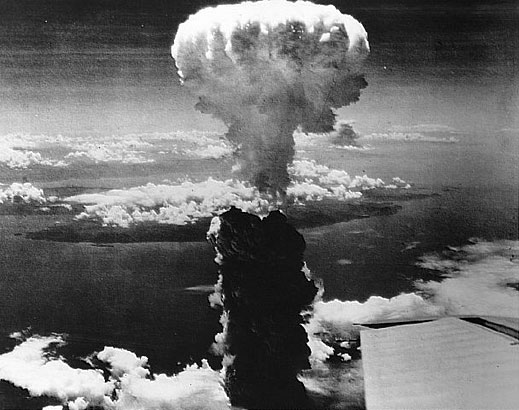
This is my indignation going up in smoke.

There are certain advantages that come from making an incorrect conclusion and publicizing it: sometimes you learn something valuable.

Here’s what I have learned about the diplomatic cable discussed in my post, “How Do I Write A Measured Ethical Analysis When I Am Shaking With Indignation and Rage?“:

1. The officer was reporting a hypothetical situation that the Japanese government official raised during the planning stage of the Obama’s visit.

2. The White House never proposed an apology. The fear of the Japanese was that if he went to Hiroshima, some groups within the country would expect an apology.

3.This key paragraph contains the officer’s assurance to the American Ambassador that the Japanese government would prevent any call, from the Japanese, for a public Presidential apology.

I have all of this from a reliable, credible diplomatic source who I know personally and who was in Japan at the time the cable was sent. This is no credit to me: I received an e-mail that said, in effect, “You Moron! You have no idea how to read diplomatic cables!!! Here’s what really happened…” Continue reading

The Warren Jeffs Sex Tapes and the Media’s Ethical Incoherence

Warren Jeffs and his happy, happy wives---caught on tape!

Warren Jeffs, the Texas polygamist recently convicted of raping his child-wives, was sent to his richly-deserved prison sentence with the help of some horrific tape recordings of Jeffs proselytizing his young victims on their God-directed duty to satisfy his sexual needs, and more tapes that recorded his grunts and pants as he had sexual intercourse with them.

The Salt Lake Tribune requested and received copies of the tapes as well as other evidence in the trial. Then, according to an explanation in the paper, it editors had extensive discussions internally regarding the journalistic ethics of making the tapes generally available online. The paper’s decision:

“We opted to post only clips because we did not believe it would be ethical to make recordings of sexual assault, in action or imminent, easily available on the Web. Young girls can be heard in the tapes, and the jury’s decision was clear: These girls are a predator’s victims. In our role as journalists covering difficult stories, we vow to do our jobs while minimizing harm. In choosing not to provide these materials, we acted to minimize harm.

“What you will hear if you listen to the clips is Jeffs explaining and justifying his abuse of young girls in the name of religion. His “teaching” is helpful in understanding the case and the jury’s decision.”

This is hypocrisy of the highest order, and an abuse of a news organization’s function. Continue reading

If President Obama Is So Smart, Why Does He Keep Doing the Same Dumb, Unethical Thing?

I have written before, more than once, about President Obama’s astonishingly flat learning curve regarding what is and is not appropriate subject matter for the nation’s Chief Executive to render public opinions about. Without knowing the facts, he has denigrated a local policeman’s handling of a difficult and racially charged situation; he has rendered opinions on state governance matters that are not the federal government’s proper concern; he has warped public opinion by condemning a state law while misrepresenting its provisions. He has criticized citizen critics and media figures by name, something that is almost unprecedented for a president. He has declared corporations negligent or guilty in matters that had not been fully investigated, before any lawsuits or charges had been filed.  He took sides in a purely local dispute over the location of an Islamic center near the 9/11 scene, and he even injected himself into NBA star Lebron James’ free agency, suggesting that he should consider Obama’s home town Chicago Bulls.

Flat, flat, flat. Continue reading

Integrity Check: Obama’s Embarrassing Transparency Pledge

President Obama is getting a mixture of ridicule and contempt from some pundits over the revelation yesterday that he accepted an award for transparency in secret. From Forbes:

“President Obama was scheduled to receive an award from the organizers of the Freedom of Information Day Conference, to be presented at the White House by “five transparency advocates.” The White House postponed that meeting because of events in Libya and Japan, and it was rescheduled…That meeting did take place – behind closed doors. The press was not invited to the private transparency meeting, and no photos from or transcript of the meeting have been made available. The event was not listed on the president’s calendar…Nor is the award mentioned anywhere on the White House website, including on the page devoted to transparency and good government. Were it not for the testimony of the transparency advocates who met secretly with the president, there wouldn’t seem to be any evidence that the meeting actually took place.”

I can guess why the President didn’t want to publicize the meeting: the same day, he had to go on television and explain why he hadn’t been transparent to the U.S. Congress about his military plans in Libya. Or perhaps he knew that the news was about to leak that the Fed had secretly sent billions in loans to foreign banks during the financial crisis, not telling the public because it would make them worried and angry. Or maybe it was the just the dawning realization that transparency in government is often neither wise nor safe, and that he was sick of being embarrassed by awards that only point  up the yawning chasm between Obama’s idealistic words and reality. (See: 2010 Nobel Peace Prize) Continue reading

The Second Annual Ethics Alarms Awards: The Worst of Ethics 2010 (Part 1)

Happy New Year, and welcome to the Second Annual Ethics Alarms Awards, recognizing the Best and Worst of ethics in 2010!

This is the first installment of the Worst; the rest will appear in a subsequent post. (The Best is yet to come.) Continue reading

Ethics Fouls and Julian Assange’s Rape Case

Well, well, well, Mr Assange!

How does it feel to have your own embarrassing and confidential information leaked to the media and publicized to the world?

On the sound ethical principle that two wrongs doesn’t make a right, The Guardian acquiring and publishing the leaked police report relating to Assange’s rape charges in Sweden is no less unethical because Assange is a smug foe of confidentiality. Nevertheless, it is hard to recall an instance when seeing the tables turned on someone was so satisfying. Ethics foul: Whoever leaked the records, and The Guardian for printing them. But thanks anyway.

It is satisfying for reasons other than delicious irony. Continue reading

The Ethics Of Refusing To Help Wikileaks

Do private corporations have an ethical obligation to allow Wikileaks to use their services? MasterCard, Visa and PayPal stopped processing Wikileaks donations. Amazon kicked the site off its server. Twitter stopped its tweets; Facebook stopped its interfacing.

Columbia University Professor Tim Wu rhetorically asked them:

“Since when are you in the business of deciding who is and who isn’t a good civil disobedience movement?”

Before I address the Professor’s question, let’s make some distinctions. Continue reading

Julian Assange: Not a Hero, Not a Terrorist, Not a Criminal, Just an Asshole

I know. Well, sometimes a vulgar word is the most accurate we have.

Our definition of journalism has yet to catch up with the cyber age, and freedom of speech does not distinguish among blogs, newspapers and dissidents. What ensures responsible use of First Amendment rights is ethics, not law. America allows journalists to act as information laundries, taking material that a private citizen was bound not to reveal by law, contract, or professional duty, and to re-define it to the world as what “the public has a right to know,” defined any way the particular journalist finds appealing.

Despite all the fulminating and condemnations by the likes of Mitch McConnell and Newt Gingrich on the Sunday talk shows, the U.S. can’t make Wikileaks founder Julian Assange a terrorist just by calling him one, nor can it fairly declare him a criminal for accepting the product of the unethical and often illegal acts of leakers, and making it public, just like the New York Times has done on many occasions…not under current laws.  Bradley Manning, the U.S. soldier who leaked many of the secret documents, is certainly a criminal. So was Daniel Ellsberg, who, to nobody’s surprise, is cheering Assange on and attacking his critics. . Assange, however, is not a criminal. He has not revealed any information that he accepted in trust while  promising not to reveal it. He is no more a criminal than the New York Times, if the New York Times was published in Hell. Continue reading