The Duty of Candor and Rich Iott, the Tea Party’s Nazi Re-enactor Candidate

Let’s say, for the sake of argument, that Rich Iott, the Tea Party darling who is the Republican candidate for Ohio’s 9th District, isn’t necessarily unfit to be a U.S. Representative just because he used to dress up as a Nazi soldier, although he would have to come up with a much better explanation of why he thought that was a fun thing to do than he has managed to do so far. And if he’s planning on borrowing Christine O’Donnell’s “I am not a witch” campaign video approach—“I am not a Nazi. I’m you!” Worth a shot? Nah—-he should forget it. Still, let’s give him the benefit of a very large doubt.

It doesn’t help. He has still disqualified himself.

The reason—other than the fact that he admires Nazis—Rich Iott has disqualified himself from any elected office of trust is that he never disclosed to his movement, his party, his supporters, the media or the voters an aspect of his background that was absolutely, beyond a shadow of a doubt, “Bet the farm on it, Maggie, ’cause the horse is a sure thing!” certain to embarrass him and anyone who believed in his candidacy if it came to light, before or after the election. Continue reading
Rahm Emanuel, History and Hyperbole Ethics

There are times when obvious exaggeration is nothing worse than politeness, nothing more than an expression of admiration and affection. “You’re the best boss anyone ever had,” is in this category, especially when the boss is retiring or dying. But when one is speaking in public about controversial and historical matters involving well-known public figures, the margin between excusable hyperbole and unethical dishonesty or worse is much smaller. Al Gore learned this when he played loyal Vice-President on the day his President was impeached by vote of the House of Representatives. Gore’s statement that Bill Clinton was “a man I believe will be regarded in the history books as one of our greatest Presidents” was intended as supportive, but interpreted as a toadying endorsement of Clinton’s unsavory and dishonest conduct, impeachable or not. It probably cost Gore the Presidency.

Worse yet was Trent Lott’s clumsy effort to praise the ancient, infirm and mentally failing Sen. Strom Thurmond at his 100th birthday party. Lott said, “I want to say this about my state: When Strom Thurmond ran for president we voted for him. We’re proud of it. And if the rest of the country had followed our lead, we wouldn’t have all these problems over all these years, either.” Thurmond, running on the Dixiecrat ticket, had opposed segregation, and Lott’s comment, less fact than flattery, made him sound like he longed for the days of Jim Crow and “white only”rest rooms. The lessons of these hyperbolic gaffes are similar: if the well-intentioned compliment concerns a public figure in historical context, historical exaggerations either appear to be unjust to history or its important figures, seem to make inappropriate value judgments, or come off as a blatant effort to mislead the public.

Rahm Emanuel hit the Trifecta with his fawning farewell to President Obama, as he left the White House to run for Mayor of Chicago. Obama, he said, is “the toughest leader any country could ask for, in the toughest times any president has ever faced.”

Wow. Continue reading

Ethics Quiz: What Do the Gulf Oil Spill, Pearl Harbor, Bernie Madoff, 9-11,Tyler Colvin’s Chest Wound Have in Common?

Answer: They all are the inevitable consequences of the human conduct known (on “Ethics Alarms,” at least) as the “Barn Door Fallacy”—the irresponsible and unethical tendency to allow a dangerous situation to persist until it actually causes catastrophic damage, thus giving the decision-makers sufficient support to spend the money or cause the systemic disruption necessary to address the problem, too late, of course, to save the victims of the catastrophe. They lock the barn door, but after the horse is gone, and perhaps has trampled someone to death while leaving.

Who is Tyler Colvin? He is a major league baseball player in the employ of the Chicago Cubs. His season, and almost his life, ended yesterday: Continue reading

The Ethics of Commemorating Hiroshima

I missed it, but apparently the son of the commander of the Enola Gay told Fox News that for America to send a diplomatic delegation to Japan to memorialize the 65th Anniversary of the bombing was a de facto apology that for a necessary wartime action.

Over at Popehat, Patrick (some day I’ll figure out how to get these guys’ last names) offers an articulate and precise explanation of why James Tibbets is wrong, historically and ethically. An excerpt: Continue reading

The Ethics of Those “Thousand Words”

The site BravoBox has a provocative post on an ever-present ethical issue on print journalism that has been with us for decades and seems to be intensifying: manipulative photo-journalism. Ethics watch-dogs come down hard on images that are photoshopped or deceptively cropped, but a publication’s choice of photo can be equally unfair when the picture hasn’t been altered at all.

A photo doesn’t have to be manipulated to be manipulative. If a picture is indeed “worth a thousand words”—and many are— responsible journalists and editor have a duty  to choose those words with as much attention to even-handedness and fairness as the words that appear in type.

As BravoBox notesContinue reading

“Raving Private Gump”: Tom Hanks Lets Political Correctness Eat His Brains, and Gets Called On It

I am a big fan of Tom Hanks’ work as an a comic, a dramatic actor, a producer, and in drag, but he has been reliably attached to what may end up being the most infuriating quote of the year. If not the most infuriating, then at least the most ignorant and irresponsible.  In an interview with historian Douglas Brinkley in a Time magazine feature about his upcoming HBO series on World War II in the Pacific, Hanks said this:

“Back in World War II, we viewed the Japanese as ‘yellow, slant-eyed dogs’ that believed in different gods. They were out to kill us because our way of living was different. We, in turn, wanted to annihilate them because they were different. Does that sound familiar, by any chance, to what’s going on today?”

If you are not now running in circles, wide-eyed and screaming, you should be. Continue reading

Ethics Hero Emeritus: Henri Salmide, 1919-2010

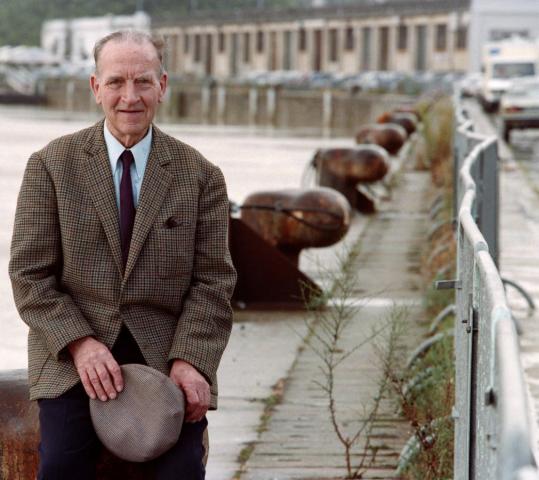
Henri Salmide by the port he saved, and came to love.

Henri Salmide by the port he saved, and came to love.

In the Nuremberg war crimes trials following World War II, the Allies took the high-minded position that “just following orders” was no defense to “crimes against humanity” committed during wartime. It is and has always been much easier to argue for defying military orders in the abstract, however, than in real combat situations. Conveniently, the victors in a war can take such a position, even knowing in their hearts, as most honest soldiers do, that they themselves might not be able to muster the courage and conviction to tell a commanding officer, “No!”

Henri Salmide, a former German soldier in World War II who died in France this week, would have been an appropriate judge for the trials, for he would not have been plagued by any such conflict or hypocrisy. For Salmide, back when he was called by his birth name of Heinz Stahlschmidt, was a rare and remarkable man who did defy an order he knew was wrong, and saved a city with his courageous, dangerous, and principled actions. Continue reading

Shin-Soo Choo and the Duke’s Dilemma

You wouldn’t think that a South Korean baseball player could have much in common with John Wayne, but a slugging first baseman for the Cleveland Indians named Shin-Soo Choo now faces an ethical dilemma strikingly similar to the one “the Duke” encountered in 1942. Continue reading

What Rudyard Kipling Taught My Father

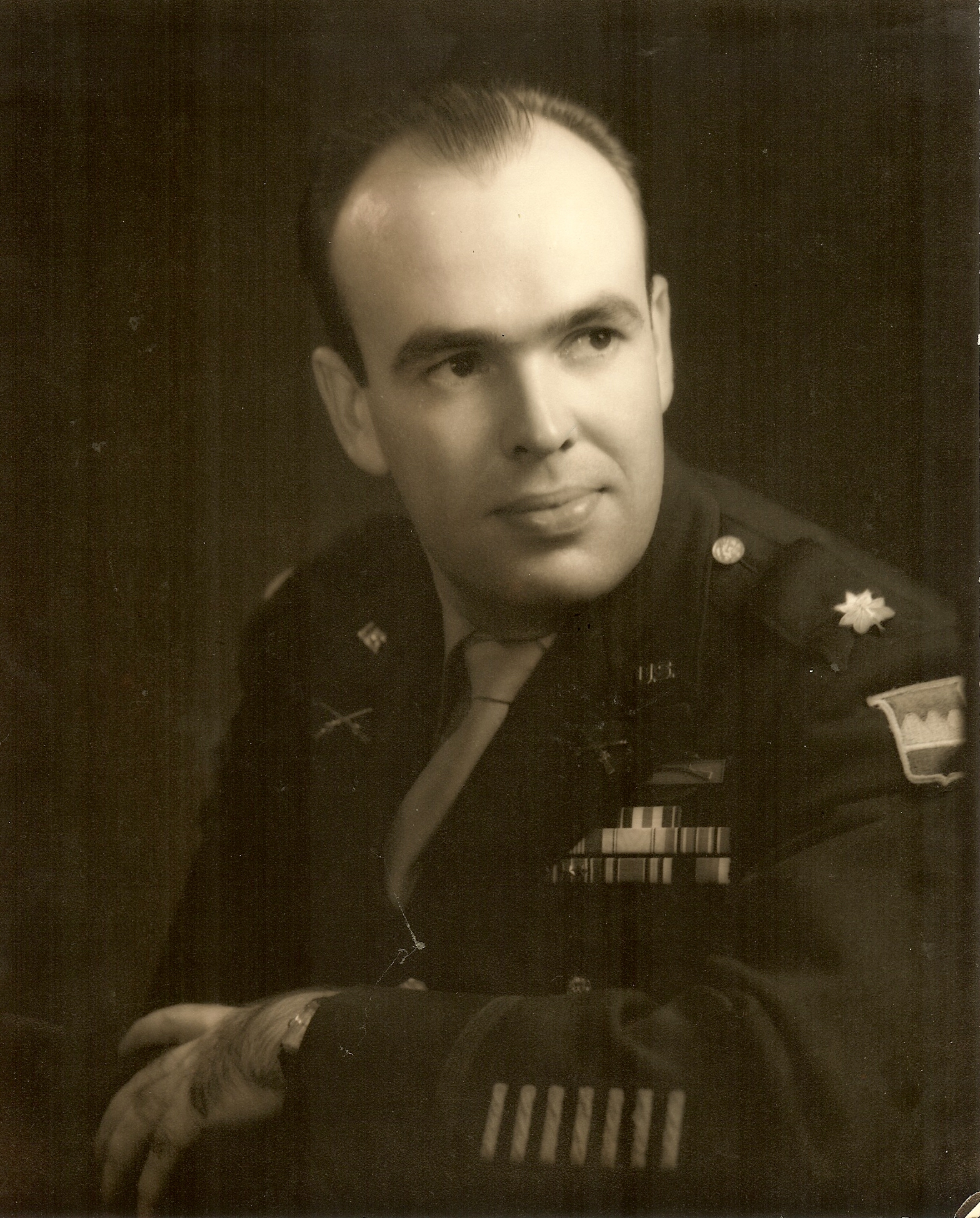
Jack Marshall Sr Army portrait

Today the Army buried my father, Major Jack Marshall, Sr., with full military honors. He had earned them, for he was a hero in World War II. Let me correct that: every soldier who serves in battle is a hero, but my Dad had a few special distinctions, like a Silver Star and a Bronze Star to go with his Purple Heart.  He  sustained a crippling wound to his foot from a hand-grenade, healed enough to jam what was left of it into a boot, and went on to fight in the Battle of the Bulge.

Under the clearest of blue skies, with the cemetery covered in snow, a caisson drawn by black horses, one without a rider, carried my father to a gravesite ceremony where the American flag draping his casket was carefully folded by six soldiers and given to my mother, following a 21-gun salute. My father was a hero off the battlefield as well, a profoundly ethical and courageous man throughout his life, and how he got that way is worth examining. Continue reading

Ethics Hero Emeritus: Miep Gies, 1909-2010

Miep Gies, the last surviving participant in the inspiring story of Anne Frank, died last week, a month short of her 101st birthday.

One of the most important objectives of thinking about ethics, and challenging ourselves to find the most ethical courses in the dilemmas and conflicts we read and hear about every day, is to be ready if and when a time comes when lives depend on our ability to determine the right thing to do, and to have the courage do it. I have no idea how much or how often Miep Gies thought about ethics. But when her time came, she was ready. Continue reading