What Rudyard Kipling Taught My Father

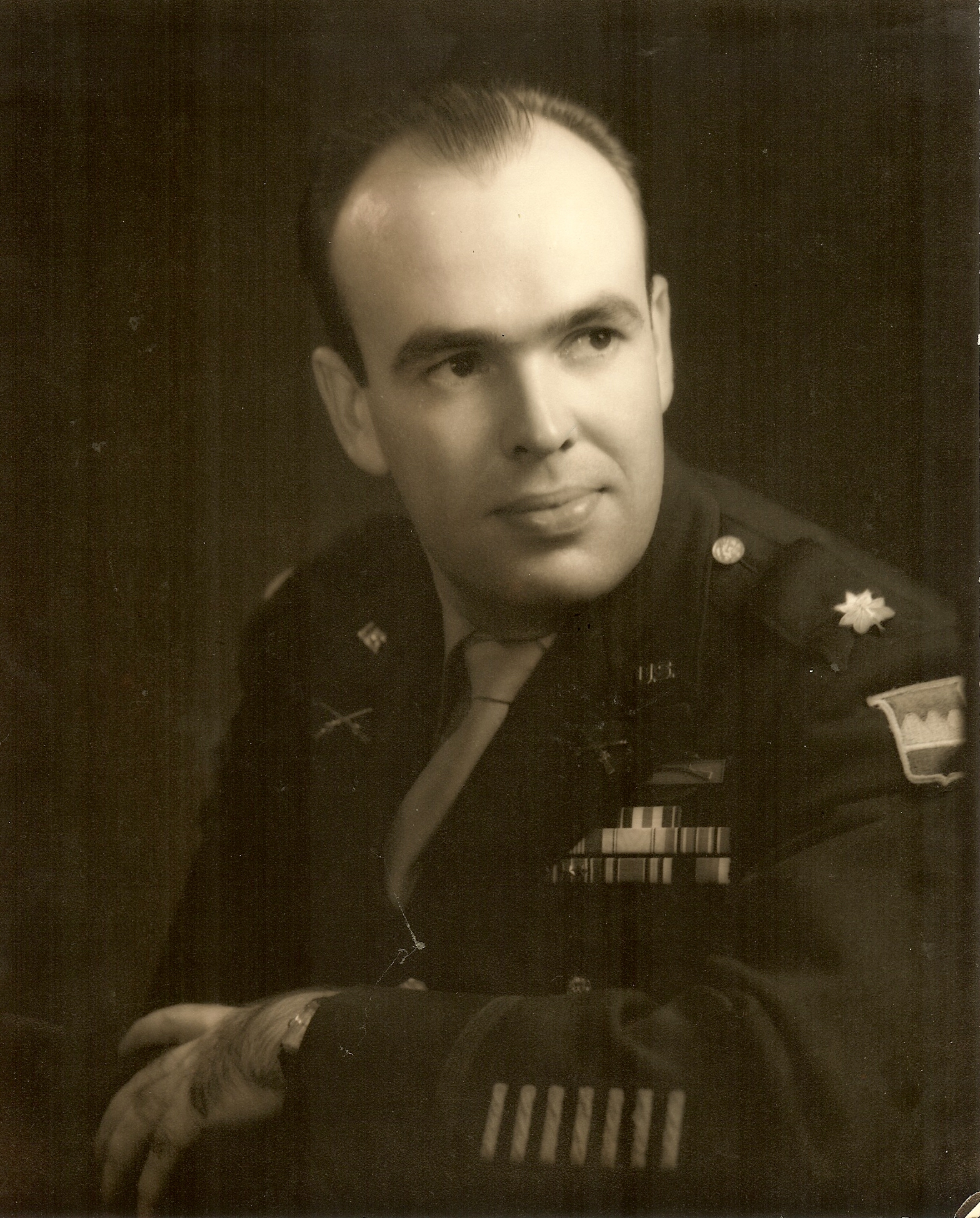
Jack Marshall Sr Army portrait

Today the Army buried my father, Major Jack Marshall, Sr., with full military honors. He had earned them, for he was a hero in World War II. Let me correct that: every soldier who serves in battle is a hero, but my Dad had a few special distinctions, like a Silver Star and a Bronze Star to go with his Purple Heart.  He  sustained a crippling wound to his foot from a hand-grenade, healed enough to jam what was left of it into a boot, and went on to fight in the Battle of the Bulge.

Under the clearest of blue skies, with the cemetery covered in snow, a caisson drawn by black horses, one without a rider, carried my father to a gravesite ceremony where the American flag draping his casket was carefully folded by six soldiers and given to my mother, following a 21-gun salute. My father was a hero off the battlefield as well, a profoundly ethical and courageous man throughout his life, and how he got that way is worth examining. Continue reading

Ethics Hero Emeritus: Miep Gies, 1909-2010

Miep Gies, the last surviving participant in the inspiring story of Anne Frank, died last week, a month short of her 101st birthday.

One of the most important objectives of thinking about ethics, and challenging ourselves to find the most ethical courses in the dilemmas and conflicts we read and hear about every day, is to be ready if and when a time comes when lives depend on our ability to determine the right thing to do, and to have the courage do it. I have no idea how much or how often Miep Gies thought about ethics. But when her time came, she was ready. Continue reading

F.D.R.’s Irresponsible Deception

Franklin D. Roosevelt’s reputation is at an all-time high these days, thanks to reflections on his handling of  The Great Depression prompted by our current financial mess. But looking at F.D.R.’s record  risks ethics whiplash, as a new book again reminds us.  Continue reading

The Price of American Principles

As everyone knows by now, Maj. Nidal M. Hasan, a 39-year-old Arlington-born Army psychiatrist, shot and killed 13 people at Fort Hood, Texas, wounding many more.  Although he originally told the Army that he was not especially religious, Hasan had become a devout Muslim in recent years. You didn’t have to be the Amazing Kreskin to predict what the combination of a Muslim soldier and a shooting spree would spark from some voices on the Right: immediate “I told you so’s” about how politically correct squeamishness prevent sensible profiling that could prevent such tragedies. Continue reading