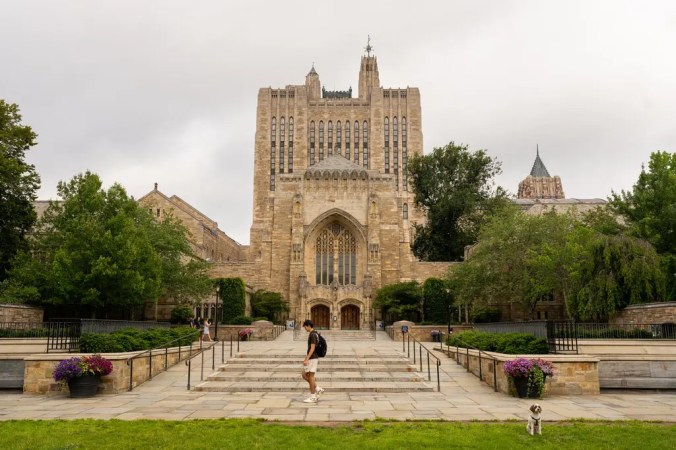
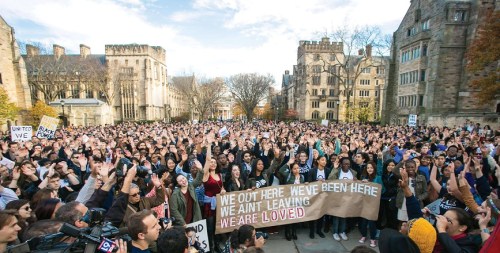
Back in June, I wrote about the Connecticut Supreme Court deciding that a student accused of rape and expelled by Yale University could sue the female student who accused him for defamation because the hearing that resulted in his expulsion lacked due process, including the ability to cross-examine witnesses. Today the New York Times bemoans the development as the lawsuits by Saifullah Khan against his accuser and Tale can proceed. Khan was found guilty by Yale in a process that did not permit him to face his accuser, a female student who had graduated, as she gave a statement by teleconference to a university panel. Nor could his lawyer, under the rules of the hearing, cross-examine her. Yet before the hearing, Khan had been found not guilty of the crime in a criminal proceeding where his accuser was cross-examined sharply.
In June, I wrote in part, “The Connecticut Supreme Court ruled 7-0 that a former Yale student is not immune from being sued for defamation by the male student she accused of raping her. Saifullah Khan was found not guilty in a criminal trial of raping “Jane Doe” in her dorm room in October 2015 in what Khan insisted, and a jury agreed, was an incident of consensual sex. Yale had expelled Khan using the “preponderance of the evidence” standard forced on educational institutions by the Obama Department of Education. The court determined that because Khan had fewer rights to defend himself in university proceedings, which, again prompted by the Obama administration, provided limited due process protections, his accuser should not benefit from the civil immunity granted to witnesses in criminal proceedings. “Statements made in sexual misconduct disciplinary proceedings that are offered and accepted without adequate procedural safeguards carry too great a risk of unfair or unreliable outcomes,” the unanimous opinion held….
“The Connecticut ruling is likely to be an influential one, cited in future cases. Nonetheless, it comes too late for many students caught in the trap Obama’s DOE “Dear Colleague” letter set. The elimination of fairness and due process protections from college and university disciplinary proceedings after sexual assault accusations led to hundreds of lawsuits and egregious injustices. If the result of this decision is that female students take special care that their claims are legitimate and provable, it will restore much needed balance and fairness to process that was warped by the destructive “Believe all women” fixation.” Continue reading





 Ethics Alarms