Ethics Observations On The “Affluenza” Sentence (And None Of Them Involve Criticizing The Judge)

Judge Boyd, being judged. (The earlier photo posted was NOT Judge Boyd. I apologize to the judge, readers, and whoever's photo that was.)

Judge Boyd, being judged. (The earlier photo posted was NOT Judge Boyd. I apologize to the judge, readers, and whoever’s photo that was, for the error)

The newsmedia and blogosphere are going bonkers over the sentence given to Ethan Couch, the 16-year-old Texan who pleaded guilty last week to four counts of intoxication manslaughter and two counts of intoxication assault causing serious bodily injury. He had a blood-alcohol level three times the legal limit (Couch had stolen beer from a Walmart), plus traces of Valium in his system, when he lost control of  the Ford F-350 pick-up he was driving (over the speed limit) and slammed into four people trying to fix a disabled car on the shoulder. They were killed; two of his seven passengers were critically injured. Prosecutors proposed 20 years in jail as the proper punishment for Couch, but his attorneys tried a novel defense: they had experts testify that their client suffered from “affluenza,” a malady caused by his rich, amoral, neglectful parents, who taught him (the theory goes) that there are no consequences for anything, if one has enough money.

Rejecting the prosecution’s argument, State District Judge Jean Boyd, presiding over the Fort Worth Juvenile Court, shocked everyone by sentencing Couch to only 10 years of probation—no prison time at all. The gist of the media outrage: once again, the life philosophy of Couch’s sociopathic parents is validated. The rich get away with everything: a poor, minority defendant who engaged in the same conduct would have been imprisoned. This is the injustice of the criminal law system in America.

Maybe. But let’s not get ahead of ourselves.

I think the judge, despite what we are hearing from the media, may have done her job well.

Continue reading

The Outrageous, Offensive, Ethical Murder Defense

"OK, granted, my client killed her. That's wrong. But shouldn't he get some credit for the fact that her loss is a net gain for society?"

“OK, granted, my client killed her. That’s wrong. But shouldn’t he get some credit for the fact that her loss is a net gain for society?”

The evidence at trial showed that Rasheen Everett arrived at Amanda Gonzalez-Andujar ‘s Queens ( New York) apartment on March 27, 2010, and almost 24 hours  later, left carrying two bags filled with the prostitute’s belongings including her camera, laptop and cell phone.. Her lifeless body was later discovered, covered in bleach. The judge pronounced the defendant, who showed no remorse during the proceedings, “a coldhearted and violent menace to society.”  Everett apparently killed Amanda after discovering that she was transgendered. She had solicited him over tbe internet.

Desperately arguing to keep Everett’s post-conviction sentence as light as possible (it turned out to be 29 years in prison), Queens defense attorney John Scarpa made about as repugnant an agrument to Queens Supreme Court Justice Richard Buchter as the imagination could devise. “A sentence of 25 years to life is an incredibly long period of time, judge,” Scarpa protested. “Shouldn’t that be reserved for people who are guilty of killing certain classes of individuals? Who is the victim in this case?” he asked. “Amanda was engaged in a life of prostitution, life of drug use, HIV exposure. She was having sex with other individuals knowing she had the chance of spreading diseases….Is the victim a person in the higher end of the community?” he asked.

This theory would have ensured Jack the Ripper, had he ever been caught, a work release program, perhaps in a butcher shop. Continue reading

Unethical Quote Of The Week: Attorney Lee J. Danforth

“If this trial prevents one little girl or one mother or father from reporting suspected abuse then this is profoundly sad for our society.”

 —-Lee J. Danforth, attorney,making a lightly veiled argument that his clients should suffer no penalties for ruining a teacher’s career and reputation with a false accusation of “inappropriate touching,” because such penalties would discourage future legitimate accusations.

"Oh, you all were lying when you got John Proctor hung as a witch? Well, that's okay---we wouldn't want to punish you, because it might discourage a real victim, in case there really IS a witch one of these days...

“Oh, you all were lying when you got John Proctor hung as a witch? Well, that’s okay—we wouldn’t want to punish you, because it might discourage a real victim, in case there really IS a witch one of these days…

Mr. Danforth was defending a San Jose, California family in a defamation suit by a former Catholic school physical education teacher, John Fischler,  who claimed that they methodically destroyed his reputation with a campaign of rumors and lies, led by his main accuser, an 11-year-old girl right out of “The  Children’s Hour” or “The Crucible.” Danforth is a lawyer (Danforth was also the name of the judge in the Salem witch trials, speaking of “The Crucible” and false accusations) , and it is sometimes necessary, and thus ethical, for lawyers to make otherwise unethical arguments in the zealous representation of their despicable clients. Remember, legal ethics does not allow Danforth to temper his advocacy out of concern for future, genuine victims, unlike his clients. They are not his concern, and even bad people have a right to vigorous legal representation. Nonetheless, his statement embodies an unethical rationalization for letting diabolical and vicious false accusers escape the just consequences for their actions. Continue reading

Encore: “The Ethics of Letting a Lying Defendant Testify”

"Objection! The defendant's pants are clearly on fire!"

“Objection! The defendant’s pants are clearly on fire!”

I’m in Ohio today, talking about legal ethics with a large law firm, and the discussion there turned to the difficult problem of the lying criminal client. Here is a post on the topic from the early days of Ethics Alarms, slightly updated, and the disturbing thing is that we are no closer to finding a satisfactory and ethical solution to the problem.

What do you do when your guilty client wants to claim he’s innocent in the witness chair, under oath? Continue reading

Texting Ethics: The Lawyer’s Duty To Propose A Ridiculous Theory And The Judge’s Duty To Reject It

"You almost had me, Miss. Your plan was clever---you knew your boyfriend would answer that text message you sent, and timed your call so he would be driving on Dead Man's Curve. It was almost a perfect crime!"

“You almost had me, Miss. Your plan was clever—you knew your boyfriend would answer that text message you sent, and timed your call so he would be driving on Dead Man’s Curve. It was almost a perfect crime!”

Last year, a Superior Court judge in Morristown, New Jersey ruled that Shannon Colonna should not and could not be made to pay damages to David and Linda Kubert, who both lost a leg after her boyfriend, Kyle Best, driving his car, read Colonna’s text message and crashed into the motorcycle the Kuberts were riding.

The Kuberts are appealing the ruling, with their attorney, Stephen “Skippy” Weinstein, arguing before a three-judge panel that texters should have “a duty of care” imposed on them, making them potentially liable when they send a message knowing that the intended recipient is driving, as Best was. It’s a novel theory and a genuinely terrible one, an insidious concept that would allow plaintiffs to drag completely innocent parties into crushing personal injury litigation, and that over time would be certain to ooze into other areas. Good for lawyer Weinstein, though; he’s doing his job, which is zealous representation. The future mischief such a duty would wreak isn’t his concern, only getting the best result for his clients is. Continue reading

Ethics Dunce: National Journal Writer Matthew Cooper (And Boy, Am I Sick Of It!)

Matt Cooper apparently thinks Clarence represented murderers because he LIKED murderers. That's not how it works, Matt.

Matt Cooper apparently thinks Clarence represented murderers because he LIKED murderers. That’s not how it works, Matt.

Matthew Cooper, like so many before him who should know otherwise, confounds the role of an attorney with the views of the individual serving as an attorney. This is a disturbing chunk of ignorance for a prominent journalist to pass on to the public, and as I have before, I am honor bound to point it out, and also to say: Understand what you’re writing about, journalists!  That’s one of your ethical duties.

In a National Journal piece about Ted Olson, who argued against Proposition 8 and for same-sex marriage before the U.S. Supreme Court, Cooper writes,

“While most folks were surprised by his support of gay marriage, I wasn’t. Yes, he was a conservative. But he had also defended the press as the longtime lawyer for the Los Angeles Times and in other First Amendment cases. He’d agreed to represent Tim Phelps, a Newsday reporter, in the Anita Hill case even if Phelps’s work was damaging to the conservative Clarence Thomas. He was conservative, but not reflexively so.”

Why is this old, basic and simple principle so difficult to grasp: a lawyer does not adopt his or her client’s views by virtue of representing them or advocating for them in court or the public square! The lawyer’s views are presumed to be irrelevant to the position he or she takes for a client. As the ABA’s Model Rules of Professional Conduct state (and legal ethics has held for centuries),

“A lawyer’s representation of a client, including representation by appointment, does not constitute an endorsement of the client’s political, economic, social or moral views or activities.” Continue reading

Bizarro World Legal Ethics Update….

This just in:

You know that aneurysm-inducing defense in the case of the Republican consultant who created a robocall designed to trick black Democrats into not voting on election day?

It worked. Continue reading

Criminal Defense Ethics: The Aneurysm-Inducing Argument

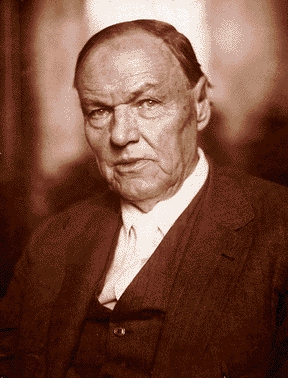
Darrow would understand.

Apoplectic stand-up comic Louis Black has a classic routine in which he describes how a snippet of a conversation he over-heard at an IHOP nearly killed him. The statement, “If it hadn’t been for that horse, I never would have spent that year in college,” made no sense to him at all and kept going around and around in his brain, threatening to cause a fatal aneurysm.

I know exactly how he feels.

A week ago, I read a news account of the election fraud trial of one Julius Henson, a former campaign consultant to ex-Maryland Governor Robert Ehrlich. This was the second trial arising out Ehrlich’s dirty and unsuccessful campaign in 2010 to win re-election over Democrat Martin O’Malley. In the first one, Ehrlich’s campaign manager, Peter Schurick, was convicted of election fraud for approving an election day robocall that went out to African-Americans in Maryland who were registered Democrats, suggesting that they “relax” and stay home, because O’Malley had already won. In the article, it said that Henson’s attorney had offered the defense that the call, which was created by Henson with his wife’s voice on the recording, was not designed to suppress the black vote for O’Malley. It was, argued Edward Smith, intended to prompt them to go to the polls and vote for Erhlich through the use of “reverse psychology.”

WHAT??? Continue reading

Van Der Sloot’s Defense: Worst Rationalization Ever?

Yup: It's Natalee's fault.

Joran van der Sloot finally pleaded guilty yesterday to the murder of a Peruvian woman, Stefany Flores, whom he had met in a bar. His lawyer, Jose Luis Jimenez, blamed the crime on van der Sloot’s earlier arrest for the disappearance of Natalee Holloway in Aruba and the widespread suspicion that he was the missing teenager’s killer.

Defense lawyers, in the zealous representation of their clients, must often come up with creative theories bordering on the risable to try to wring every last drop of helpful spin out of a hopeless case. It bothers non-lawyers and legal ethicists alike when attorneys assert things about a case or their client that they couldn’t possibly believe is true, though it is enough to meet the low bar of the Rules of Professional Conduct for the lawyer to believe that such statements might be true, perhaps in a parallel universe. They are in the “well, how about this?” category. A defense lawyer with a despicable client like van der Sloot, who appears to be a stone cold sociopath, doesn’t have much to work with. Continue reading

Hypocrite…or Lawyer?

"After we're done, darling, let's discuss your sexual harassment suit. I think you have a good case!"

This story probably will strike you as a bit odd.

Prosecutors have charged a 50-year-old lawyer, Robert Michael Hoffman of San Francisco, with rape after complaints from four women who told police he assaulted them when they answered his Craigslist ad for rough sex. The prosecutors say that he assaulted at least three of the four women  and engaged in rape, sexual battery, forced oral sex and one count of false imprisonment.

The odd part? Hoffman practices employment law , specializing in sexual harassment cases. Sexual harassment law is explicitly designed to ensure that employees are not exploited, debased or discriminated against because of their gender.Needless to say, rape, sexual battery and  forced oral sex would qualify as extreme sexual harassment. Continue reading