 Here’s a rule of thumb: Don’t give the rights to reproduce your child’s photograph to a photographer or ad agency unless you are prepared to accept however it is used, and certain that your child will not be harmed or embarrassed as a result.
Is that so hard?
Tricia Fraser has sued Life Always and Majella Cares Heroic Media, an anti-abortion group, claiming it used her daughter’s picture in “a racist, controversial advertising campaign” that is “defamatory, unauthorized, and offensive,” posting the 4-year-old girl’s photo on a giant billboard by the Holland Tunnel and another in Florida.
Nice try. But there is nothing racist about the campaign, and nothing defamatory about using her daughter’s photo in it. It is unfortunate that a young girl’s photograph is being used in a context that her mother finds offensive, and that the girl may find offensive later on. That is primarily one person’s fault, however: Tricia Fraser. She made a bad deal, exercised poor judgment, and failed to protect her child’s interests.
Fraser responded to an ad on the NYCastings.com website that sought models for “family photos.'” She got free professional photos of her daughter in exchange for giving the photographer the right to use them, which included, though she apparently didn’t consider this, the right to sell them. Fraser says that she wasn’t told that they might be used to illustrate a controversial message or as political propaganda. Of course, there is no way of knowing whether the photographer was thinking about that possibility either. The mother was naive.
I don’t blame her for being upset. Indeed, I think an organization using a young child’s image in a highly public way in connection with any political or social issue is unethical. The child is too young to truly consent to any use of her image: the parent shouldn’t approve it, and no group should allow a child’s reputation and self-image to be endangered in the interests of advertising and publicity. Still, the law gives authority to the parent, and Fraser misused it.
Life Always and Majella Cares Heroic Media bought a license to use the photo of Fraser’s daughter from Getty Images, which had purchased the girl’s photo from the photographer. The fact that Trisha Fraser regards the billborad campaign as “designed to shame African-American women from exercising their constitutional rights to reproductive freedom” explains some of her anger, but has nothing to do with whether they should have used the photo. To the advocacy group, it’s a picture, not a person, and the one who gave up the rights to the photo is responsible for its use.
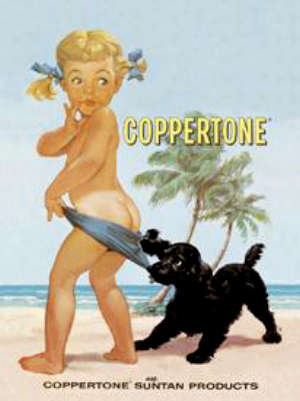
I hate the fact that the images of infant and children are sold and given away by parents with little thought about how long the images will linger in the public view. I have the same concerns about parents posting embarrassing YouTube videos featuring their children. The child’s image is being exploited, and the child is given no opportunity to approve, consent, or object. Ethically, I think that a parent is obligated never to approve of a child’s image being used commercially, until the child is mature enough to give informed consent. Of course, this would mean no more Gerber babies and Coppertone bare-bottoms. That’s fine with me.
I would also welcome the acceptance of an organizational ethical standard that recognizes the inherent unfairness of using and exploiting children’s images. Children’s images are such traditional and effective tools of persuasion, however, that this is nothing but wishful thinking. Parents, in contrast to corporations, ad agencies and advocacy groups, are supposed to have their children’s welfare as their top priority.
I sympathize with Tricia Fraser, but she is accountable for her daughter’s plight.
 Ethics Alarms
Ethically, I think that a parent is obligated never to approve of a child’s image being used commercially, until the child is mature enough to give informed consent. Of course, this would mean no more Gerber babies and Coppertone bare-bottoms. That’s fine with me.
Also, there would be no children in movies or television shows… even in the background. I don’t think your desired line would work.
I know it wouldn’t work—but I also think not allowing children under a certain age to perform in mass media at all would be more ethical—if not more friendly to the arts—than the current system.
Maybe parents should only be able to sell specified use of their child’s image? Of course, that would completely dismantle an entire line of Getty Images and the like. And what would be the age of consent for unspecified use? 18?
Sounds bureaucratic and difficult, so I’m for the current system.
I’m not sure the law handles this well, but ethics will. Just say no. Don’t pimp out your kids’ images until they can legally do it themselves, with full knowledge of what it might mean. Does that mean that companies will have to rely on CGIs, midgets and drawings, so be it. Consent is a bitch; ask any researcher scientist.
Amen. And this is why photos/videos of my daughter AT ALL in a public sphere (on FB, I control privacy settings and they’re not out in *public*) in any way that can leave my control. More parents who want performers/models instead of just plain kids need to look into classes on contract law before they start playing the game. I feel for the family, but legally, she screwed herself.
Becky,
Those FaceBook privacy settings are little more than escape instructions on an airplane .. the illusion of safety. You might want to rethink your security culture.
-Neil
Oh, and Jack, this is why, IF a script calls for a kid, I know YOUR theatre would be a great place for youngsters to get some theatrical experience.
Parents have vast responsibilities when it comes to their children. But perhaps nowhere is a child’s own image (and identity) at so great a risk then when it becomes a marketable item. It is then that parents- though either gullibility, avarice or downright depravity- can make a child into a “golden calf”. As you say, Jack, children’s images can convey many things… not all of them good by any means.
Personally, I favor pro-life. But that promoter was dead wrong in using an actual child’s image for his poster that was obtained by subterfuge. The parents should have the final say in how their child’s likeness is utilized; whether in still photos or in a performance. And, as not all parents (or media types) are of the highest moral order, enforceable rules of ethics in regard to such displays of childhood should likewise be in play.
Where kids are concerned, no precaution should be left unconsidered. This won’t abolish children from media work. It will only force the adults to show the courtesy and responsibility that they should in any case… and because they ARE adults.