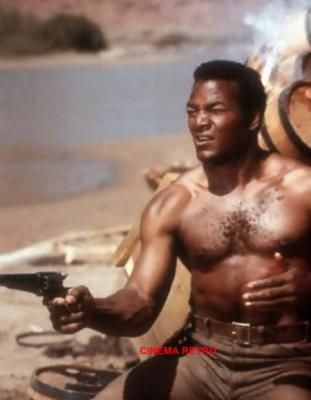
Wne Jim Brown talks, people tend to listen.
I have mixed feelings about Jim Brown, the legendary N.F.L. running back and former movie star (“The Dirty Dozen”), stemming from the fact that loving a woman and beating her up never seemed to be mutually exclusive actions to him. His domestic problems aside, however, Brown has also periodically used his fame and status to draw needed attention to important issues, and he has just done so again, calling out the N.F.L. players’ union for apparently failing to make the welfare of retired players part of their impending deal with the league’s owners.
“Why isn’t the union talking about health care, better health care?” Brown recently told reporters. “Why aren’t they talking about better pensions? You definitely need a health plan that goes beyond five years; you definitely need a better pension plan.”
Brown is acting as the players’ conscience, if they care to listen. The issue of paying for the health problems of former players was transformed by new data showing that many, quite possibly most, and conceivably all former pro football players retire with brain injuries from the repeated pounding they take every Sunday during their careers. The incidence of premature dementia and other nervous system problems is horrific, and the League and the players’ union have a moral and ethical obligation to make sure that however they divide up their billions, the proper care of former players is part of the deal.
“You definitely need to look at your old, sick and wounded,” says the greatest running back who ever lived. (Brown may be an exception to the brain injury rule, since he eluded tackles most of the time.)
Jim Brown himself doesn’t need more money for medical and retirement costs; Hollywood made sure of that. He is speaking out because as one of the all-time greats of the game, he has influence, respect, and power. In short, he is a leader, and leaders are duty-bound to exercise their influence whenever it can stop injustice and needless harm to others. That is what Brown is doing on behalf of his fellow retired players, and for the benefit of the N.F.L., the current players, and the game itself. He is reminding them that while rich new financial agreements are good, doing the right thing for those who made that deal possible at the cost of their minds and bodies is essential. “I’m not pro-owner or pro-player. I am pro-football,” Brown told the New York Times. “I want the game to go on. I want the game to be tough. I don’t want the game to be a killer of our players.”
Jim Brown, the Babe Ruth of pro football, is as hard to ignore as he was to tackle. He deserves our respect for recognizing a situation in which his reputation and stature can do some good, and setting out to do it.
 Ethics Alarms
In full disclosure, I do work for the former players’ union – as you may know we decertified as a union in March at the expiration of the collective bargaining agreement with the NFL.
With all due respect to Mr. Brown, a true NFL Legend, he has been nowhere near the negotiations of the last few months between the players and owners. He, like everyone else (including me), must rely on press reports about what he *thinks* is going on between the negotiators. He does not mention that one of De Smith’s first actions as Executive Director was to have retired players finally represented on the NFLPA’s Executive Committee. Cornelius Bennett (Bills, Falcons and Colts and five-time Pro Bowler 87-00) and Jim McFarland (Bills, Cardinals and Dolphins 70-75) have been representing the interests of our legends and retired players in the negotiation room to very specifically ensure that whatever deal is struck includes the vital interests of our former players. Bennett and McFarland have been consistently strong voices for retired players throughout these negotiations. It is simply inaccurate to say there is no seat at the table for this important group.
I can tell you what I do know about these negotiations: we ARE talking about health care for current players, former players and players yet to join the NFL. We ARE talking about improving the pensions and benefits of those on whose backs this game was built. We ARE talking about trying to make this game safer for the men who play it and providing support to those who have played and now suffer.
Mr. Brown is not to my knowledge active in the NFLPA or with our retired players group. While he has years of NFL greatness, he does not have anything approaching current information on what is or is not being done in these negotiations. He does not help the cause of former players or the current players locked out by the owners by sniping at the team trying to negotiate a fair agreement with a group for whom fairness is not always the first option.
Thanks for the information, Mark. You would have to admit, though, that since the former players had to sue the Union (and were awarded substantial damages), the lack of trust there is perfectly understandable, and even justified. I’m not sure what harm it does for Brown to keep the issue front and center. Or for the players to make it known that they were looking out for the old, the sick and the injured, if, as you say, they are.
The settlement of that $28.1M suit was one of Smith’s first official actions after his election to signal to former players that they would no longer be left out in the cold by their Union. It acknowledged the general feeling among retired players that the previous administration had been more responsive to the needs of current players. The inclusion of retired players on the decision-making Executive Committee was the second such action. At every step, in practically every speech, he has made it clear that the needs of retired players are a priority both in the negotiations and within the ongoing life of the NFLPA.
Mr. Brown was approached by a member of the press who knew what he was going to get when he asked the questions – an NFL Great who still believes the Players Associaton is ignoring its retired players, especially at a time when changes can most logically be made. That just isn’t true. The issue is front and center (with Smith anyway).
Thanks, Mark. I presume you are writing a letter to the Times.
I look forward to learning how the ultimate agreement withe NFL owners addresses this issue.