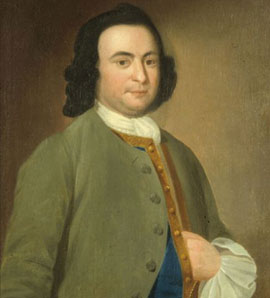
George would be proud.
“Student organizations are allocated budget by the Student Bar Association in order to allow them, among other things, to bring speakers to the law school. Neither the law school nor the university can be taken to endorse such speakers or what they say. Law school administration is not consulted about these invitations, nor should we be. Sometimes speakers are invited who are known to espouse controversial points of view. So be it. So long as they are here, they are free to say whatever is on their mind within the bounds of law. They cannot be silenced and they will not be.
“Just as speakers are free to speak, protesters are free to protest. They must do so in a place and in a manner that respects the rights of speakers to speak and listeners to listen, and that is in all other ways consistent with the educational mission of the university. Student organizations which hold contrary points of view have every right to schedule their own programs with their own speakers, and these speakers’ rights will be protected in just the same way.
“The law school will not exercise editorial control over the words of speakers invited by student organizations, nor will we take responsibility for them, nor will we endorse or condemn them. There has to be a place in the world where controversial ideas and points of view are aired out and given space. This is that place.”
—— Daniel D. Polsby, Dean of George Mason University Law School, responding to calls from the Council on American-Islamic Relations for the Law School to disinvite activist Nonie Darwish, who had accepted an invitation from the campus Federalist Society and the Jewish Law Students Association to speak on campus.
What you or I or anyone else may think about Darwish, (you can check out her blog here) is irrelevant to the importance of allowing her to speak. This should be the response on every campus, to every attempt to stifle speech, thought, debate and opinion.
It would have been especially disturbing if the university named after the man who prevailed upon James Madison to add the Bill of Rights to the Constitution had followed the disgraceful examples of the University of Wisconsin and Widener School of Law. Fortunately, Dean Polsby embraced the ideals of the Founding Father whose name honors the school and its graduates.
 Ethics Alarms
Fantastic. Simply wonderful.
First Amendment issues are never simple. Answers are not always easy. I say, bravo to the dean — there must always be a vigorous competition in the free marketplace of ideas.
On the other hand, “show me the money”. I can understand the feelings of some students when they must pay mandatory fees, and some of that money is used to sponsor speakers whose ideas or history are abhorrent to the student.
Many Holocaust survivors were outraged when some of their membership money was used by the ACLU to defend the rights of neo-Nazis to hold a parade in Skokie, Illinois, some years ago.
Easy solutions, anyone?
It’s the easiest solution: “Do nothing.”
ACLU membership money isn’t compulsory. Here “Do nothing.” means don’t pay voluntary dues. You don’t need to support the ACLU if you don’t like what they do.
With regard to student fees, you can’t please everyone, and when you have someone with abhorrent viewpoints, it only sparks a dialogue. Speakers aren’t holding rallies. They aren’t garnering support. They are laying out their viewpoints and the listeners consider and, if necessary, provide rebuttal, debate, and discussion. This is the point of a university, so “Do nothing.” here means, it ain’t broke. Don’t fix it.
My answer to the “show me the money” argument: If the students going to the school will listen to nothing except what they already know and already agree with, why are they paying any tuition at all?