Ethics Train Wreck In A Little Teapot

I don’t understand this story at all.*
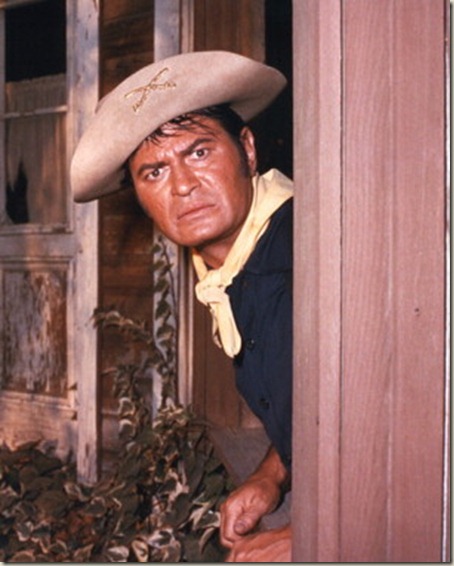
Not THAT Larry Storch! That Larry Storch made sense to me.

Larry Storch is no relation to the late comedian of “F Troop” fame, but is a defiant, uncivil 89-year-old scofflaw who insists on driving around his North Carolina community with his sound system at eardrum-popping levels. “They’ve been giving me noise tickets for years,” Storch said. “I guess they thought their tickets would deter me, but every time I paid off a ticket I’d stop by the speaker place on the way home and add a little more boom to my zoom.” Good for you, Larry; by the way, you’re an asshole. His latest arrest for breaking noise ordinances brought him before a judge who was ready to throw the book at Storch, but who had a peculiar way of doing it. Lenoir County District Judge Robert T. Ironside—who is no relation to the wheelchair-bound Robert T. Ironside played by post- “Perry Mason” Raymond Burr in a CBS detective show—told him:

“You’ve come before this court many times over the years Mr. Storch. In the past I’ve fined you, sentenced you to community service, and at one point even forced you to watch the fourth hour of the ‘Today Show.’ Since none of those punishments have done anything to curb your jackassory behavior, I’ve decided to get medieval on where your butt — if you had one — would be.” Continue reading


Sympathy Abuse: The Unethical Death Announcement Request


Take ’em or leave ’em.

The Miami Herald reports that Robert Maurius Reno, a younger brother of former U.S Attorney General Janet Reno has died. In lieu of flowers, the family is asking  friends to give to the Obama campaign –“even if they are Republicans.”

Wrong. Ethics foul.

I know that the Obama campaign has been promoting its tasteless brainstorm of encouraging wedding invitees and birthday celebrants to give money to the campaign rather than a gift, but this is emotional extortion. A citizen has a right to his or her own political activity, and short of using logic, facts and the power of persuasion to prompt a shift in loyalties, it is an abuse of the power of friendship and a misuse of sympathy to exploit a death to make someone give support to a cause, a party or a candidate that he or she would normally oppose.

If a family can compel Republicans to give to the campaign of a Democratic candidate, then it can use a family death to make an anti-abortion advocate give to Planned Parenthood, an Orthodox Jew contribute to Hamas, and a Red Sox fan buy a season ticket to watch the Yankees. This turns a generous and normal desire to show respect for the deceased and support for the grieving family into a trap to make mourners choose between violating their core beliefs and rejecting the wishes of the family.

The device is unfair, unmannerly, offensive and crude, and places politics over friendship and good taste. So is Obama’s birthday and wedding registry scheme, but that only  crossed an ethical line, while this obliterates it. Republican or Democrat, if you’re going to try this strong-arm tactic on me, don’t expect to see me at the funeral.

Or anywhere, for that matter. And I might just give double to the other side.

___________________________________________

Pointer: James Taranto

Facts: Miami Herald

Ethics Alarms attempts to give proper attribution and credit to all sources of facts, analysis and other assistance that go into its blog posts. If you are aware of one I missed, or believe your own work was used in any way without proper attribution, please contact me, Jack Marshall, at  jamproethics@verizon.net.


In Tennessee, the Tea Party Tries An Anti-Chris Rock

The fine art of whitewashing, brought to you by Tennessee’s tea parties.

It might have been Chris Rock’s anti-Fourth of July tweet, or perhaps because there hadn’t been enough news stories making tea party members look racist or foolish (though there have), but suddenly Salon and other left-leaning websites started publicizing an 19 month-old press conference by Tennessee tea parties demanding that the Tennessee legislature pass a law that would whitewash American history, particularly as it applies to the Founders. From a report in the Commercial Appeal from January of 2011:

“Hal Rounds, spokesman for the group, recently claimed at news conference that there was ‘an awful lot of made-up criticism about, for instance, the Founders intruding on the Indians or having slaves or being hypocrites in one way or another.’ As a result, the Tea Party organizations argue, there should be ‘no portrayal of minority experience in the history which actually occurred shall obscure the experience or contributions of the Founding Fathers, or the majority of citizens, including those who reached positions of leadership.’ ‘The thing we need to focus on about the Founders is that, given the social structure of their time, they were revolutionaries who brought liberty into a world where it hadn’t existed, to everybody — not all equally instantly — and it was their progress that we need to look at,’ Rounds explained of his interpretation of the legacy of the Founding Fathers.”

There is a lot of useful information to be extracted from this remarkable theory, some with ethics ramifications, and some without. Among the non-ethical conclusions are that… Continue reading

Ethics Quiz: Twitter Ethics

An Ethics Alarms Quiz for a hot sleepy Sunday:

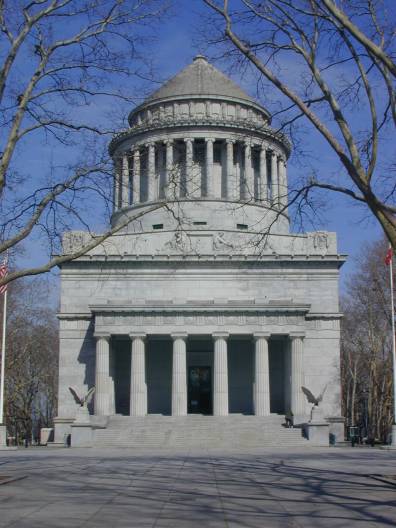
Grant’s Tomb or the National Stupid Question Monument

Young Georgia Ford of Great Britain wasn’t a veteran of Twitter, and when she sent a tweet to her followers naively asking if the Wimbledon tennis tournament was “always held in London,” she had no reason to expect that viral re-tweeting would make her an international laughingstock. It did though, as thousands of Twitterphiles, and some celebrities, pounced on her question and mocked her by name. “Wow, that Georgia Ford tweet from earlier is possibly the dumbest thing I’ve ever heard,” tweeted one Laurence T. Green, who obviously does not follow the speeches of Joe Biden, the political opinions of Bill Maher, or the periodic pronouncements of Rep. Allen West. Embarrassed and humiliated, with her name being made a synonym for ignorance, Georgia closed her Twitter account.

Your Ethics Quiz: Was Georgia’s treatment by the Twittersphere unethical, or was her tweet fair game for ridicule? Continue reading

Why Journalists Can’t Shoot Straight

George probably wasn’t lying, but Bill sure was.

The issue in the Washington Post’s weekly Outlook section concerned the virtues and dangers of honesty in a Presidential campaign, a matter that interests me from the perspective of ethics, presidential history, and citizenship. Two Post reporters were given the assignment of creating sidebars to the main article, one on candidates who told the truth and were punished for it, the other on campaign lies that came back to haunt the Presidents involved.

These are not difficult assignments, by any means. Either would be a legitimate term paper topic for a high school senior’s history class; both would be rejected as a history major’s thesis topic as overly simplistic. Yet both Rachel Weiner and Aaron Blake botched their tasks, and would have earned D’s at best in high school history, and that’s only because of grade inflation. The reasons for their failures exemplify the inadequacy of the mainstream media for the job we need it to do during a Presidential election.

Continue reading

The Difference Between Unemployed Scientists and Unemployed Lawyers

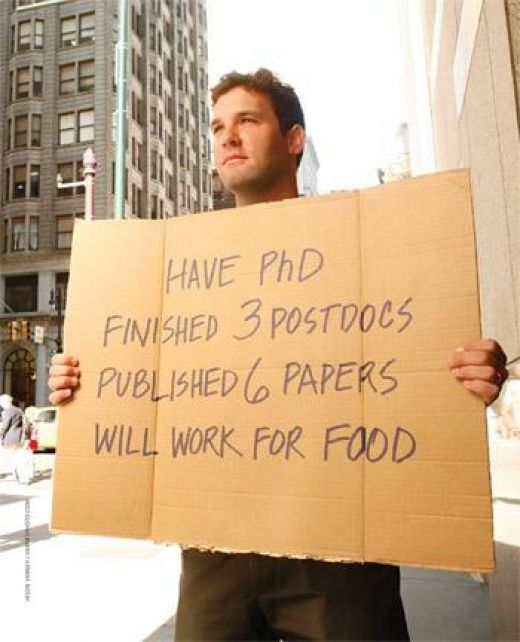
A front page story in today’s Washington Post casts interesting perspective on an Ethics Alarms rumble that broke out here a couple of weeks ago. One of the many websites where underemployed, over-indebted law grads hang out to commiserate—sites with pathetic names like “butidideverythingrightorsoithought”—discovered a post from the days when people were taking Occupy Wall Street seriously, in which I chided a protester whose sign blamed his law school  for his failure to  find a job, without giving due weight to the fact that sitting in a park whining about his plight wasn’t doing him any good either. Suddenly Ethics Alarms experienced an avalanche of indignant and often personally insulting comments introducing me to the strange world of the JD conspiracy theorists, who maintain that law schools engaged in an intentional conspiracy or “scam” to gull naive college grads into believing that a law degree was a sure-thing ticket to Easy Street and six-figure starting salaries.

In the Post’s report, we learn that other advanced degree-holders, namely PhDs in scientific fields, are also unable to find work or toiling in fields unrelated to their degrees. The Post says:

“Traditional academic jobs are scarcer than ever. Once a primary career path, only 14 percent of those with a PhD in biology and the life sciences now land a coveted academic position within five years, according to a 2009 NSF survey. That figure has been steadily declining since the 1970s, said Paula Stephan, an economist at Georgia State University who studies the scientific workforce. The reason: The supply of scientists has grown far faster than the number of academic positions.”

Sounds a lot like the legal market to me! Continue reading

Unethical Column of the Century: CNN’s L.Z. Granderson

OK, maybe I’m exaggerating.

But not much.

L.Z. Granderson’s role model. I’m not kidding.

In a horrifying opinion column, the regular CNN political pundit L.Z. Granderson evoked the virtues of public apathy and unchecked government conduct with warped logic and unethical rationalizations, to make the case that the public should merely shrug off scandals like “Fast and Furious.” I was only able to finish reading it without retching it by imagining Granderson’s motives for writing such mind- and culture-poisoning swill. At least, as an African-American journalist, a liberal and a Obama supporter (I know I repeat myself), he has the self-respect, fairness and integrity not to claim that critics of Attorney General Holder’s Waterloo are being racist. Like the race-baiters, however, he is in denial, and willing to throw principle to the wolves to protect the first African-American Attorney General, though far from the first corrupt and incompetent one.

In a column with the descriptive and idiotic title, “Don’t be nosy about Fast and Furious,” Granderson argues…

“…Times have changed. Yet, not everything is our business. And in the political arena, there are things that should be and need to be kept quiet…..there comes a point where the public’s right to know needs to take a back seat to matters like national security and diplomacy. Heads should roll because of the Fast and Furious debacle. We don’t need every detail of that operation to be made public in order for that to happen. If it were an isolated sting, maybe. But it is at least the third incarnation of a gun-running scheme stretching across two administrations, which means we could be pressing to open Pandora’s Box. We do not want to open Pandora’s Box, not about this and certainly not about a bunch of other potentially scandalous things the federal government has been involved with.” Continue reading

Rushed Ethics

Feeling pressured?

The Economist points its readers’ attentions to two studies showing the ethical benefits of delay to decision-makers. It is an important topic, with profound ethical implications. Deadlines and the perception of urgency are both what I call pre-unethical conditions, situations that so frequently lead to unethical conduct that our ethics alarms should start ringing the second we start feeling the dread of time-pressure. The Economist article notes that…

“…[ in ] an obscure article in the Academy of Management Journal by Brian Gunia of Johns Hopkins University… Mr Gunia and his three co-authors demonstrated, in a series of experiments, that slowing down makes us more ethical. When confronted with a clear choice between right and wrong, people are five times more likely to do the right thing if they have time to think about it than if they are forced to make a snap decision. Organisations with a “fast pulse” (such as banks) are more likely to suffer from ethical problems than those that move more slowly….The authors suggest that companies should make greater use of “cooling-off periods” or introduce several levels of approval for important decisions.” Continue reading

Comment of the Day on “Ethics Quiz: Jury Nullification For A Molestation Victim”

Here is the Comment of the Day, Eeyoure’s deliciously indignant dressing-down of the jury whose verdict was discussed in today’s post, “Ethics Quiz: Jury Nullification For A Molestation Victim”:

“The jury’s verdict was absolutely perverse.  The jury ignored truth about specific law for which they were responsible for finding guilt or innocence, where evidence existed beyond reasonable doubt that the law was broken.  Simultaneously, the jury concluded that irrelevant evidence, plus the defendant’s testimony, proved guilt beyond doubt of a person who was not charged, not on trial, for breaking of law for which the jury was not responsible for finding guilt or innocence.

“The jury’s verdict was the culmination of an orgy of medieval reparations-groupthink, a determined seizing of lowest available ground in the terrain of societal unrest.  The members of the jury made themselves a proud, self-serving, self-satisfying gang of “justice”-dolers, caught-up in extolling the glories of vengeance.  This was a jury that obviously considered with the utmost gravitas (that is sarcasm) the notion that “justice delayed is justice denied.”  No matter how long was delayed the justice THEY felt was due, they saw it as their sovereign right to determine that such justice would not be denied, and to determine who would deliver (that is, who did deliver) that justice, blameless.  (more sarcasm coming) What a shining moment in jury-rigged righting of historical wrongs! (end sarcasm)

“Well, chances are rather high that none of the jurors will ever read here.  So, they can just each go their merry way, keep marching merrily along as ignorantly and unthoughtfully as ever, proud of the “justice” they have served.  Without ever taking the simplest, tiny, extra step of considering, for example, by their own jury-“reasoning,” how their verdict thoroughly justifies any friends, allies, or sympathizers of the old man who was beaten in the retirement home stalking THEM (the jury members and their hero) for the rest of THEIR (the jurors’ and hero’s) days – then suddenly, at a convenient and opportune moment, beating every one of THEM every bit as savagely as was beaten the man by the assailant whom they let off the hook.

“With “justice” like this jury has upheld, who needs to hold a stinkin’ court?”

Ethics Quiz: Jury Nullification For A Molestation Victim

Really?

A San Jose jury acquitted William Lynch of criminal assault, despite his admission that he had beaten a former priest who had molested him as a child. After the acquittal, Lynch was cheered outside the courtroom.

Lynch told reporters he fully expected to be convicted, but had hoped that his testimony would call more attention to the child abuse problems in the Catholic Church. He visited his victim, Rev. Jerold Lindner, at the retirement home where he now lives.  The 65 year-old who allegedly molested Lynch and his younger brother in 1975 was confronted by Lynch, and when he told Lynch that he didn’t remember him, Lynch attacked him and “beat him almost to death” according to witnesses.

Your Ethics Alarms Quiz question:

Was the jury verdict ethical? Continue reading