Wikipedia Ethics

An article in the Chronicle Of Higher Education serves as a stark lesson in how policies, procedures and bureaucracy can warp an organization’s purpose and lead to self-destructive conduct that injures stakeholders and destroys trust. The entity at issue: Wikipedia. And now we know why, despite the immense growth and improvement in the web’s community encyclopedia, it still can’t be trusted….and may never be trustworthy.

Historian and researcher Timothy Messer-Kruse tells of his decade-long effort to correct misinformation in Wikipedia relating to the Haymarket riot and subsequent trial in 1886, a landmark episode in the social, political and labor history of America. Messer-Kruse discovered that the entry included an outright error that had become standard in the historical accounts, but that he had personally proven was false through meticulous research. But Wikipedia wasn’t interested in accuracy: Continue reading

American Idol Ethics, Group Day, 2012

Johnny Keyser

American Idol’s Group Day is the one stretch of the show that is more reality show than competition, and it usually delivers the best ethics dramas of the season. Last year, for example, the Group Day chaos—all the Idol wannabes have to form combos and rehearse an a capella number in harmony, often fighting, crying or collapsing in the process—produced a moment of courage and character when Scotty McCreery, the eventual winning Idol, stepped up and took full responsibility for the rotten conduct of his group, which had tossed out another young man at the last minute to take McCreery in.

This year there were ethics heroes and dunces, but mostly dunces. A real gem was the awful stage mother of competitor Brielle Von Hugel, who was filmed in rehearsals complaining how weak a singer her daughter’s fellow group member Kyle Crews was. After Crews crashed and burned in the performance, and was the only member of the group cut, Mrs. Von Hugel was shown insincerely telling him what a “good voice” he had. Kudos to Idol’s director for immediately re-running her backstage slamming of the kid’s voice in the previous episode. Continue reading

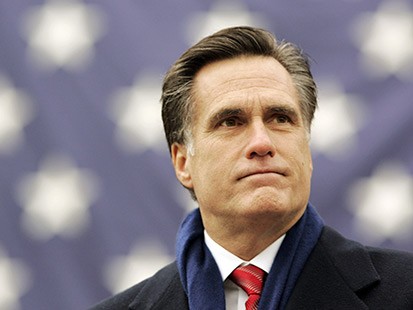
Ethics Quiz: The Strange Case of Mitt Romney and the Posthumous Jewish Baptisms

I’m not even sure what the question  should be, but let’s wade into this Twilight Zone dilemma.
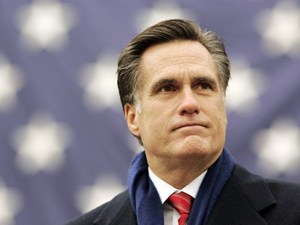
"Your mission, Mr. Romney, should you accept it, is to save these dead Jews from vicarious baptism. Your head will explode in 8 seconds..."

Apparently the Mormon Church has been baptizing dead Jews for a  long time. You don’t have to be a Mormon for Mormons to want to save your soul (as I found out when I lived with a Mormon my freshman year in college), so this is undeniably an act of love, if a bit presumptuous. The Church of Jesus Christ of Latter-Day Saints performs what they call “proxy baptisms” in order to save ancestors and others who weren’t baptized in life or who were baptized “without proper authority,” and such a baptism can even take place  after a person has died. When the live Jewish community discovered this was going on, and that even Holocaust victims like Anne Frank were getting baptized posthumously, it strenuously objected and negotiated a  baptism cease-fire of sorts, with the Mormons promising  to only proxy baptize dead Jews who were ancestors of Church members. The deal, however, fell through, and lot of deceased Jews are apparently being sent to Mormon Heaven, or somewhere, against their wills.

Thus Ellie Weisel has decided who is responsible for fixing this—whatever it is…Mitt Romney. Weisel has said that Romney should tell his church to cut it out, because, he says, “it’s scandalous.”

So the Ethics Alarms Ethics Quiz for today is:

If the Mormons believe that baptizing dead Jews saves their souls, do they have any ethical obligation to stop doing it because the Jewish Community, Ellie Weisel, Mitt Romney or anyone else asks them to?

You know what? I don’t think so.I think if the Church made a deal it should keep its promise, but the deal aside: who does this hurt?

I also don’t think it is fair for Ellie Weisel to publicly demand that Mitt Romney throw his weight around in his Church to please another constituency.

Admittedly, however, the weirdness factor here is strong, and it may be blurring my reasoning powers. What do you think?
Now THAT’s a Conflict of Interest!

"How do you plead, Judge Ballentine?" "I'm innocent, Judge Ballentine!" "I find you credible. Case dismissed, Judge Balentine! See you in the mirror!"

Judge Kelly S. Ballentine, a Pennsylvania district court judge, apparently avoided paying $268.50 in parking tickets by dismissing  her own cases.  Two of the three tickets issued to her were for overtime parking, and the other was for an expired registration. She has been charged with tampering with public records, obstructing the administration of law and participating in activities that are prohibited due to a conflict of interest.

Yes, I’d say that was a fair assessment of the situation.

Ethics Alarms thanks the ABA Journal for the story.

The Perils of Ignoring Professionalism

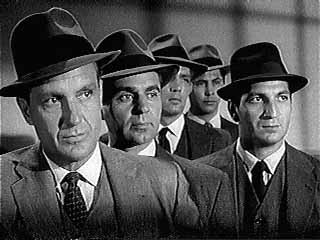
Robert Stack as Eliot Ness with the rest of TV's "The Untouchables." Now THOSE guys were professional. You'd never see THEM text messaging jokes to Al Capone...

The Washington Post ran a story Tuesday describing how the defendants in an elaborate FBI sting operation escaped conviction as a consequence of the revelation of racy text messages between the agents and their undercover informant. Agents and their key informant bantered “about sex, booty calls, prostitutes, cigars, the Village People, the informant’s wives and an agent’s girlfriend.”  When the arrests were first announced by the Justice Department, the operation was regarded as a model law enforcement success. But federal prosecutors failed to win a single conviction,  in large part because defense lawyers used the text messages to raise juror doubts about the credibility and professionalism of FBI agents. Now the Justice Department says that in light of the first two trials, the government is evaluating “whether to continue to go forward” with the remaining prosecutions of 16 defendants, seven of whom had their cases end in hung juries.

During the most recent trial of six men and women on charges of paying bribes to win business with a foreign government, the defense attorney used the FBI’s texts both to attack the character of the informant and to suggest that the lead agent was an untrustworthy, bigoted, anti-gay misogynist. The FBI believes this was unfair, and an example of a lawyer’s trick defeating justice. Informants, almost without exception, are sleazy characters, and managing them takes skill and guile. The agents felt it was essential to build trust, which meant working to develop a collegial  relationship, at least in the informant’s mind. The text banter, they say, was designed to ensure the loyalty of a low-life, which required the agents to sometimes act like low-lifes themselves. Thus they texted messages back and forth that included bawdy jokes, innuendos about sex, anti-gay stereotypes and more, all in a buddy-buddy tone that the jury found troubling. “The texts were one of many things that point to an absolutely amateurish operation,” the jury foreman told the Post. Continue reading

Ethics Quote of the Week: Yu Jie

“I arrived in the United States a month ago, thinking I had escaped the reach of Beijing, only to realize that the Chinese government’s shadow continues to be omnipresent. Several U.S. universities that I have contacted dare not invite me for a lecture, as they cooperate with China on many projects. If you are a scholar of Chinese studies who has criticized the Communist Party, it would be impossible for you to be involved in research projects with the Chinese-funded Confucius Institute, and you may even be denied a Chinese visa. Conversely, if you praise the Communist Party, not only would you receive ample research funding but you might also be invited to visit China and even received by high-level officials. Western academic freedom has been distorted by invisible hands.”

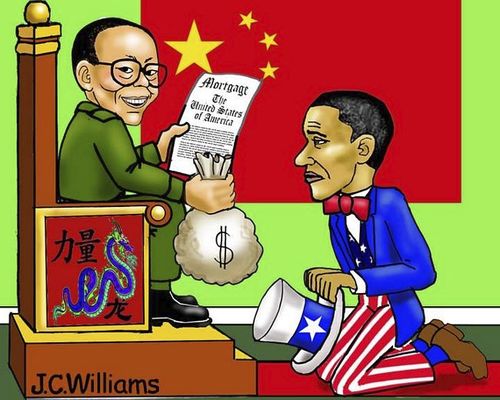
Yu Jie, Chinese dissident and author recently relocated to the U.S., in an op-ed column in the Washington Post, exposing how America’s dependence on China for trade and financing has not only made the nation vulnerable, but is also eroding its integrity and values.

Every budget cycle that the United States permits to expand its debt makes the nation more indebted to China, and places more power in the hands of its leaders to exert influence over American policies. Yu Jie’s disturbing article shows how our values are being undermined as well. China’s is a repressive, undemocratic and often brutal regime that the United States has foolishly allowed itself to become dependent upon. What will the consequences of this be? How can the United States lead the free world while being under the thumb of the Chinese? Corruption is inevitable. Yu Jie writes, Continue reading

A “Naked Teacher Principle” Spin-Off: “The Case of the Naked Football Coach”

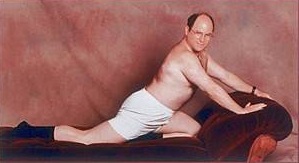
If it's any consolation, Coach Withee, George Costanza sends his sympathies.

With the notable exception of the high school art teacher who moonlighted on the web as an artist that painted pictures using his butt and genitals while wearing a paper bag over his head, most victims of the “Naked Teacher Principle”(TNTP for short) have been females.  [You can read the initial exposition of the principle here. “To put it in the simplest possible terms, a responsible high school teacher has a duty to take reasonable care that her students do not see her in the nude. It’s not too much to ask.”] This time, however, the naked teacher was not only male but the football coach. And, as the merciless Principle demands, he’s out of a job. Continue reading

America Is Severely Confused About Domestic Abuse

John Wayne paddling his wife (Maureen O'Hara) in "McClintock!" I love ya, Duke, but this isn't funny any more....if it ever was.

Violence inflicted by one partner in a relationship upon another is absolutely unethical, yet it is one of those embedded cultural habits from the bad old days that still flourishes. Over at the Whitney Houston post, where I am being over-run by the drug-legalization zealots, sicced on me by a sad website where people indulge their dreams of legally de-braining themselves on a regular basis, there is widespread contempt for the concept  that cultural norms of what is right, wrong and worthy of shame controls our worst impulses. That contempt is as crippling as it is ignorant, for controlling behavior is what cultures do, and why they are essential. And our culture is still giving confusing signals about domestic abuse. Two recent examples: Continue reading

Our Incompetent Broadcast News Media: A Frustrating Morning With Soledad O’Brien

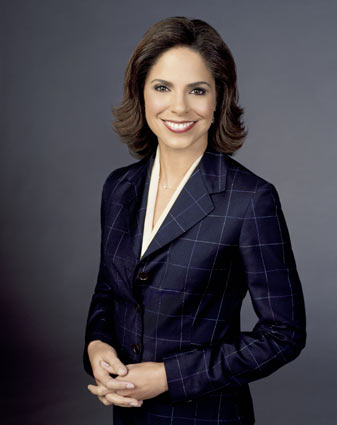
Soledad O’Brien, paving the road to Athens

This morning, on CNN, I managed not to change the channel as I usually do when Soledad O’Brien is on the screen. It was a mistake. The long-time CNN anchor is as low as newscasting can sink short of MSNBC when it comes to smugly-biased commentary, and unlike some of MSNBC’s lefty warriors, O’Brien is just not very bright. This doesn’t keep her from visibly wincing, rolling her eyes or winking at the supposedly simpatico viewer when she thinks her opinion is superior to someone she is interviewing, as unprofessional a habit as I have ever seen. She has a job because, I suppose, she is pleasant to look at and exudes confidence, though it is confidence unsupported by any actual skill, insight or knowledge. Continue reading

Greedo Ethics

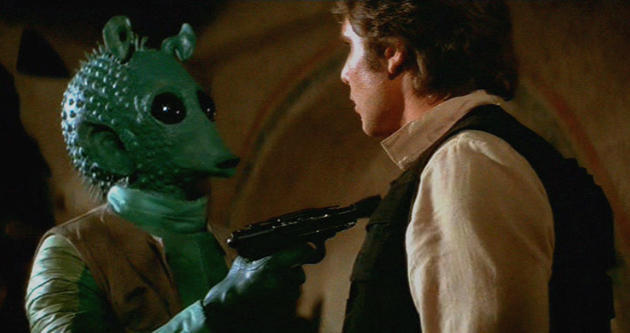
Who shot first?

Jedi Emeritus George Lucas betrayed a warped concept of cowboy ethics, self-defense and ethics generally in a recent Hollywood Reporter interview in which he was quizzed about his technological fixes on the original Star Wars trilogy. The topic was the shooting of Greedo in the bar, when Han Solo blasts away at the green, fishy porcupine-like villain, who has a gun pointed at him:

Lucas: Well, it’s not a religious event. I hate to tell people that. It’s a movie, just a movie. The controversy over who shot first, Greedo or Han Solo, in Episode IV, what I did was try to clean up the confusion, but obviously it upset people because they wanted Solo [who seemed to be the one who shot first in the original] to be a cold-blooded killer, but he actually isn’t. It had been done in all close-ups and it was confusing about who did what to whom. I put a little wider shot in there that made it clear that Greedo is the one who shot first, but everyone wanted to think that Han shot first, because they wanted to think that he actually just gunned him down.

Lucas’s idea of what constitutes a “cold-blooded killer” runs counter to law, common sense, and ethics. Continue reading