“Today is my last day at Goldman Sachs. After almost 12 years at the firm — first as a summer intern while at Stanford, then in New York for 10 years, and now in London — I believe I have worked here long enough to understand the trajectory of its culture, its people and its identity. And I can honestly say that the environment now is as toxic and destructive as I have ever seen it”
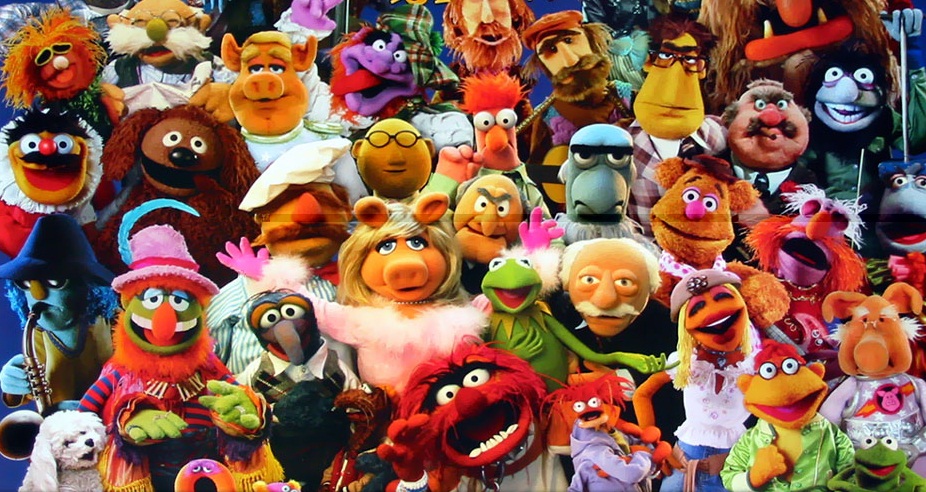
This, says Greg Smith, is how the leadership of Goldman Sachs sees its clients.
With that, Goldman Sach’s executive Greg Smith began his remarkable op-ed in the New York Times, sending his former employers into crisis mode, panicking investors, and setting the financial, political and journalistic worlds buzzing. Obviously, it was an exposé about ethics as much as anything else. Smith described a corporation-wide breach of trust with clients, a culture in which leadership openly derided those the company pledged to serve as “muppets,” and apparently, sheep to be sheared:
“It makes me ill how callously people talk about ripping their clients off… I don’t know of any illegal behavior, but will people push the envelope and pitch lucrative and complicated products to clients even if they are not the simplest investments or the ones most directly aligned with the client’s goals? Absolutely. Every day, in fact.”
Smith cites a breakdown in leadership, resulting in a corruption of values:
“…get your clients — some of whom are sophisticated, and some of whom aren’t — to trade whatever will bring the biggest profit to Goldman. Call me old-fashioned, but I don’t like selling my clients a product that is wrong for them….I attend derivatives sales meetings where not one single minute is spent asking questions about how we can help clients. It’s purely about how we can make the most possible money off of them.”
Immediately, opinion split between those who felt Smith was a grandstanding malcontent with an agenda, and those who thought he was a heroic whistle-blower. For the former, the contempt was thick. Jennifer Rubin of the Post:
“Oh my heavens: make as much money off your clients as you can??!!
“Next thing you know car dealers will be trying to sell you cars others don’t want, realtors will be pushing you to buy a more expensive home (shhh, don’t tell — but they work on a commission) and your kids will be selling you magazine subscriptions you don’t want. (This month’s “Travel+Leisure” sits on the counter.) Put aside the jerkiness of quitting on the pages of a newspaper, and you still have to wonder if Greg Smith is really this silly or is playing silly, well, to get a column in the New York Times (which remains shocked by the entire capitalism thing) and a book deal or an appearance on Oprah. Smith describes the recruitment process: “For more than a decade I recruited and mentored candidates through our grueling interview process.” Apparently, not grueling enough. No one in the interview seems to have asked him if he had objections to trying to maximize profit legally.”
Bloomberg editorialized, in full sneer:
“Apparently, when Greg Smith arrived at Goldman Sachs Group Inc. (GS) almost 12 years ago, the legendary investment firm was something like the Make-A-Wish Foundation — existing only to bring light and peace and happiness to the world.
“Smith, who was executive director and head of the firm’s U.S. equity derivatives business in Europe, the Middle East and Africa, does not go into details in his already notorious op-ed article in Wednesday’s New York Times, “Why I Am Leaving Goldman Sachs.” But one imagines Goldman bankers spending their days delivering fresh flowers to elderly shut-ins and providing shelters for abandoned cats. Serving clients was paramount. “It wasn’t just about making money,” Smith writes. “It had something to do with pride and belief in the organization.”
“It must have been a terrible shock when Smith concluded that Goldman actually was primarily about making money. He spares us the sordid details, but apparently it took more than a decade for the scales to finally fall from his eyes.”
What these and other cynical defenses of Goldman manage to ignore, conveniently, is that Goldman Sachs holds itself out as something very different from a car dealer or other sales organizations for whom the warning “Let the buyer beware!” was invented. Goldman represents itself as an organization of professionals, who by definition exist to help others better their lives. The key ethical value for professionalism is trustworthiness, and sure enough, that is what Goldman Sachs pledges to have, maintain, and value. On its website, in its statement of values and code of ethics, the firm says this:
“There’s only one thing we sell, and that’s trust. This applies to anything, but nowhere more than Investment Management. Clients trust us to do the right thing, and particularly when you’re in investment management and you’re appointed to manage clients’ money, they trust that you’re going to do it in a prudent manner. The worst thing you could do is breach that trust. We look for people who want to run the marathon, and who understand that trust fuels it.”
Is that consistent with denigrating clients and working to sell them inappropriate investment products? Of course not. Are Bloomberg and Rubin arguing that it is ethical, professional and acceptable for a company to describe its services one way and to deliver the opposite? If so, they are endorsing deception and fraud.
There is reason to question Smith’s judgement and sincerity in handling his resignation this way. For one thing, it was obvious to many observers that that the culture at Goldman Sachs was seriously ill by 2010, after listening to the company’s executives, in a Senate committee hearing, blandly excuse their intentionally selling clients “crappy products” that Goldman later bet against itself at a tidy profit. Where was Greg Smith during all this? The culture didn’t curdle overnight; indeed, there is significant doubt that it moved all that much more to the Dark Side during his tenure. Did he confront management about the problems he found so disturbing? Did he go to the Board of Directors? His Times broadside cost the company over 2 billion dollars in lost client investments—that’s quite a kick in the teeth for a departing exec whose compensation from the company undoubtedly has him set for life—perhaps explaining why he was willing to do this at all. Smith is not likely to be trusted himself within any financial institution, or perhaps any company in any enterprise. It will be ethics lectures and book tours from now on. That’s the whistle-blower’s sinecure.
Nevertheless, Smith’s message cannot be denied. He described a classic unethical culture, and one that is untrustworthy and unprofessional. His conclusion is undeniable: “It astounds me how little senior management gets a basic truth: If clients don’t trust you they will eventually stop doing business with you. It doesn’t matter how smart you are.”
That’s right. There is no getting around the immutable fact that an unethical culture will forfeit trust—this is what has been happening to all American institutions, with devastating results. Whether Smith’s op-ed was a calculated ploy, an act of vengeance or a courageously-blown whistle, Goldman Sachs, and everyone else, ignore his message at their peril.
 Ethics Alarms
“It astounds me how little senior management gets a basic truth: If clients don’t trust you they will eventually stop doing business with you. It doesn’t matter how smart you are.”
Management at Goldman Sachs doesn’t have to pay attention to that. Their ‘customers’ have very little choice. The era of pensions are over, people now have 401k’s. If they want to save for retirement, this is where it has to go. If they want to save for retirement and don’t want to use their company’s plan (and the matching funds they are entitled to), they put it in an IRA. Who runs these? Goldman Sachs, Fidelity, and the other investment banking firms do. They all act like this and I don’t know why anyone was shocked. They tack on fees and dump their unwanted products on their customers because they no there is no where else for them to go. They are allowed to advise investments with the maximum fees and forget about any returns, all while telling the client (in writing, no less) how this will earn them more money. The investment bankers know this is a lie, but they have some nice fine print that says they aren’t liable for how the product actually performs.
Used car dealers are much more ethical than investment bankers. Yes, they are trying to make money selling you a product, but they also are providing you with something you need. They may try to make as much money off the deal as possible, but they can’t make it too unfair to you. If they do, they are on the hook for an underwater repossession and they lose money. If they try to sell you a defective product, they have to answer in court (the car dealer’s in my area won’t sell a car on used tires). If the car catches on fire or the brakes fail on the way home, they have to answer for that. They can be sued and they can go to jail for it.
Contrast that to investment bankers. When they packaged mortgage backed securities as ‘bonds’ and they failed and sent the economy in the tailspin, were the investment bankers held responsible? What happened when the houses started getting repossessed? Are the banks paying for that? When Goldman Sachs finds that they bought a really bad investment with company money and they then trade it for perfectly good investments in a client’s retirement fund, are they held responsible?
(1) First of all, investment banks are supposed to be selling the client investment advice and for keeping track of the client’s investments. That is it. They are supposed to charge a reasonable amount for that service.
(2) To try to directly make money off of the investments of your client is unethical. It isn’t their money! In used-car salesman terms, it would be like replacing the factory supercharger with a fake one (so they won’t know), selling the catalytic converter for the precious metal content and replacing it with a straight pipe, or replacing the ceramic brakes with conventional ones after the customer has bought the car!
(3) To charge large fees while losing your customers money on bad investments that you knew were bad investments should be fraud.
The negative comments to Greg Smith’s editorial show how deep the fraud is. It shows how many people feel they are part of a privileged class who are entitled to take money from other people’s account whenever they feel like it. It shows how they really feel about the ‘common people’. It shows we need a prison the size of Wyoming…
When someone is as experienced as Greg Smith is- and when that someone has given so much of his professional life into a prestigous firm- and then quits to say this, he should be listened to. In the end, all companies, regardless of endeavor, must rise or fall on the trust factor of their clientele. Goldman Sachs is no fly-by-night car insurance outfit in a strip center. This was a company dedicated to certain goals THROUGH certain values. Now, it seems, it must join the seemingly staggering number of firms, unions and associations who have cynically ignored the mission statement that prefaces their own charters.