The Difference Between Unemployed Scientists and Unemployed Lawyers

A front page story in today’s Washington Post casts interesting perspective on an Ethics Alarms rumble that broke out here a couple of weeks ago. One of the many websites where underemployed, over-indebted law grads hang out to commiserate—sites with pathetic names like “butidideverythingrightorsoithought”—discovered a post from the days when people were taking Occupy Wall Street seriously, in which I chided a protester whose sign blamed his law school  for his failure to  find a job, without giving due weight to the fact that sitting in a park whining about his plight wasn’t doing him any good either. Suddenly Ethics Alarms experienced an avalanche of indignant and often personally insulting comments introducing me to the strange world of the JD conspiracy theorists, who maintain that law schools engaged in an intentional conspiracy or “scam” to gull naive college grads into believing that a law degree was a sure-thing ticket to Easy Street and six-figure starting salaries.

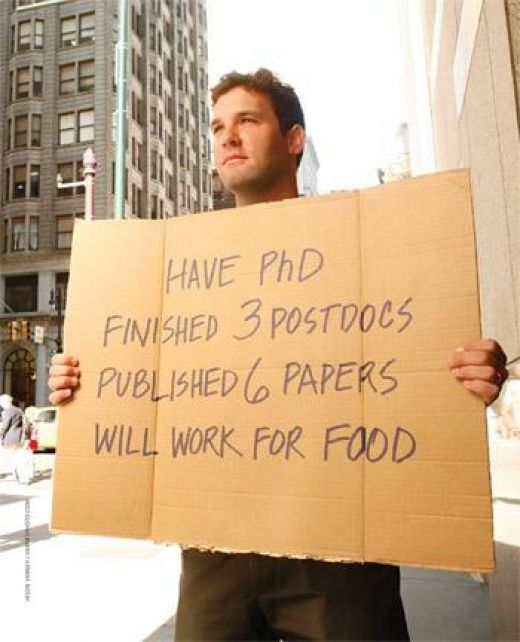
In the Post’s report, we learn that other advanced degree-holders, namely PhDs in scientific fields, are also unable to find work or toiling in fields unrelated to their degrees. The Post says:

“Traditional academic jobs are scarcer than ever. Once a primary career path, only 14 percent of those with a PhD in biology and the life sciences now land a coveted academic position within five years, according to a 2009 NSF survey. That figure has been steadily declining since the 1970s, said Paula Stephan, an economist at Georgia State University who studies the scientific workforce. The reason: The supply of scientists has grown far faster than the number of academic positions.”

Sounds a lot like the legal market to me! Continue reading
Unethical Column of the Century: CNN’s L.Z. Granderson

OK, maybe I’m exaggerating.

But not much.

L.Z. Granderson’s role model. I’m not kidding.

In a horrifying opinion column, the regular CNN political pundit L.Z. Granderson evoked the virtues of public apathy and unchecked government conduct with warped logic and unethical rationalizations, to make the case that the public should merely shrug off scandals like “Fast and Furious.” I was only able to finish reading it without retching it by imagining Granderson’s motives for writing such mind- and culture-poisoning swill. At least, as an African-American journalist, a liberal and a Obama supporter (I know I repeat myself), he has the self-respect, fairness and integrity not to claim that critics of Attorney General Holder’s Waterloo are being racist. Like the race-baiters, however, he is in denial, and willing to throw principle to the wolves to protect the first African-American Attorney General, though far from the first corrupt and incompetent one.

In a column with the descriptive and idiotic title, “Don’t be nosy about Fast and Furious,” Granderson argues…

“…Times have changed. Yet, not everything is our business. And in the political arena, there are things that should be and need to be kept quiet…..there comes a point where the public’s right to know needs to take a back seat to matters like national security and diplomacy. Heads should roll because of the Fast and Furious debacle. We don’t need every detail of that operation to be made public in order for that to happen. If it were an isolated sting, maybe. But it is at least the third incarnation of a gun-running scheme stretching across two administrations, which means we could be pressing to open Pandora’s Box. We do not want to open Pandora’s Box, not about this and certainly not about a bunch of other potentially scandalous things the federal government has been involved with.” Continue reading

Rushed Ethics

Feeling pressured?

The Economist points its readers’ attentions to two studies showing the ethical benefits of delay to decision-makers. It is an important topic, with profound ethical implications. Deadlines and the perception of urgency are both what I call pre-unethical conditions, situations that so frequently lead to unethical conduct that our ethics alarms should start ringing the second we start feeling the dread of time-pressure. The Economist article notes that…

“…[ in ] an obscure article in the Academy of Management Journal by Brian Gunia of Johns Hopkins University… Mr Gunia and his three co-authors demonstrated, in a series of experiments, that slowing down makes us more ethical. When confronted with a clear choice between right and wrong, people are five times more likely to do the right thing if they have time to think about it than if they are forced to make a snap decision. Organisations with a “fast pulse” (such as banks) are more likely to suffer from ethical problems than those that move more slowly….The authors suggest that companies should make greater use of “cooling-off periods” or introduce several levels of approval for important decisions.” Continue reading

Comment of the Day on “Ethics Quiz: Jury Nullification For A Molestation Victim”

Here is the Comment of the Day, Eeyoure’s deliciously indignant dressing-down of the jury whose verdict was discussed in today’s post, “Ethics Quiz: Jury Nullification For A Molestation Victim”:

“The jury’s verdict was absolutely perverse.  The jury ignored truth about specific law for which they were responsible for finding guilt or innocence, where evidence existed beyond reasonable doubt that the law was broken.  Simultaneously, the jury concluded that irrelevant evidence, plus the defendant’s testimony, proved guilt beyond doubt of a person who was not charged, not on trial, for breaking of law for which the jury was not responsible for finding guilt or innocence.

“The jury’s verdict was the culmination of an orgy of medieval reparations-groupthink, a determined seizing of lowest available ground in the terrain of societal unrest.  The members of the jury made themselves a proud, self-serving, self-satisfying gang of “justice”-dolers, caught-up in extolling the glories of vengeance.  This was a jury that obviously considered with the utmost gravitas (that is sarcasm) the notion that “justice delayed is justice denied.”  No matter how long was delayed the justice THEY felt was due, they saw it as their sovereign right to determine that such justice would not be denied, and to determine who would deliver (that is, who did deliver) that justice, blameless.  (more sarcasm coming) What a shining moment in jury-rigged righting of historical wrongs! (end sarcasm)

“Well, chances are rather high that none of the jurors will ever read here.  So, they can just each go their merry way, keep marching merrily along as ignorantly and unthoughtfully as ever, proud of the “justice” they have served.  Without ever taking the simplest, tiny, extra step of considering, for example, by their own jury-“reasoning,” how their verdict thoroughly justifies any friends, allies, or sympathizers of the old man who was beaten in the retirement home stalking THEM (the jury members and their hero) for the rest of THEIR (the jurors’ and hero’s) days – then suddenly, at a convenient and opportune moment, beating every one of THEM every bit as savagely as was beaten the man by the assailant whom they let off the hook.

“With “justice” like this jury has upheld, who needs to hold a stinkin’ court?”

Ethics Quiz: Jury Nullification For A Molestation Victim

Really?

A San Jose jury acquitted William Lynch of criminal assault, despite his admission that he had beaten a former priest who had molested him as a child. After the acquittal, Lynch was cheered outside the courtroom.

Lynch told reporters he fully expected to be convicted, but had hoped that his testimony would call more attention to the child abuse problems in the Catholic Church. He visited his victim, Rev. Jerold Lindner, at the retirement home where he now lives.  The 65 year-old who allegedly molested Lynch and his younger brother in 1975 was confronted by Lynch, and when he told Lynch that he didn’t remember him, Lynch attacked him and “beat him almost to death” according to witnesses.

Your Ethics Alarms Quiz question:

Was the jury verdict ethical? Continue reading

The Economic Meltdown: Accountability Check

The shoe fits both Parties.

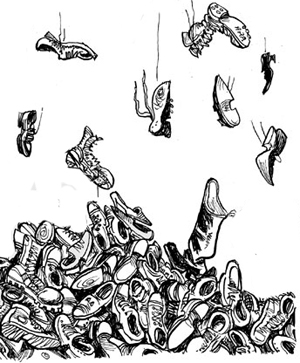
The ethics story of week was the dropping of the missing shoe in the “Friends of Angelo” scandal that helped drive Democratic Senator and party leader Chris Dodd into retirement. (More here.) It fell like this:

WASHINGTON (AP) — The former Countrywide Financial Corp., whose subprime loans helped start the nation’s foreclosure crisis, made hundreds of discount loans to buy influence with members of Congress, congressional staff, top government officials and executives of troubled mortgage giant Fannie Mae, according to a House report.

What the report indicates is that the bribery of regulators and members of Congress to allow the sub-prime mortgage con-game to continue was far worse and for more widespread than anyone realized. Countrywide offered special loan deals to dozens of influential government officials to stave off regulations that might have avoided or greatly lessened the mortgage collapse that triggered the current long-term economic crisis: 

“Documents and testimony obtained by the committee show the VIP loan program was a tool used by Countrywide to build goodwill with lawmakers and other individuals positioned to benefit the company,” the report said. “In the years that led up to the 2007 housing market decline, Countrywide VIPs were positioned to affect dozens of pieces of legislation that would have reformed Fannie” and its rival Freddie Mac, the committee said.

More: Continue reading

Ethical and Unethical Adultery Advice: There is Carolyn Hax, and Then There Is Emily Yoffe

Sometimes, you just have to tell your slimy boss “No.”

Emily Yoffe is Slate’s advice columnist, in its “Dear Prudence” feature. She specializes in extreme situations: a recent column involved a teenager who realized that his mother had breast-fed him far too long because she was sexually aroused by it, and then had him fondle her breasts for years after he stopped be willing to suck on them. He asked what he should do now that his mother was subjecting his younger sister to the same treatment. (Emily did get that one right: she told him to call child services on his mother, and to seek professional help for himself.)

Last week I congratulated Carolyn Hax for her advice to a woman torn between the adulterous relationship of one friend with another friend’s husband. Notwithstanding the persistent argument of one crusading commenter who felt that I should have stood for universal adultery whistleblowing on friends and strangers alike, Hax gave, as usual, practical, ethical and measured advice.  She suggested that the inquirer tell the cheating husband that his secret was out, and that she would not lie to protect his illicit affair.  I believe that’s the right ethical balance. Hax’s advice to the woman was to be proactive in both extracting herself from the split loyalties and to be a catalyst for either disclosure or ending the affair. I also noted that the ethical duty on the questioner may be different when the betrayed spouse is an especially close friend, or a family member. Then loyalty and trust could require disclosure.

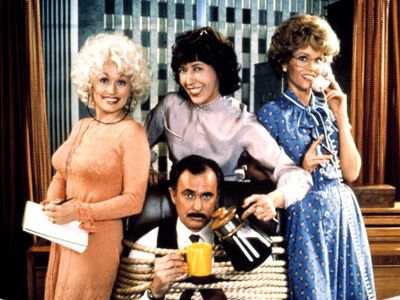
That same week, Yoffe got an inquiry from a “well-paid assistant of a successful business mogul.” Among her duties, she told “Prudence,” is to facilitate her boss’s extra-marital affair: lying about his whereabouts to business associates, deceiving his wife when she calls, and even buying gifts for the illicit lover. “Next month he’s going on a weeklong business trip,” she wrote. “He only needs to be gone for two days, but he’s taking his girlfriend with him and staying longer. I know I’m doing wrong by his wife. But I love my job, and I’m not sure what I could or should do to behave honorably in this situation.” Continue reading

Incompetent Elected Official of the Month: North Carolina State Rep. Becky Carney

North Carolina’s General Assembly accidentally legalized fracking,  the controversial technology that allows the extraction of natural gas and hydrocarbons that once were inaccessible for commercial use, when the Governor’s veto of the fracking bill was unintentionally over-ridden.  Rep. Becky Carney, D-Mecklenburg, says she did not intend to cast the key vote that overrode the governor’s veto of the bill, but pushed the green button, signifying “Aye” instead of the red button, signifying “Nay.” 

Doh!

The vote was 72-47, exactly the count required for to override a veto. Without Carney’s botch, the governor’s veto would have stood. This meant that Carney, by North Carolina’s House rules, could not change her vote, which is only allowed when a flip-flop won’t alter the result.

“It is late. Here we are rushing to make these kind of decisions this time of night,” she told reporters, pathetically. Indeed, Carney is an opponent of fracking, she has voted against it in the past, and she spent the day lobbying other Democrats to uphold the veto of Senate Bill 820.

Color me unsympathetic. Legislators don’t have much to do but read bills, make up their minds, and vote by pushing a big button, and there are only three (including “ABSTAIN.” It is presumably  yellow.) If Carney can’t gather her wits sufficiently to push the correct button on a crucial and closely contested vote, she is too careless and irresponsible to hold office. She is also unqualified to drive (that red-green color-blindness is a problem), use automated voting machines, and please, for the love of God, have responsibility for launching nuclear weapons. Right after the vote, Carney’s was heard on her microphone, saying “Oh my gosh. I pushed green!”

At least she didn’t say, “Oopsie! I just destroyed Beijing!

___________________________________________

Pointer: James Taranto

Facts: WRAL

Graphic: tbbr

Ethics Alarms attempts to give proper attribution and credit to all sources of facts, analysis and other assistance that go into its blog posts. If you are aware of one I missed, or believe your own work was used in any way without proper attribution, please contact me, Jack Marshall, at  jamproethics@verizon.net.

Ethics Dunces: Half of the U.S.A.

“Who’s Plato?”

According to a recent  Pew poll, almost half of the U.S. is still unaware of last week’s landmark Supreme Court decision upholding the Affordable Care Act, limiting Congress’s power to control private choices through reliance on the Commerce Clause of the Constitution, and flagging the Democrat deceit in passing a substantial tax on the middle class while hiding the fact in public and political discourse. 15% of the public must have been watching Fox and CNN the way listeners of Orson Welles “The War of the Worlds” listened to the 1938 radio broadcast, turning the dial before misinformation was clarified. These trusting or lazy souls still think the ACA was over-turned. This is, admittedly, better than thinking the world has been conquered by Martians.

The poll means that as we head into a watershed election that challenges the nation to make hard choices about its future course in tax policy, addressing the debt and deficit, foreign policy, commitment to national defense, entitlement reform, immigration, education, infrastructure renewal, employment, financial regulation, and equally vital matters that could have a decisive impact on America’s success, stability and even survival, one half of the public lack the interest and initiative to  stay current with crucial national developments. Continue reading

“I’m Warning You: If You Rescue That Drowning Man Over There, You’re Fired!”

“Not your concern…”

The brain-dead and ethics-empty conduct of Jeff Ellis Management, an Orlando, Florida-based company, in its recent firing of 21-year-old lifeguard Tomas Lopez is welcome in one respect, and one respect only. It helps explain the inhuman attitude of the two Brooklyn EMT’s who stood by and watched a woman die of a heart attack as they munched bagels. It begins to explain why two Seattle security guards stood by and allowed a woman to be nearly beaten to death while they looked on. It almost explains how a crowd of people on a California shore, including firefighters, stood by as a man named Raymond Zack took nearly an hour to drown himself. It might even provide some insight into the thought processes of Penn State assistant football coach Mike McQueery, who famously observed Jerry Sandusky as he engaged in a child rape but didn’t stop it. For one of the reasons so many Americans turn off their ethics alarms, reject their humanity and flunk their duty to rescue those in peril is that there are people like  Jeff Ellis, who deem human life less important than business, policy and profit, and who will punish any employee who doesn’t feel similarly and act accordingly.

The company fired Lopez after he pulled a struggling swimmer out of the ocean on Hallandale Beach in Broward County, saving his life. The rescue, you see, occurred 1,500 feet south of the firm’s contracted boundaries for lifeguard service.  Lopez was told that a swimmer was in peril off the neighboring beach, and ran to his rescue, leaving the “protected beach” area where his services had been contracted to serve. The near-drowning victim was swimming in the “unprotected area” without lifeguards, and there’s no point, the management company reasons, to hire it to provide lifeguards if the heroes like Lopez will dive in for free. Continue reading