And now, Muppet ethics.
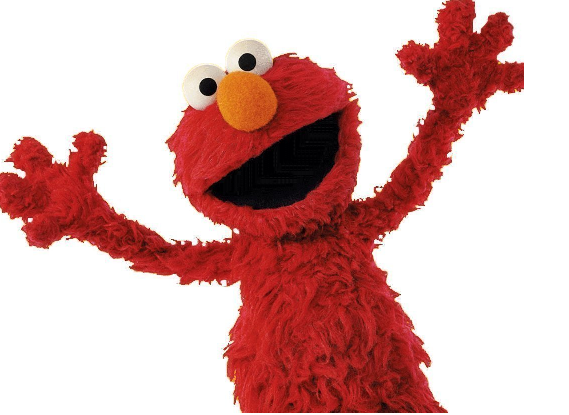
Sorry, Elmo.
Kevin Clash is the voice and operator of beloved Elmo, the cute lttle red monster on “Sesame Street.” A young man has accused Clash of molesting him when he was a teen. Clah denies the allegations, claining that the relationship was between consenting adults. The Children’s Television Workshop says its investigation did not substantaite the accusation; nonetheless, Clash is being disciplined for says the show, is being disciplined for “inappropriate use of company email,” and is unlikely to have his hand in Elmo any time soon, if ever again. The alleged victim is probably not through with Clash, and this could get ugly.
Your Ethics Quiz challenge, should you choose to accept it, is this:
Assuming nothing illegal is proven regarding Clash’s sexual relationship with the accuser, and it remains a “he said/he said” dispute, should Clash remain the voice and puppeteer behind “Sesame Street’s” most innocent character?
Ugh. Bad story, sad story.
This is an ethics conflict, with ethical considerations on both sides of a controversy, meaning that whatever happens, an ethical principle is certain to be a casualty. On one side, we have fairness to Clash, who has not been proven guilty of anything. On the other side, we have the responsibility of the Muppets, the show, the Children’s Television Workshop and PBS channels to its audience and stakeholders, including the children that make up its audience.
Fairness and Kevin Clash lose, in my assessment. Elmo is a fictional character, and it shouldn’t make any difference who speaks for him or moves his little furry arms, as long as the puppeteer has the skills to make Elmo seem real to his many fans. But it does make a difference. Elmo personifies joy, innocence and happiness, and watching him should be free of any stray thoughts of children in peril, danger, and certainly sexual abuse. That’s impossible now, certainly when Clash is being Elmo, and maybe, I fear, no matter who operates Elmo in the future. “Sesame Street” cannot allow a child molester, alleged child molester, accused child molester, convicted child molester or even acquitted child molester to be publicly associated with one of its characters. This is unfair to Clash, but essential to the show’s relationship of trust with its young audience and their parents. “Sesame Street” must be safe, and that means that even the most attenuated threat—the hand and voice of someone accused of inappropriate sexual contact with a minor–is intolerable.
UPDATE: A few hours after this was posted, Clash’s accuser confirmed Clash’s version that he was an adult when his sexual relationship with the muppeteer began. I still think that people don’t want to think about the sex life of the humans behind (or under) muppets, and that Clash’s career has been irreparably harmed by the episode. I hope I’m wrong, but I don’t think Elmo is ever going to sound quite the same again..
______________________________________
Facts: Daily News
 Ethics Alarms
Definitely in an area where ethics may become muddled, and I think this really boils down to the accuracy level the Justice system has provided — not statistically, but honestly. If it can be confirmed without a doubt this incident did occur, then most likely the only thing Clash’s hand will be under is his cellmates boxers, in which case, the issue as to whether or not he should operate the puppet is a moot point.
However, given that the system is prone to mistakes, false allegations that result in convictions and or destroying someones life (inverse victim scenario), and if there is any true justice, then allowing him to continue to work in a supervised environment while he remains innocent until proven guilty is quite probably the most ethical venue.
Conversely, if the system was 100% accurate, and circumstances are clear, then he should no longer be allowed to operate the puppet.
Given the puppet is a form of trust, in general, it only stands to reason that if this man is innocent, that information should be publicly known and made apparent embedded in the values that Sesame Street tries to teach children — this one could be “You should not tell lies”. However if this man is truly guilty, then perhaps a different story should ensue detailing about “You should tell if this happens to you” or something along those lines.
He said/she said, is a very shady road with lots of curves and twists that ultimately end up perceiving the “she said” side of things as the truth given the “he said” side can not contain damning information. Given also, there is no venue for support for one who has been accused and or convicted of such a heinous crime wrongly, and there are systems of reward setup for those to “come forward” with no repercussion if lying. This is a whole legal mess that we could discuss for years and never figure out how to correct it, but it does leave a very wide open door — especially when accusing a celebrity, for those seeking a thrill, or a reward, or perhaps some form of vengeance.
I have not followed the story directly, but this does bring up other questions which pose a challenge ethically:
1. Was he/she of age legally ?
2. Did he/she consent ?
3. Ethically, where does the line get crossed between socially acceptable and ethically correct when it comes to both parties consenting ?
4. What should happen to people who accuse others of such serious crimes falsely ? Should they pay the maximum penalty of the crime they are accusing of, or of a lesser crime perjury which then takes another trial, more time, money, and devastation ?
Right now, rather it this event/s’ occurred with this individual as and adult and/or as a child, the fact remains that there was inappropriate use of email which leads to question as to the content of the emails.
I would say no.
Even though it is not illegal, there is definitely something creepy about a person in their late 40’s who seeks out sex with a 16 year old. Even if the age-of-consent in the state is 16, it suggests someone who should not be around children and definitely should not be employed by Sesame Street. It may be acceptable for members of rock bands or certain sleazy actors, but not for high-profile employees of Sesame Street.
What’s the age cutoff for a person that a man in his late 40s can seek sex with them where it’s not creepy and doesn’t suggest that person should be around children? 18? 21? 25? 30? Age divided by 2 plus 7?
Well, might this change anything?
http://www.usatoday.com/story/life/tv/2012/11/13/elmo-puppeteer-sex-charges/1703133/
I think this is the only outcome that might totally exonerate him, if this is true.
Thanks for the update. My guess? He’s toast anyway.
Thanks for the update. My guess? He’s toast anyway.
Why should he be toast?
Edit my above reply to include blockquotes.
Definitely in agreement. This is a career ending move regardless of the outcome, or guilt / etc. That being said, the question still remains — if innocent, what happens to the accuser ?
Someone on Twitter said that, since he’s not a minor OR a victim, his identity should be publicized.
I’m sure I could be talked out of this, but this seems appropriate.
I agree. He should be accountable, and being known as the one who smeared Crash is an excellent start.
I agree that he has to go. I also think, especially given the latest news, he’s due a severance package that a Fortune 500 CEO would call immoderate.
You’re right. As a commodity Elmo must be/should be preserved as an innocent happy childhood character.
But, I think that ship has sailed and there is no way to get it back. Children will remain innocent about it, but parents and others who purchase the things Elmo sells, and who have influence over what their children watch will not be happy about the association.
The question is easy to answer.
Is there a preponderance of evidence that Kevin Clash molested an underage boy?
We now know the answer is no. The answer to the ethics quiz is yes.
To say otherwise is to say that mere accusations, without more, is a basis for guilt. How would you feel if you were treated as guilty merely because of allegations?
He’s not going to be treated as guilty. He’s going to be treated a children’s show performer whose sex life has become public. That’s a disqualification in his field. Sesame Street is not about sex. What if he was a kids show clown? Same thing. I have always felt the Muppets were taking a risk by making stars out of their puppeteers, and this is why.
It is undeniably unfair to Clash. But Clash is not the prime client here. Should the Workshop allow the show to be less popular and trusted to be fair to Clash? No. Kick him to management, give him a big settlement. I think he’s cooked.
That is an excellent rationalization, and I do agree that the end result will be his demise in the Workshop. This comes down to a question of deciding who to be (more ?) ethical with. The workshop, or the accused. This is something I see happen quite often where someone is accused (perhaps wrongly), and their life is ruined via a cascade effect of the industry their are in simply because they are a public figure, etc. Admittedly, people in general never see that person the same due to the fact that the aftermath reports aren’t as “big” news. What I think should be done, is to set the record straight – and make it big news.
The initial articles of “a did x to y”, are huge page 1 news, but when the truth is revealed, they get a small article somewhere by the funny pages, and no where near emphasizing enough on how wrong it was to do so. The end result — a witch hunt, where he/she was tried and convicted by the public based on a cover story designed by nature to slander, and weighing the story that what an accuser says is the truth by using damning words to condemn the accused before an official trial has even occurred.
The ethical thing to do here, would be to undo the damage at the source of the broadcast on equal or greater level than the damning information was released — to clean up the mess they made. And ideally, in the future, to keep this stuff out of the media until all the fact are known and the persons guilt is definite (or as close as reasonably possible). And internal suspension pending outcome would suffice, and protect all those involved (and viewing). Granted this is a Utopian idealism and is unlikely to happen, I believe this would be the right thing to do.
The damage that has done — is undeniable, however I do not feel that it is unrepairable by those who had a major hand in ensuring the level of damage. I think this goes in hand with “The King’s Pass” rationalization given that “the media” is accepted by the public at large as an honest and complete source of information. To publish part of a story like this while the facts still remain blurry is unethical, and due to this rationalization — guilt is automatically assumed due to the very specific and damning wording of the article(s).
I don’t think it’s a rationalization at all. Once an ingredient in a food product—say, alar or pink slime, gets bad publicity, the public doesn’t want to eat it or buy it, and latter information that all the fuss was manufactured doesn’t undo the damage. Is the fair thing, on behalf of the manufacturers of these ingredients, to keep using them, even though the consumer no longer trusts them? Of course not. The first duty is owed, both in business terms (pragmatically) and ethically, to the consumer, the audience. If the audience no longer feels comfortable with Kevin Clash being Elmo, he can’t be Elmo, and the Workshop would be both irresponsible and incompetent to insist that he be Elmo.
Given your analogy of “alar or pink slime” being a contaminant, this would be more akin to finding out that there was no alar or pink slime and there was an err in the announcement. It would be proper to inform the public the with the same level of publicity the negative review created — aka… admitting ones mistake.
Since this never happens, you are correct, people will continue to believe the food has been poisoned given that the media will only – if at all – attribute a small footnote to the outcome. People trust the media to tell the whole story, but when facts are left out (or not presently obtained), or when the wording is slanted in one direction to incite hatred, this is an abuse of their position of power which ultimately ends in people getting hurt which is unethical.
One could argue that Clash is in a position of trust by the operation of the puppet in this scenario, and therefore no transgressions should be permitted (sexual or otherwise), however the media portrayed the allegation as fact before all the facts were defined, and preyed upon the public’s distaste for child abuse in their wording. Given at a later date, the discovery was made the accuser was “of age”, becomes a moot point as people will focus their hate based on the original headline given that the addition probably never even reached anywhere close to front page news, and the article is also most likely still written in a slanderous fashion further inciting hatred by focusing on everything else except the one part which remains key to nulling the allegation.
I do not agree with people in general abusing this process, as there are no significant repercussions for dishonesty of this magnitude, however the final results are always the same — tiny footnote to the mistake, and a persons life and/or career are ruined permanently. I do not say irreparably due to the fact that if the media gave the same amount of attention to correcting these errors as they do to destructive and hateful articles, then the damage could be reversed using the same “King’s Pass” they used to destroy a persons life. Clash, unfortunately seems to be among those who have been subject to this abusive process.
I am not giving excuse to those who are truly in the wrong, Clash’s case notwithstanding; simply giving rise to this element where the media “jumps the gun” on stories that will devastate someones life, and always portraying the accuser as the victim, and the accused as sinister and guilty. So, yes, he may be found innocent, but this headline will follow him through the rest of his life, and he will always be seen as guilty. It is a great travesty. There have been a few times where I have seen a front-line article portraying someones Innocence, however upon reading the artice, it is still very slanted with the attitude of — ‘Look at another guilty person go free’ with demeaning photo’s that would generally portray someone sinister, and “guilty”.
I will not, nor can I justify his relationship with the accuser, as I do not have all of the circumstances, nor is it possible for us to ever reasonably gauge the true reason why the accuser “came forward” as the system (and articles) like to portray.
What I do suggest strongly, is that upon innocence, the media should portray that and beat it into peoples heads with front-line coverage and repeated television broadcasts until it has received as much coverage as necessary to re-mediate the damage done as much as possible — and then after that, if the public in general, or the Workshop still have a poor reputation from him, then the correct thing would be to give him a permanent leave. Only the media can reach the masses that were reached by this broadcast, and therefore, only the media can correct this.
It is definitely a very sticky situation.
But you must see, Alan, that prominent media stories about how this man only had consensual sex with another adult male hardly helps Clash’s position or career prospects. Again—Elmo is not about sex. If I’m thinking about the sex life of the guy speaking for the puppet teaching my toddler about table manners, I’m changing the channel. That’s a fact, and TV is Clash’s employers’ business. They know it, and my guess is that he knows it too.
I agree. His career is most definitely finished, esp. regarding children’s television as he will be criminalized by the public as some sort of sinister sex fiend, and holding the puppet will give rise to thoughts of children in relation to this idea. No matter his innocence, he will walk around with that label for the rest of his life. That given, there is no disagreement with removing him from the show. All I am trying to address is that if it wasn’t for the media jumping all over this like butter on pancakes, and kept bedroom talk off the press until all the facts were clear, there would be no slimy mess which only the media stands any chance in mopping up — even if it’s most of it, they do have a way of wording things to change the light someone is seen in. Ethically, I feel it would be the right thing to do regardless of whether or not it actually changes anything.
This mans life is most definitely in ruins, and all it took was a few stray words, some bad press that made him look like a predator, and boom — it’s over. This is not dissimilar to the courts confiscating everything someone owns as “proceeds of crime”, and even after being found innocent and of no relation to the criminal aspect, they never see their stuff again — unless very luck and through many years of trial.
So he should not remain the voice and puppeteer of Elmo because he is a homosexual who was outed?
I make no opinion at this time whether Sesame Street should refuse to hire outed homosexuals as puppeteers. But any action on their part on this basis would not be based on mere rumor, as Clash admitted to being a homosexual.
No, the same would be true if he announced his fondness for specific varieties of hetero sex, or if photos of him having sex with his wife came out on Facebook. It’s a version of the naked teacher principle—the sexy puppeteer rule.
He didn’t announce his fondness for specific varieties of homosexual sex and there are no photos of him having sex available. Can you try again?
It was a revelation of a sexual nature, which is where the similarities exist.
The concept that something sexual was revealed and branded on him — not the trivial details as to how the information was made public.
While I still stand if the media had not involved themselves so early, he would not have this public issue on his hand. It is akin to students at school finding out (and possibly seeing) their teacher stripping at a night-club. The information of that event will spread, and that teacher will likely never be looked upon without association with sexual ideas, again.
It was a revelation of a sexual nature, which is where the similarities exist.
The concept that something sexual was revealed and branded on him — not the trivial details as to how the information was made public.
Having a kid reveals something of a sexual nature about a person, but it’s not disqualifying, is it?
It seems like you are trying to rationalize that this should be accepted using “The Consistency Obsession” by adding a distraction from the main point by using ‘The “They’re Just as Bad” Excuse’ as a far stretching comparative taking you down ‘The Reverse Slippery Slope’.
I can’t parse that.
What I am doing is saying that Jack’s example of equivalent conduct wasn’t equivalent conduct and that your generic “sexual nature” standard is clearly ambiguous and ridiculous.
Look through this thread. I haven’t said that Clash should keep his job. I’ve just attacked what I see to be bad arguments.
Holy cats! Someone actually reads the rationalizations list! My life has meaning!
It is an excellent list that covers a lot of ground. A pleasant read to see someone else articulating the details so well, and from what I can tell, pretty thoroughly. I am sure if we brainstormed, there are probably other tactics that could be titled, and included, with examples.
I am inclined to go with Jack on this one. The ousting will happen simply due to any type of adult activity being in direct or controversially indirect association with children via puppet, or other.
Think back to Pee-wee Herman. Different circumstances, but the end result was similar — Pee-wee was never looked upon the same again after having something of a sexual nature associated with him. He did go on with his career somewhat (if memory serves), but it did eventually diminish children watching his show. When it comes down to it, the network really cares about the ratings, and how many people are watching — and if no one is watching, they make a business change or they are out of the race.
See my comments to tgt. Not worth the trouble to have a dialogue with him. Take my word for it.
What response to me? Are you talking about the direct reply to the post that is just another random accusation without evidence?
Just so you can write another long and egotistical response? Alan Rage and Michael Ejercito clearly haven’t been reading you blog-stealing responses to bother you. They’ll learn. The only reason you send in responses is to try to prove other responders wrong. Ego, ego, ego.
The only reason Barack Obama ran for President is to destroy America!
The only reason Romney ran for President is to hurt poor black women!
The only reason you post is to stop the screaming voices in your head!
Ego, ego, ego.
There is a general rule in the entertainment business that performers accept a fickle public. It is often unfair. But if a hit tv show’s ratings start to drop because of controversy over one of its actors, even if the actor’s behavior is not illegal, the actor has to accept dismissal. I think the same applies here. It is unfortunate for Clash, but the program’s executives need to protect the brand. There are millions of dollars of Elmo bubble bath at stake.
And, as others have pointed out, “Tickle Me Elmo” will never be the same.