Sandy Hook Ethics Train Wreck Update: Integrity Check For Liberal Media Bias Deniers

This is really pretty simple, or ought to be.

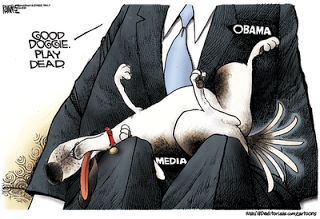
That's some watchdog you got there...

That’s some watchdog you got there…

On Tuesday, CNN released a press announcement unequivocally stating its support for the background check provisions of proposed gun control legislation. It declared that it would devote two days to the issue, and on Wednesday, Democratic Senator Joe Manshin (WV) thanked CNN news anchors for their support in the gun debate, saying to John Berman and Christine Roman, who had just presented, as promised, a completely one-sided view of the issue, “We appreciate your support.”

This, from the self-proclaimed “Most Trusted Name in News,” is the canary dying in the mine of honest, objective, ethical national journalism. It shouldn’t matter if you approve of background checks, though that is CNN’s disgraceful gambit: a large majority of the public does, and a large majority of the public approves of unethical journalism when it supports their preference. Not to be indelicate, but they are fools. A news organization that only presents one side of an issue or that slants its coverage to influence policy isn’t a news organization at all, but an ideological shill, and a tool of political manipulation. Continue reading

The Florist, The Gay Wedding And The Slippery, Slippery Slope

OK, she's a jerk. But is it ethical to say she can't be a jerk? Isn't America about having the right to be a jerk?

OK, she’s a jerk. But is it ethical to say she can’t be a jerk? Isn’t America about having the right to be a jerk?

Arlene’s Flowers & Gifts proprietor Barronelle Stutzman had been selling flowers to Robert Ingersoll and his partner, Curt Freed, his partner, for a decade, but drew a line in the sand when they wanted her business to supply the floral arrangements for their same-sex marriage. She refused, citing her relationship with God. This week, Washington State Attorney General Bob Ferguson filed a consumer protection lawsuit against  Stutzman, drawing a line of his own.

There are legal and ethical issues mixed up here like gazpacho, and some of them are not difficult. For example, whether Stutzman should have the legal right to do so or not, her decision to reject and stigmatize long-time customers is indefensible ethically. It is cruel, unfair, ungrateful and disrespectful. They were good enough to profit from for ten years, but not good enough to accommodate at the most important time of their lives? Such conduct earns a massive ethics “Yechh.”  Continue reading

Why Does MSNBC Give Melissa Harris-Perry A Platform?

This isn’t a free speech issue at all.

Soviet schoolchildren, 1954. They belong.

Soviet schoolchildren, 1954. They belong.

Prof. Perry, an MSNBC talking head, has the same right to make inflammatory, un-American statements that any of us do—and that is the kind of statements she regularly makes—but she is a Marxist. Her ideas and words are cultural poison. A cable network that promotes them is irresponsible.

Now, this is MSNBC, the network that allows Al Sharpton and Ed Schultz to broadcast their hateful rants to the nation, so we knew it was irresponsible, I suppose. These two buffoons, however, are not preaching concepts alien to core American values, and Harris-Perry is. Their presence on the network is unprofessional and obnoxious. Hers is unforgivable.

In a recent MSNBC promo advertising its house communist, Perry, scripted and saying exactly what she intended to convey, is heard saying that Americans..

“…haven’t had a very collective notion that these are our children. We have to break through our kind of private idea that kids belong to their parents or kids belong to their families, and recognize that kids belong to their communities…Once it’s everybody’s responsibility and not just the households, then we start making better investments.”

Here’s the video:

She was shocked—shocked!—that these words were controversial and widely condemned. She took to her blog to condemn her critics and, she claimed, “double-down” on her statement. She did not double down, however. She lied and obfuscated, just as any good communist, radical and totalitarian must.  Continue reading

Gov. McDonnell And The Wedding: When Ethics Hypotheticals Come True

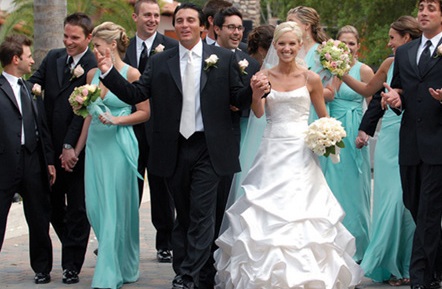
Reception

I thought I was dreaming when I read this in the Washington Post this morning:

Virginia Gov. Robert F. McDonnell (R) has said his daughter and her husband paid for their own wedding. So a $15,000 check from a major campaign donor to pay for the food at the affair was a gift to the bride and groom and not to him and therefore did not have to be publicly disclosed under the law, the governor says. But documents obtained by The Washington Post show that McDonnell signed the catering contract, making him financially responsible for the 2011 event. The governor made handwritten notes to the caterer in the margins. In addition, the governor paid nearly $8,000 in deposits for the catering. When the combination of the governor’s deposit and the gift from the donor resulted in an overpayment to the caterer, the refund check of more than $3,500 went to McDonnell’s wife and not to his daughter, her husband or the donor….The question of who was responsible for paying the catering bill is a key one because Virginia law requires that elected officials publicly report gifts of more than $50. But the law does not require the disclosure of gifts to the official’s family members. McDonnell has cited the statute in explaining why he did not disclose the payment in annual forms he has filed with the state.

I have taught an ethics hypothetical very similar to this in several contexts, including government, business, and legislative ethics. The lesson is that regardless of the laws, and whether a particular set of regulations designates gifts to a direct family member as creating a conflict of interest and appearance of impropriety, this kind of transaction is suspicious, probably corrupt, looks terrible, undermines trust, and should be rejected by the official whose family member is getting married. Continue reading

Ethics Hero Emeritus: Annette Funicello

AnnetteAnnette died yesterday after a long, painful decline triggered by the onset of Multiple Sclerosis 25 years ago. To understand why she was an Ethics Hero, one need only read the New York Times obituary, which captures her essence well. One is an Ethics Hero if one goes through life caring about others, being loyal, responsible and fair, never inflating one’s own value and worth above those you live and work with, and having integrity.

If you can do all this while being a celebrity, TV star, teen idol, recording star,  movie star and adolescent lust object, you are more than an Ethics Hero. You are a miracle. That was Annette. Continue reading

Ethics Dunce: Tony Kornheiser

Ugh.

No pardon for you, Tony...

No pardon for you, Tony…

Tony Kornheiser is a sportswriter and humorist as well as a television and radio personality. I’ve been reading, watching and occasionally laughing at him since I moved to D.C. eons ago, when he was a Washington Post columnist. This post has nothing to do with sports, however, though the issue arose in a sports context. It has to do with the depressing fact that Tony’s mode of ethical analysis is still based on consequentialism and an ignorance of moral luck, and that he is, despite being an educated, erudite and clever man, typical of the public in this respect.

It is depressing, and thus I say, “Ugh.”

For the second time in two days,  the ten minutes I had time to watch TV randomly brought me to a discussion of umpire Marty Foster’s botched third strike call to end a close game between the Tampa Bay Rays and the Texas Rangers. Tony was arguing with Michael Wilbon on their hit ESPN show, “Pardon the Interruption.” [ Aside: And why did my channel surfing pause there? Because the project that has eaten my life the last couple weeks requires me to mention, in a speech, the HBO Larry David show “Curb Your Enthusiasm, ” and I keep wanting to say “Pardon the Interruption.” I blew it again last night, so naturally, the first thing I see this morning is the show I’m trying to purge from my brain.] They were debating whether Foster should be disciplined for his bad call, an idiotic issue, since the answer is “Of course not; are you nuts?” Umpires make hundreds of judgment calls every game, and mistakes are inevitable. As I wrote yesterday, Foster’s handling of this botched call was exemplary, because he admitted that he had erred. Punishing him or any umpire who misses a visual call would be unfair and destructive; such punishment could only be valid in the case of actual misconduct or negligence, as in the case of an umpire ignoring or not knowing the rules. Continue reading

Ethics Quote of The Week: Umpire Marty Foster

“I saw the pitch and of course don’t have the chance to do it again. But had I had a chance to do it again, I wouldn’t call that pitch a strike.”

—– American League Umpire Marty Foster, in the wake of the controversy over his game-ending strike call in the Texas-Tampa Bay game last night.

In other words, “I missed it. I was wrong.”

Strike Three?

Strike Three?

Good for Foster. His wildly inaccurate call was strike three on Rays batter Ben Zobrist, who thought that he had worked a base on balls. This would have placed Rays runners on first and second with two outs, creating a reasonable opportunity for the Rays to tie or win the game.  Instead, the Rangers got a gift. Rays manager Joe Maddon, in interviews and in a tweet to his followers, said, “That can’t happen in a major league game,” meaning that the call was beneath major league umpiring standards.  Of Maddon, Foster said,  “He was frustrated and I understand .He acted probably the best he can under that situation.”

Obviously, there have been many, many worse calls, nearly as bad calls, and only a smidge better calls, and there will be this season. In the vast majority of those, umpires have and will remain mum, maintaining that they were in the best position to judge the pitch or the play, and that even video showing their gaffes are misleading. Foster, however, did the hardest thing for many of us: admitting a mistake. Admitting so, to himself as well as the world, doesn’t make him a worse umpire; it makes him a better one.

Note: I apologize for the sparse postings the last few days. I am involved in a night and day project that is preventing me from doing thinking and working on anything else…even baseball. Naturally, the only game update I happened to watch, at 2:20 AM, was an ethics story.

___________________________________

Sources: NBC Sports (and Graphic); Townhall

Different Symptoms, Same Ethics Illness: The Mike Rice-Rutgers Scandal And The Sandusky-Paterno-Penn State Tragedy

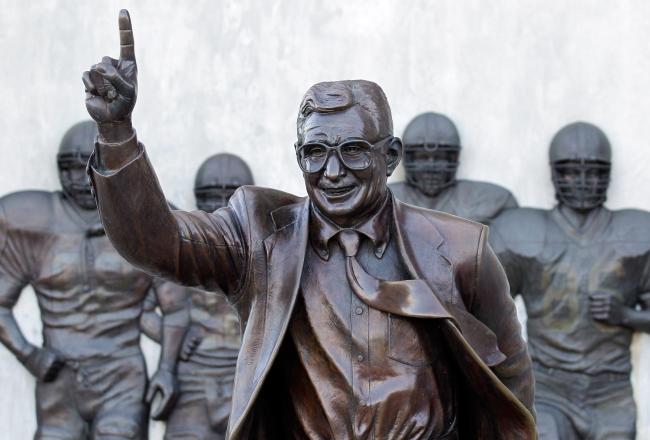
Missed out on your statue by thaaaat much, Mike.

Missed out on your statue by thaaaat much, Mike.

The question isn’t, as many news reports would have us believe, whether the Mike Rice affair mandates an administrative house-cleaning at Rutgers. Of course it does. The question is why, after the far uglier Penn State scandal, anyone possessing the gray matter of the Scarecrow from “The Wizard of Oz” thinks otherwise.

In case you are really smart and pay no attention to the dire ethics swamp known as college sports: Mike Rice was a very successful Rutgers basketball coach until ESPN got a hold of a video compilation of him abusing his players on multiple occasions. Though the Rutgers athletic director had seen the damning evidence in November, he let Wise off with a fine and suspension; then the recent national exposure forced him to fire Wise. This prompted Rutger’s president, Robert Barchi, to fire the athletic director (Tim Parnetti) for not taking appropriate action once he had discovered his coach was hitting, assaulting, and taunting players. And Barchi? Even though he knew, or should have known, that Rice’s methods were unacceptable, he never looked at the video (or so he says) that was available to him six months ago, until April. The New York Times reports that many Rutgers officials as well as the university’s outside attorneys knew that Rice was abusing his players,and that he had been doing so for years.

The net lessons learned from the Penn State disaster are zero. As the Times article says, “interviews and documents reveal a culture in which the university was far more concerned with protecting itself from legal action than with protecting its students from an abusive coach.” Yes, a coach attacking student is far short of child-molesting, but that’s  irrelevant: the corrupt cultural syndrome is exactly the same.  Rutgers, top to bottom, placed winning basketball games above sportsmanship, decency, fairness, and protecting their own students. The difference between Rutgers and Penn State is Joe Paterno and moral luck.

Let us be clear: if a teacher physically assaults a student, anywhere, at any level, ever, that teacher has to be fired, and probably prosecuted. A coach is no different. This isn’t open to debate. Yet I listened, as my gorge rose, to the glib and simple-minded conservative radio host Sean Hannity jabber with ex-Notre Dame football coach and facile “inspirational speaker” Lou Holtz about how Parnetti got a raw deal. Why? Parnetti built a great program! So he lets his coaches assault his players—anyone can make a mistake! Isn’t this hindsight? Second-guessing?

“Players are spoiled today; they just aren’t ready to be criticized,” said Holtz, who speaks in platitudes and nostrums that cover a Neanderthal sensibility (so you know he’s much in demand for corporate speaking gigs.)  These men are both ethics-challenged fools, but they have plenty of company.  Rutgers’ report on Rice’s abusive treatment assembled excuses and rationalizations by the authors and others. Rutgers athletic assistants said the video clips showing Rice kicking his players and throwing objects at them “were taken out of context.” What?? In what “context” is it appropriate for a college coach to do this? None! Many of Rice’s players said he prepared them well for tough competition. The report noted that under Rice’s abusive, tortious methods, the players’ grades rose to a B average. Oh! Well, that must mean assault and battery is okay, then, because it works!  This is the ethical standard Rutgers is teaching its students.

Parents everywhere: grab your student and run.

Elsewhere, Rutgers’s internal report called Rice “passionate, energetic and demanding” and concluded that his intense tactics were only aimed at improving his team and “were in no way motivated by animus.” Ah! So beating kids is okay, as long as it’s well-intentioned! This culture is sick, sick, sick and as with Penn State, it is part of a large sick culture that pervades university sports. Here’s one official from another sick school defending Parnetti:

“I think it was unfair for them to fire Pernetti. There were probably a lot of things that went into the decision not to fire Mike Rice in December. And as gruesome as that tape was, it was also a first offense for Mike Rice. I think Pernetti is taking the heat for everything and sometimes in leadership roles you take the glory probably more than you deserve and you take the heat more than you deserve. I think right now Pernetti is taking the heat more than he deserves.”

A first offense???? The video was compiled from dozens of incidents, and Rice’s penchant for violence and abuse were already known! Yeah, there were  “a lot of things that went into the decision not to fire”  Rice, none of which add up to a single good reason not to get rid of any coach who beats up kids in his charge.

The New York Post interviewed a college official who believes its all Facebook and Twitter’s fault:

“The whole situation, top to bottom is a shame. But my opinion is that there is no manual or rule book for how to handle these types of situations. To say (Pernetti) should have handled this situation a certain way, well unless you’ve been in his shoes, it’s hard to comment on it. Obviously there was a reason why Pernetti kept Mike Rice around. What was that reason? We don’t know. But one thing I saw was that his kids, his players backed him. So In my opinion do you know what got Mike Rice and Tim Pernetti fired? Social media got them fired. People make comments and form opinions without knowing all the facts sometimes. That’s the world we live in now.”

Yes, there is a rule book, and it’s called ethics, not that this guy, or whatever college he works for, would recognize it. “Unless you’ve been in his shoes”? The translation of this fatuous and offensive rationalization is simple: “Hey, there’s a lot of pressure on this guy to win, and he’s not going to let a couple of bruised sophomores jeopardize the won-lost record and alumni support. I bet you’d let the kids get beat up too.”

I wonder what schools those two anonymous officials work for? That’s the frightening part;  they could be working at almost any big time sports school, because that’s the predominant culture there.

__________________________

Sources: New York Times, Sean Hannity, New York Post
Ethics Hero: Dick Hoyt

hoytsI don’t think I’ll have to explain why Dick Hoyt is an Ethics Hero.

Rick Hoyt has cerebral palsy and has been a quadriplegic since childhood. When he was in middle school, he told his father, Dick, that he wanted to compete in a charity marathon for a basketball player who had been paralyzed in an accident. Dick Hoyt agreed to push his son’s wheel chair in the race. When it was over, Rick told him, “Dad, when I’m ‘running,’ it feels like I’m not handicapped!” Touched and inspired, Dick Hoyt, 72, went on to push his son, now  51, in 1,091 events, including 252 triathlons, 70 marathons, 94 half marathons, and 155 five-kilometer races. They have never finished last. The father-son team is preparing to compete in their 31st Boston Marathon next week.

When they compete in the triathlons, Dick pulls his son in a boat tied to a cord as he swims, and pedals for him on a tandem bicycle for the cycle round. In 1989, the family set up the Hoyt Foundation which has the goal of helping disabled youths participate in activities that their disabilities would normally preclude.

Rick says his only wish is that he could make his dad sit in the chair and push him for once.

Every now and then, I learn about people whose kindness, selflessness and ethical instincts place me in awe.

Dick Hoyt is such an individual.

__________________________________

Facts and Graphic: Opposing Views

Q: What Do You Get When You Cross The Cheerleading Prosecutor With President Obama? A: An Unethical Quote of the Week!

“You have to be careful to, first of all, say she is brilliant and she is dedicated and she is tough, and she is exactly what you’d want in anybody who is administering the law, and making sure that everybody is getting a fair shake. She also happens to be, by far, the best looking attorney general in the country.”

—- President Obama, introducing California’s attorney general (and a possible future gubernatorial candidate) Kamala Harris, at a party fundraiser in Atherton, a wealthy suburb of San Francisco

Hey, she IS hot! I'd love to see HER shake her pom-poms! What is it she does again?

Hey, she IS hot! I’d love to see HER shake her pom-poms! What is it she does again?

You see, all you nay-sayers, another reason why it is inappropriate and unethical for a prosecutor to prominently display herself in the role of unadulterated male eye candy is that it reinforces this kind of subtle (well, not so subtle, really), insidious marginalization of female professionals that occurs daily in offices and places of business all over America. I have taught this in sexual harassment seminars for decades: when a male boss, manager, or superior references a woman’s attractiveness, beauty, or allure in a public settling, it relegates her and all women in that organization to second-class status, and reinforces the glass ceiling. Women who are the target of this sexist, if often innocently intended, practice are usually lulled by the flattery into dismissing such incidents. That has to change. They must register their objections to the speaker for their own sake and that of generations of women to come. Continue reading