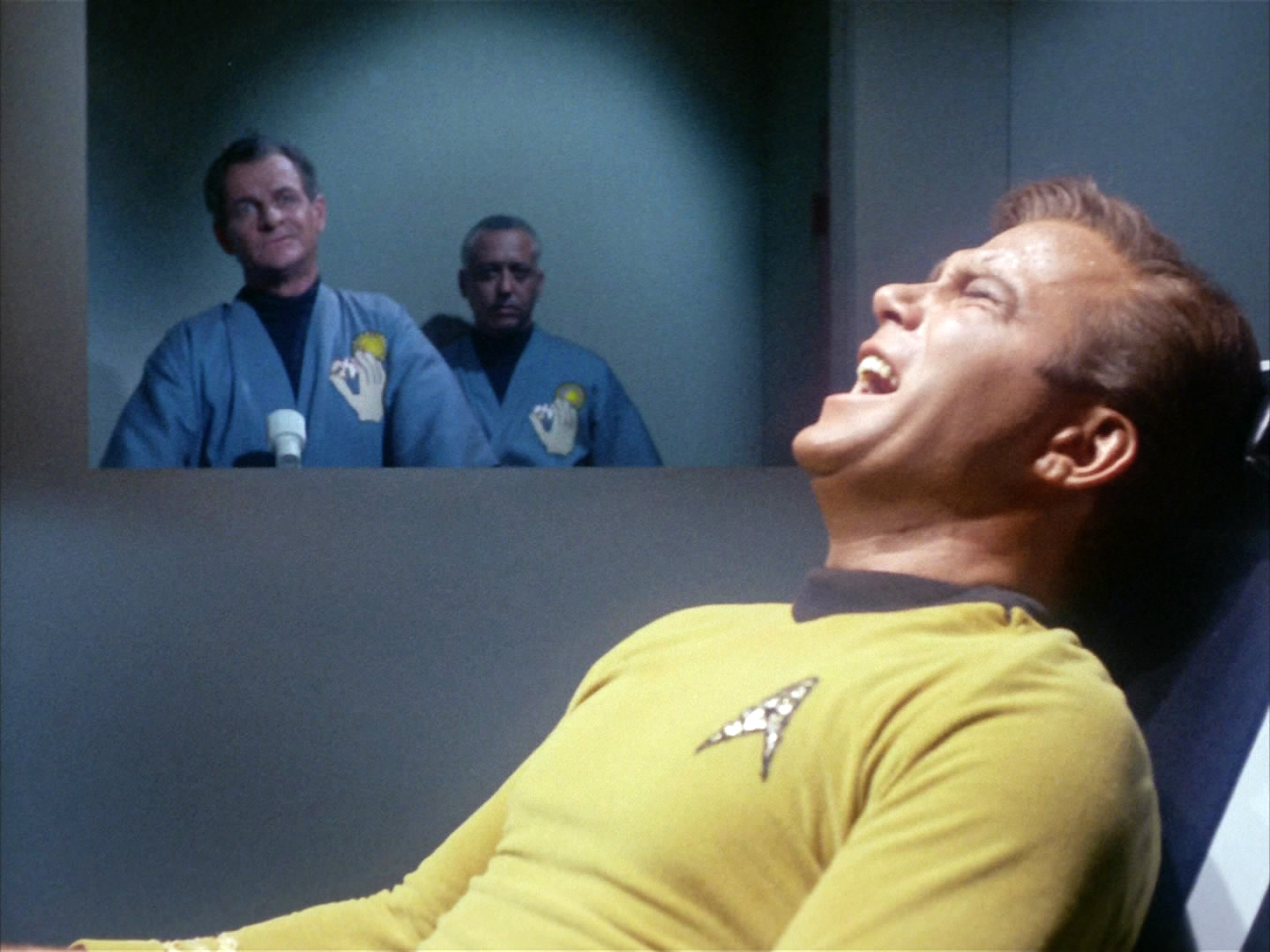
Harvard researchers are on the way to perfecting brain-to-brain interfaces, permitting a human to control the behavior and eventually instincts and emotions of other creatures with thought alone.
I have frequently written here about how new technology, like cloning, is often called unethical when in fact there is nothing inherently unethical about it at all, just a potential for unethical uses. Those uses, should they materialize, should be controlled and prohibited, not the technology itself. Other technology falls victim to “the Ick Factor,” in which something is deemed wrong when it is just new and strange.
The use of this technology to control humans, however, seems to me to come as close as I can imagine to an inherently unethical technology that violates human rights and ethical principles like respect, fairness, respect, autonomy, and the Categorical Imperative by its very nature. Yes, I can see some benign uses for the technology, but they are so overwhelmed by the wrongful ones that I would be willing to stop this research in its tracks.
Or as Drew Curtis’s Fark would headline this story (I haven’t checked, but maybe its has)…”THIS will end well.”
What am I missing?
________________________
Pointer: Instapundit
Facts: Extreme Tech
 Ethics Alarms
Your judgment based on the “ethical uses of technology to unethical uses of technology ratio” is apt for condemning this. But I think even more of an argument against this would be whatever ratio can be made out of whether or not, once this technology is used unethically, can it be mitigated, reversed or opposed at all? From what could be done with this technology for unethical purposes, I’d be too worried that once used it could never be undone or opposed. That right there is an equal condemnation of the technology.
Just think of it, though, you’d never have to ask your husband twice to do something. hehe
Of course the husband can just implant a memory in the wife’s brain that the task was done.
Then despite all current evidence the task isn’t done the wife will slowly go crazy being fully sure it was done.
They made a movie about this but I don’t totally recall its name now.
Full exploitation of this technology could make ethics obsolete (like that isn’t where we are already). Thank God, it’s all just electrical or electromagnetic. Reality, that is. Whoever controls the power sources and power flowpaths, controls the universe. Heh-heh, good luck, humanity!
And here I thought this was going to be a post about gun fear-mongering or prosecuting kids for obviousl jokes on the internet or MSNBC or Nancy Pelosi. Darn. An ethics issue on an ethics blog? What’s up with that? The fun part of class is over and we have to go back to the subject? Shoot.
Haha, recess is over. (Psst: Don’t tell our teacher [Jack], but the fire alarm has been rigged to go off.)
All is ethics, Grasshopper…
What is the ultimate goal of utopianistic social engineering? Make a society so perfect no one chooses to do wrong? Make so a world perfect for humans by removing their humanity. But then, to what purpose. We wouldn’t be human.
Maybe there is still reason for hope:
http://www.ethics.harvard.edu/ethics-at-harvard
Oh good…
Since mommies and daddies don’t teach it any more, let’s entrust it to institutions.
Groan…
This is NOT an attempt to compete with Arthur in Maine, who in my opinion has already provided the Comment of the Day in verse. I just happen, for the moment, to be stuck on John Lennon’s “Imagine:”
Imagine there’s no ethics
It’s easy if you try
Just watch the nightly news shows
Then choose to laugh, or cry
Imagine all the people
Living to feel gooooooooood
You might say I’m not human
And I might be down with that
Hope someday we’ll all join us
And the whole world can be Democrat
There is a reason why one of the three Unforgivable Curses is the Imperius curse.
Then again, Harry used one of those to break into the Lestrange Vault to get one of the horcruxes.
It really IS how it’s used that’s important.
It’s said that all human endeavor has an equal capacity for good or evil. The “double edged sword” of technology. I’m sure that direct mental interface has a number of virtues, too. However, the nuance of the description of this research indicates that the nightmare described in such movies as “Total Recall” seems to be uppermost in the minds of these Harvard technologists.
I certainly hope this is not the case! But whether it is or isn’t, such techniques will invariably be ill-used by some- including national governments- when it becomes viable. Therein lies the issue. It WILL eventually become viable. The time to make the decisions as to how it is to be ethically and lawfully controlled need to be made now.