“‘If you like your health plan, you can keep it’ was never a reasonable promise; health reform that addressed America’s combination of high cost, middling outcomes and spotty coverage was necessarily going to have to change a lot of people’s health plans. So yes, that statement is proving false — and it’s a good thing.”
—–Josh Barro in Business Insider, joining the ranks of the untrustworthy while discussing the unfolding realities of the Affordable Care Act.
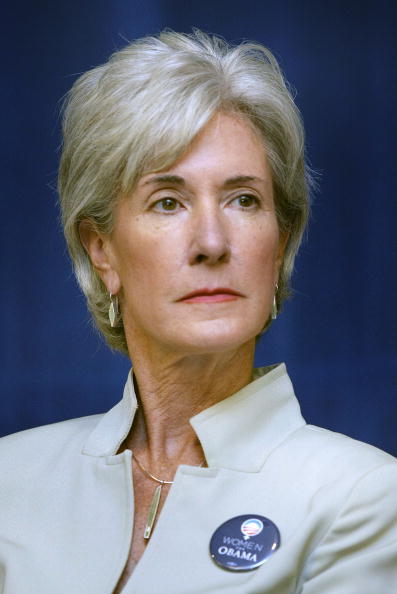
Or as HHS Secretary Kathleen Sebelius would say: “Whatever.”
James Taranto has catalogued several more disgraceful efforts to deny the undeniable—that President Obama’s assertion that nothing in the Affordable Care Act would cause any American to lose a plan that he liked was a calculated and intentional lie—thus adding those individuals to the growing list of people Americans should never pay heed to again on any topic, because they have proven themselves to lack integrity and are thus untrustworthy.
Among them: New York Times pundit David Firestone, James Carville (I’m shocked!), Time’s Kate Pickert, and my friend Jason Linkins over at the Huffington Post, a funny, smart man who ought to be ashamed of himself. The comments that most alarmed me, however, were those of another addition to the list, commentator Josh Barro. “The statement is proving false” is a particularly loathsome version of “mistakes were made,” which attempts to remove the human being responsible from identification and accountability. Obama’s statement isn’t changing or doing anything. Barro’s dishonest phrasing denies the fact of human agency. Obama made a promise regarding matters that he had complete control over in every way, and that promise was false when it was made. By him. The President could have guaranteed that his promise would be kept by refusing to sign a bill that didn’t make certain, through its provisions, that it would be kept. In fact, he has known all along (or has no excuse for not knowing)that millions of Americans wouldn’t be able to keep the plans they wanted to. The promise isn’t “proving false;” it was always false.
As for Barro’s airy declaration that the fact that it is “proving false” is a good thing, this is essentially an endorsement of lying as tool of public manipulation. Lying to the public is never a good thing, and a President lying to the public is a terrible thing. That so many of President Obama’s allies and supporters, like Barro, endorse lying and shamelessly so if it achieves ends that they happen to believe are beneficial should set off not merely ethics alarms, but democracy and republic alarms. Self-government cannot flourish or even survive when this kind of conduct by elected leaders becomes commonplace and accepted.
Although I have seen scant evidence of it so far, I hope that the progressives, Democrats, journalists and others who are now discarding all semblance of honesty and objective reasoning to rationalize away the President’s words in this episode recognize that their obligations to their illusions and ideologies must be secondary to their duties to the culture, fellow citizens, American values and the nation. Many of these desperate deniers are my friends, some are my family. I call on them to stop amplifying a lie and excusing betrayal. You’re disillusioned—I accept that. I’ve been in your position. It is devastating when those you have admired, believed, and tied your own credibility to show themselves to be unworthy of that trust, and abuse it. But denial makes the consequences of that conduct worse, and indeed ratifies it and guarantees that it will continue. This is cowardly and irresponsible. You are better than that; the country is better than that. This is not a culture that has embraced the concept of “the King can do no wrong,” indeed, the Constitution and the Declaration are predicated on the truth than leaders are fallible.
The President lied to everyone, and that is not “a good thing.” It is something that should never be trivialized nor allowed to pass without serious, meaningful consequences, and there can be no consequences when good and intelligent people abdicate their duty of self-government, which includes the duty of oversight, to protect the wrongdoers. All the polls say that we want our government to be trustworthy. Well, it can’t be trustworthy if we excuse its lies. For the government to be trustworthy, we have to be trustworthy too. We have to be able to trust each other not to aid the lies we are told, and to confront the liars.
It’s not too late.
______________
Pointer and Source:Forbes, Business Insider, Wall Street Journal
 Ethics Alarms
I’ll say it again – we told you all of this would happen.
We told you this would happen and you didn’t believe us.
Even those who are shocked and appalled that there were many, many lies and other ethical lapses don’t win points in my book.
This is what we knew would happen and you gleefully ignored it.
No. Sympathy.
It’s far too late. The issue is so polarized that all ends are seen as fully justifying the means. If you were hiding Jews in your attic, would it be wrong to lie to the Nazis who came hunting them? In much the same way, the Democrats have framed the entire debate as the racist party-of-no ReThuglicans hating Obama and not wanting you to have health care because they hate everybody except rich old white men, so ANYTHING you do to circumvent them is justified.
The Anne Frank scenario is the Ethics Incompleteness Theory stuff—ethical anomalies where the usual ethics rules work backwards. Those mustn’t be used to justify destroying the entire system. Lying to achieve any ends you think are important is just lying.
Agreed. As much as I hate buzzwords, though, “Culture wars” seems like a pretty good way of describing the current situation. I get so tired of seeing people villifying their opponents- not just believing them to be acting poorly or unethically, but active demonization. The other side isn’t wrong, or taking ethical shortcuts, or anything else- the other side is actively evil and wants to destroy the country and are deliverate bad actors.
When you simplify everything to “my team is good and just and virtuous, and the other team is cruel and evil and destructive” then you convince yourself that your ends ARE at an Anne Frank level of importance.
Or it’s a cause to recognize one of two possibilities:
1) Lying isn’t an absolute.
2) The ethics of lying is not determined by the act but by the effect. Jokes are often based on little adherence to the truth as do entertainingly hyperbolic renditions of actual events.
The Jewish code of morals in the Old Testament even qualify that for lying to be a sin is when the effects harm others “thou shalt not bear false witness” distinctly implies maintaining honesty when the effects of honesty or dishonesty have tangible effects on others.
Possibilities. Of course, option 2 demands a clear understanding of just what constitutes tangible harm. Because someone could take hold of #2 to justify white lies “well it doesn’t harm anyone”. Yeah, but it doesn’t help anyone either and actually degrades your believability in the future as well, so that would constitute tangible a harm. Of course, to whom you are lying compared to the recipient of the benefit of your lies for sets up a ratio that justifies the action.
I never saw any contradiction between that Anne Frank scenario and the absolute nature of principles such as the sinfulness of lying and dishonesty.
It’s an absolute truth that lying is wrong.
The “hiding Jews from the Nazis” scenario, and similar scenarios, involve having absolutely NO choice but to do SOMETHING morally wrong.
A. Lie.
B. Tell the truth, thus surrendering innocent people to death
C. Freeze up and do nothing (and let innocent people die when you could easily save them just by lying.)
The best possible choice is A, and any decent person would default to A. But lying is still wrong. You have effectively been forced at gunpoint into sinning. Your act was absolutely wrong, but you are guiltless, because the fault for your act was not yours. It was the fault of the freaking Nazis with guns demanding that you do horrible things.
This is why only a fool would use an Anne-Frank type scenario as some sort of “aha!” moment against the absoluteness of moral laws. Just imagine some clown saying, “oh yeah, adultery is a sin huh? Well, what if thugs broke into your house, tied up your husband, and threatened to slit his throat unless you slept with them? Would it still be a sin then?”
Ummmm, of course it would? Just because I can be forced into making a sadistic choice doesn’t mean that one of the horrible options suddenly becomes pleasant. It just means that I am not held responsible for my action because I was put into a position in which I had no choice!
PS, good point about joking Texx. I presuppose that jokes, stories, etc. are understood not to be taken as true statements, and hence not deceptive. Pranks of the intentionally deceptive April Fools variety are deception for its own sake, and, if I’m going to really nitpick, I think are only ethical if the prank-ee appreciates them as humorous afterwards. Same goes for lying your tail off so as to keep a pleasant surprise a secret. I don’t consider those to really fall under the category of lying, which fits pretty neatly into your point about harm. There is no ill intention (or purely selfish motive).
I’d say that “it doesn’t hurt anyone” should never fly as an excuse, but a prank or surprise birthday party COULD actually help someone, by imparting a good laugh and a joyful surprise, respectively. So I think there is room for those kinds of deceptions- when the deception is deemed absolutely worth it by the person being deceived. It’s rare, though- most pranks and secrets are more likely to undermine trust at best, and do harm at worst.
I played an elaborate April Fool’s joke one year (the “you got punk’d” type), and it went over so well (with absolutely everyone) that it was talked about fondly for months. The following year I conspired with some friends to pull a similar stunt, and hurt someone’s feelings to the point that they didn’t talk to me for a few days. That was the end of my April fooling.
I don’t like Obama, but I don’t think he “lied” — at least with malicious intent. I think he used the worst phrasing in the world AND that he had an obligation to explain it accurately given that this was his grand plan. If Obamacare had never passed, we still wouldn’t be able to keep the coverage we wanted. Rates change, plans change — even those with employer-sponsored plans have coverage at the whim of their employers and their insurers. If a company is bought or merged, this affects plans. If an employer has a bad year, it is going to buy a cheaper plan for the following year. If a carrier has a poor claims history with an employer, it is going to drop coverage or raise the price astronomically. These plan and price changes get pushed down to the insureds/employees. I’ve had 4 plans in the last 8 years even though I’ve stuck with the same employer. So, in your definition of he “lied,” I would say that you obviously are technically accurate, but his statement would have been a lie whether or not Obamacare passed.
What he should have said (and didn’t say) was that consumers with employer-sponsored coverage would not be forced to buy coverage from an exchange as long as their employers chose to continue providing coverage — but even employer-sponsored plans are bound to change at some point given the regs to come into effect under Obamacare, the nature of the insurance industry generally, and normal free market processes. He didn’t say that and he should have — I guess because it doesn’t make for a nice sound byte and would require answering follow-up questions. Instead, he went for simplistic flair that confused and misled a lot of people and now has them angry — and justifiably so in my opinion. I remember these speeches at the time and I snorted in disbelief because his statements could never ever be true.
Quite frankly, even as an attorney, he should have been able to do better. One of the first things I learned when practicing (and my attorney friends would agree) is that you have to accurately explain your position in oral/written argument so that a 5 year-old would understand it. Obama gets the part about using simplistic terms (“Your coverage won’t change. Period.”) He just missed the part about the simplistic terms having to be ACCURATE and presuming that the average American understands all of the uncontrollable market forces that determines the coverage they are provided right now.
Come on, do you really think he “missed” the fact that his simplistic explanation was horribly misleading? Sure, we can get into semantics. If we met at a restaurant and you asked if I could watch your coat while you ran to the bathroom, I could say “Sure, I’ll watch your coat, and I won’t take anything from it.” When you leave, I signal my friend to come rifle your pockets. Everything I said was true, I just missed the part about my explanation being misleading.
As for “plans change,” I don’t know if anyone got the impression that “You can keep a plan you like” means that it will never under any circumstances change. Liberal Dan in an earlier thread argued something similar. But seriously, I have a health plan that I like. Last year they tweaked some things, so now it’s easier to get prescription drugs by mail with fewer doctor visits to confirm the prescriptions, but they made specialist copays a bit higher. I STILL HAVE THE SAME PLAN. The overall structure is the same, even if it’s not identical. Your car is still your car, even if you put in a new stereo or get a big dent in the door from a runaway shopping cart. It may get a touch better or worse, but it’s the same car.
The biggest complaint that I see is not that people’s plans are changing, and they don’t want them to – it’s that people’s plans are changing because Obamacare forbids those plans from being offered. Those plans which are being demonized as being ‘substandard’ or ‘not providing enough coverage’ to count under Obamacare as legitimate plans. Those are the plans which many people – unable to pay for more, or unwilling to do so; unwilling to purchase more coverage, or without the need to do so – THOSE are the people’s complaints which the president was addressing each time he made this statement. And in light of those concerns – this statement can be nothing but a bald-faced lie.
Awful spin Beth. But much more creative.
Yes, the market creates conditions in which people’s arrangements must change to remain economical. In the case of insurance plans, you are accurate that some people have had their plans adjusted in the market as a reaction to market forces.
When Obama states that you can keep your plan if you like it under obamacare, but obamacare is the DIRECT cause of the conditions in te market that cause people to LOSE their plans, then obamacare cause it and obama’s statement IS a lie.
And no, his statement wouldn’t be a lie if other market conditions unrelated to obamacare had caused the changes.
Of all the possible excuses, Beth, the argument that Obama misspoke—for three and a half years, probably more than a hundred times, in speeches, and in print, on video and in the media, may not be the most offensive, but it is easily the hardest to swallow. This was his big project, and he had to know it inside and out, or certainly knew that his audience would believe that (I think, as usual, he was faking it). He used “period” which means “there is nothing more to say.” And Obama has exactly one skill—oratory. He is not allowed to say he misspoke when it’s prepared remarks. He isn’t much good at anything else, but he knows English. The information omitted was what any lawyer or competent English speaker would know was essential, and that it could not be omitted without misleading. He knew that. Thus he was lying.
And a man who cared about telling the truth would recognize and care if subsequent events threatened to make his statements untrue. He didn’t. He let the Democrats in the Senate defeat measures proposed to make certain people could keep their plans —as he promised. This was calculated beyond a reasonable doubt.
Of all the possible excuses, Beth, the argument that Obama misspoke—for three and a half years, probably more than a hundred times, in speeches, and in print, on video and in the media, may not be the most offensive, but it is easily the hardest to swallow. This was his big project, and he had to know it inside and out, or certainly knew that his audience would believe that (I think, as usual, he was faking it). He used “period” which means “there is nothing more to say.” And Obama has exactly one skill—oratory. He is not allowed to say he misspoke when it’s prepared remarks. He isn’t much good at anything else, but he knows English. The information omitted was what any lawyer or competent English speaker would know was essential, and that it could not be omitted without misleading. He knew that. Thus he was lying.
*************
Couldn’t agree more.
He pulled the same bs when he tried to back peddle about crossing a red line.
Anyone who is still defending this fool is a fool.
I’m neither spinning nor am I making excuses. Again — for the 50th time — I am not a fan of Obama. Heck, I think he should be tried for war crimes, but I digress. I think the explanation of this Act was horrible but I also think Obama’s biggest crime is one of arrogance. I would bet that right now he is thoroughly confused about all the hate directed at him because he presumed that everyone knows how insurance works and that OF COURSE his comments were directed at what consumers had to do/not do under the Act — not that the plans would eventually change. Everyone knows that plans can and will change, but his Act makes the plans better with more coverage so of course everyone wants that. Arrogance. This was Obama’s pet project and his legacy — it also probably is the most controversial legislation in the last 20 years. He knew that it would be getting this level of attention and his ego could never take the hit that he would be remembered for a lie. Being a good orator has NOTHING to do with the content being delivered, just style. A on style, F on content.
Apparently you didn’t read this which debunked your line of reasoning once already.
You like the word “debunk” but rarely have you used it correctly. For e.g., in my comment above, I addressed that plans will change under Obamacare.
Diversion.
You stated that he didn’t really lie. That’s your assertion that I debunked.
He said everyone could keep the plans they wanted.
His law forced conditions on the market that forced providers to drop plans.
People weren’t able to keep the plans they wanted because of his law.
He lied.
I think my use of the word “debunked” is unquestionably accurate.
If Obamacare hadn’t passed, millions of the people who have just lost their coverage BECAUSE OF OBAMACARE, would still have it right now. This is exactly what Obama promised would not happen. How is that hard to understand?
(sorry about the all caps).
He lied, he knew he was lying, he didn’t care, and let’s not forget that he demonized a certain Mitt Romney for attempting to call him on his lies, insinuating that Romney was lying and spreading paranoia about Obamacare.
That’s the most despicable thing about lying your tail off on national television. Not only are you lying and deceiving, but you are making a liar out of the truth-tellers at the same time. It takes a certain lack of shame to be okay with that.
A lot of eternally Obama-apologizing pundits and bloggers are going to be living with the fallout of their own praises of ACA- and their pathetic attempts to mitigate its failure and falsehood- for a long time to come.
A lot of eternally Obama-apologizing pundits and bloggers are going to be living with the fallout of their own praises of ACA- and their pathetic attempts to mitigate its failure and falsehood- for a long time to come.
******************
Such people have lost all credibility.
I like Josh Barro’s quote so much that I adapted it and tried it out on my wife:
” ‘Forsaking all others’ was never a reasonable promise; sex reform that addressed our combination of high cost, middling kinkiness and spotty frequency was necessarily going to change a lot of our marriage vows. So yes, that statement is proving false-and it’s a good thing.”
I must confess, I’m not optimistic about my chances with that. She feels, what was the word…defrauded. Let’s adapt Barro’s magnificent nugget of bullshit to other promises. We could try:”Preserve and uphold the Constitution”.
You’re about to get a frying pan bent over your head, Joe!
Just an observation, and no more: I have had to spam a slew of vile, uncivil and non-conforming (to the Comment rules) comments the last couple of days. The most rude, abusive and logically deranged readers of Ethics Alarms appear to be 1) the pot advocates, who really do seem to write their comments while stoned; 2) the ’til the last dog dies” Obama apologists and 3) the fans of “Chimpmania,” the racist website.
Make of that what you will. I certainly know what I make of it….
That the coming civil war will be fought by a ragtag band of unwashed toothless virulent racists and lockstep robotic obamatrons?
While a cluster of stoners sits on the side:
“Hey man, did you see that dude’s arm get blown off?”
“I have hands!”
Meanwhile libertarian survivalists are sitting on piles of gold that they can’t use?
Okay — THAT was funny.
Quick, sell it to Netflix.
Too late. I’ve already signed on Ben Stiller for the lead. Shooting starts Monday in Bangladesh (substituting for Detroit).
I was gonna do a movie about pirates vs cannibal Indians.
But perhaps this is a better idea. Of course a battle involving disorganized symbols of stereotypes vs phalanxes of uniform robots representing the government with the backdrop of drug abuse was already tried. And it sucked
Just to be clear, I think Obama’s statement was a lie, and I wish he hadn’t said it, for the obvious ethical reasons. (If he had said “Obamacare makes only minor or modest changes to coverage for the vast majority of Americans,” that would have been fair; but that’s not what he said.)
But with this post, you’re no longer criticizing people for what they’ve said; instead, you’re criticizing Barro for what you’re inferring he meant even though he didn’t say it.
He didn’t say any such thing. He’s saying that a policy that no one can ever involuntarily have an insurance product become unavailable, would be a bad policy with harmful effects, and it is therefore good that such a policy doesn’t exist. (And he’s right!).
It doesn’t follow from that, that he’s saying it’s good to lie about it. That is not in any way implied by his statement.
If you can’t quote him actually endorsing “lying as a tool of public manipulation,” then it’s dishonest to claim he’s endorsed lying as a tool of public manipulation.
Jeez, Barry…Twisting, twisting, twisting. Obama’s statement WAS false. It was false when he said it. Since it isn’t “proving false,” but was false when he said it, Barro is endorsing the fact that the statement was false (while being misleading about it), ergo he is endorsing the lie. Since we know that Obama knew this was going to happen before he made his assertion, the only way Barro’s statement could be anything but an endorsement of dishonesty is if he believed that out of dumb luck beyond the President’s control, the statement that would have worked out badly for the public and the nation if true unexpectedly happened not to come to pass. But that’s not what happened. He knows that’s not what happened, and you know that’s not what happened. So he’s endorsing lying, and so are you.
Now, if Barro had said, “The plans getting cancelled are a good thing,but Obama deceived the nation about what to expect and that is wrong,” then I have no beef (though he, like you, would be wrong about part one). But he didn’t— he assigned no accountability for Obama’s act of lying, spinning it as something that “proved not to be true,” when it was NOT something that proved not to be true. What proves not to be true after a statement is not a lie, but a mistaken assumption.
What about
Did you find ambiguous, Jack?
I didn’t lie, nor did I endorse Obama’s lie. And by saying I did, you are lying.
No Barry, you are lying by saying I said you were lying after you agreed that Obama was lying. (Whew.)
My exact quote:
“So he’s endorsing lying, and so are you.”
Of course you are endorsing Obama’s lie. You wrote “He’s saying that a policy that no one can ever involuntarily have an insurance product become unavailable, would be a bad policy with harmful effects, and it is therefore good that such a policy doesn’t exist. (And he’s right!)”
If you believe Barro’s right, then you believe he’s right about what he actually said, not how you cleverly rephrased him, which was this (as I already pointed out): “So yes, that statement is proving false — and it’s a good thing.” “That statement is proving false” is a euphemism for “the President was lying when he made that statement” (as you agree). Thus the statement is, without the double talk and spin: “The President was lying when he made that statement and that’s a good thing.” And you say: “And he’s right!”
No, he’s not right, even if you are right about the results being a good thing (and I don’t think you are.). You can’t separate the two parts of the sentence. Do you wish the President was telling the truth, and thus the law wouldn’t have had the result of cancelled plans? Clearly you don’t. So you are glad he was lying, which means you are glad he lied, which means you endorse his tactic of lying, which means you endorse his lie.