Tipping points are events that establish major shifts in public attitudes and the culture, and what determines a tipping point varies from circumstance to circumstance. When the switch is flipped on public trust, a leader is done for, at least in a democracy. This is why, in a parliamentary system, prime ministers call for elections at such times, or even resign. It’s a tradition the U.S. might do well to consider.
The tipping point on the George W. Bush presidency was glaringly obvious: it was the botched handling of Hurricane Katrina, even though that particular fiasco was mostly an example of effective blame-shifting by New Orleans mayor Ray Nagin. Bush had already accumulated many legitimate reasons to doubt him, but the traditional American eagerness to like and trust whoever holds the same job as Washington, Lincoln and FDR had kept his presidency afloat…until it drowned in Katrina. All was downhill from there.
Now it appears that the Obama proposal/decision/ argument—who knows what it really is?—to engage in a limited missile attack on Syria may be the public tipping point on Obama’s leadership, the moment when the veils fall and the nation reluctantly but decisively admits that the man it elected—twice—as its leader cannot be trusted. If so, it is remarkable this took so long, testimony to how much we all wanted our first African-American President to succeed. The tipping point for me was years ago. Following the Bush experience, I thought that the bungled government handling of the Gulf oil spill would clinch it, but no. Then came the Benghazi mess, with an ambassador and other Americans murdered without any decisive response other than deceptive spin and obfuscation to avoid electoral consequences—the I.R.S. tea party harassment (still being investigated, and looking worse all the time)—the NSA revelations, and the growing evidence that while the Affordable Care Act may not be the cataclysmic socialist disaster conservatives claim it is, it is also far from what the President promised. No tipping point though, until Syria, and the consequences flowing directly from the President’s undisciplined off-the-cuff rhetoric—a constantly repeated flaw in his leadership style.
Now, as tipping points do, this current controversy is resuscitating all of the past incidents, and serving as the catalyst for a reappraisal of Obama’s leadership. The looming conclusion is that he cannot be trusted.
Occasionally am beaten to the punch by a pundit or blogger who delivers an essay that says exactly what I was preparing to write, even as I was almost finished writing it. Such a pundit is Forbes contributor Merrill Mathews, who delivered an article on that publication’s website over the weekend, titled “What Happens When You Can’t Believe A Thing The President Says?” (My title was going to be “When Trust Is Gone”).
I really don’t know what to make of this, but I think it means something,and whatever it is, it’s important to remember and learn from it. Now if I could only figure out what it is.
Here is what Ed Asner, the elderly “Mary Tyler Moore Show” and “Up” actor—he was also a bad guy in one of my favorite John Wayne Westerns, “El Dorado”—said in response to an interviewer’s question about why the Hollywood anti-war left was staying out of Obama’s self-made Syria controversy, in such marked contrast to its vocal opposition to the Iraq invasion (Where have you gone Janeane Garafolo, our nation turns its lonely eyes to you…OOOOO! ).
Spake Ed:
“A lot of people don’t want to feel anti-black by being opposed to Obama.”
Now, Asner has long been a vocal member of the Hollywood liberal activist community. Presumably, he still is well-connected and knows something about the culture and political pulse in Tinseltown. So I want to know: What can we glean from this ridiculous statement? What does it mean? Continue reading →
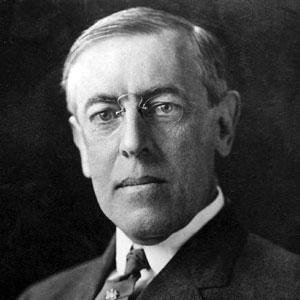
“Berg is not uncritical of Wilson’s biggest lapses — his tolerance of segregation, his suppression of civil liberties and his “highly questionable” actions (or paralytic inaction) after the stroke he suffered in 1919, during his grueling campaign to win Senate approval of the League of Nations.”
—Former Clinton Speechwriter and author Jeff Shesol, in his Washington Post book review of historian Scott Berg’s new biography of Woodrow Wilson, “Wilson.”
All right, he was a racist, but he was GREAT racist, right, Jeff?
There is a nasty piece of dishonesty in this quote, all the more sinister because it slides right by, altering your understanding of history and reality without you even knowing it. (Is it any surprise that Shesol wrote speeches for Bill Clinton?) Did you catch it?
It is the phrase, “[President Woodrow Wilson’s] tolerance of segregation.”] Continue reading →
I’m certain some will say that it is self-serving, that he made the video to try to minimize his punishment. This could be, and so what? The YouTube confession is still the best, most honest, most ethical, most courageous option that he had, once he had made the tragic and irresponsible decision to drive while intoxicated. Many, indeed most, and arguably all ethical acts have an element of self-serving in them. If they are right, they are right.
Imagine how much better society and the justice system would be if those who committed crimes fulfilled their societal duty to admit them, apologize, and accept their just punishment. Cordle, ironically, is not merely an Ethics Hero, but a role model.
The Ethics Alarms Rationalizations List keeps growing, and proof that it will eventually be much, much longer is in the fact that the most recent additions are old, common, and popular. Human beings are so talented at concocting lies that make them feel better about doing the wrong thing, or continuing to support friends, family members, colleagues or personal heroes who do the wrong thing. I have been meaning to include The Tortoise’s Pass for quite a while, and then a commenter on the post about the charter school that banned dreadlocks used “They must be doing something right!” as a cornerstone of her comment defending the rule. I realized that I had neglected a classic. Well, “Better late than never!”
The whole list, now 34 strong, is here. Here are the new entries:
33. Success Immunity, or “They must be doing something right!” Continue reading →
When is a $765 million dollar law suit settlement “chump change”? This is when, reading the reactions to the NFL’s announcement last week of its agreement with former players who sued the league over crippling concussion injuries sustained while playing professional football:
It is inadequate when half of that will be ladled out over seventeen years, and all of it will be reduced by the lawyer’s fees, to be determined but unlikely to be less than a third. That means that each former player (or his heirs and family) will get, at most, $114, 000 or so.
It is inadequate when the league paying the damages will split the payment among its 32 franchises, making each responsible for paying $24 million over 20 years, which comes to about $1.2 million a year. Remember that projected NFL revenues this season are $10 billion, and the NFL gets more than $40 billion on top of that through 2022, thanks to media rights.
Let me know when Mary’s gone and it’s safe to take the boot off.
The internet can carry the contagion of horrible reasoning with astounding speed, especially since so many of us have been slow to accept that being published no longer creates any likelihood that a writer has a coherent thought worth reading. Even knowing this, I was still taken aback by the startling ethics illiteracy on display in blogger Mary Fischer’s post titled “Possible ‘Cure’ for Down Syndrome Seems So Wrong.” This is the kind of undisciplined, emotion-driven, bias and rationalization besotted thinking about life issues that Ethics Alarms was launched to combat, and yet reading Fischer’s sloppy substitute for thought, I still found myself wondering: How does someone get this way? How do they function in life if their method of determining right from wrong reaches conclusions like this? How many people read posts so devoid of anything resembling legitimate ethical analysis and allow it to become part of their belief system?
I’m not even sure that I want to know the answers to these questions. Continue reading →
Deborah Brown Community School in Tulsa, Oklahoma forbids its students from wearing their hair in dreadlocks, afros “and other faddish styles.” Terrence Parker, a barber, challenged the rule by sending his 7-year-old daughter Tiana to class there wearing her hair in dreadlocks. She was told that she could not attend school with her hair in a (stupid and ignorant) rule-violating style. Tiana is now attending another school, while the story, reported on the web in various sources, is holding the school up to well-earned ridicule for a dress code that if not racist in intent, is racist in impact. Eventually, I would think, the school will be shamed into seeing the error of its ways, which is enforcing an inappropriately narrowly-viewed, culturally-biased interpretation of what constitutes a “presentable” hairstyle as opposed to one that might “distract from the respectful and serious atmosphere [the school] strives for.”
This is the way unethical rules get changed. Parker confronted the rule by violating it, and accepted the penalty while publicizing the unjust rule to the greater community, which is making its disapproval known. Continue reading →
During the deplorable reign of Michael Steele as chair of the Republican National Committee, the RNC set new lows for deceptive fundraising practices, bordering on mail fraud. Replacing Steele with the superficially less ridiculous Reince Priebus has failed to dispel Steele’s lingering curse, and here is the latest example.
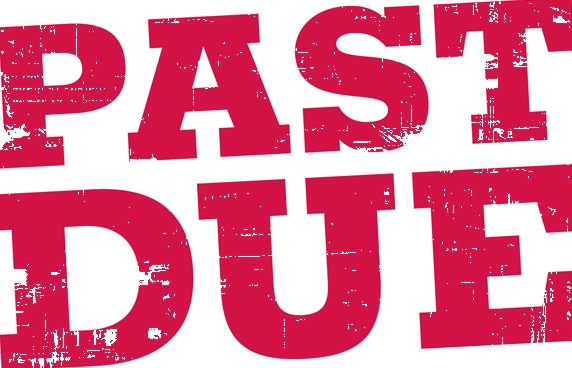
Yesterday, a brown envelope arrived at Chez Marshall with a block red message “Past Due” on it. We get a number of such envelopes—fewer now than a while back—but they are always a cause for alarm. This one, however, was a fake. Back in 2012 when, if you remember, there was a campaign going on, my wife, for the first time in her life, sent a small contribution to the Romney camp. As a result of that wasted gesture, we have received an average of ten phone calls a week from the RNC seeking funds, prompting my wife to tell every caller, futilely, of course, that any party that could not defeat Barack Obama wasn’t worthy for her money or anyone else’s, and to stop with the calls already. Naturally, this has had no effect, leading me to remind her, as when she imprudently ordered some kind of miracle anti-aging cream from Madagascar over the internet, “I warned you!”
It turned out that this urgent letter was also from the RNC, using the “Past Due” stamp to fool us into opening it rather than sending it directly into the trash. Nothing was past due, of course, though the enclosed donor card was falsely labelled a “statement,” and we were asked to “renew” a “membership” we never agreed to, and had no benefits, other than the pleasure of being harassed for money. Continue reading →
I live in the Washington, D.C. area, and at this moment even the beginning of the NFL season, usually the one thing everyone here (except me) usually cares about, is being over-shadowed by the drama of the looming Congressional vote on Syria. What was assumed—why, I cannot imagine–to be a likely rubber stamp with only an insufficient number of Republicans providing opposition because, as we all have been told repeatedly, they will oppose the President on anything, has materialized as strong bi-partisan opposition. The Washington Post estimated last night that the votes in the House are currently running 3-1 against the symbolic-and-deadly-but-promised-to-be-non-committal missile strikes on pre-announced targets. This is the most encouraging development in the government since President Obama was elected, I am tempted to say. It shows that this is not a nation of lemmings, and that the separation of powers has its virtues after all. Nonetheless, interesting ethical arguments are arising in favor of votes both no and yes.
The no arguments are varied, and reach the same conclusion from different positions, some more ethical than others. The pacifist Left and the isolationist Right, both irresponsible and dedicated to ideology over reality, are on the same path here, and would be on that same path even if the President’s argument for missile strikes was strong. Others, including me, but also those who supported more extensive military action in the Bush administration, fault the plan because of its dubious results, its contradictory logic, and the feckless and troubling way the President brought us to where we are.
I just heard an interview with a Republican House member who announced that he reversed his initial support for the missile strike after hearing Obama’s remarks in Sweden. After hearing Obama appear to deny that he drew the red line—a rhetorical point that was too cute by half and clumsily stated—this Congressman decided that he couldn’t believe anything Obama said or promised regarding Syria, including his assurances that nothing would lead to “boots on the ground.” (I would argue that his assurances that nothing would lead to boots on the ground is, if not dishonest, frighteningly irresponsible.)
The yes arguments are more perplexing. Naturally, there are those who, against all logic, simply adopt the contradictory and militarily nonsensical arguments John Kerry was asked to present to the Senate (apparently because President Obama knows that he appointed an inarticulate—but loyal!!!—dim-bulb, Chuck Hagel, as Secretary of Defense—but that is another, though related, issue). Liberal columnist Eugene Robinson, who has won an Affirmative Action Pulitzer Prize and who has proven that he will cheer whatever his fellow-African American in the White House does, even if he makes a decree like the South American rebel-leader-turned-dictator in Woody Allen’s “Bananas”...
“From this day on, the official language of San Marcos will be Swedish…In addition to that, all citizens will be required to change their underwear every half-hour. Underwear will be worn on the outside so we can check. Furthermore, all children under 16 years old are now… 16 years old!”
made this “argument”…
“The issue can’t be who wins that country’s civil war. It has to be whether the regime of Bashar al-Assad should be punished for using chemical weapons — and, if the answer is yes, whether there is any effective means of punishment other than a U.S. military strike…Let me clarify: I believe that a U.S. strike of the kind being discussed, involving cruise missiles and perhaps other air-power assets, can make it more likely that Assad loses. But I also believe that — absent a major commitment of American forces, which is out of the question — we cannot determine who wins.”
Gee, thanks for clarifying, Eugene!
Other, more coherent voices argue for endorsing Obama’s plan do sent a few missiles—not any that might hit Assad or his weapons, mind you– because they argue, even if the plan is weak, misguided, dangerous or certifiably bats, the President and, by extension, the United States will be dangerously weakened if a call to arms is rejected. This is essentially the argument of rational conservative James Taranto. Here is former Bush speechwriter Michael Gerson, this morning:
“…During the Syrian crisis, the Obama administration has generally waged a war of words and then used those words casually and clumsily. President Obama declared that Assad “must go” when his departure seemed inevitable — without a strategy, or even the intention, to achieve this goal when it became difficult. He drew a chemical-weapons “red line” that became a well-trodden thoroughfare. The Obama administration revealed details of an imminent military operation, which was promptly repudiated by the parliament of our closest ally, then abruptly postponed. The administration seemed to indicate that United Nations support for a military strike was needed — before declaring it unnecessary. It seemed to indicate that a congressional endorsement was superfluous — just before staking everything on securing it. Obama is inviting members of Congress to share responsibility for a Syrian policy that has achieved little to justify their confidence. In fact, he has undermined political support for the legislative outcome he seeks. For more than five years, Obama has argued that America is overcommitted in the Middle East and should refocus on domestic priorities. Now he asks other politicians to incur risks by endorsing an approach he has clearly resisted at every stage…”
Wait…this is how Gerson argues that Congress should vote yes? Indeed it is…
“Legislators are not arguing between preferred policy options, as they would on issues such as health care or welfare. They are deciding if they will send the chief executive into the world with his hands tied behind his back. This would be more than the repudiation of the current president; it would be the dangerous weakening of the presidency….even if this military action were wrong or pointless, it would have to be sufficiently dangerous to justify the gelding of the executive branch on a global stage. A limited military strike may be symbolic. But for Congress to block that strike would be more than symbolic. It would undermine a tangible element of American influence: the perception that the commander in chief is fully in command.”
This is a good time to stop and offer today’s Ethics Alarms Ethics Quiz, based on the reasoning of Gerson and others:
Are members of Congress ethically obligated, by loyalty and responsibility for the image and credibility of the U.S. abroad and to avoid weakening the institution of the presidency, to support the missile strikes on Syria, even if they and their constituents believe that to do so is wrong and misguided?
 Tipping points are events that establish major shifts in public attitudes and the culture, and what determines a tipping point varies from circumstance to circumstance. When the switch is flipped on public trust, a leader is done for, at least in a democracy. This is why, in a parliamentary system, prime ministers call for elections at such times, or even resign. It’s a tradition the U.S. might do well to consider.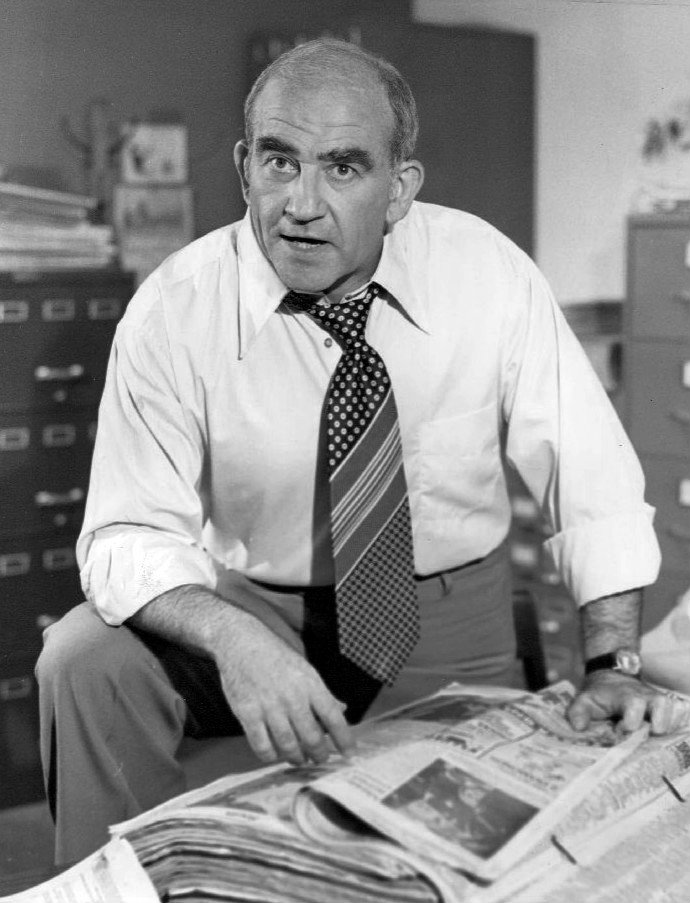



 Ethics Alarms