Drone Ethics: The Policy and the Memo

Hey, Fox News! INCOMING!!!

Hey, Fox News! INCOMING!!!

With the leak of the Obama Administration’s Justice Department memo laying out  alleged legal and Constitutional justification for targeted drone killings abroad, the ethical debate over this practice finally began in earnest. Back in October of 2011, I visited this topic in a post titled, “The Ethically Messy, Legally Muddled, Drone Killing of Anwar al-Awlaki,” who was an American citizen and also an al-Qaida leader and terrorist, and wrote…

“I am far less confident of a conclusion that the killing was legal than I am that the killing was ethical in a situation where traditional rules and considerations don’t fit the situation well, meaning that decision-makers must go outside the rules to find the right, meaning ethical, course of action.  And I’m even not 100% confident of that.”

This still accurately encompasses my view, although my confidence in the position has declined materially, in part because of the memo. However, my position in 2011 was based on the assumption, using the Bush Administration’s position, that the United States was engaged in a de facto war with al-Qaida, and as a tool of war, killer drones  are within ethical bounds by my analysis. The leaked memo, however, begins with the assumption that the drone strikes are not part of ongoing declared warfare, but rather a new variety of cross-border lethal intervention that has no legitimate statutory basis. I think that under those assumptions, targeting drone killings are illegal, unethical, and to the extent that they give the President of the United States the power to kill someone in any nation based on his assessment that person needs killing, ominous.

I’ll leave the legal analysis of the memo to others. For now, other than pointing readers to my earlier analysis of drone killings in the context of warfare, I just have some observations: Continue reading

The Arlington, Texas School District Flunks Accountability

The latest in teaching aids in Arlington, Texas

The latest in teaching aids in Arlington, Texas

If a Walmart worker poured pencil shavings down the throat of a customer, he would be fired. If the CEO of Boeing poured pencil shaving down the throat of a company accountant, he’d be out the door before he could utter the word, “Seconds?” If a pediatrician poured pencil shavings down the throat of a patient, she’d lose her license, and if a veterinarian poured pencil shavings down the throat of a kitten, he’d be arrested.

Yet in the Arlington, Texas, School District, the teacher who poured pencil shavings into the mouth of unsuspecting Marquis Jay, a 13-year-old eighth-grader at Boles Junior High School, is back on the job after less than a month’s suspension. She apologized, you see. She said that she wasn’t thinking right.

Yes, I’d say that’s a fair description of her actions. But I’d also say that a teacher prone to harming her students in those periodic moments when she is “not thinking right” is a continuing risk to the children. If fact, I’ll confidently state not only that a teacher who attacks a child in this manner—and an attack is what it is—has to be fired, if a parent of a child attending the school involved is to have any justified faith that the school is properly concerned with the welfare of its students, isn’t recruiting instructors from the violent ward at the local Home for the Bewildered, and, in short, doesn’t have an administration staffed by moonlighting Hell’s Angels members. Continue reading

The Judge Who Would Be Nun: This Could Become A Bad Habit

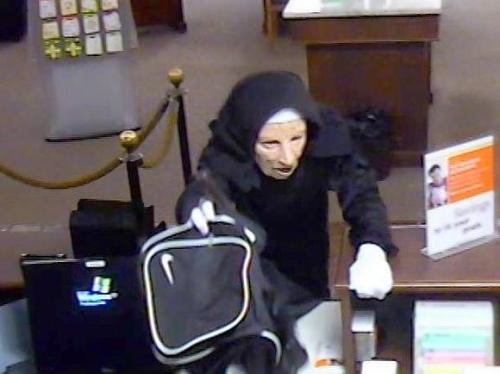
Nun hiest

Sister Mary Ignatius explains it all: “Stick em up!”

You can’t make this stuff up.

Navahcia Edwards, 25, was being tried before U.S. District Judge Matthew Kennelly on charges of bank robbery. She performed the heist disguised as a nun. A scary nun.

Her attorney argued that the  robbery was carried out by a white thief, and Edwards is African-American. Her fiance, the defense claimed, hit the bank with a white accomplice who blackened her face under the old lady mask. This seems like a far-fetched defense to me, but criminal defenses when one’s client is probably guilty tend to be like that.

Judge Kennelly decided to test the theory. He said that he dressed up like the fake nun in the photo, mask and all, and looked in a mirror. His white skin was visible, so he rejected what he described as a “reverse Al Jolson” defense, and found Edwards guilty as charged.

This is unethical judicial conduct. Continue reading

Ethics Dunce: Chelsea Welch (The Applebee’s Train Wreck, Part Deux)

Chelsea Welch 2

Chelsea Welch: Hire at your own risk. You have been warned. By Chelsea, in fact…

I really, really didn’t want to revisit the tale about the cheap pastor, the self-righteous waitress, and Applebee’s. The comments on the original post here were illuminating, not in a good way, and were profoundly discouraging. The fact that so many people are incapable of getting past their biases against any business that has to enforce basic common sense policies on their employees is depressing; the fact that they embrace wholeheartedly the idea that a minor instance of poor judgment and conduct warrants permanent vilification on the web is alarming; and the widespread rejection of the principles of the Golden Rule is scary.

Unfortunately, Chelsea Welch, the fired waitress whom I once had some sympathy for despite the fact that her firing was 100% justified, has apparently seen fit to publish a letter, although there is no way to tell that it is really hers—the way this whole scenario has gone, it probably was written by the pastor who started the whole mess to make Chelsea look bad. If that was the objective, the pastor was wrong again, for a ridiculous percentage of the commenters think the letter is perfectly reasonable, meaning, of course, that they have the ethical sensibilities of 5th graders. The cruel reader who brought this to my attention actually read the comments on one site and tallied them: 1538 supporting Chelsea, only 20 that didn’t.

<Sigh!>

Nonetheless, Chelsea Welch reveals herself as an A-1 prime ethics dunce, the kind of person who will blunder along through life behaving unethically, causing little and large harms and discomforts to those she encounters, always thinking she is in the right, because she doesn’t have the foggiest notion of how one goes about determining what  right is.

Her letter is a classic of rationalization. Some highlights (the entire letter is at the end)… Continue reading

The $500,000 Dead Baby: Signature Sign Of An Unethical Industry

Why certainly, we'll be happy to paint a target on your baby's back, no questions asked---just keep up with the premiums!"

“Why certainly, we’ll be happy to paint a target on your baby’s back, no questions asked—just keep up with the premiums!”

Three insurance companies allowed a Manassas, Virginia father with a suspicious history of violent family deaths to take out life insurance on his 15-month-old son in the astounding amount of more than $500,000. Now the boy, Prince McLeod Ram, is dead, allegedly drowned by the beneficiary of those policies, his dad, Joaquin Rams. He’s under arrest; the companies are unlikely to have to pay out a cent.

I suppose that makes this a good business deal for them.

For the dead kid, not so much. Continue reading

Ethics Alarms Banishes “The Smoking Gun,” Unethical Website of the Month

"This? Sure, this fits our mission. Post it!"

“This? Sure, this fits our mission. Post it!”

“The Smoking Gun” website has been linked on Ethics Alarms from the start, as its published documents from various sources can be an invaluable resource in uncovering unethical conduct in business, government, and popular culture.  Being linked here, however, carries an implied conviction that a site is itself ethical, or at least makes a good faith effort to be so. I can no longer say this with confidence about the “The Smoking Gun,” and thus am deleting its link while designating it the Unethical Website of the Month. Let’s not forget that it is owned by Time-Warner.

Why the ban? A hacker by the name of Guccifer hacked into Bush family AOL accounts, stole private messages and photos and posted them online  to embarrass the Bush family and violate their privacy. “The Smoking Gun” then re-posted all of it, including a private letter from George W. Bush to his family about planning the funeral of his father. Continue reading

“Free Wi-Fi” And Journalism’s Flagrant Untrustworthiness

You’ve probably memorized that State Farm TV commercial where the woman tells her friend that she believes everything on the internet because it has to be true, and introduces her “French model” date—a grotesque geek wearing a belly pack who can barely manage “Uh..Bonjour!”—whom she met on the internet. Well, last week we were treated to a lesson in how the mainstream media, even its most prestigious and trusted members, are about as trustworthy as her date.

None other than the exalted Washington Post breathlessly reported last week, in a front page story, that “the federal government wants to create super Wi-Fi networks across the nation, so powerful and broad in reach that consumers could use them to make calls or surf the Internet without paying a cellphone bill every month…If all goes as planned, free access to the Web would be available in just about every metropolitan area and in many rural areas.”

The story was stunning and worrisome–Why is the government competing with private enterprise? How can it undertake such a sweeping discretionary initiative with the Treasury deep in debt? Wait, what??—and rapidly spread all over the 24-hour news media, including cable, radio and the internet (Uh..Bonjour!). It is there still, largely uncorrected. The story, meanwhile, was essentially untrue, a mistake. Yet as of yesterday, it was still being reported and argued about as fact on such respectable and trusted websites as Salon, Reason, UPI, Business Investor, The Daily Caller, NPR and many more. The Post, meanwhile, has still not published a clear and prominent retraction, and the reporter who wrote the erroneous story is still spreading misinformation. Continue reading

Ethics Dunce: Melowese Richardson, Ohio Poll Worker

Melowese Richardson

Melowese Richardson

Melowese Richardson, Ohio poll worker, doesn’t understand why she’s being investigated for voter fraud. Oh, she voted at least twice, no doubt about that, and she doesn’t deny it: According to Hamilton County records, Richardson’s absentee ballot was filed on Nov. 1, 2012 along with her signature. Later, she told an official she also voted at a precinct polling place because she was afraid her absentee ballot would not be counted in time. Double voting is something of a family tradition, for Richardson’s granddaughter, India Richardson, also cast two ballots in November, her first time as a voter. Melowese sees nothing wrong with any of this, or this either: absentee ballots for Montez Richardson, Joseph Jones and Markus Barron all came from Richardson’s Whetsel Avenue address, were received by the board the same time as Richardson’s, and the handwriting on all four of them was similar. Continue reading

Stop Picking On Mike Tyson

This time, it wasn't your fault, Mike.

This time, it wasn’t your fault, Mike.

“Law & Order: SVU” cast former heavyweight boxing champ Mike Tyson as a prisoner and past victim of child abuse victim, who murdered one of his abusers. The episode bombed for the NBC show during the crucial “sweeps” ratings period, and Washington Post TV writer Lisa De Moraes attributes the failure to the show’s insensitivity in casting Tyson.  She wrote in today’s Post,

“Before the episode aired, about 7,000 people signed a petition asking NBC to recast the role. The petition was created by an ardent “SVU” fan who is a rape survivor and who said she felt betrayed by the stunt casting. Among those who signed the petition: “NCIS” star and abuse survivor Pauley Perrette. Tyson was arrested in 1991 and charged with raping then-18-year-old Miss Black America pageant competitor Desiree Washington; he was convicted and served three years of a six-year prison sentence.”

If the “Law and Order” producers erred in casting Tyson, it was in under-estimating the fecklessness, bias and hypocrisy of the viewing public.  Continue reading

Slow Loris Ethics: Great, Now Even The Smithsonian is Hyping!

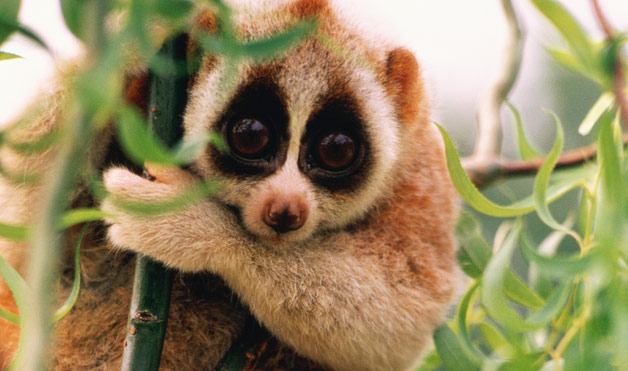
Slow Loris

If we can’t even trust the Smithsonian not to lie to us, what hope is there?

The February issue of the Smithsonian magazine arrived, full of articles about origins and evolution. I immediately gravitated to the essay about komodo dragons, whose bite, as those of you who have been bitten by one know, is poisonous. In a colorful sidebar to the main article was a smaller note about the wide range of other animals that poison their victims, titled “Pick Your Poison.”

“The komodo dragon may be the newest addition to the elite corps of predators that kill with chemistry, but the venomous world is already more diverse than people realize,” it began. The note was illustrated by photos of a duck-billed platypus (owner of a leg spur with a poison gland that gives the thing quite a kick); the tiny Pacific cone snail, which can kill a human; the black mamba, the snake that had a co-starring role as an assassin in “Kill Bill, Part 2,” and…a slow loris???

The little, big-eyed, furry, cute Asian primate is venomous? That was a surprise. The article included no details, just noting that the slow loris was the only “venomous primate.” I managed to pass along this information as fact to my wife and two friends before bedtime (it takes so little to excite me these days!), and this morning dived into the web to learn the details of the slow loris’s poison. What I discovered was even more shocking than the original note. The Smithsonian magazine was hyping, and badly at that.

To begin with, there is a difference between venomous animals and poisonous ones. “Venomous” means that the creature injects toxin into its prey, through a sting, a bite, or other means. “Poisonous” means that the animal carries some kind of toxin that the prey ingests, absorbs or inhales, occasionally fatally. The Smithsonian article ignores this distinction for sensational purposes, as the title “Pick Your Poison” suggests. But the slow loris, which is definitely not venomous,. and  it isn’t really poisonous either. Continue reading