We can hope.
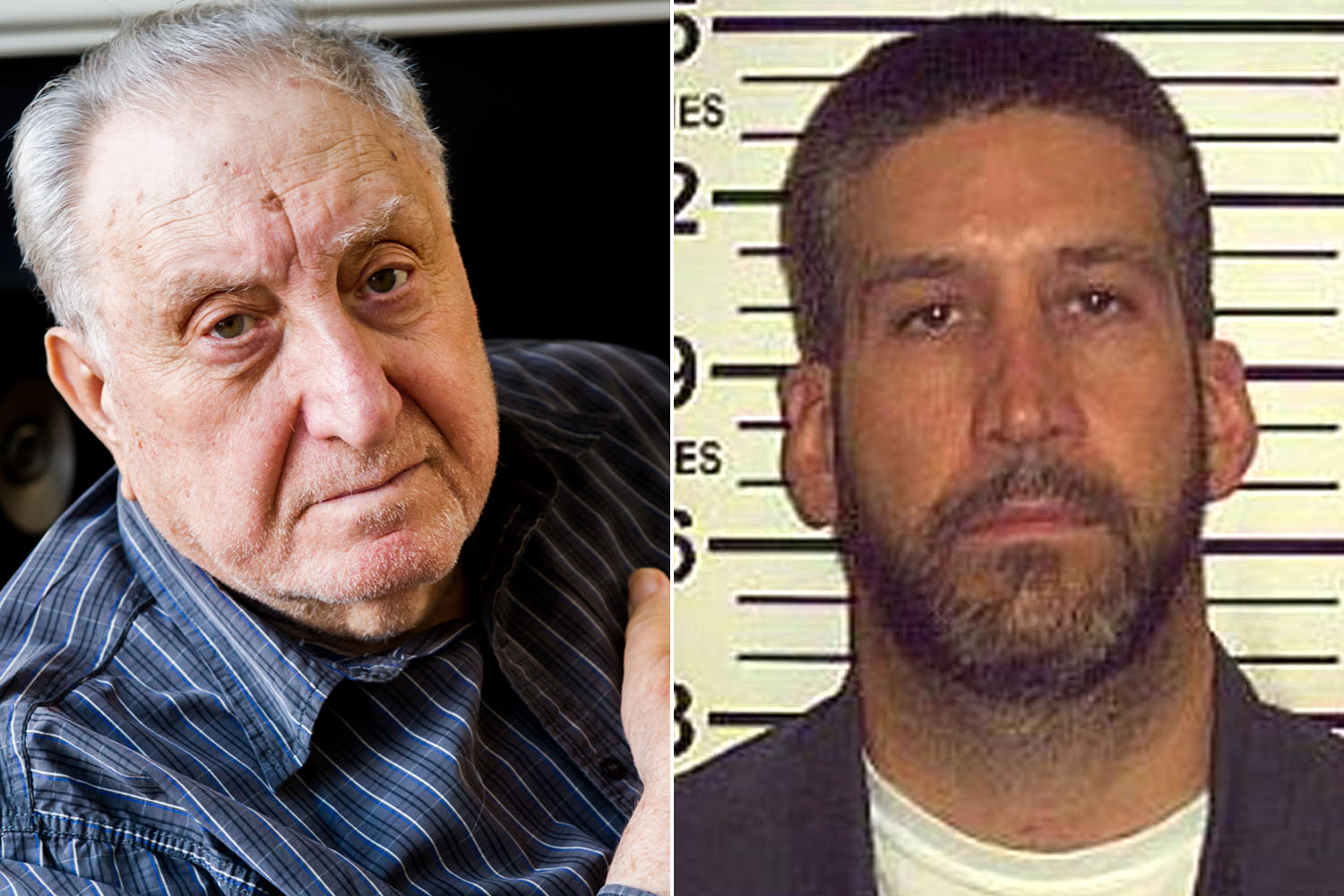
The judge’s conscience gnawed at him a little more every year after he retired from the bench. With every news article he read about a wrongful conviction, Frank J. Barbaro, the former Brooklyn judge and assemblyman, would return to a particular murder case in 1999, and question whether he had made the right decision to send a man to prison for 15 years to life. Not long ago, Mr. Barbaro, 85, decided to contact the lawyer for the man, Donald Kagan. He got a transcript of the trial, during which Mr. Kagan had waived his right to a jury and put his fate in Judge Barbaro’s hands.
“As I read it, I couldn’t believe my eyes,” the former judge said in an interview. “It was so obvious I had made a mistake. I got sick. Physically sick.”
Mr. Barbaro’s change of heart led to a highly unusual spectacle this week in a Brooklyn courtroom: He took the witness stand in State Supreme Court to testify at a hearing that his own verdict should be set aside. His reason was even more unusual: As a die-hard liberal who had fought as a politician against racism in Brooklyn and weathered the race conflicts in Bensonhurst, he said he had been biased against Mr. Kagan because he was white and the shooting victim, Wavell Wint, was black.
“I believe now that I was seeing this young white fellow as a bigot, as someone who assassinated an African-American,” Mr. Barbaro testified on Wednesday before Justice ShawnDya L. Simpson. He added: “I was prejudiced during the trial.”
Mr. Barbaro’s statement, reported in The New York Post on Thursday, has reopened a case that had seemed airtight and put in question a verdict that had survived an appeal in 2004. Experts on appellate law said it was highly unusual for a judge to try to overturn his own verdict, much less admit a bias, and it raised unusual legal issues, akin to when a juror is found after a trial to have a hidden prejudice…
We all have biases, and it is no crime, as being human is no crime. Our obligation, never-ending, is to try to recognize our biases, mitigate their harm, and try,try, try to perceive reality accurately and fairly despite them. It is very difficult. Sometimes it is impossible. We have to keep trying, however, no matter how often we fail, or how long it takes.
Frank Barbaro, who in addition to recognizing his bias and making every effort to undo the harm it did, also performed that other most difficult feat, admitting he was wrong, should be a beacon for us all….and those who still call George Zimmerman a racist murderer most of all.
______________________________
Pointer: ABA Journal
Facts: New York Times
Graphic: NY Post
 Ethics Alarms

That is definite hero status.
Admitting you are wrong to even a friend can sometimes prove very difficult, let alone to the public.
The judge’s conscience gnawed at him a little more every year after he retired from the bench.
It is ethical and moral that the Judge stepped up. I would find it more impressive if when he first had doubts he would have immediately tried to revisit the case. It seems like this was something that didn’t come onto the judge as an epiphany but was there for some time. I understand that doing what he did may have had serious repercussions on other cases but the duty is to the innocent. Good on him for coming clean, it took courage but maybe not as much courage as it would have if he wasn’t in such advanced age. Makes me think he is trying to cleanse his soul prior to arriving at the pearly gates.
I am feeling especially cynical today.
Yet what he is doing is so unusual and extraordinary that I think he warrants the benefit of the doubt, no?
Even without the benefit of the doubt it is so unusual and extraordinary as to deserve credit.
If he’s just doing it to impress St. Peter then he is also succeeding in impressing me.
Unusual and extraordinary yes, but I don’t know if it erases the original unethical conduct. I would hope that you would also categorize that conduct as unusual and extraordinary and obviously unethical.
Without a doubt coming clean was the right thing to do.
Addtionally I am willing to use his actions as an example of an ethical act but at 85 my cynical side makes wonder about his motive.
Based on his premise that he made the decision due to his bias, not evidence, it makes me very concerned that a bias that strong didn’t just taint the case but decided it. That has to weigh on ones soul, if one has such a thing. To convict someone of murder based on bias is a character flaw, one that I would classify as signature significance. Because of this flaw, the time that has passed and the Judges age I question whether the man has truly developed and evolved in these last waning years.
“I don’t know if it erases the original unethical conduct.”
What in the post even suggested that? The guy’s been in jail: harm was done. Fixing an injustice seldom involves erasing it.
“I would hope that you would also categorize that conduct as unusual and extraordinary and obviously unethical.”
Bias in sentencing? Neither unusual, nor extraordinary, nor especially unethical. Biases are subconscious adjustors of perception. The sentence might well have been just—it withstood appeal. It was just wrongly arrived at, as the judge realized later. That’s a mistake, and a mistake isn’t always unethical.
Additionally I am willing to use his actions as an example of an ethical act but at 85 my cynical side makes wonder about his motive.
Few, if any ethical acts have pure motives. Usually it isn’t even worth exploring. It’s like the recent Clinton post. The right thin is still the right thing.
Based on his premise that he made the decision due to his bias, not evidence, it makes me very concerned that a bias that strong didn’t just taint the case but decided it.
Well, sure. In the sense that the bias determined how he interpreted the evidence. That’s why judging is a difficult job.
I don’t know if it erases the original unethical conduct.”
What in the post even suggested that? The guy’s been in jail: harm was done. Fixing an injustice seldom involves erasing it.
“Ethics Hero” implies such doesn’t it? If the title was “ethical act or quote of the day/week or whatever” I would agree. I did intend to make the point with the Ethics Hero: Bill Clinton post but got sidetracked.
“I would hope that you would also categorize that conduct as unusual and extraordinary and obviously unethical.”
Bias in sentencing? Neither unusual, nor extraordinary, nor especially unethical.
I may have misread but I thought the judge’s point was not related specifically to sentencing bias, which I would still think IS unethical, but to conviction of murder.
Biases are subconscious adjustors of perception. The sentence might well have been just—it withstood appeal. It was just wrongly arrived at, as the judge realized later. That’s a mistake, and a mistake isn’t always unethical.
Granted, but I don’t know enough about the types and manner in which appeals are conducted, if the presiding Judge was known to be a bigot and use his power as weapon against those he was biased against would that have affected the appeal?
Few, if any ethical acts have pure motives. Usually it isn’t even worth exploring. It’s like the recent Clinton post. The right thing is still the right thing.
I agree with this premise and that what the Judge did was an ethical act, but the one act or even several does not make an ethics hero. By deeming this judges ethical act or that of Clintons as worthy of Ethics Hero status seems to be an application of The Ruddigore Fallacy.
Based on his premise that he made the decision due to his bias, not evidence, it makes me very concerned that a bias that strong didn’t just taint the case but decided it.
Well, sure. In the sense that the bias determined how he interpreted the evidence. That’s why judging is a difficult job.
Judging is a difficult job but that is why it is so important that not only judges but everyone in the justice system be aware of bias and apply professional ethical standards in every decision they make regardless of skin color. This case and your view again reminded me of the vehemence of those who condemned Judge Deni based on the unsupported allegation of her bias by one activist internet journalist because she dismissed one charge of six or so against a defendant.
Even in our evealuations of the ethics posts you do here demonstrates how bias effects how we all evaluate things; in this case everything points to this judge being biased to include the judges own statement that he was. That he eventually owned up to it does little in my mind to minimize his initial unethical act, it certainly does not make him an Ethics Hero. In the Deni case nothing but one unsupported and dubious statement lead many to conclude that she was biased and that she based her decision not evidence but on her bias thus making her not just unethical but anyone voting for her dreadful human beings. Of course that was rape and this is only murder. If Judge Deni turned out to be biased against hookers and came out and admitted it would she be an Ethics Hero?
1. Ethics Hero implies that someone did an ethical act under circumstances where most people would not or do not, and/or sets an important example for others. I don’t see any way this act does not qualify him as an ethics hero. His past act making it necessary is irrelevant to the designation. It isn’t a Life Achievement Award.
2. I misspoke. Bias in sentencing OR in the verdict. But the statement still stands.
3. If I was making the Ethics Hero designation a full accounting, it would be a Ruddigore situation, but I don’t, except in the rare cases of the Ethics Hero Emeritus group. That is a life award. And good deeds can outweigh the bad, but they rarely erase them.
4. I don’t see the relevance to Judge Deni. Biases become clearer with time. You are surprisingly harsh on this–those who appoint judges assume bias. They like bias: it means that the judge is predictable. This is why Chief Justice Roberts was vilified over his ACA decision—he didn’t rule as his presumed conservative biases predicted. And that’s why I made him an ethics hero for what he did, though I also was disappointed in the decision—biases in judging are the rule, not the exception. Some judges bleed red for all defendants. Some think all criminals are scum. Some are biased against police based on their previous legal work. Virtually none of these ever come back later and say, “you know, I wasn’t being fair and objective: I was biased.” One judge that I know of—this one—did. That’s remarkable, and clearly Ethics Hero worthy.
“1. Ethics Hero implies that someone did an ethical act under circumstances where most people would not or do not, and/or sets an important example for others. I don’t see any way this act does not qualify him as an ethics hero. His past act making it necessary is irrelevant to the designation. It isn’t a Life Achievement Award.”
3. If I was making the Ethics Hero designation a full accounting, it would be a Ruddigore situation, but I don’t, except in the rare cases of the Ethics Hero Emeritus group. That is a life award. And good deeds can outweigh the bad, but they rarely erase them.
I still don’t like it as I see hero and heroic acts as separate things but with your distinction I will accept it and move on.
4. I don’t see the relevance to Judge Deni.
The relevance to Judge Deni is that you make the exact opposite argument regarding a Judges Bias as you have here in the comments, the differences are there is no proof that Deni was biased, Barbaro admits he was, Deni erred on the side of the accused, Barbaro didn’t, Deni appears to have based her decision on evidence, Barbaro admits he ignored it, Deni was dealing with a case of rape, Barbaro Murder. How can in the case that involves rape a dubious suspicion of bias is unacceptable but in a case of murder Bias is just part of life?
There is a distinction, you can have bias and it will color your perception from one case to another but that does not excuse a Judge who ignores his ethical duty and evidence based on the color of one’s skin. A judge can be suspicious of police but when confronted with indisputable evidence or even evaluating completing claims he cannot just ignore the evidence. The justice system is supposed to be biased in favor of the accused, when in doubt the judge has a duty to side with the accused.
What this Judge ended up doing is ethical and he should be highlighted and applauded for it, but if he wasn’t unethical in the first place and did his job as he was required to it wouldn’t have been necessary and a possible innocent man wouldn’t still be in prison.
What? You’re off the rails. Deni’s decision was wrong on the law. It could be explained by idiocy or bias. Bias is more likely, with idiocy in the mix. No proof? Deni made a decision that is ant-woman and anti-prositute. It can’t be defended. It had to be based on something, and yes, I am stating that no judge NOT biased agains prostitutes could possibly say that a gang rape was not a rape. She didn’t err on the side of the accused, she pretended that the crime didn’t exist; she wrote her own law. That isn’t just bias, that’s prejudice.
Being biased is not unethical. Bias is also called instinct and wisdom, if kept under control. Dealing with bias makes one more ethical, but having biases affect one’s judgment is not per se unethical, because pure objectivity is impossible.
He may have been unethical, but we don’t know. Other than that, your last paragraph is correct.
”What? You’re off the rails. Deni’s decision was wrong on the law.”
You can make that call without being in THAT court or knowing any facts of the case?
Philadelphia Municipal Court judge Teresa Carr Deni ruled that the 2007 rape of a prostitute at gunpoint was merely “theft of services.”
False statement, no such ruling was ever made. An activist began this smear, the quotes in which she said she got from the judge in a coffee shop (not the court or records) are at odds with the official statement from the court that Deni has never commented on cases that come before her and is barred from doing so.
The idiot Chancellor who based on the activist quotes then demonized Deni for a ruling that was never made fueled the feminist flames. Then some bar members stuck it to the Chancellor for talking out of her ass and backed the judge up, the bar officially highly endorses Judge Deni and always has.
But her bias is bad for not convicting a man of rape in which you have no facts on the case but Barbaro is ok for being a bigot and admittedly sending a man to prison for murder because of the color of his skin.
It could be explained by idiocy or bias. Bias is more likely, with idiocy in the mix. No proof?
Or that the judge did her job and based on the available evidence dropped the charge; this seems like the most likely scenario as the prosecutor took it to a separate court and separate judge and the same thing happened.
Deni made a decision that is ant-woman and anti-prositute. It can’t be defended. It had to be based on something, and yes, I am stating that no judge NOT biased agains prostitutes could possibly say that a gang rape was not a rape.
Or the more likely scenario is she never said any such thing, made no such ruling and you’re off the rails because it must be true as it is rape!
No one, from any court, from any judge was ever convicted of this crime, as a matter of fact none of the other gang rapists were ever charged. I absolutely believe it happened but if the evidence did not exist then what the hell was she going to do? Do you suggest that she demonstrate bias against rapist and convict the guy regardless of the evidence because that is damn sure what it is starting to sound like.
She didn’t err on the side of the accused, she pretended that the crime didn’t exist; she wrote her own law. That isn’t just bias, that’s prejudice.
Bullshit, how about “He may have been unethical, but we don’t know.”? At least with him we have the benefit of him admitting he was, with her you have exactly nothing but a rape allegation and the fog of feminist activists all quoting the same coffee shop conversation that the first one started.
Yet without knowing any facts or evidence about the Deni case you can state; Judge Deni clearly has a monstrous bias against prostitutes, and thus believes that they shouldn’t receive equal protection under the law.
Back off. I don’t know what your sources are, and until I see they are more reliable than what I have, your rant is out of line.
PHILADELPHIA – A prostitute who was allegedly gang-raped suffered nothing more than “theft of services,” a judge has found.
“She consented and she didn’t get paid,” Municipal Judge Teresa Carr Deni told the Philadelphia Daily News. “I thought it was a robbery.”
The comments drew a sharp rebuke Wednesday from the Philadelphia Bar Association.
“The victim has been brutalized twice in this case: first by the assailants, and now by the court,” said Jane Leslie Dalton, head of the bar.
A Philadelphia man who hired the 20-year-old hooker for a one-on-one forced her to have sex with three other men, prosecutors said – and the judge agreed, upholding forced imprisonment charges but tossing out the more serious rape counts.
( http://www.nydailynews.com/news/crime/judge-deems-prostitute-gang-rape-robbery-article-1.259433#ixzz2plgVJm00)
A rape cannot be a robbery, and a judge ruling otherwise IS wrong on the law. The statement to the newspaper is not a “coffee-shop conversation,” and the statement by the bar was official. I have to wonder why you are so passionately determined to defend a judge who believes that when a prostitute is raped, it’s theft of services. YOUR source, whatever it is, is the outlier, not mine.
The origin of the always in quotes theft of services was from Jill Porter’s original article about this case. It is no longer available, not even in the archives…very strange since her other articles are, maybe something to do with the Judges complaint against the prosecutor.
Despite the prosecutor not agreeing with Judge Deni’s decision you won’t find him personally saying anything about her stating it was theft of services, nor is there any other document stating theft of services. Nor is there a charge of such or conviction. On the original charge sheet is robbery, rape, conspiracy, well look for yourself. In many of the articles it says the gun was used when bought by the second man, if the first already did his deed with her consent such as in your own stated opinion The offense then would have occurred after the consensual sex, and would be not rape, but breach of contract…an unenforceable, illegal contract at that. Fraud in the inducement would also fit, perhaps. Never rape since none of us were there, nothing but circular reporting exists, none of the other men were ever charged, and Gindraw was never convicted for this rape, even by the second court/judge, would it not be logical that the evidence did not support the rape charge? The money and cell phone being stolen would fit robbery or armed robbery. Conspiracy fits bringing in the other guys.
Even in the articles that are the primary sources of this whole controversy the columnist states;
Deni told me she based her decision on the fact that the prostitute consented to have sex with the defendant.
“She consented and she didn’t get paid . . . I thought it was a robbery.”
To me that read as she consented to sex, had sex and then didn’t get paid, is that rape? Mind you if this is accurate in the least it is not in context, was the second guy with the gun their yet? Was it after he had sex that the rest went down? I don’t know, I was not there, not during the incident, not in the court room nor in the coffee shop. But for such horrible decision by a judge how is it she has so much support, is recommended so highly by her profession, has never made any other statements on cases and has never been accused of any other obviously unethical decisions during her whole career? This doesn’t wash, this was a hit job both times due to elections, it is the only thing that makes any logical sense.
Additionally there was the investigation or complaint about the prosecutor for conduct in the case in regards to contact with the press, namely one Jill Porter. No information I can find on that outcome either.
I provided links and information on the Deni case before; we have discussed it several times, yet despite pointing out what I believed was contradictory analysis by you we are still at an impasse, which I would be fine with except that the discussion never seemed to get into the ethical position of the judge to determine based on evidence presented that the crimes were committed. I didn’t bring it up several times now because I was trying to sharp shoot you but because you seem to contradict yourself, so I was seeking clarity but what I got was more of the same it was rape and since the judge didn’t take the charges to trial she is obviously unethical. You continue to make this claim without addressing any of the conflicting information, addressing the fact that nothing from the actual hearing has been released, no evidence of the crime listed or any other corroborating information that the judge hates hookers and didn’t actually consider the evidence.
Columnist who crossed paths with the judge in the coffee shop and writer of the original article where all the circular reporting came from
http://www.philly.com/philly/columnists/jill_porter/
The origin of the disputed quotes from the Judge are also in Jill Porters second article on the case, note that this is where she also states that she got the Deni quotes on the case at a coffee shop.
http://archive.is/pnYzQ
Court doc
http://courtdocs.org/dominique-gindraw-mc-51-cr-0045328-2007/
One of the responses to the Chancellor.
http://articles.philly.com/2007-11-02/news/25225110_1_bar-association-judicial-independence-preliminary-hearing
I’m sorry, Steve, I just don’t see it. The comment about “real rape” is a smoking gun, but nothing in the record indicates that this is anything but a judge who finds the idea that a prostitute can be raped repugnant. The defense bar’s protest is pro forma—obviously, they represent criminals and don’t want the bar to make statements that might discourage other judges from leniency, no matter how unjustified. The possible ethics complaints about the prosecutor have to do with the propriety of leaking to the press (a possible 1.6 (confidentiality) violation, or even 3.8 (prosecutorial misconduct) or 3.7 (publicity), OR 8.2, impugning the i9ntegrity of a judge. It has nothing to do with the charges brought.
I guess it really comes down to the statements to Jill Porter, I don’t believe them, at least the context that they are in. Even the “minimizes true rape cases and demeans women who are really raped.” quote as bad as it is does not demonstrate context or association. If that followed the statement that the gal consented and had consensual sex with Dominique Gindraw then to charge him with rape after that would “minimizes true rape cases and demeans women who are really raped.”
Deni told me she based her decision on the fact that the prostitute consented to have sex with the defendant.
“She consented and she didn’t get paid” if this is an accurate statement even out of context then that act was not rape. Perp number 2 with the gun doesn’t seem to have any bearing at this point. Than the dot, dot, dot linked quote pertains to her not getting paid? ” . . . I thought it was a robbery.” the phone and money? What was between the consent statement and robbery one?
I would say I was stretching trying to make her quotes fit a more reasonable picture but I don’t think I am. I think they were stretched to develop the worst possible picture.
When you first posted this I was with you, but then too many unanswered question came up. 12 years on the bench when this incident came up but no hint that she hated rape victims or prostitutes until this? Then 6 more years go by without any other indication she is a bad judge who hates rape victims? How many victims and prostitutes came before her during that whole time and not one other incident? Three elections in which the board went through her records and transcripts and still decided to highly recommend her? The feminist were out in force against her, as well as many other folks, with that entire furor and all those thousands digging in to destroy the judge not one other incident or corroborating evidence comes out? 18 years and all they can point to is the out of context quotes from the one incident. Feminist bloggers and activist are way too effective at digging up dirt and twisting even the most benign comments into the anti women statements but they failed to be able to with this judge? That to me speaks volumes.
That is why I just don’t buy that this judge is unethical and didn’t consider the evidence in front of her, it just doesn’t add up. I’ll give her the benefit of the doubt; there just is nothing tangible that supports that she didn’t do her job, no charges brought against any others, no rape charges for Gindraw for this incident. The prosecutor had the option to file with another judge and even another court, it never happened. To me that speaks to the evidence not the judge.
Even the Chancellor relied on the hacks quotes, I say hack as I went and read other stories of hers, Jane Daltons statement was within her right to do, but some of the other bar board members had issues with it. She said she read the transcripts and that she didn’t agree with the judge, and then she attacked the judge based on the article. She even used Jill Porters “theft of services” that she came up in the first article.
I doubt we can reconcile our opinions on this one because we are operating off of different “facts”. In premise I agree with your call, I just don’t think a accurate accounting of the incident has been made. Maybe in six more years when her next election goes someone may finally come up with a transcript or substantiating information.
No, Jack. We just thought that Chief Justice Roberts would uphold his oath to defend the Constitution and were rudely surprised when he proved that he placed his own interests above his duty… even to the extent of finding a lame excuse for Obamacare that even Obama’s people had rejected.
As for Judge Barbero; it’s true that he deserves some approval for finally revisiting what was actually a judicial crime of his. But after all this time? The fact remains that he sentenced a man to a long term in jail because of political correctness beyond the law… just as Roberts did. Only in this case, he additionally left a man to suffer long years of incarceration.
Yes, he can’t take it back or give his victim back the years of his life that were cruelly stole from him. But that judge still committed a crime which has not been addressed. If he is as repentant as he claims, he would be demanding a court of inquiry as to his actions.
How “own interests”? Roberts has a job for life, and no one can touch him. He had to know he would be skewered. Kneejerk voting on the court according to partisan expectations undermines its authority. The ACA is no longer a precedent for misuse of the Commerce Clause, and the the penalty was always a tax…now the opponents of the law have to be vigilant and make sure the public understands it as such. Its not SCOTUS’s job to protect us from bad laws, just illegal ones—if there was a way to interpret the law of the land as legal, that’s the correct limitation.
Democrats may yet wish Roberts had killed the law, leaving Obamacare in the dreamy realm of theory.
I would theorize that, for Roberts, this was a “legacy” thing. Whatever his motives, though, the consequences are staggering.
Wow.
That was a different kind of courage than Judge Horton’s (http://en.wikipedia.org/wiki/James_Edwin_Horton) and possibly an even rarer kind.
This brings to my mind a question that I’ve struggled with for a while now: Who is the better man: The man who has never done wrong, or the man who has done wrong, and then recognized their wrong and acted to make it better? The man who has never drank, or the recovering alchoholic? The good son, or the prodigal son?
What do you think?
It’s a tie. Especially since the man who has never done wrong 1) doesn’t exist or 2) has been juts sitting in a cave, or 3) is just lucky. Ethics is an ongoing process; someone who has never done wrong is not likely to be very good at it. I’d trust the other guy more.
Maybe I put that poorly, not “never done wrong” perhaps, but “hasn’t done the specific wrong we’re comparing, all other things equal”. It’s a hard question for me, because although there’s something awesome in redemption, the fact is that they needed to do something wrong to need redeeming. And who’s to say the other guy wouldn’t redeem himself also? don’t think there’s a right answer here, but i’s a good thing to keep in mind.
I don’t see redemption with this act, I think he would have to go a good bit more before I could classify it as redemption, maybe going to the man in question and his family and begging forgiveness, working for or donating resources to a program like the innocence project….something more.
Way, way too far. Begging forgiveness? Nothing says judges are pledged to be infallible. He did his best then—he now realizes it wasn’t good enough.
I took it that Humble Talent was implying and you agreed that this was an act of redemption.
Way, way too far. Begging forgiveness? Nothing says judges are pledged to be infallible. He did his best then—he now realizes it wasn’t good enough.
Begging forgiveness is not far enough if he convicted this man based on the color of his skin and not evidence. A judge holds a position in society where special trust is essential, if that Judge is not worthy of such trust due to being so ethically corrupt as to ignore his professional duty and standards then it goes beyond simply making a poor decision into being a corrupt bigot.
“I believe now that I was seeing this young white fellow as a bigot, as someone who assassinated an African-American,”
This statement does not support that he made a mistake while evaluating the evidence but that he evaluated the individual on his skin color and judged him guilty of murder based on it.
I think the term “redeem” does make the discussion somewhat murkier.
Based on the objection you raised: the Judge’s role in society, I don’t think redemption is possible. But, the nature of what redemption is, certainly doesn’t mean the former judge was not an Ethics Hero to come forward despite the personal and non-ethical considerations not to come forward and admit his error and then take steps to fix the error.
There is nothing in the story that suggests that he didn’t consider the evidence. I assume he did. If the evidence didn’t support his verdict, then the case would have been overturned on appeal. Indeed, we don’t even know that the guys wasn’t guilty, now do we? All we know is that a judge now believes that his bias prevented him from considering the case fairly and objectively, which is what biases do. If the judge intentionally ignore his duty to be fair and objective, that’s one thing, but the story does not suggest that at all. I am presuming he believed that his verdict was correct and just when he rendered it, and only now, with time, realizes that his judgment was impaired. An apology, under those circumstances, is appropriate. “Begging” for forgiveness? That assumes actual wrongdoing.
What you are really approaching is consequentialism, unless you would say that the judge would also owe him an apology if he was influenced by bias but got the verdict right anyway. Or would you?
“If the evidence didn’t support his verdict, then the case would have been overturned on appeal.
Appeal process broken? Protects judges? I dont know but it seems based on the the few stories I looked up that Kagan is likely to be exhonorated.
Barbaro was convinced that Kagan was racist and wanted to kill a black person, Barbaro said.
Wint was shot and killed outside a movie theater in the East New York neighborhood of Brooklyn when the two men got into a fight involving Kagan’s gold chain necklace, Barbaro said.
Barbaro said he gave little consideration to the self-defense argument presented by Jeff Adler, Kagan’s attorney, because he was blinded by his experience as a civil rights activist earlier in life.
When Barbaro read the court transcripts, he said, it became apparent to him that he ignored undisputed facts that support Adler’s self-defense argument. Kagan tried to walk away from Wint twice during the verbal and physical altercation, Barbaro said.
“With these undisputed facts, I should have acquitted him,” he said in the interview. “There was no way I could have found him guilty.”
The appellate court disagreed, obviously. So might another judge. Without witnessing the trial, there is no way to tell.
If the judge intentionally ignore his duty to be fair and objective, that’s one thing, but the story does not suggest that at all.
I think that is exactly what the judge is saying he did.
What you are really approaching is consequentialism, unless you would say that the judge would also owe him an apology if he was influenced by bias but got the verdict right anyway. Or would you?
If the judge was biased and based his decision on skin color and not evidence regardless of verdict then yes the judge owes him an apology for being a corrupt bigot and not fulfilling obligations as a Judge.
I don’t think the man who doesn’t err compared to the man who errs and makes right isn’t really a fair comparison.
Two events occur:
1) An error. The man who doesn’t err WINS this comparison, because he hasn’t erred and the other has. Further complicating this comparison are characteristics Jack alluded to in his response to you. What is the nature of the error?
Jack says “someone who has never done wrong is not likely to be very good at it” seems most applicable to professional practice, a student architect may have an error in his calculations and his teacher has taught him his error. The student (and since all professionals never stop being students, this is applicable) may confront unknown territory and they must put their own judgment and imagination to work to find the right answer and still err anyway. In this case, their error and associated consequences is a learning experience. Jack is then right claiming they would become better through errors and lessons learned. I don’t think that is a preferred method and I don’t think it automatically disqualifies a person who hasn’t made mistakes… you’d have to look at the bigger picture. Plus this consideration doesn’t include the effects of the error or just how mitigable the error was to begin with. Someone who makes an error that they should never have made IS NOT BETTER FOR IT, they are proven negligent.
Was the error due to negligence? Was it malicious in origin? All of this matters in deciding if “learning” and “growing” from the mistake are factor mitigating individual who erred, compared to the one who doesn’t.
2) The second event, which occurs after the error, is the conduct in attempt to rectify the error. In this, there cannot be a comparison. The one who did not err has nothing he must do further…. he did not err. There is no way to tell if he is ethically better or not.
I think your son who stays vs the prodigal son who returns makes an analogy out of something that doesn’t work. The parable of the prodigal son resulting in an outcome that appears to favor the son who fell away but came back is not an allegory to the person who doesn’t err vs the person who errs and makes amends. Side barring into Theology for a moment: the story of the Prodigal son is that the father (God) is OVERJOYED that the son (repentant sinner) who returns is to be an occasion so joyous to the Father that it is worth celebrating. It isn’t a story to compare the two sons.
Where the stories may be analogous, and Jack alludes to again, is that everyone makes mistakes. So the evaluation may be moot to begin with and a fairer comparison would be between how any one error-maker responds to the error and any other one error-maker.
OK, you got me at Theology sidebar (BA in theology about 33 years ago). As regards the question of which person is the better —
Indeed, the point of the story of the Prodigal Son is not actually about the repentant (and starving) son’s return, but instead it is about the Prodigal Father who lavishes his unconditional love on the son whom he thought was lost to him. Bible study explains to us that this is the kind of love that we would always receive from a loving Father God, regardless of our sins and failings. However, the story doesn’t end there. What about the older brother, who becomes pretty huffy when he sees his father’s prodigality on full display toward his seemingly disloyal and mega-jerk brother? The father’s response (“You are always with me and everything I have is yours…”) shows that in this story, at least, the two brothers are equal in the heart of the father. Even though the older brother never did anything wrong, and the younger brother acted like an idiot and returned home mostly because he was starving but he was repentant — One isn’t better than the other, because both are beloved by their father and there is no question of better when love is involved.
This judge did the right thing. It doesn’t matter why he did it, except to those who feel the need to judge his motives, which are immaterial when there is no down-side to his actions.
So we agree. Thanks for the deeper exposition.
Yes. I just don’t get to pontificate from a theological perspective very often, so I jumped at this opportunity. Thanks!
Oh definitely. Again, thanks for the deeper exposé. It’s a valuable story and one that needs not be misinterpreted.
As Dinah Shore would say, Patrice, “MMMMMMMMWAH!!!
Oh, Jack, I am blushin’, I am. 🙂
Although it isn’t a deathbed confession which can be hard to ethically evaluate I think there are some parallels due to his advanced age. This is a man who made a decision that is counter to the most important principals and ethics of his profession, and is something I find extraordinary corrupt. I can understand if he realized he had bias he never suspected later in life that may have tainted his view throughout the years but I think this goes well beyond reason. He was in a profession that recognizes bias may taint decisions and to combat such has developed and instituted a stringent set of ethical standards to be applied to such decision processes. If he was so poor at evaluating himself, applying professional standards and insuring the fair treatment of those whose liberty was in his hands then I think it is fair to question his character and motives.
Kagan the man convicted seems to be a class act.
““It’s great that he was a champion for the underdog,” Kagan said of Barbaro’s past civil-rights activism. “But unfortunately it affected his judgment at my trial.”
”
http://nypost.com/2013/12/20/inmate-i-forgive-racist-judge-who-jailed-me-because-im-white/
Saw it. Yes, I agree. And champions of the underdog are just a particularly attractive form of biased individuals.
Ouch. I must remember that.Thanks for emphasising it.
Biased against corruption I am….