Comment of the Day: “The Eternal Ethics Conflict: Drawing Lines, Enforcing Them”

speed traps

The post generating texagg04‘s (latest) Comment of the Day dealt with the tricky and common ethics problem of enforcing reasonable rules strictly in the face of situations where compassion and sympathy pull us toward leniency, because the penalty for non-compliance seem out of proportion to the transgression. He correctly identified this as a problem involving the Ethics Incompleteness Theorem (or Principle), which is an ethics analysis concept used frequently here, and one of my favorites. The Theorem, as stated in the Ethics Alarms Concepts and Special Tools, a.k.a. “the Rule Book,” holds that…

The human language is not sufficiently precise to define a rule that will work in every instance. There are always anomalies on the periphery of every normative system, no matter how sound or well articulated. If one responds to an anomaly by trying to amend the rule or system to accommodate it, the integrity of the rule or system is disturbed, and perhaps ruined. Yet if one stubbornly applies the rule or system without amendment to the anomaly anyway, one may reach an absurd conclusion or an unjust result. The Ethics Incompleteness Principle suggests that when a system or rule doesn’t seem to work well when applied to an unexpected or unusual situation, the wise response is to abandon the system or rule—in that one anomalous case only— and use  basic ethics principles and analysis to find the best solution. Then return to the system and rules as they were, without altering them to make the treatment of the anomalous situation “consistent.”

No system or rule is going to work equally well with every possible scenario, which is why committing to a single ethical system is folly, and why it is important to keep basic ethical values in mind in case a pre-determined formula for determining what is right breaks down.

 Tex expands the discussion into such areas as test scores, speed limits, and rule-making itself.  Here is his masterful Comment of the Day on the post, The Eternal Ethics Conflict: Drawing Lines, Enforcing Them:
Continue reading

Ethics Quote of The Month: Fired Sony Executive Amy Pascal

Good for you, Amy.

Good for you, Amy.

“Here’s the problem: I run a business. People want to work for less money, I’ll pay them less money. I don’t call them up and say, ‘Can I give you some more?’ Because that’s not what you do when you run a business. The truth is, what women have to do is not work for less money. They have to walk away. People shouldn’t be so grateful for jobs. … People should know what they’re worth.”

—Recently fired—because of those hacked e-mails—Sony Pictures chief Amy Pascal, in an interview with journalist Tina Brown at the Women in the World conference in San Francisco. She was addressing her e-mails revealing that actress Jennifer Lawrence was paid less than her male co-stars in “American Hustle.”

Take that, “77 cents for every dollar”!

My least favorite deceitful statistic took it on the chin with Pascal’s candid and accurate statement, and she ranks Ethics Hero status not just for saying it, but saying it in front of an audience full of women who have supported the lie while cheering and voting for politicians who repeat it.

A large chunk of the disparity between the salaries of men and women for the same jobs is not the product of bias or discrimination, but the natural consequences of females being raised to be less assertive, with lower self-esteem, and their resulting poor negotiating skills. Pascal is placing responsibility squarely where it belongs. This has been one more example of a traditionally mistreated group relying on victim-mongering rather than focusing on personal responsibility, accountability and honesty to address what is well within their power to fix.

Brava, Amy Pascal!

If Sony had any sense or principals, it would give you your job back.

The Strange And Unethical Case Of The Aging, Ageless, Part-Time Actress

Cheer up, Junie! Remember the sage words of the great Satchel Paige: “How old would you be, if you didn’t know how old you was?”

Cheer up, Junie! Remember the sage words of the great Satchel Paige: “How old would you be, if you didn’t know how old you was?”

In October of 2011, Ethics Alarms offered an Ethics Quiz that asked, “Did the Internet Movie Data Base do anything unethical by publishing the actress’s real age without her permission?” The occasion was a lawsuit asking for over a million dollars in damages by an anonymous film actress who claimed that Amazon’s Internet Movie Data Base harmed her career by researching and publishing her real age without her permission. My conclusion at the time was that Actress X was

“shooting at the wrong villain. If there is age discrimination in Hollywood, confront it: a number shouldn’t disqualify her from any roles at all. I am not saying that fighting such a long-standing tradition in the show business culture isn’t a daunting task, but that’s the real problem, not a web service that conveys information about movies and movie stars by publishing facts.”

Well, it’s almost four years later, this dubious case has wound its way to trial, and we are now learning some fascinating things: Continue reading

Comment of the Day: “Why Our Children Will Grow Up To Be Cheats and Liars: The Little League Champs Are Banned For Cheating, And Are Told That They Should Be Proud”

Well, one out of three isn't...no, actually, it IS bad...

Well, one out of three isn’t…no, actually, it IS bad…

johnburger2013 contributes the kind of Comment of the Day Ethics Alarms doesn’t see very often: a researched follow-up to the original post that raises separate ethics issues. My post was about the cheating involved in the Jackie Robinson West team’s championship; John’s explores how the Little League itself behaved unethically, and attempted to duck its duty. I often can’t research the stories covered here beyond the aspects of it that sparked the ethics commentary, and in some cases, like this one, the result is an incomplete picture. I am grateful to John and every other commenter who goes the extra mile that my futile attempts to cover the vast ethics landscape miss, skip over, or neglect.

Here is his Comment of the Day on the post “Why Our Children Will Grow Up To Be Cheats and Liars: The Little League Champs Are Banned For Cheating, And Are Told That They Should Be Proud” :

I am not sure that Little League International has all that integrity. LLI was perfectly content to encourage the feel good story of underprivileged kids from Chicago’s South Side making it all the way to the series final, only to lose to South Korea. These players were honored by the White House and had photo ops with the President and First Lady. In a sport that has lost interest from the Black community, here was a heart warming story of the little guy making it big.

However, LLI had been on notice that the boundary and residency requirements had been manipulated, or outright disregarded, to create a team of ringers vying for the title. LLI wanted the narrative so it closed its investigation, only then to have its decision to blow up in its face because a reporter kept asking questions. This has turned into a huge ethics problem for LLI. Continue reading

One More Time As A Child Finds A Gun And Kills: Prosecute the Parents

DSC_1306

This time the locale was Elmo, Missouri, and it was a five-year old pulling the trigger. The victim was a 9-month-old boy, but it’s basically the same tragic, stupid story….just like in the Idaho Walmart, where the two-year-old shot his mother, or the Albuquerque motel room where another toddler shot both of his parents, who were just lucky and lived. (They have been charged with child abuse. Good.) A gun owner negligently, recklessly, criminally leaves a firearm, loaded, where  young children are and a tragedy results.

Alexis Widerholt, the mother of the children, called 911, and when emergency crews arrived they found that her the baby had been shot in the skull with a .22-caliber magnum revolver.

Somebody has to go to jail for this, maybe several people. Authorities say the gun belongs to a relative, but not the mother. If she knew the gun was in the house, she’s accountable. Anyone responsible for putting the loaded gun where a kid might find it is accountable. Charge them with manslaughter, convict them, send them away. Unless the mother didn’t know about the gun (she originally told the police it was a paint gun, either out of panic, confusion, or ignorance), she needs to lose the right to parent them, at least for a while. Continue reading

The Eternal Ethics Conflict: Drawing Lines, Enforcing Them

cross-the-line

Yesterday traffic caused me to arrive a bit later than usual at my monthly gig as the instructor in the legal ethics portion of the D.C. Bar’s mandatory orientation session for new admittees. It was after 9 AM (my segment starts at 9:20), and as I approached the glass doors to the lecture hall lobby, I saw a distraught women angrily berating one of the D.C. Bar staff. I knew instantly what was going on.

You see, the courts approving the program insist that every attendee be there at the start: the doors close at 9, and anyone arriving late, no matter what the reason, is out of luck. They can’t attend the session, can’t get credit for it, and have to return the following month. That rule is on the website and in all communications with the Bar, along with the warning that there are no exceptions, and no effective excuses. Every month, someone misses the deadline; every month, that person goes ballistic. This women, however, was remarkable.

She had flown to D.C. on the redeye, she said. Her cab was stuck in traffic, and when she arrived in the cavernous Reagan Building where the day-long course takes place, she had ten minutes to spare. Unfortunately, the Reagan Building eats people. I have wandered its halls lost many times. I keep expecting to encounter a bearded, Ben Gunn-like figure who grabs my pant leg and jabbers about how he’s been trapped by the bewildering signage, and has been living off of Cub Scouts since 1992. The woman made it to the right hall in just 12 minutes, which is impressive without a GPS. But she was still two minutes late. Continue reading

Why Our Children Will Grow Up To Be Cheats and Liars: The Little League Champs Are Banned For Cheating, And Are Told That They Should Be Proud Anyway

Littel League champs

When the Tom Brady/ Bill Belichick/New England Patriots cheating issue was at high pitch [Aside: Notice how we have heard nothing about this at all since the Super Bowl, which the Patriots won. This is why NBC thinks it will get away with not firing Brian Williams…both the news media and the public have the attention span of closed head injury victims, especially when it comes to liars, cheaters and betrayal. They call this phenomenon “America’s belief in redemption.” It is actually is a product of America’s crippling domination by chumps, dolts, suckers….and people who are liars and cheats themselves.], a friend of mine brushed it all off saying, “It’s a game.” Well, children learn a lot about ethics from games, and if they learn that adults think cheating is acceptable (never mind that a billion dollar business is hardly just a “game”), they will cheat in their games, and later in life.

Today we learn that the inspiring 2014 Little League Champions, the Jackie Robinson West team that was the first all-African-American team to win the tournament, has been stripped of all of its wins, including those from its Great Lakes Regional and United States championships. As a result, the United States championship has been awarded to Mountain Ridge Little League from Las Vegas.

A Little League investigation revealed that the Jackie Robinson team, which was supposed to field a team exclusively from the Chicago South Side, secretly used an expanded boundary map. Team officials conspired with neighboring Little League districts  to build what was essentially an all-star team by acquiring players from well beyond the South Side. Continue reading

Brian Williams’ Suspension

smoke-n-mirror

Nope.

This is smoke and mirrors.

From Politico:

“NBC Nightly News anchor Brian Williams has been suspended for six months without pay following his false claims about an experience he had during the Iraq war, NBC News president Deborah Turness announced Tuesday night.”

Observations:

1.  An untrustworthy anchorman does not turn into a trustworthy one because he hasn’t worked for 6 months.

2. NBC apparently thinks, or hopes the public will think, that the issue is punishing Williams. Undoubtedly, there are (ethically obtuse, ignorant) people who think this way, but the issue is trust. Williams has shown, by lying to the public for more than a decade about his Iraq experience and probably more, that he cannot be trusted to do what his job requires: truthfully and reliably telling the public what happens in the world.

3. That an organization allegedly dedicated to broadcast journalism doesn’t understand that, or worse, does understand it and will retain an untrustworthy anchor anyway because he might still be profitable—after the heat is off, that is—is an indictment of that organization’s lack of courage, integrity, honesty, professionalism, and respect for its audience.

4. NBC says that its investigation of Williams will continue. I think it is possible, even likely, that he will not return. That means that this half-measure’s main result may be to mark NBC as a cynical, venal organization for which journalism is neither a calling nor a profession, but a sham and a profit center.

5. We will see if NBC’s audience is as gullible, foolish, and easily manipulated as this action suggests the network believes it is. If viewers just return to Williams like sheep, it is difficult to see why any news organization would value honesty and integrity, since its market doesn’t.

UPDATES (2/11)

From Althouse:“I guess they want to see if we’ll forget why he left and start wondering why he’s gone, so they can bring him back. That’s all very lame and pathetic, and I don’t watch the nightly news, so there’s a limit to my outrage about NBC’s wan interest in the truth.”

From Ruth Marcus (WaPo): “Some discussion of Williams’s fate has involved his central role at NBC and whether the network could “afford” to lose its most recognizable franchise. This is the network version of “too big to fail” — that Williams is too important to can. I see it the opposite way: Williams’s elevated status subjects him to a higher standard of behavior, and more rigorous consequences. The face of NBC News cannot afford to be so scarred.”


Brian Williams Ethics Train Wreck Update: David Brooks’ Ethics Confusion

Huh?

Huh?

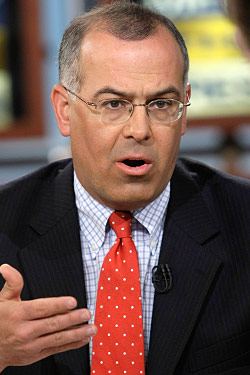
David Brooks’ New York Times op-ed column decrying the widespread criticism of Brian Williams’ serial lying show us that Brooks himself is frighteningly confused regarding such basic ethical values as accountability, trust, trustworthiness and accountability. That’s good to know, don’t you think? Now the question is why anyone in their right mind would care what such an ethically muddled political and cultural analyst thinks about anything.

Yesterday, the Washington Post revealed yet another example of Williams’ fabulism: his bizarre story about roaming gangs at the local Ritz Carlton in the wake of New Orleans’ devastation by Katrina. Never mind, argues Brooks: the problem isn’t with Williams, it’s with his critics.

Brooks’ New Times column begins with a strange, exaggerated and unethically inclusive first paragraph about how  fame drives people to wrongdoing. “The desire for even more admiration races ahead. Career success never really satisfies. Public love always leaves you hungry,” he writes. “Always?” Who is he talking about, himself? The famous people being described here are emotionally and spiritually unhealthy famous people–addicts to fame, narcissists, desperate hostages to celebrity. I have no doubt that Williams fits that description,  but many prominent, accomplished and celebrated people do not. They are known as “trustworthy.” Having impugned many thousands of well-adjusted pubic figures past and present to lay the groundwork for an “everybody does it” defense of Williams (EDI is running neck and neck with the other favorite rationalization being used by Williams enablers: “It’s not the worst thing.”), Brooks attacks anyone not famous who resents being lied to:

“The barbaric part is the way we respond to scandal these days. When somebody violates a public trust, we try to purge and ostracize him. A sort of coliseum culture takes over, leaving no place for mercy. By now, the script is familiar: Some famous person does something wrong. The Internet, the most impersonal of mediums, erupts with contempt and mockery. The offender issues a paltry half-apology, which only inflames the public more. The pounding cry for resignation builds until capitulation comes. Public passion is spent and the spotlight moves on.”

This paragraph is astounding, and embarrassing too. Someone violates a public trust, and the public has the audacity not to trust him any more! What barbarism! Is Brooks even passing familiar with the concept of accountability? Not on the evidence of this drivel, he isn’t. An honorable man or woman in a position of trust who so publicly disgraced himself as Brooks has should immediately and voluntarily resign. Once, long ago, that was the natural, traditional, expected and required response to such a scandal, but this was in the days when celebrity and power was not so frequently accompanied by greed. Williams is paid about ten millions dollars a year, and that’s apparently too much to give up merely to demonstrate integrity, remorse and acceptance of responsibility for wrongdoing, especially when there are allies like Brooks out there ready to shift the blame.

There would be no need to purge someone who has proven themselves untrustworthy in a high position of trust if the individual would be accountable and courageous and purge himself, as he (or she—I’m looking at you, Kathleen Sibelius) is obligated to do. How can Brooks not understand this? The offender offers a “paltry apology,” and Brooks blames the public for correctly concluding that such an offender doesn’t understand the seriousness of what he did, isn’t really sorry, and will do it again. So the “pounding cry for resignation builds until capitulation comes.” Yes, David, that’s the way it’s supposed to work. This isn’t barbarism. This is civilization. This is enforcing standards. This is ethics, this is accountability.

Brooks doesn’t comprehend any of it, apparently:

“I do think we’d all be better off if we reacted to these sorts of scandals in a different way. The civic fabric would be stronger if, instead of trying to sever relationships with those who have done wrong, we tried to repair them, if we tried forgiveness instead of exiling.”

We’d all be better off if we let people who lie to us stay in the position that will allow them to keep lying to us? Continue reading

“Hands Up! Don’t Shoot!” Ethics: The Public Defenders And The Rap Video

defenders30n-1-web

Kumar Rao and Ryan Napoli, two  lawyers who worked for the New York City-funded public defenders group called the Bronx Defenders, ran headlong into an ethics mess when they appeared in a video posted on YouTube the December day after the grand jury voted not to bring criminal charges in Eric Garner’s suspicious “choke-hold” death. In the video titled “Hands Up” (of course), Rao and Napoli comfort a grieving mother at the Bronx Defenders offices as they work on a case involving police brutality. The video also includes the image of a white man in a police uniform with pistols pointed in his face and the back of his head by black men, as rappers chant that it’s “time to start killing these coppers.”

Nice.

The video came under heavy criticism from Mayor de Blasio and others. City-paid public defenders should not be lending their positions and the prestige of their office to calls for retribution and violence. Lawyer Rao defended his appearance, arguing that the video supported the mission of the Bronx Defenders to zealously defend minority clients, and that a rap video was an ideal vehicle to make their services known. Gallant try, but no cigar. That message about killing cops is not part of the organization’s mission presumably, nor is it a responsible message for those in the justice system to appear to endorse. Continue reading